

Looking for a quick, healthy meal that actually tastes good?
You’re tired after work, and you’ve got leftover salmon sitting in the fridge. The last thing you want is something complicated or another boring salad.
A salmon grain bowl checks all the boxes. It’s nutritious, filling, and surprisingly easy to throw together.
Plus, it’s a perfect way to use up that leftover salmon without letting it go to waste.
Ready to make one? This blog shows exactly how to do it.
What is a Salmon Grain Bowl?
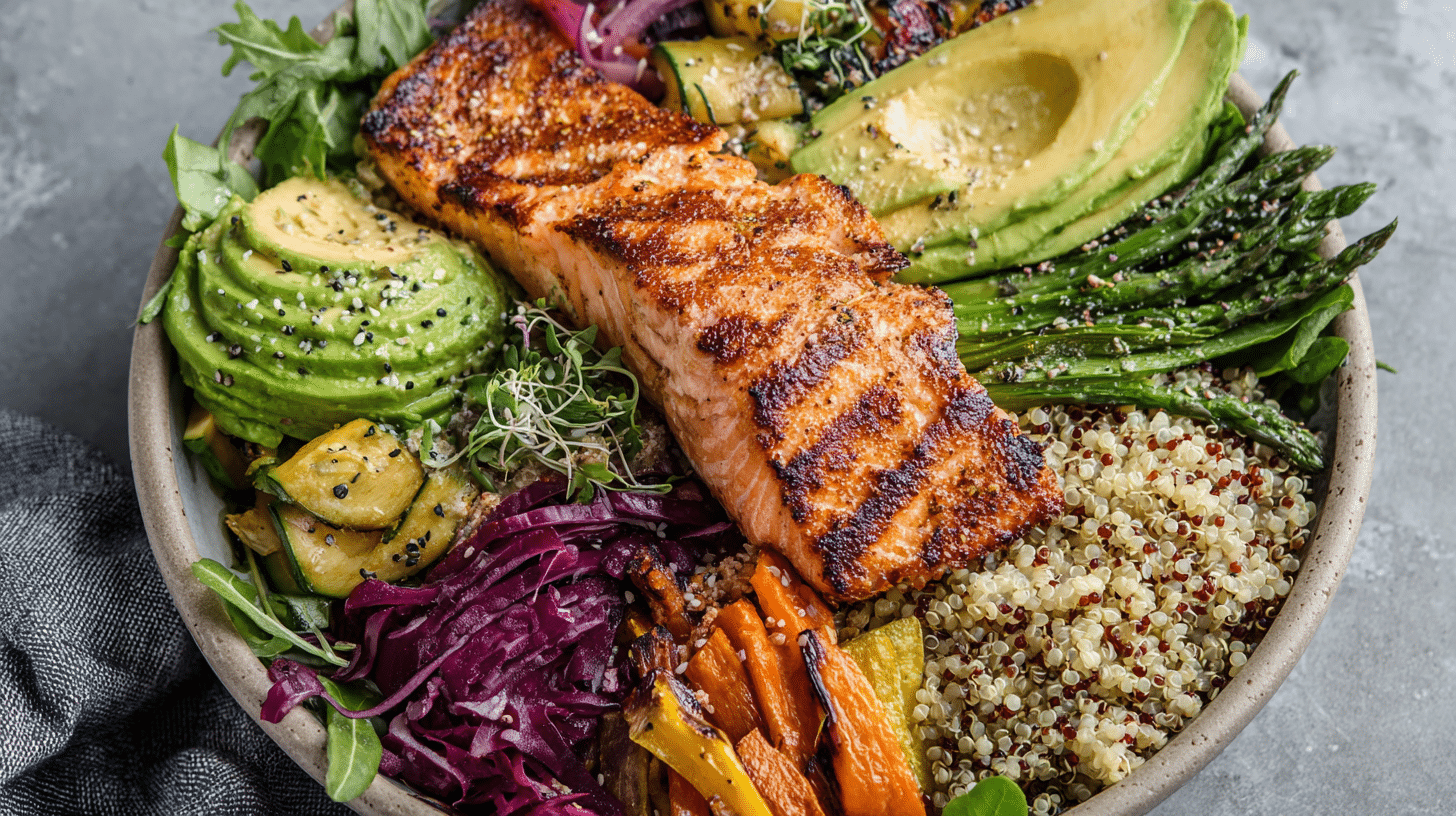
A salmon grain bowl is exactly what it sounds like: a bowl filled with grains, topped with salmon and fresh vegetables. And no, it’s not a salmon rice bowl. Don’t confuse these both with one another.
Think of it as a build-your-own meal that’s both healthy and satisfying.
Most salmon grain bowls include:
- A base of grains: quinoa, brown rice, or farro works great
- Protein: flaked leftover salmon is perfect for this
- Fresh vegetables: cucumbers, avocado, edamame, or whatever you like
- A flavorful sauce: think soy-ginger, tahini, or a simple lemon dressing
You can eat it warm or cold. You can make it spicy or keep it mild.
The options are endless, and that’s what makes it such a go-to meal.
Ingredients You’ll Need
You don’t need anything fancy to make a great salmon grain bowl. Most of these ingredients are probably already in your kitchen.
| Ingredient Category | What You’ll Need |
|---|---|
| Base | Cooked grains (quinoa, brown rice, or farro), leftover cooked salmon |
| Vegetables | Cucumber, avocado, cherry tomatoes, edamame or chickpeas, shredded carrots |
| Dressing | Soy sauce or tamari, rice vinegar, sesame oil, fresh ginger or garlic, a touch of honey |
| Optional Toppings | Sesame seeds, green onions, seaweed strips, and a squeeze of fresh lemon |
You can swap out any of these based on what you have. This recipe is flexible, so don’t stress if you’re missing something.
How to Make a Salmon Grain Bowl?
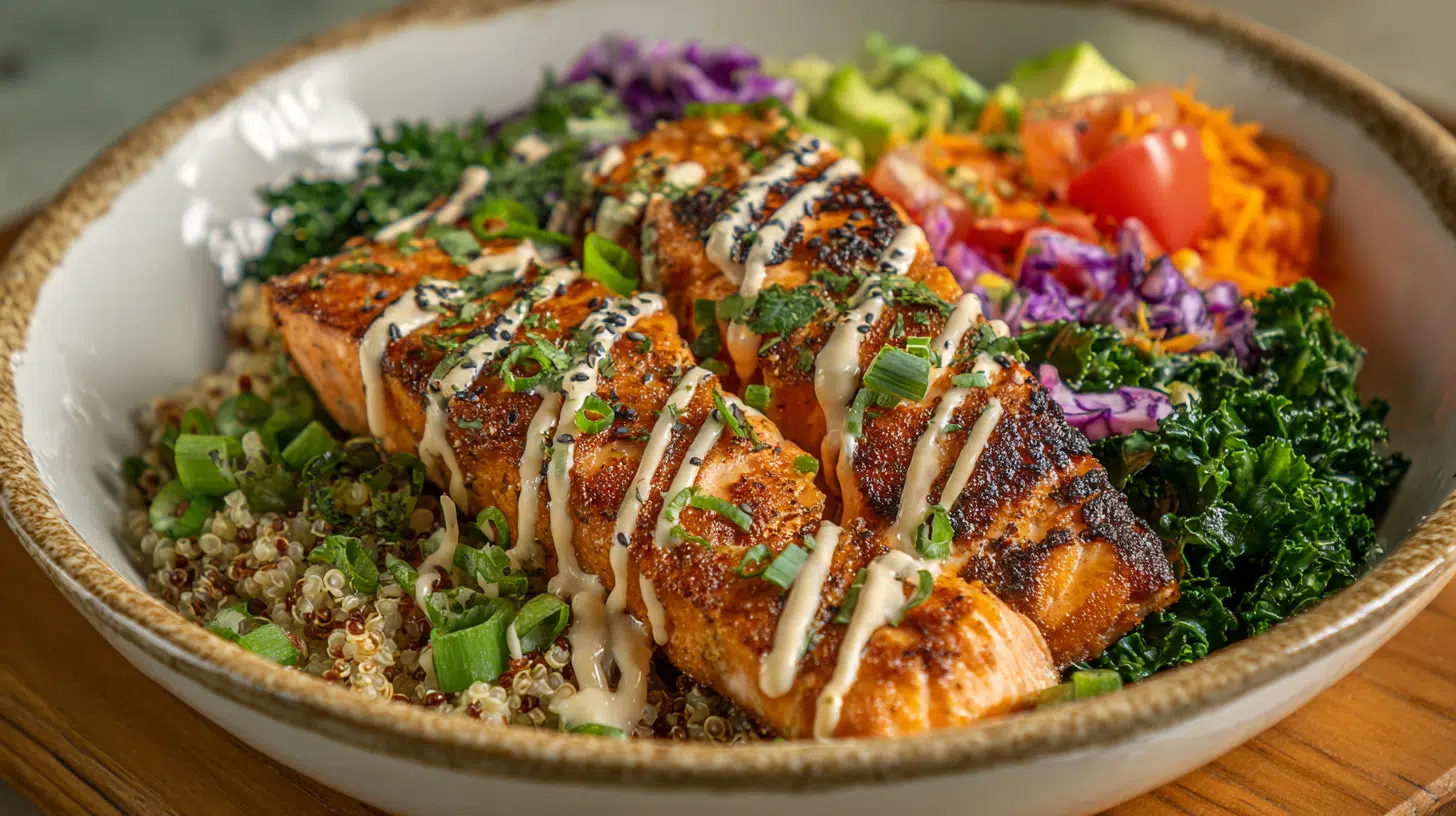
Making a salmon grain bowl is easier than you think. You don’t need any special cooking skills, just a few simple steps.
Step 1: Prep Your Grains
Cook your grains according to package instructions. Quinoa takes about 15 minutes, while brown rice needs closer to 40.
Rinse quinoa before cooking to remove any bitterness.
For rice, use a 2:1 water-to-rice ratio. If you’re short on time, use leftover grains from another meal and warm them up for a minute.
Step 2: Prepare Your Leftover Salmon
Take your leftover salmon out of the fridge. You can eat it cold or warm it up for 30 seconds in the microwave.
Use a fork to flake it into bite-sized pieces. Remove any skin or bones.
Step 3: Chop Your Vegetables
Wash all your vegetables first. Dice the cucumber into small cubes, slice the avocado, and halve the cherry tomatoes.
If you’re using edamame, buy it pre-shelled to save time.
Shred your carrots or grab pre-shredded ones from the store. This whole step takes about 5 minutes.
Step 4: Make Your Dressing
Mix 2 tablespoons of soy sauce, 1 tablespoon of rice vinegar, 1 teaspoon of sesame oil, and half a teaspoon of honey in a small bowl.
Add minced ginger or garlic if you want. Whisk it together and taste.
Adjust as needed.
Step 5: Assemble Your Bowl
Add one cup of cooked grains to the bottom of a large bowl. Arrange your vegetables in sections around the bowl for a restaurant-style look.
Place the flaked leftover salmon in the center or on top.
Step 6: Add Dressing and Toppings
Drizzle your dressing over the entire bowl. Don’t drown it; just enough to lightly coat everything.
Sprinkle sesame seeds on top for a bit of crunch.
Add chopped green onions for freshness and color. You can also add seaweed strips if you have them.
That’s it. Your grain bowl is ready to eat.
Best Grain Options for Salmon Bowls
Not all grains are created equal. Some work better in salmon bowls than others.
- Quinoa: Cooks fast, has a light texture, and absorbs dressing well. Plus, it’s packed with protein.
- Wild Rice: Adds earthy flavor and unique texture. Mix it with brown rice for variety.
- Brown Rice: It is hearty and filling with a chewy texture. Takes longer to cook, but holds up well in the bowl.
- Farro: Has a firm, chewy texture and nutty flavor. Great if you want something different.
- Cauliflower Rice: A low-carb option that cooks in minutes and soaks up dressing nicely.
Serving Suggestions
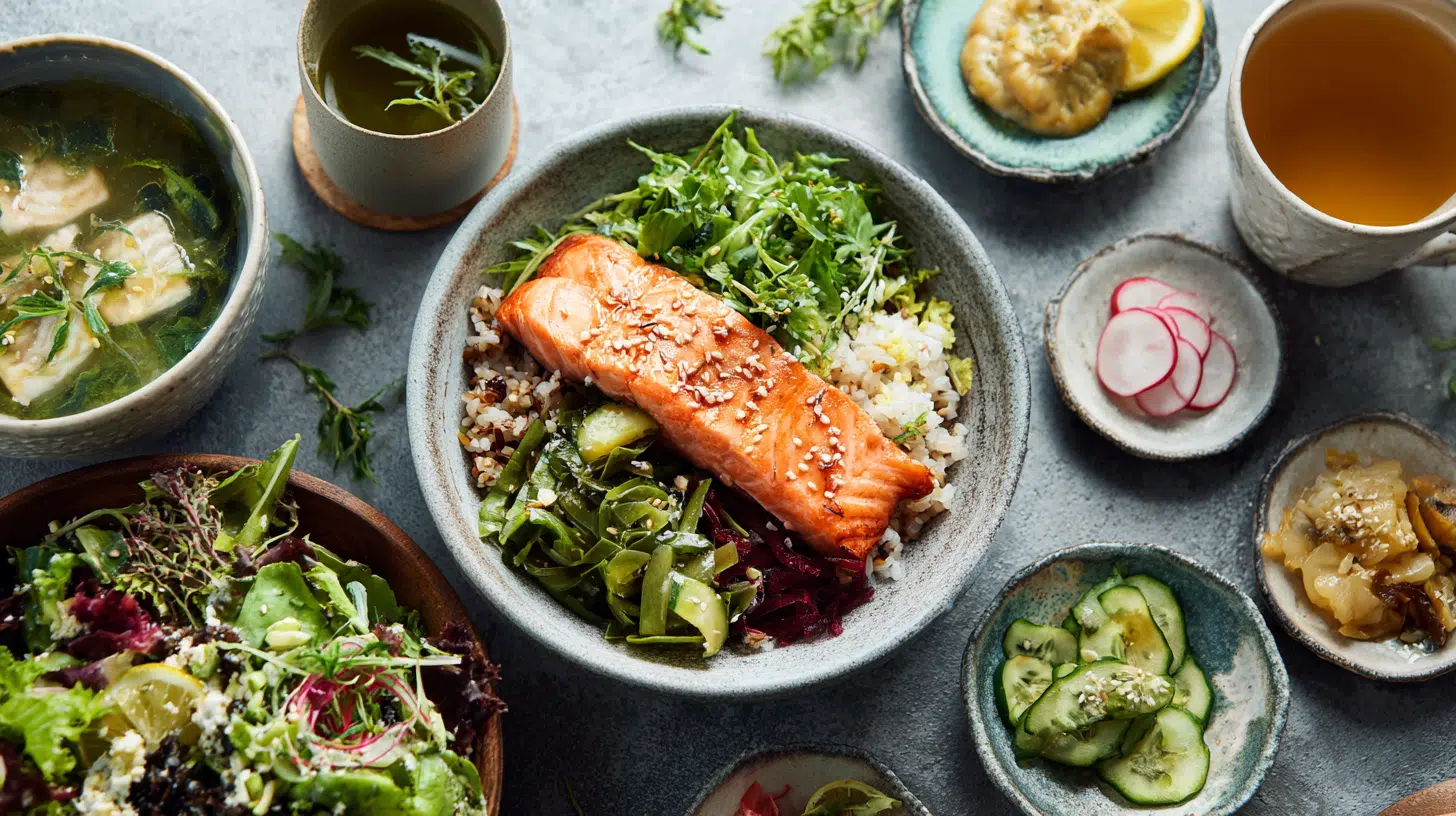
A grain bowl is filling on its own, but you can pair it with a few extras to round out the meal.
Serve it with Soup
A light miso soup or clear broth works great on the side. It adds warmth without making the meal too heavy.
Plus, the savory broth complements the flavors in your bowl perfectly.
Add Pickled Vegetables
Pickled ginger, cucumber, or radish adds a tangy contrast to the rich salmon. You can buy them pre-made or make your own in minutes.
Pair it with Green Tea
Green tea or jasmine tea complements the flavors well. It’s refreshing and helps cleanse your palate between bites.
Add a Side Salad
Keep it simple with mixed greens, a squeeze of lemon, and a light vinaigrette.
This adds extra crunch and freshness to your plate. The greens balance out the richness of the salmon and grains.
Avoid These Mistakes when Making a Salmon Grain Bowl
The following are the most common mistakes people make with salmon grain bowls, along with how to fix them.
1. Overcooking the leftover salmon when reheating
Only warm it for 30 seconds on medium power. Cold salmon works fine too, so don’t feel like you have to heat it.
Overheating makes it dry and tough.
2. Using too much dressing
Start with a drizzle and add more if needed. You can always add, but you can’t take it away.
3. Mistake: Not seasoning the grains
Add a pinch of salt to your grains while cooking. Plain grains taste bland and won’t bring out the other flavors in your bowl.
4. Cutting vegetables too large
Keep everything bite-sized. You want to get a bit of everything in each forkful.
5. Forgetting to fluff the grains
Use a fork to fluff cooked grains before adding them to the bowl. This prevents clumping and makes them lighter.
6. Adding avocado too early if meal prepping
Add avocado right before eating. It turns brown quickly when exposed to air.
Avoid these mistakes, and your grain bowl will turn out perfect every time.
Conclusion
A salmon grain bowl is one of those meals that makes leftovers feel special.
You get a nutritious, satisfying lunch or dinner without much effort. You’re using up that leftover salmon instead of letting it go to waste.
So next time you have extra salmon in the fridge, don’t overthink it, just make this leftover salmon recipe.
Grab some grains, chop a few vegetables, and throw them all together.