

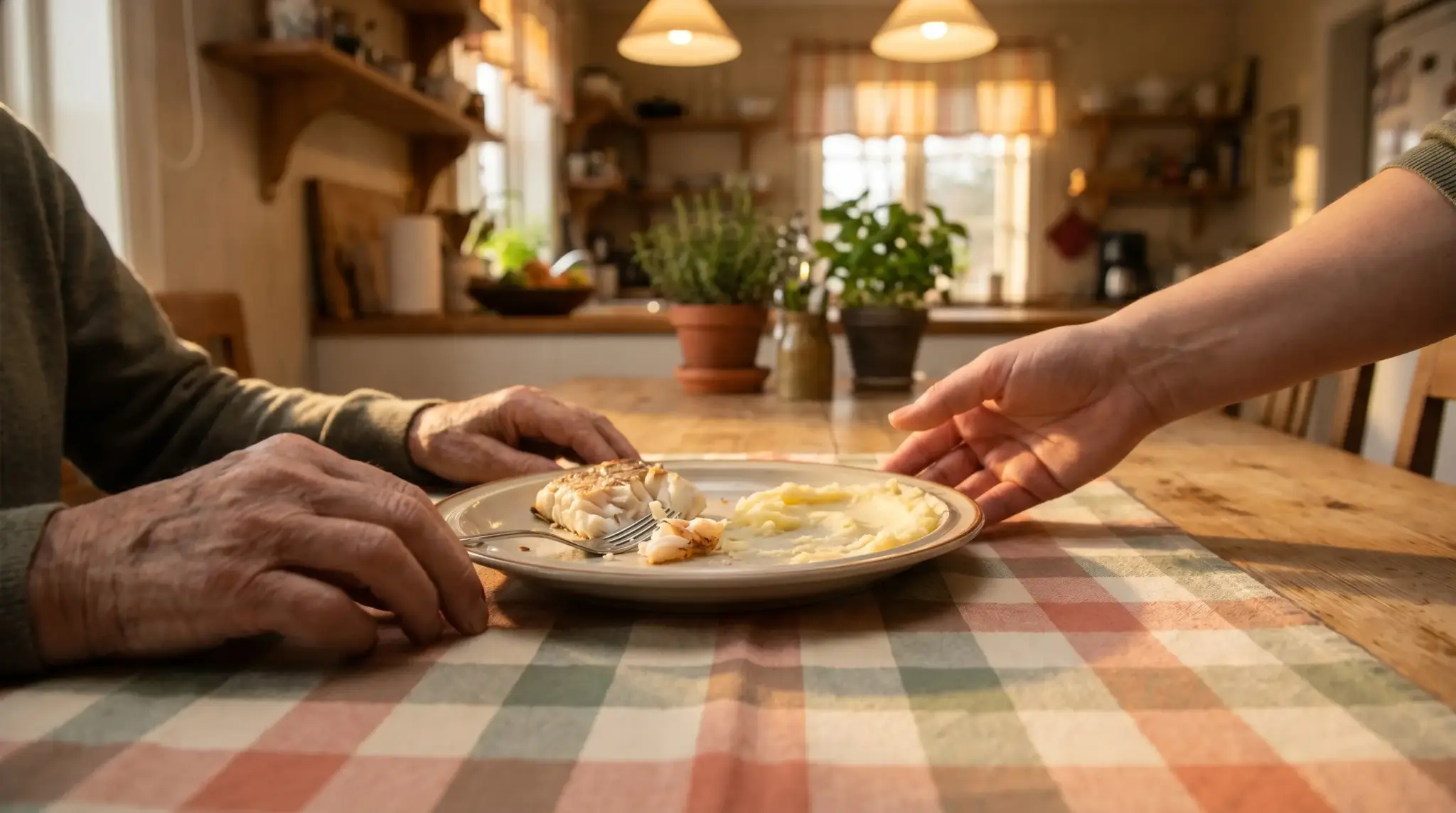
A half-eaten fish dinner is easy to explain away. Maybe the cod was dry, the salmon cooled down, or your older loved one simply wasn’t hungry.
One unfinished plate usually isn’t a crisis. The pattern matters. When fish is the part that keeps coming back untouched while softer foods disappear, the plate may be pointing to something worth noticing.
For older adults, appetite changes can come from fatigue, medication, dental pain, swallowing trouble, loneliness, or meals that take more effort than they’re worth. A simple plate check can help families spot when an off day may be turning into a nutrition concern.
One Leftover Dinner Is Normal. A Pattern Is the Clue.
Older adults can have uneven appetites for ordinary reasons. Sleep, medication, mood, dental discomfort, and changes in taste can all turn dinner into a few polite bites. Some days, a smaller meal is simply a smaller meal.
The useful clue is repetition. If fish is often left untouched while softer foods are eaten, texture may be the issue. If the whole plate is barely disturbed, fatigue or low appetite may be getting in the way. If drinks stay full, hydration deserves a closer look.
That doesn’t mean every leftover fillet needs a family meeting. It means the plate can give you a starting point. What gets eaten, what gets avoided, and what changes from week to week can reveal more than a quick “Did you eat?” ever will.
Why Fish Is Often a Helpful Plate Check Food
Fish sits in an interesting middle ground. It’s usually lighter than steak, easier to portion than a roast, and softer than many other protein choices when cooked well. A small piece of cod, salmon, tuna, or trout can bring real nutrition to the plate without feeling heavy.
That matters for older adults, who often need steady protein even when their appetite shrinks. Federal nutrition guidance includes seafood among nutrient-dense foods and highlights protein and vitamin B12 as nutrients older adults should pay attention to.
The catch is simple: nutrition only counts if the food gets eaten. A piece of fish that turns dry, rubbery, or hard to cut can become the first thing pushed aside. A tender portion with enough moisture has a much better chance of making it from plate to fork.
The Texture Test: Would This Be Easy to Finish?
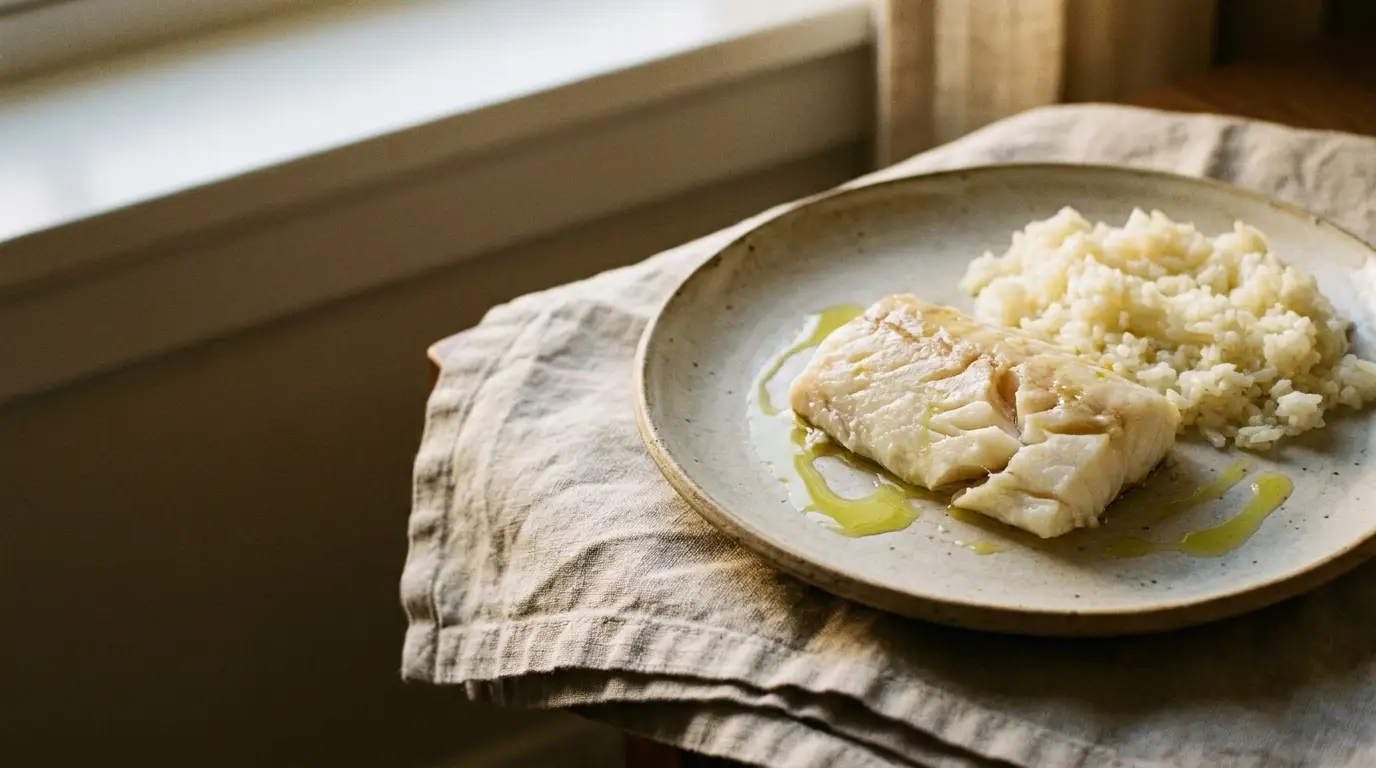
Texture can decide whether a good seafood dinner gets eaten or quietly moved around the plate. Fish that flakes easily, stays moist, and works with a fork is usually more forgiving than a dry fillet that asks for cutting, chewing, and patience.
Small changes help. A spoonful of broth, a little olive oil, a soft rice bowl, mashed potatoes, or a gentle sauce can make fish feel less like a task. Mild white fish is useful because it takes on familiar flavors without feeling heavy, and simple ideas like white fish with lemon and olive oil can keep the meal easy without making it bland.
The best plate check question is practical: would this be comfortable to eat on a tired day? If the answer is no, the leftovers may be saying more about the meal than the appetite.
When Leftover Meals Become a Care Concern
At home, a family member can adjust quickly. They can add sauce, make a smaller portion, switch to soup, or ask whether chewing feels uncomfortable. They can also notice whether the same food keeps coming back untouched night after night.
That becomes harder when an older loved one lives in a nursing home or another care setting. Families may only see part of the picture during visits, while daily meals depend on staff noticing what is eaten, what is refused, and when someone needs extra help. A tray coming back full once may not mean much. A pattern of unfinished meals deserves closer attention.
Repeated poor intake, sudden weight loss, weakness, dry mouth, confusion, or protein that keeps coming back untouched should not be brushed off as picky eating. These signs can point to meals that do not match the person’s needs, swallowing trouble, lack of feeding support, or broader concerns such as malnutrition in nursing homes. The point is to recognize when the same quiet problem keeps showing up on the plate.
What Families Can Notice Without Hovering
A plate check works best when it feels calm, not like an inspection. You’re looking for patterns, not grading every bite.
Notice whether the protein is always left behind. Watch whether water, tea, or broth comes back untouched. Pay attention to looser clothes, less energy, slower movement, or a sudden lack of interest in foods they used to enjoy.
Meals can feel easier with the right kind of company. Some older adults eat more comfortably when someone sits with them, keeps the conversation light, and gives them time instead of rushing the plate. Others may do better with softer foods, smaller servings, or bite-size pieces that take less effort.
Small Seafood Meals That Can Work Better Than a Full Plate
A full fillet can feel like a lot when appetite is low. Smaller seafood meals often work better because they look less demanding and give the person a clear place to start.
Try salmon flakes over soft rice, tuna salad on toast, cod in broth, chopped shrimp folded into pasta, or a small fish cake with yogurt sauce. Sardines mashed with avocado can work for someone who likes stronger flavor, while chowder-style bowls can make seafood feel warm, soft, and familiar.
The best meals are easy to see, easy to cut, and easy to finish. A smaller plate with enough protein is often more useful than a large serving that comes back mostly untouched. Sometimes, the most useful clue is the quiet pattern sitting right there on the plate.