

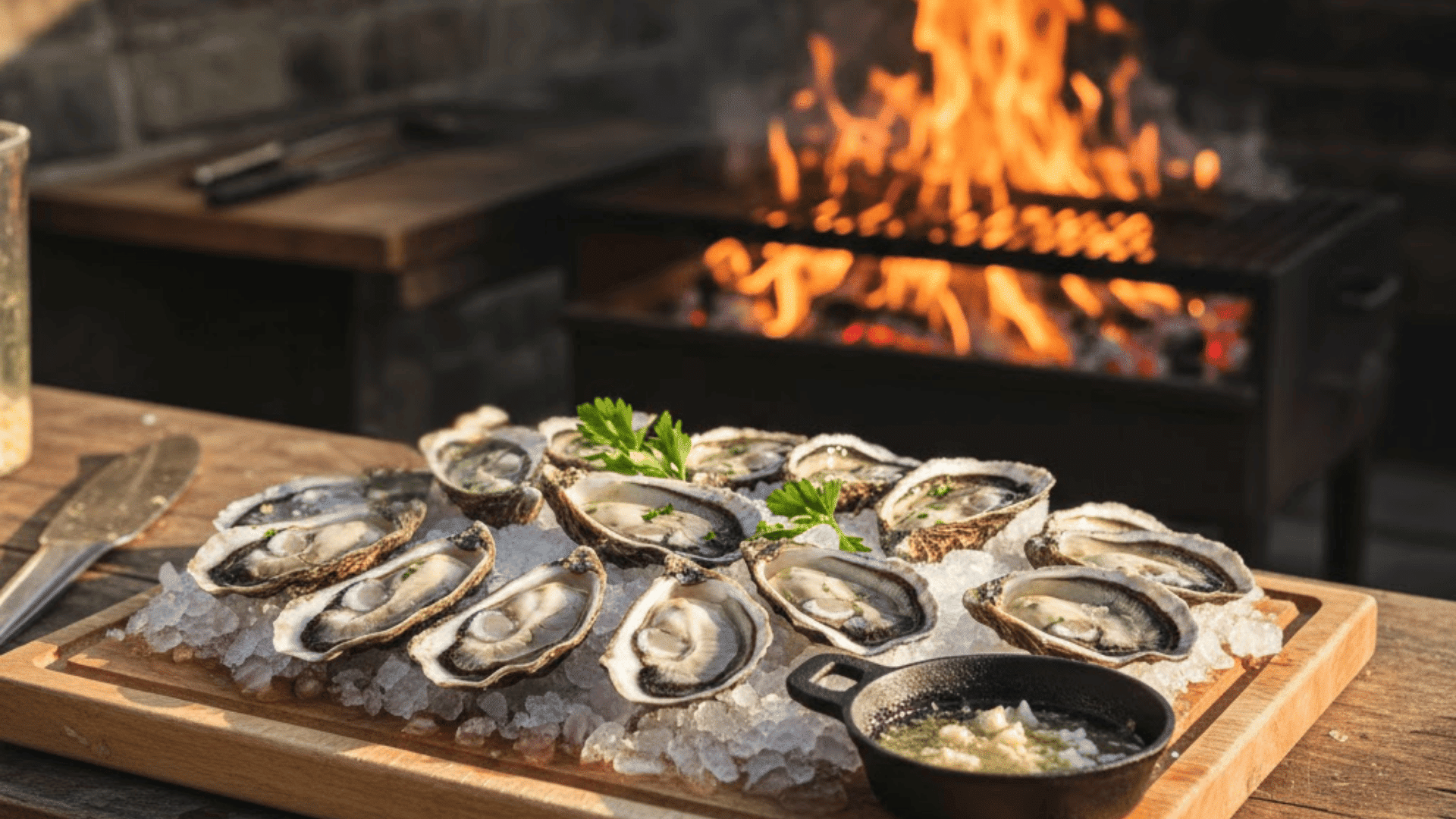
Have you ever taken a bite of a grilled oyster and thought, this is perfect? That warm garlic butter hits first, then the oyster stays soft and briny, not chewy.
I did not get it right the first time. In fact, I ruined batch after batch just by leaving them on the grill 30 seconds too long.
My family stopped volunteering to taste them.
After plenty of trial and error, I finally found a grilled oysters recipe that gives me perfect results every time.
Why I Can’t Stop Making Chargrilled Oysters
Once I finally perfected my grilled oysters recipe, chargrilled oysters became a regular at my table.
When that high heat hits the shell, the butter starts bubbling, and the edges brown slightly. The first bite gives you smoke, garlic, and that fresh briny flavor all at once.
What keeps me making them is how simple and satisfying they are. A medium oyster has only about 7 to 10 calories but is rich in protein, zinc, and vitamin B12.
Zinc supports immune health, so it feels good knowing they are not just tasty but also useful for your body.
They cook in about five minutes once the grill is hot. Quick, simple, and always a crowd favorite in my house.
The Best Oysters for Grilling
Not all oysters behave the same on the grill.
If you are following a grilled oysters recipe, choosing the right type makes a big difference.
I prefer medium to large oysters because they hold butter and toppings better. Smaller oysters cook too fast and can turn tough before you even notice. Larger ones give you a little more room to work with.
Look for oysters with tightly closed shells.
A simple comparison to help you choose:
| Oyster Type | Size | Flavor Profile | Best For Grilling | Why It Works |
|---|---|---|---|---|
| Gulf Oysters | Large | Mild, slightly sweet | Yes | Bigger size holds toppings well |
| Pacific Oysters | Medium | Clean, balanced | Yes | Good texture and reliable cook time |
| Atlantic Oysters | Small to Medium | Briny, sharper | Sometimes | Cook faster, need close attention |
| Kumamoto Oysters | Small | Sweet, mild | Not ideal | Better raw due to small size |
If you are new to grilling, start with Gulf or medium Pacific oysters. They work well with most grilled oyster recipe variations.
Hot, Smoky, Buttery: My Char-Grilled Oyster Recipe
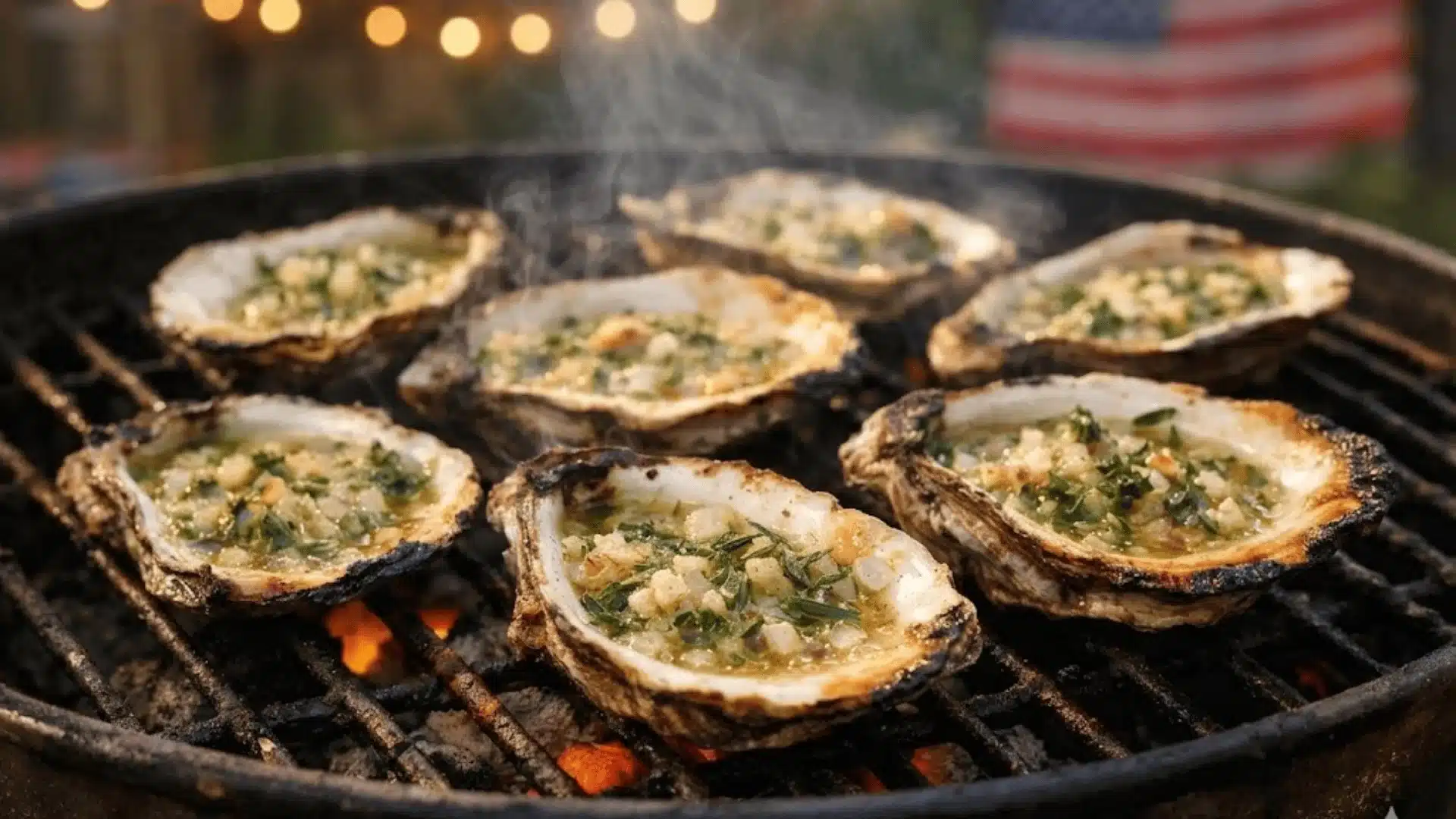
The Story Behind the Recipe
Last Fourth of July, I almost ruined dinner.
I was midway through my usual grilled oysters when I realized I was completely out of regular butter.
Guests were arriving in twenty minutes. The only thing left in the fridge was a herb compound butter I had made for steak: rosemary, thyme, shallots, the works.
I was convinced the herbs would bulldoze the delicate flavor of the oysters. But I had no backup plan, so I used it anyway.
It turned out to be the best batch I had ever made.
The shallots softened and turned gently sweet. The rosemary paired beautifully with the smoky char.
One lesson learned, though: compound butter burns faster, so stick to one tablespoon per oyster and always use a two-zone grill setup.
What You Need
For the herb compound butter:
- 115g (½ cup) unsalted butter, softened
- 2 shallots, finely minced
- 3 garlic cloves, minced
- 1 tsp fresh rosemary, finely chopped
- 1 tsp fresh thyme leaves
- Zest of 1 lemon
- ¼ tsp kosher salt
- ¼ tsp freshly ground black pepper
For the oysters:
- 24 fresh oysters, scrubbed
- 1 lemon, cut into wedges
- 2 tbsp flat-leaf parsley, chopped
- 8 slices crusty bread or baguette, for serving
How to Make it
Step 1: Make the compound butter.
Combine all butter ingredients in a small bowl and mix until fully incorporated.
Roll into a log using plastic wrap and refrigerate for at least 30 minutes to firm up.
This step can be done up to three days ahead, which makes it ideal for entertaining.
Step 2: Set up a two-zone grill.
Preheat your grill to around 400°F (200°C). For charcoal, bank the coals to one side. For gas, leave one or two burners off.
You need one zone of direct high heat and one zone of indirect heat.
This two-zone setup is the single most important thing you can do to prevent flare-ups when cooking with a fat-rich compound butter.
Step 3: Shuck and prep the oysters.
Shuck each oyster, discarding the flat top shell and keeping the deeper cupped shell to hold the butter and juices.
Rest the prepared oysters on a sheet tray lined with crumpled foil to keep them level and prevent the liquor from spilling before they hit the grill.
Discard any oysters that smell off or are already open and do not respond when tapped.
Step 4: Top with compound butter.
Slice the chilled compound butter into rounds of roughly 1 tablespoon (about 14g) each.
Place one round directly on each oyster.
Do not be tempted to add more. Excess butter is the primary cause of dangerous flare-ups on the grill, and more is genuinely not better here.
Step 5: Grill over direct heat.
Place the oysters on the direct heat side of the grill, cupped shell down.
Grill uncovered for 2 minutes, until the butter begins to melt and bubble and the very edges of the oyster flesh just start to curl.
Step 6: Finish over indirect heat.
Carefully transfer the oysters to the indirect side of the grill.
Close the lid and cook for a further 3 minutes. By this point the oysters should be fully cooked through: plump, slightly firm, and swimming in herb-scented butter.
The shallots will have softened and taken on a gentle sweetness.
Step 7: Garnish and serve immediately.
Remove the oysters with tongs and arrange on a platter. Squeeze fresh lemon generously over the top and scatter the chopped parsley over everything.
Serve at once with crusty bread for mopping up the butter.
Grilled oysters wait for no one.
Notes from my Experience
On choosing oysters
Gulf oysters, such as Louisiana Blue Points are the classic choice for grilling.
Their larger size and meatier flesh hold up well to high heat. Pacific oysters work well too.
Avoid delicate East Coast varieties like Wellfleets on the grill; the heat dulls the very complexity that makes them worth eating raw.
On the compound butter
The herb blend here is forgiving and adaptable. Tarragon adds a pleasant anise note. Smoked paprika deepens the char flavor.
A pinch of cayenne adds heat if you want it.
The one thing to avoid is wet herbs like fresh basil – they release too much moisture and can cause the butter to separate.
If you don’t have a grill
A cast-iron skillet under a high broiler is the closest substitute.
You will lose the smoke character, but the char and butter flavor will largely be there.
Chargrilled Oysters vs Charbroiled Oysters: Is There Any Difference?
Chargrilled uses heat from below on a grill. Charbroiling uses heat from above in a broiler.
Restaurants often mix up these terms, but both methods work great for any grilled oysters recipe.
| Feature | Chargrilled Oysters | Charbroiled Oysters |
|---|---|---|
| Heat Source | Direct heat from below (grill or charcoal) | Intense heat from above (broiler) |
| Flavor | Smoky from open flame or charcoal | Less smoky, butter, and garlic shine more |
| Texture | Slight char on shell and edges | Browner, crispier top layer |
| Cooking Style | Cooked over grill grates outdoors | Cooked under the oven broiler indoors |
| Cooking Time | 4 to 6 minutes, depending on the heat | 3 to 5 minutes with consistent broiler temp |
| Best For | Backyard cookouts and smoky taste | Year round cooking without going outside |
I use chargrilled when I want that campfire flavor for summer parties.
I switch to charbroiled during winter when it’s too cold to stand outside by the grill. My family honestly can’t tell the difference once the butter and garlic go on top.
Best Grilled Oysters Recipe
These are the top picks for incredible flavor and tender meat.
Each one brings something special to your grill, and I’ve tested them all multiple times.
1. Lemon Pepper Grilled Oysters
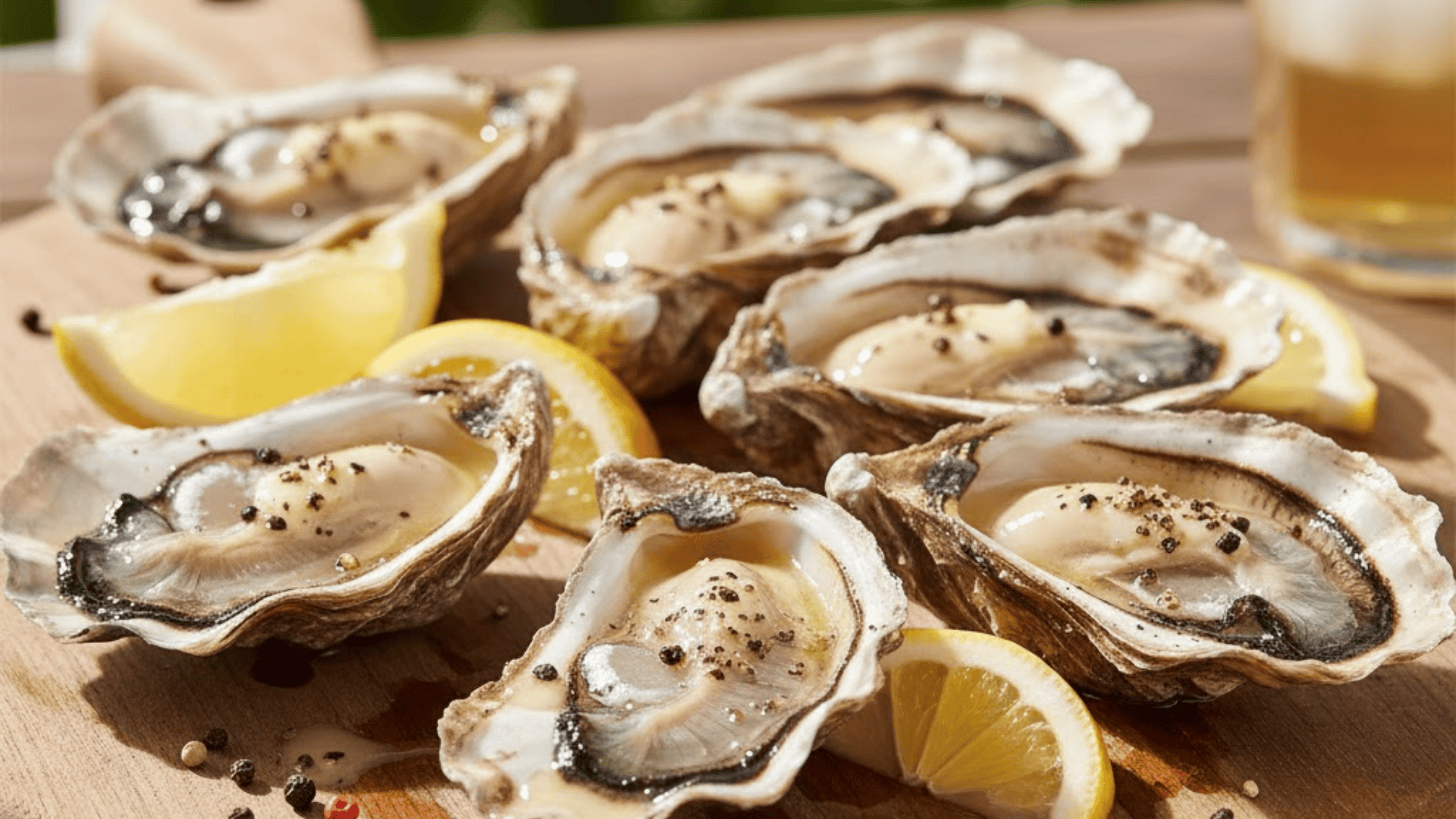
This is the lightest version of any grilled oysters recipe I’ve tested. It keeps the oyster flavor front and center.
This grilled oyster recipe is great for summer cookouts because it feels light and refreshing.
How to Make It
- Preheat the grill to medium heat.
- Place oyster shells shell-side down.
- Add a small spoon of butter.
- Sprinkle lemon zest and cracked pepper.
- Grill for 4 to 6 minutes, until the juices bubble.
- Add a light squeeze of lemon before serving.
Tip: The first time I made this, I added too much lemon juice at the start. It overpowered the oyster. Now I use zest during cooking and juice only at the end.
Honest Opinion: Perfect if you like clean, fresh flavor. Not ideal if you prefer heavy topping
2. Cajun Spiced Grilled Oysters

Paprika, cayenne, and garlic powder coat each oyster before grilling. The spices form a slightly crispy outer layer while keeping the inside tender.
How to Make It
- Preheat grill to medium-high.
- Mix melted butter with Cajun seasoning.
- Place oysters on the grill.
- Spoon seasoned butter into each shell.
- Grill 5 to 7 minutes until bubbling.
- Let rest for 30 seconds before serving.
I once used too much seasoning, and it tasted salty. Start light. You can always add more after grilling.
An Honest Opinion: Great for gatherings. People who enjoy spice love this one.
You get heat without overwhelming the seafood taste, and it pairs well with cold beer.
3. Pan-Style Shell-Free Grilled Oysters

This method completely changes the feel of the dish. Removing the shell gives you more control over heat and seasoning.
It also makes flipping easier and reduces flare-ups.
How to Make It
- Heat a cast-iron pan on the grill.
- Add butter or garlic oil.
- Place shucked oysters in a single layer.
- Cook 60 to 90 seconds.
- Flip once, then cook for another 30 to 60 seconds.
- Finish with lemon or herbs.
Tip: Without the shell, oysters cook very quickly. I now set a timer because even 30 seconds is too long; it changes the texture. Watching them closely keeps them tender.
4. New Orleans–Style Chargrilled Oysters

This dish comes straight from Louisiana tradition. Lots of butter, garlic, and Parmesan create a rich topping.
The oysters bubble in their shells until the cheese melts into golden brown spots.
How to Make It
- Preheat the grill to high and create two heat zones.
- Mix softened butter, garlic, and Parmesan.
- Place oysters over direct heat for 2 minutes.
- Move to indirect heat.
- Add topping and close the lid.
- Cook 2 to 4 more minutes until browned.
Personal Tip: I used to cook them entirely over high heat and burned the topping. Switching to a two-zone setup fixed that problem. Controlling heat made the biggest improvement.
5. Crispy Topped Charbroiled Oysters
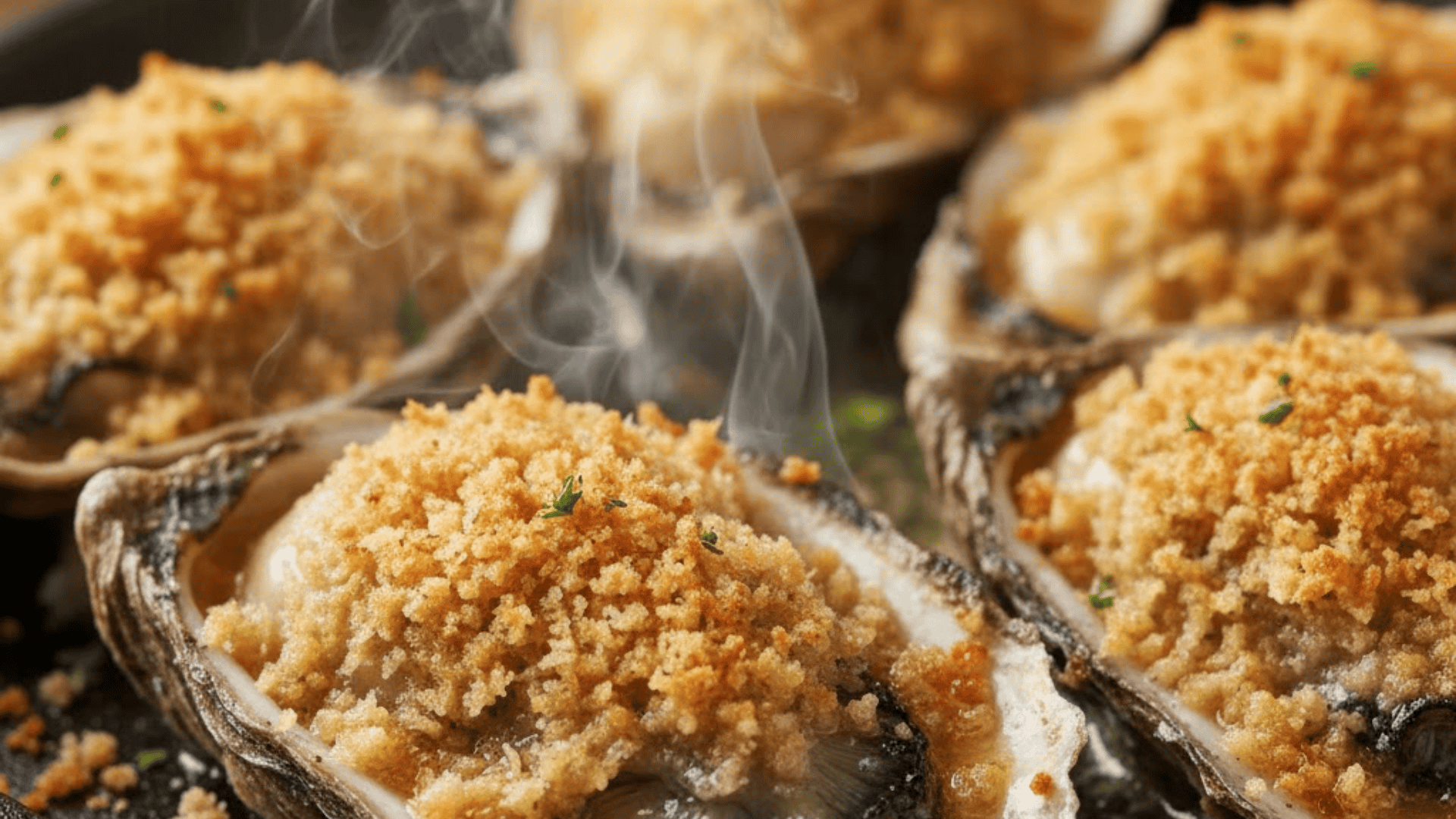
Breadcrumbs mixed into the butter create texture on top. The crumbs toast under the broiler’s heat and turn golden.
You get a satisfying crunch with the soft oyster underneath.
How to Make It
- Preheat broiler to high.
- Arrange oysters on a tray.
- Mix breadcrumbs with melted butter.
- Spoon topping onto each oyster.
- Broil 2 to 5 minutes until golden.
- Let rest briefly before serving.
Breadcrumbs brown very fast under a broiler. I start checking at the 2-minute mark and stay close to the oven. Staying nearby prevents over-browning.
What’s My Opinion: I like the added crunch, especially for variety. But if you prefer a pure oyster flavor, this may feel slightly heavier than the others.
Conclusion
Grilling oysters taught me that timing matters more than talent.
I used to overthink it, but once I understood the heat and learned when to pull them off, everything became easier.
I do not use fancy tools, just a steady grill and a solid grilled oysters recipe.
I always suggest starting simple with butter, garlic, and lemon.
After a few tries, it stopped feeling intimidating in my kitchen, and I’m confident it will in yours too.