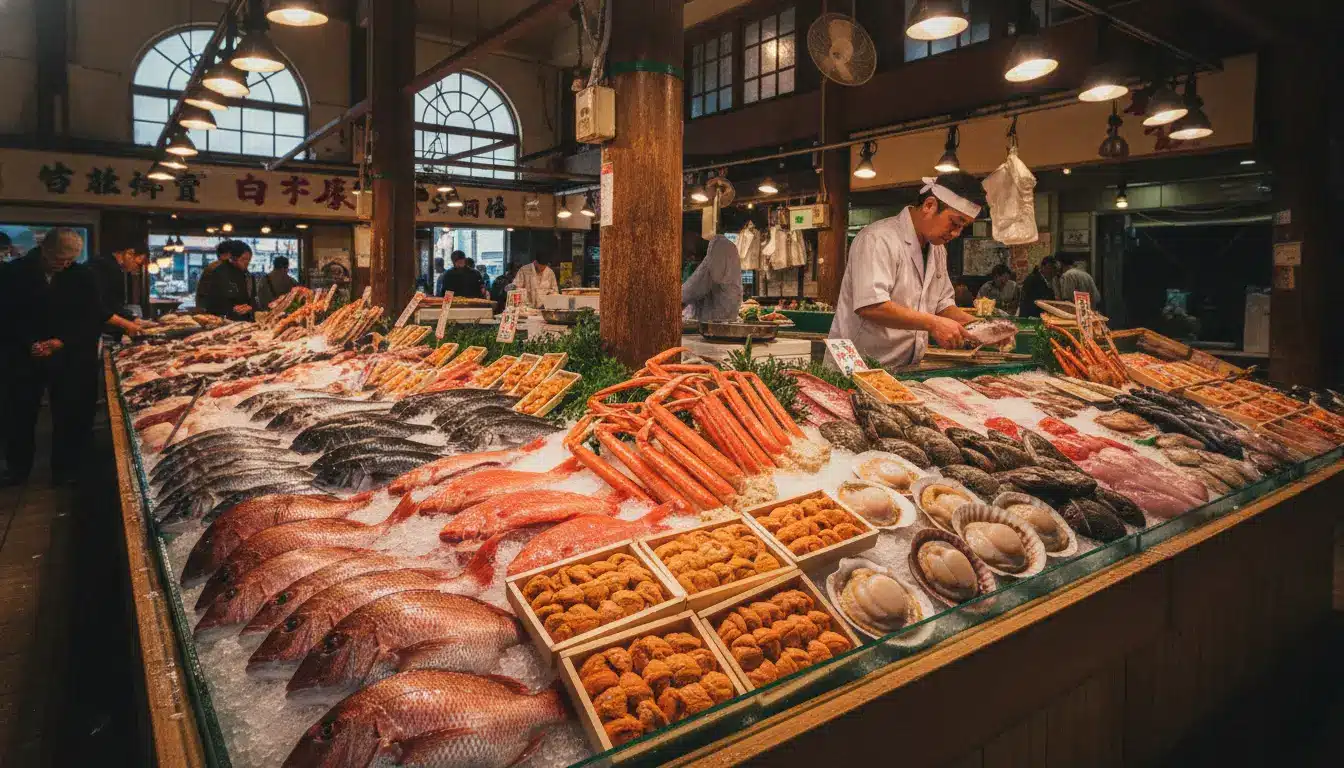


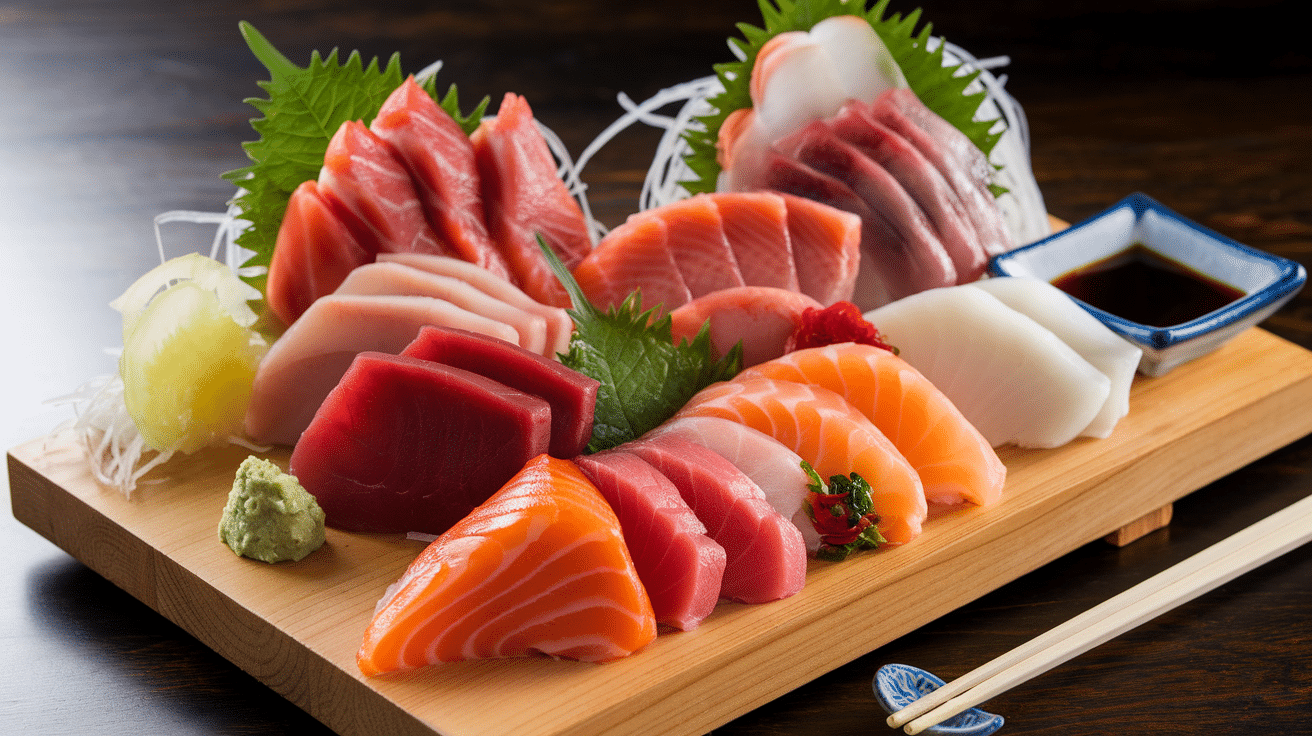
What makes sashimi more than just raw fish on a plate?
Sashimi is a refined Japanese culinary art that celebrates the purity of raw seafood, sliced with precision and served without rice or seaweed.
Each cut is made to enhance texture and flavor, showcasing the freshness of the ocean in its simplest form.
If you are a sushi lover or a curious newcomer, understanding sashimi opens the door to an appreciation of Japanese cuisine.
Classic & Most Popular Sashimi Types
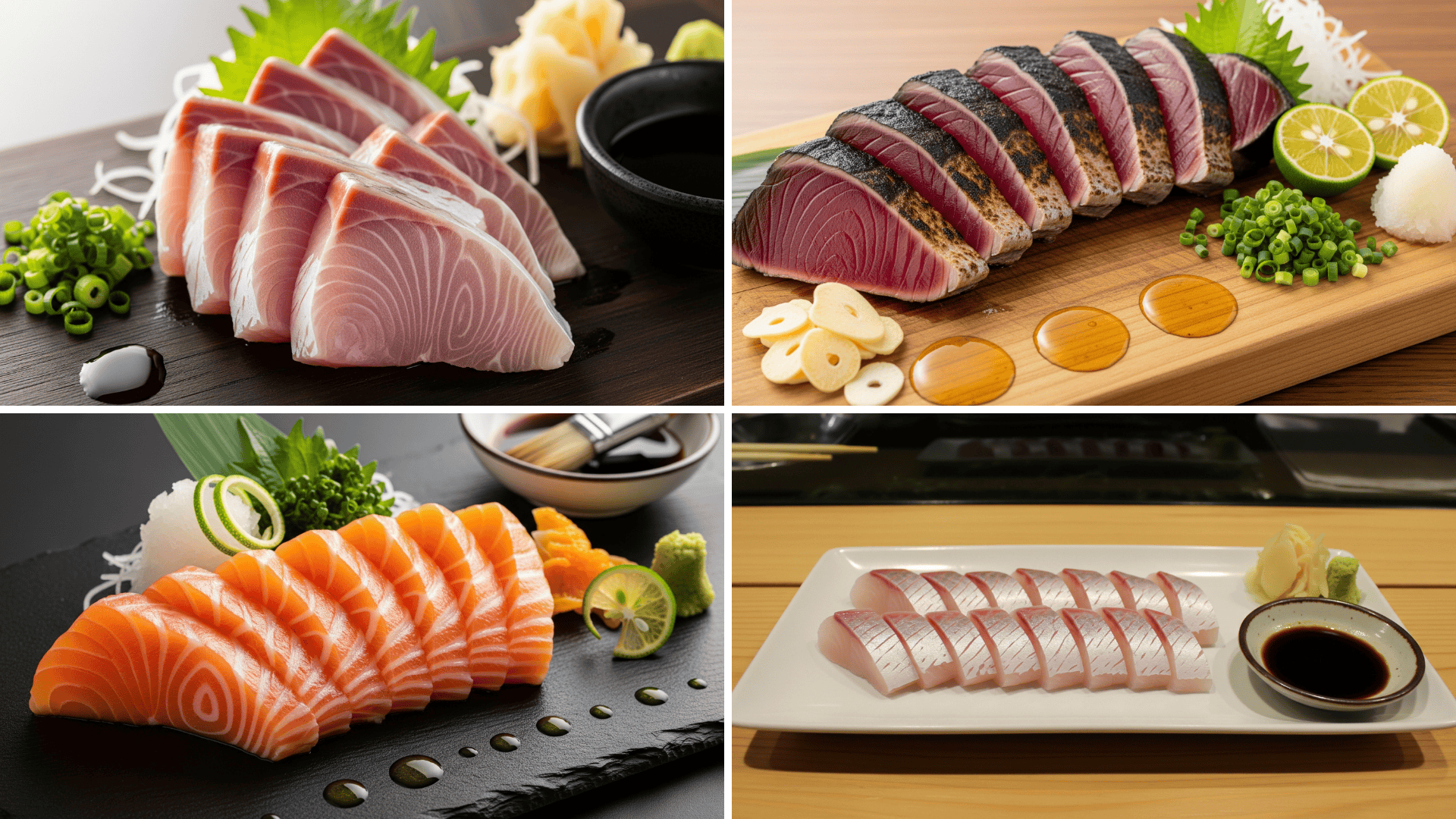
These iconic sashimi varieties are staples across Japanese restaurants, valued for their balance of texture, flavor, and culinary significance.
1. Tuna (Maguro)
Tuna is one of the most sought-after sashimi fish, especially bluefin varieties.
It comes in multiple cuts, akami (lean), chutoro (medium-fatty), and otoro (fatty belly), each offering a unique balance of texture and umami.
Maguro’s flexibility and richness make it a standout in traditional and modern sashimi presentations alike.
2. Salmon (Sake)
Salmon sashimi is loved for its silky texture and high fat content. It’s rich, marbled, and mild, and delivers a smooth, almost buttery mouthfeel.
Its approachable flavor and vibrant color make it a popular choice among beginners and connoisseurs, often paired with citrus or soy for added brightness.
3. Yellowtail (Hamachi/Buri)
Yellowtail sashimi is tender, slightly oily, and delicately sweet. In colder months, the fish develops more fat, boosting its luxurious texture.
Hamachi is often enjoyed with grated ginger or scallions to highlight its subtle flavor.
It’s a mainstay in sushi restaurants and is frequently included in premium sashimi assortments.
4. Sea Bream (Tai or Madai)
Tai, or Japanese sea bream, is revered for its clean, delicate taste and slightly firm bite. Traditionally served at celebrations, it symbolizes good fortune.
The fish’s mild sweetness and flesh make it a refined choice, often complemented with yuzu zest or light soy to preserve its subtlety.
5. Mackerel (Saba)
Saba is bold, oily, and packed with umami. Due to its strong flavor, it’s typically marinated in vinegar before serving.
This curing process balances its richness while boosting its aroma.
Loved by those who prefer assertive fish, saba sashimi is profoundly satisfying and commonly garnished with scallions or grated ginger.
6. Bonito (Katsuo)
Bonito sashimi is usually prepared as katsuo tataki, seared on the outside while leaving the center raw. This method imparts a smoky, complex flavor.
The fish is rich in umami and often served with ponzu, garlic, or scallions. It’s particularly popular in regional cuisines like Kochi Prefecture’s rustic dishes.
Sashimi Flavor & Texture Guide
| SASHIMI TYPE | TEXTURE | FLAVOR | BEST PAIRINGS |
|---|---|---|---|
| Tuna (Maguro) | Firm, meaty | Rich, umami-heavy | Ponzu sauce, scallions |
| Salmon (Sake) | Smooth, buttery | Mild, fatty | Soy-wasabi, yuzu |
| Yellowtail (Hamachi) | Slightly oily, tender | Sweet and rich | Ginger, chive garnish |
| Tai/Madai | Lean, delicate | Light sweetness | Yuzu zest, light soy sauce |
| Ika/Tako | Chewy | Mild or neutral | Wasabi, lemon |
| Uni | Creamy | Briny, oceanic | Shiso leaf, quail egg |
Regional & Rare Varieties Worth Trying
These lesser-known sashimi options are seasonal or regional delicacies, offering distinct textures and refined flavors.
7. Amberjack (Kanpachi): Firm and clean-tasting, often enjoyed in spring and summer for its mild, refreshing flavor.
8. Whitefin Trevally (Shima-aji): A crisp, subtly rich sashimi often featured in upscale sushi restaurants.
9. Spanish Mackerel (Sawara): Flaky and light with a gentle sweetness, more delicate than standard mackerel.
10. Pacific Saury (Sanma): An autumn favorite with bold, oily flavor, occasionally served raw at peak season.
11. Threadfin Bream (Itoyori): Sweet and tender, this rare fish offers a delicate bite and soft texture.
12. Cornetfish (Aka-Yagara): Mild-flavored and uniquely long-bodied, served in specialty regional dishes.
13. Stonefish (Ishi-Dai): Firm texture with a clean, nutty taste, prized for its distinct mouthfeel.
Other Common Seafood Sashimi
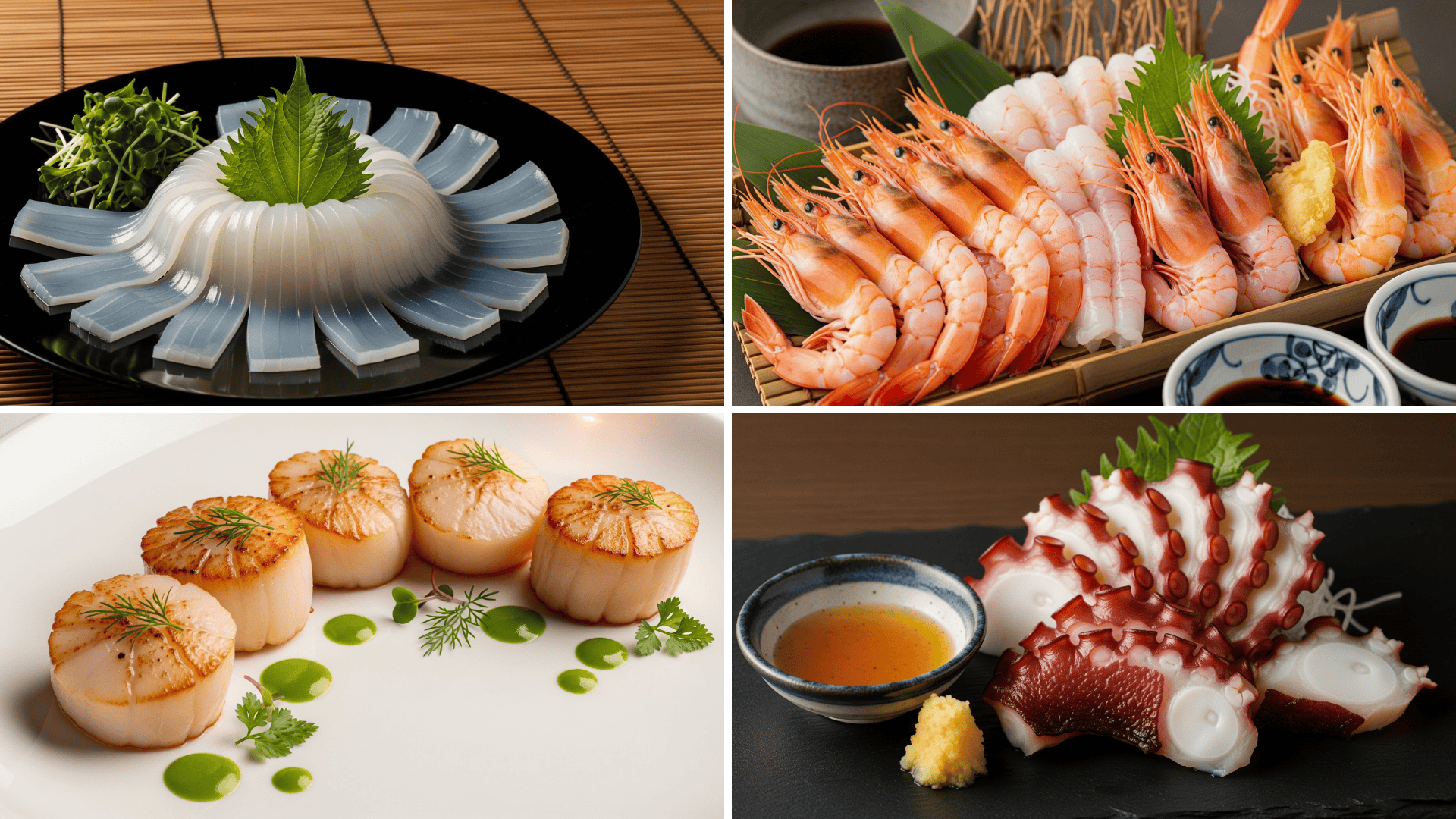
Sashimi extends beyond fish to include a variety of seafood selections.
Each offers a distinct texture and flavor, from the creamy richness of sea urchin to the gentle chew of squid.
14. Squid (Ika)
Squid sashimi has a clean, mildly sweet taste and a firm, chewy texture. It’s typically served in thread-like slices known as ito-zukuri.
The translucent appearance and refreshing flavor make it a popular choice for those who enjoy texture in sashimi without strong fishy or briny notes.
15. Octopus (Tako)
Tako sashimi is most often served after being lightly boiled to tenderize the meat. It offers a firm bite and a subtle, almost neutral flavor.
Often paired with ponzu or citrus-based sauces, octopus sashimi provides satisfying texture and a mild base for strong condiments like wasabi or yuzu.
16. Scallops (Hotate)
Hotate sashimi is prized for its creamy texture and natural sweetness. Served raw, scallops offer a soft, buttery mouthfeel that melts instantly.
They’re often sliced thin or served whole, sometimes with a touch of soy or citrus to enhance their delicate, ocean-fresh flavor and luxurious quality.
17. Shrimp (Ebi/Amaebi)
Shrimp sashimi comes in two primary forms. Boiled ebi has a firm, meaty texture and slightly sweet flavor. Raw amaebisweet shrimp is tender, soft, and prized for its delicate sweetness.
Often served with the fried head on the side, it’s a favorite among sashimi enthusiasts worldwide.
18. Sea Urchin (Uni)
Uni is creamy, rich, and packed with briny ocean flavor. Its custard-like texture melts on the tongue, delivering an intense, savory experience.
While polarizing due to its bold taste, it’s a beloved delicacy for connoisseurs. High-quality uni is sweet, with no bitterness or fishy aftertaste.
19. Salmon Roe (Ikura)
Ikura consists of vibrant orange fish eggs that burst in your mouth. Each pearl delivers a salty, umami-rich pop of flavor.
Often served atop rice in gunkan style or alone as sashimi, it offers a luxurious texture and visual appeal, making it a favorite among sushi lovers.
Non-Fish Sashimi & Traditional Rarities
While fish is the staple, some Japanese regions celebrate unconventional sashimi with bold textures and flavors:
- Raw Beef (Gyu Tataki): Lightly seared outside, raw inside, rich, umami-packed beef served with ponzu.
- Horse (Basashi): Chilled, sweet, and lean, eaten with soy, ginger, or garlic.
- Chicken (Torisashi): Raw or torched, mild, tender meat served only under strict safety standards.
- Sea Cucumber (Namako): Chewy and briny, served thin with vinegar for balance.
- Jellyfish (Kurage): Crisp, gelatinous texture, lightly marinated in soy or sesame.
- Sea Pineapple (Hoya): Bold, oceanic flavor, soft, fibrous, and distinctly briny.
These rare types reflect Japan’s culinary daring and regional pride.
Serving & Food Safety Tips to Follow
Enjoying sashimi isn’t just about taste; it’s about preparation, presentation, and safety.
Proper handling ensures both a superior dining experience and protection from potential health risks.
| TIP | DETAILS |
|---|---|
| Fish Quality | Use sashimi-grade fish frozen to -20°C/-4°F for 7 days (FDA standard). |
| Storage | Keep fish refrigerated until just before serving. |
| Knife & Cutting | Use a razor-sharp knife; slice in one clean motion (no sawing). |
| Clean Tools | Always use a sanitized cutting board and utensils. |
| Garnishes | Serve with shredded daikon, shiso, soy sauce, wasabi, and pickled ginger. |
| Safety Focus | Follow these steps to maintain freshness, taste, and food safety. |
How to Choose Quality Sashimi?
When selecting sashimi at a market or restaurant, keep the following tips in mind:
- Look for vibrant, glossy flesh without discoloration.
- Fresh fish should smell clean, not fishy.
- Buy only from trusted, reputable fishmongers.
- Confirm it’s sushi-grade or flash-frozen properly.
- Ask about source, handling, and freezing methods.
If you are building your own or ordering at a fine Japanese restaurant, understanding the varieties of sashimi will deepen your appreciation for this culinary art form.