

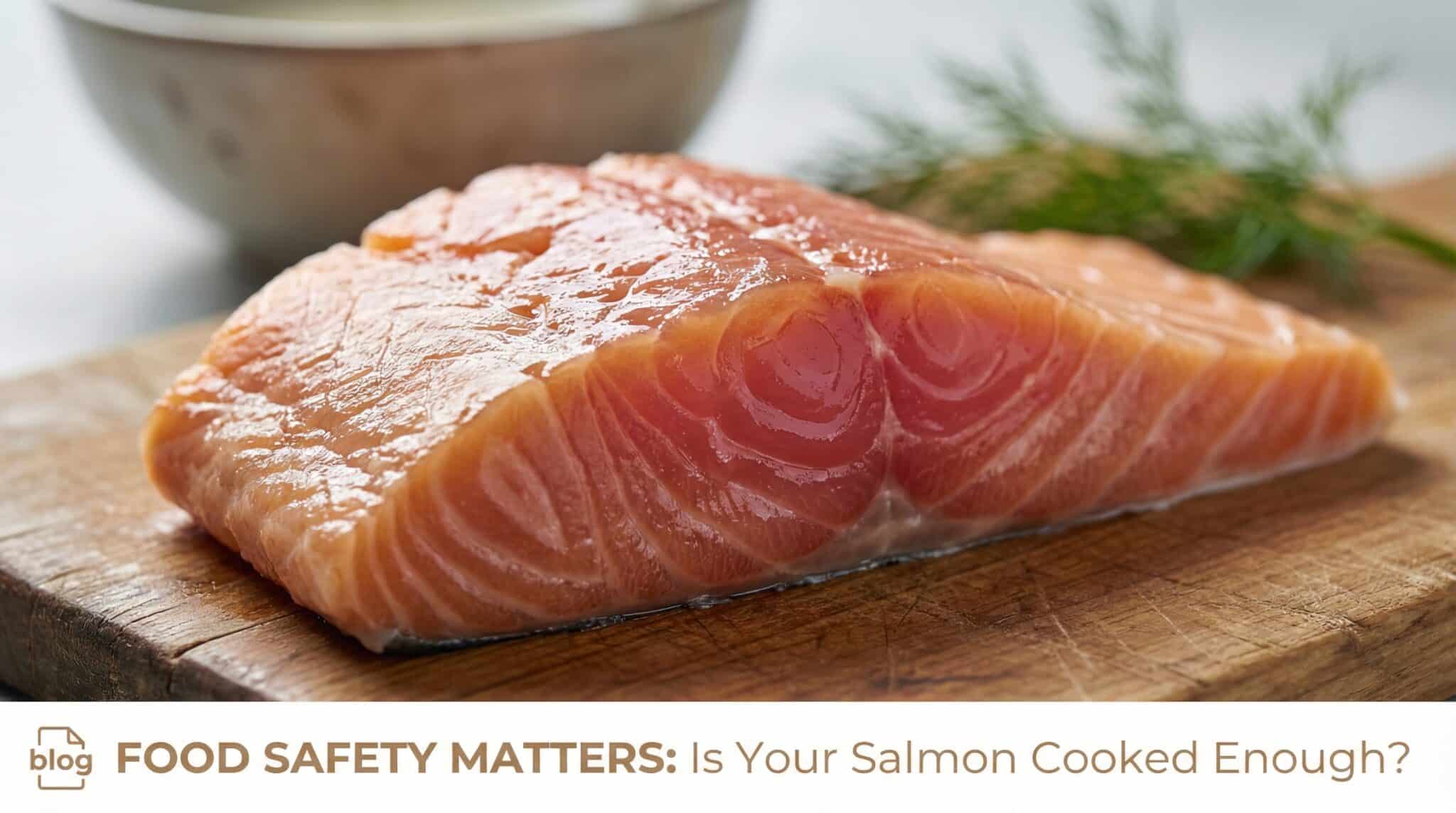
If you’ve ever stood over a salmon fillet squinting like you’re trying to read tiny legal print—”Is that raw… or is salmon just… shiny?”—hi. Welcome. You are not alone, and you’re not dramatic. Fish is just weirdly good at looking suspicious right when you’re hungry.
Here’s the big thing I want you to tattoo on your brain (gently, with a washable marker):
Looks lie. Temps don’t.
Salmon can stay a little pink and even slightly translucent in the center and still be totally fine. The only real way to know you’re in the safe zone is temperature. Not vibes. Not “my mom always cooked it until it squeaked.” Temperature.
The Only Numbers That Actually Matter (aka “Stop Arguing With Your Eyeballs”)
The FDA’s across the board recommendation for fish is:
145°F internal temp = safest for everyone
If you want the no stress, no asterisks answer, that’s it.
That said, a lot of people (me included, when it’s good quality salmon and I’m cooking for healthy adults) prefer a slightly lower finish because 145°F salmon can be… enthusiastic. Dry. Flaky in a “where did all the moisture go?” kind of way.
Here’s the practical breakdown:
- Below 120°F: nope. If it’s still gel-ish and super translucent, put it back on the heat.
- 120-125°F: can be okay for healthy adults with high quality salmon (but it’s pushing into “medium rare” territory).
- 130-135°F: my favorite “best of both worlds” zone—juicy, tender, and you’ve got more safety buffer.
- 145°F: the safest default, and the rule for high risk situations (more on that in a sec).
If you only remember one thing: Aim for 145°F if you’re cooking for anyone who’s high risk, if you’re unsure about the fish, or if you just want peace and quiet at the dinner table.
The Sneaky Part: Salmon Keeps Cooking After You Take It Off (Because Of Course It Does)
Salmon has carryover cooking meaning you pull it off the heat and it continues to rise for a few minutes like it’s trying to prove a point and bring out white protein on salmon.
In general, after you remove it from heat and let it rest 3-5 minutes, you might see:
- High heat (hard sear, hot oven around 425°F): temp can climb 10-15°F
- Moderate oven (350-375°F): more like 8-10°F
- Gentle cooking (poaching): minimal rise—what you see is pretty close to what you get
So yes, you can pull it a little early, tent it with foil (loosely don’t steam it into sadness), and let it finish.
This is also why “it looked underdone so I cooked it longer and now it’s chalk” happens to perfectly nice people.
How to Check Doneness Without Performing Salmon Tarot
1) The instant read thermometer (the hero)
If you don’t own one, I’m not judging you… but I am gently nudging you toward the checkout aisle. A basic instant read thermometer is cheap and saves so many dinners.
How to do it:
- Insert it into the thickest part of the fillet
- Go in from the side if you can (more accurate than stabbing straight down)
- Don’t touch the pan, bone, or skin
- If the piece is uneven, check a couple spots and trust the lowest reading
2) The fork and flake check (useful, but not perfect)
Stick a fork in the thickest part and twist slightly.
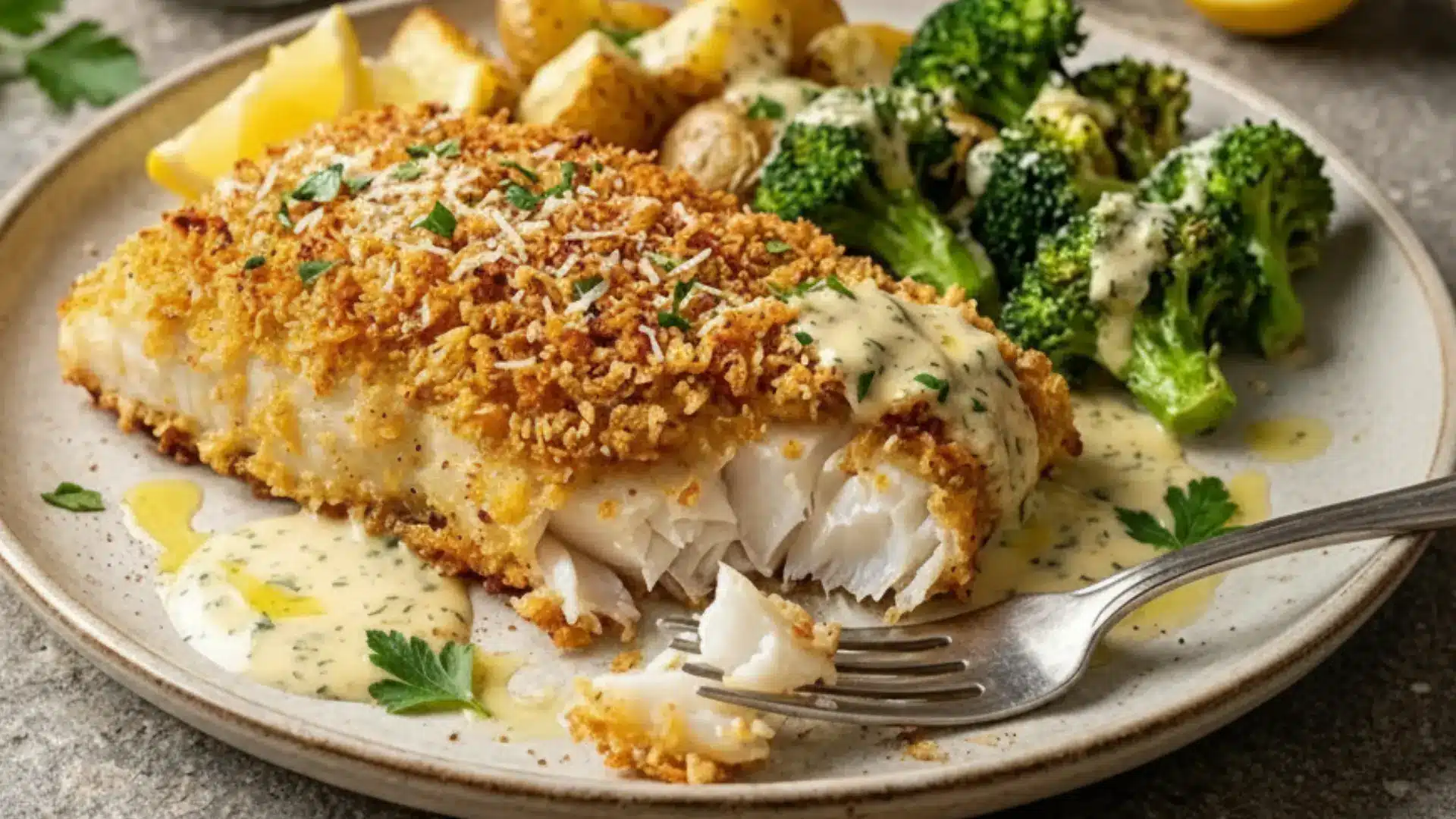
- If it separates into flakes but still looks moist = good
- If it flakes like dry shredded paper = you may have taken it a smidge far
3) The metal skewer/knife “lip test” (old school, surprisingly decent)
Slide a thin knife or cake tester into the center for a few seconds, then touch the metal to your bottom lip:
- Hot: you’re there
- Warm: close
- Barely warm: keep going
Still: if you want confidence, go thermometer. Because “I think it’s done?” is not a strategy I recommend with seafood.
Why Salmon Can Look Translucent Even When It’s Safe
Salmon’s color doesn’t “cook out.” That pink orange is pigment (astaxanthin), and the fat content can make the flesh scatter light in a way that stays a little glossy and translucent looking.
So yes—a salmon center can look pink and slightly see through at 130-135°F and match a salmon doneness color guide and be totally normal.
Also: fatty fish is a different beast than lean fish.
- Fatty fish (salmon, arctic char): can stay a little translucent even when it’s at a safe, tasty temp.
- Lean white fish (cod, tilapia, halibut): should look opaque when done. If it’s translucent, it usually means it’s undercooked and kind of unpleasant.
- Dense fish (tuna, swordfish): plays by its own rules and can look translucent even when it’s technically “done.” Use temperature, not looks.
Farmed vs. Wild Salmon (and Why It Changes the Risk Conversation)
This is where people start whispering “sushi grade” like it’s a magical spell.
- Farmed salmon is raised in controlled conditions, and parasites are much less common.
- Wild salmon can carry parasites more often, so if it’s wild caught and you’re unsure about handling/freshness, I’d personally lean toward 130-135°F at minimum, or just go to 145°F and sleep like a baby.
A quick word on “sushi grade”
In the U.S., “sushi grade” isn’t a legally regulated label. What actually reduces parasite risk for raw/undercooked fish is proper commercial freezing, like:
- -4°F for 7 days, or
- -31°F for 15 hours
Your home freezer is usually around 0°F, which is not the same thing. So unless your fishmonger can specifically confirm proper freezing/handling, don’t let a cute label talk you into risky temps.
When Translucent Is a Red Flag (aka “Don’t Be Brave”)
Sometimes translucent is normal. Sometimes it’s your salmon waving a tiny warning flag.
Put it back on the heat (or toss it) if any of this is happening:
- It’s below 120°F and still looks gel like in the middle
- It smells off (sour, ammonia-y, “questionable buffet” vibes)
- It’s slimy or the texture feels wrong
- It’s freshwater fish (trout, catfish, etc.) — these should hit 145°F, no negotiation
Also, different category but important:
- Shellfish has stricter visual rules.
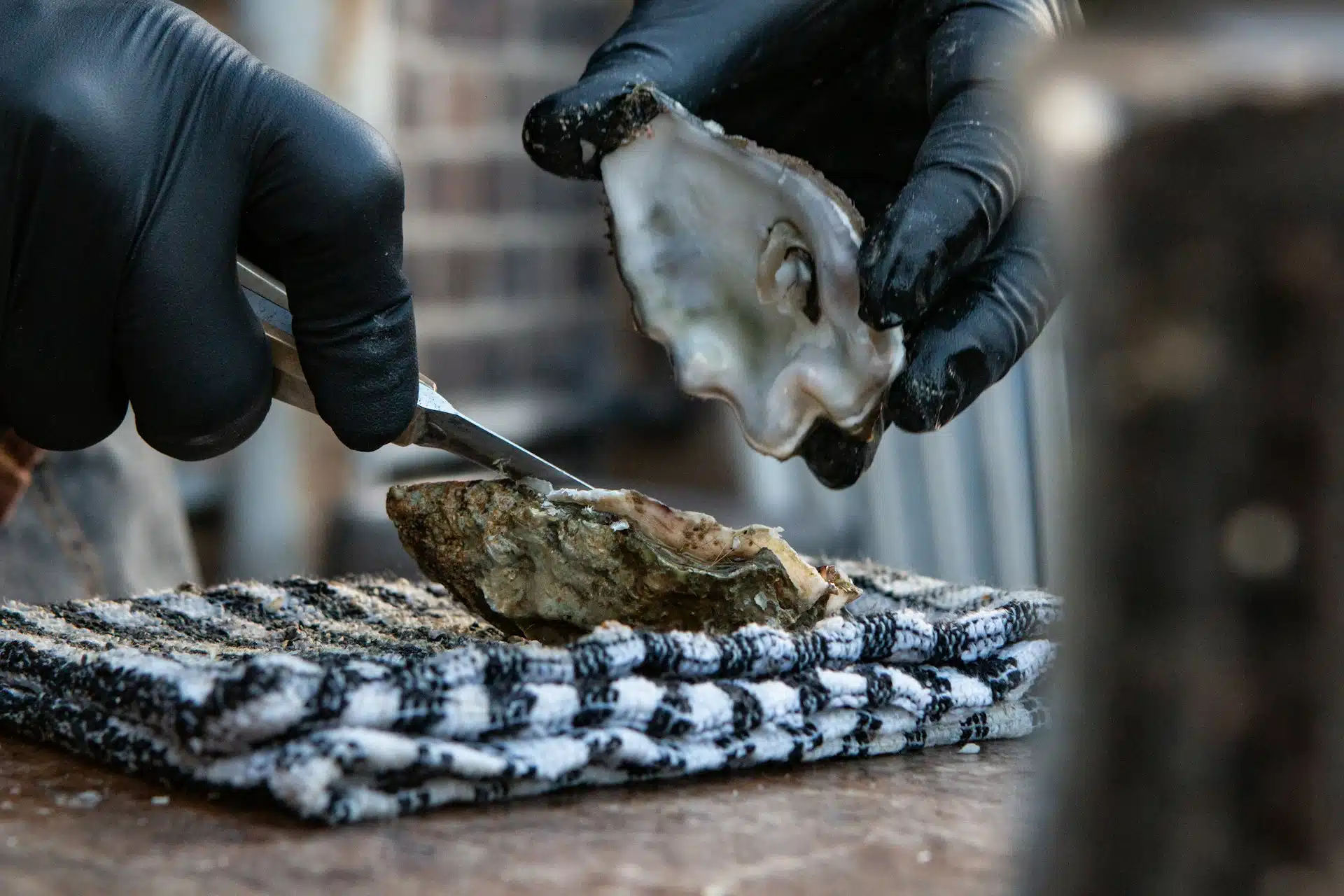
Shrimp/scallops should be opaque. Mussels/clams/oysters should open when cooked—discard any that stay closed.
Who Should Always Cook Salmon to 145°F (No Exceptions, Sorry)
If you’re cooking for anyone in these groups, don’t aim for medium rare salmon. This is not the moment for culinary adventure.
Cook to 145°F if the eater is:
- pregnant
- a child under 5
- 65+
- immunocompromised (chemo, transplant recipients, uncontrolled diabetes, liver disease, etc.)
The texture tradeoff is worth it. Period.
Uh-Oh. I Cut Into It and It’s Translucent. Now What?
First: no shame. Salmon goes from “not yet” to “oops” in about 45 seconds. I have absolutely overcorrected, panicked, and ended up with salmon jerky. Learn from my pain.
Here’s how to fix it without destroying it:
Oven (my favorite gentle save)
- Put salmon on a baking sheet
- Cover loosely with foil
- Warm at 275°F
- Check every 3-4 minutes until you hit your target temp
Stovetop (also works)
- Low heat in a covered pan
- Add a splash of water/broth/wine so it doesn’t dry out
- Check often (fish is a sprinter, not a marathoner)
If you’re within ~5°F
Tent with foil and rest a few minutes. Carryover might finish it.
Microwave? It’ll work in a technical sense, like how you can cut your own bangs. Proceed if you must, but don’t blame me for the rubbery results.
If You Already Ate Some Undercooked Salmon…
If you’re a healthy adult and the salmon was at least around 120°F, odds are still low that anything happens. Most people will be completely fine.
If symptoms do show up (nausea, vomiting, diarrhea), they often appear within 6-48 hours.
Get medical care if you have:
- fever over 101°F
- blood in stool
- severe abdominal pain
- vomiting that won’t stop
- symptoms lasting more than 3 days
If you’re in a higher risk group and you ate undercooked fish, call your doctor sooner rather than later—especially if symptoms start. Tell them it was undercooked seafood so they can decide what to do next.
The Bottom Line: Cook Salmon by the Numbers, Not the Panic
A slightly translucent, pink center doesn’t automatically mean your salmon is raw or unsafe. Salmon is just… visually unhelpful like that.
- 145°F = safest for everyone (especially high risk groups)
- 130-135°F = a popular, juicy sweet spot for many healthy adults using quality fish
- Below 120°F = back on the heat
If you take nothing else from this post, take this: buy (or find) an instant read thermometer and let it be the adult in the room.
Now go cook your salmon—and tell your eyeballs to mind their own business.