

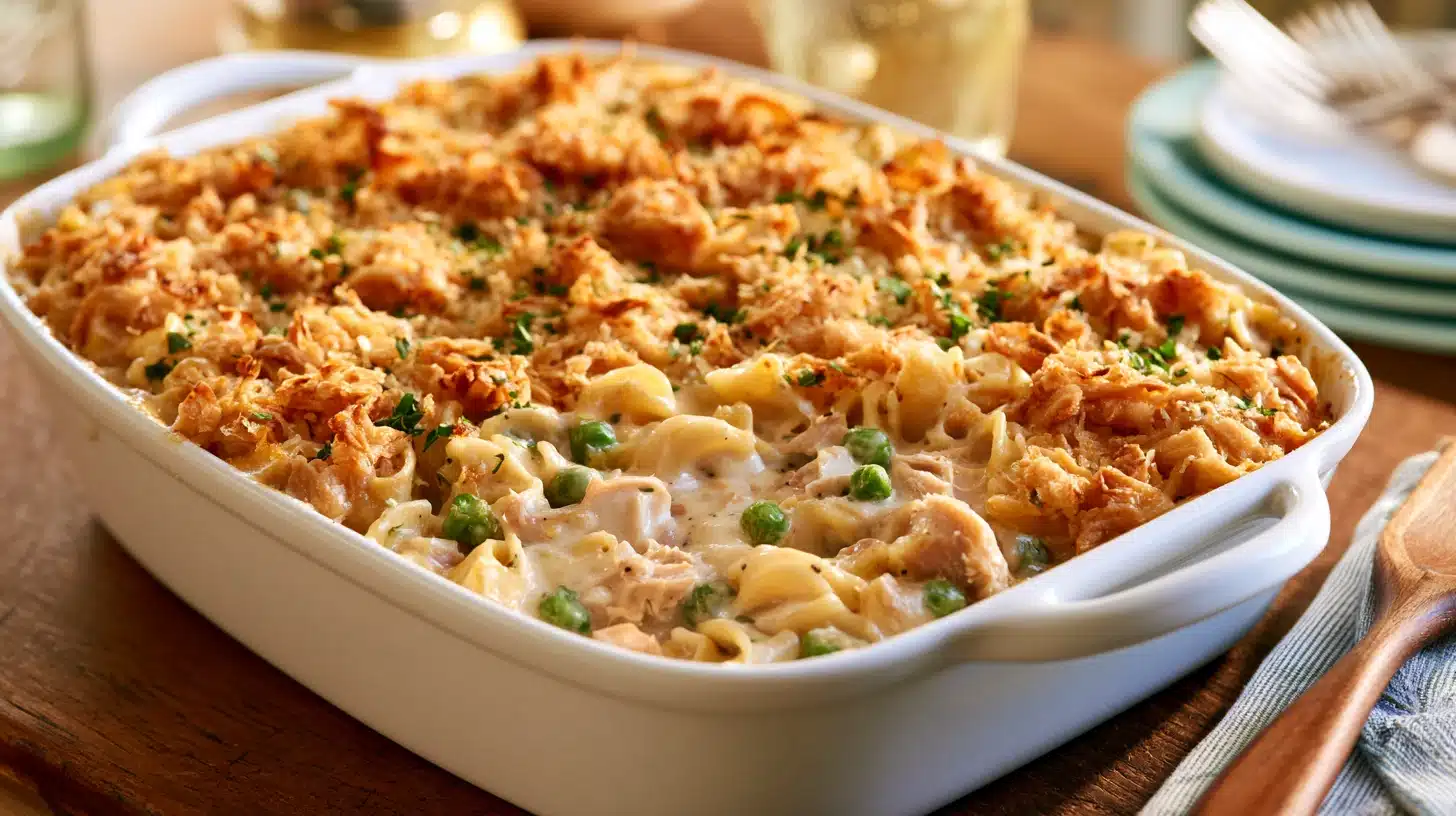
Dinner does not always need to be complicated to work. Tuna noodle casserole comes together with a can of tuna, some noodles, and whatever cheese you want.
It bakes into something warm and filling, with little cleanup afterward. Less than thirty minutes in the oven is usually all it takes.
That kind of simplicity keeps it on the dinner rotation year after year. A straightforward way to make it comes next, plus classic, easy, old-fashioned, and best-rated spins to try.
Make The Best Tuna Noodle Casserole
Difficulty: Easy | Serves: 6 | Estimated time: 35 min | Prep time: 10 min | Cook time: 25 min
This casserole doesn’t require much. Every ingredient comes from the regular grocery aisles, right next to the pasta and canned soup.
Grab these few things, and dinner is basically halfway done already.
Ingredients You’ll Need
- 12 ounces egg noodles
- 2 (5-ounce) cans tuna, drained
- 1 can (10.5 ounces) cream of mushroom soup
- 1 cup milk
- 1 cup frozen peas
- 1 cup shredded cheddar cheese (Sharp cheddar melts cleanly and doesn’t get lost next to the cream soup)
- ½ cup breadcrumbs or panko
- 2 tablespoons butter, melted
- Salt and pepper, to taste
Step 1: Boil the Noodles
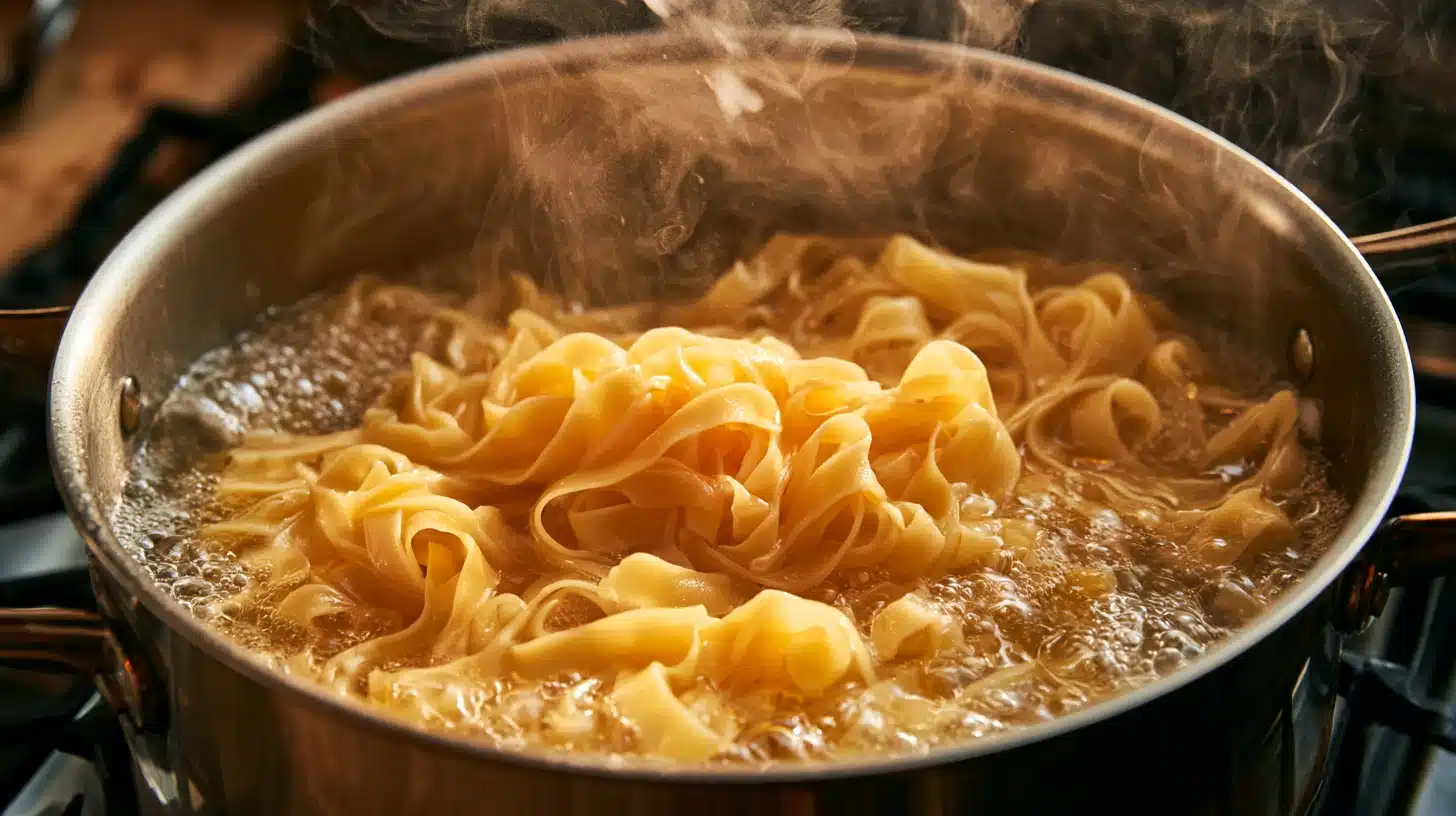
Salt a large pot of water and bring it to a boil. Drop in the noodles and cook them for six minutes, not the full time listed on the box.
A quick taste test after six minutes should show noodles that are still slightly firm in the center. They finish softening in the oven, so pulling them early matters.
Fully cooked noodles turn to mush after twenty minutes of baking. Six minutes on the stove, not nine or ten, keeps them from falling apart.
Step 2: Make the Creamy Filling
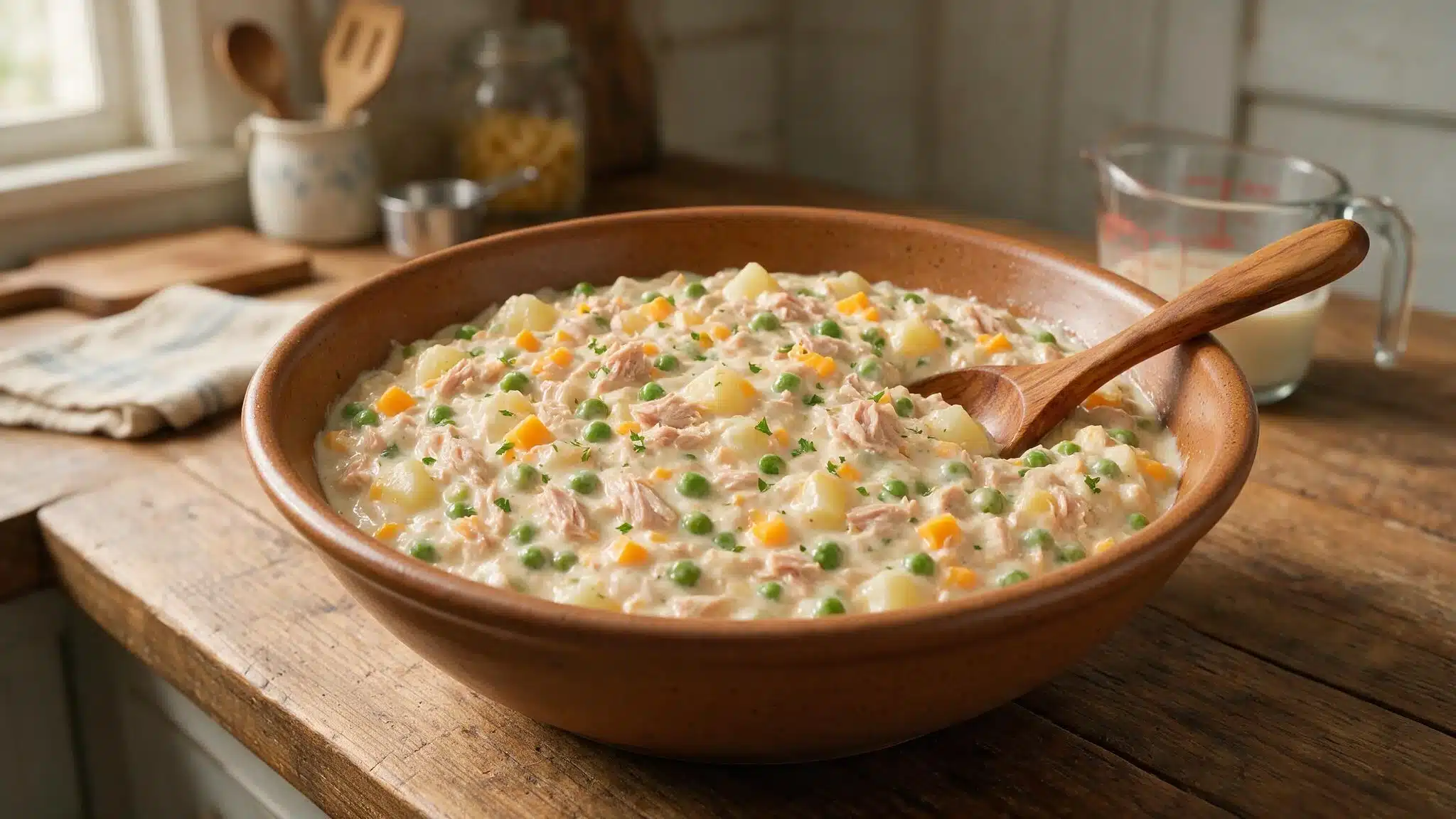
Combine the soup, milk, tuna, peas, and cheddar in a large bowl. Add salt and pepper here, before anything else goes in.
Stir until the mixture looks smooth, with no dry streaks of soup left at the bottom of the bowl.
A bland casserole almost always means the filling wasn’t seasoned at this step. Salt added after baking sits on top of the dish instead of soaking through it.
Step 3: Assemble the Casserole
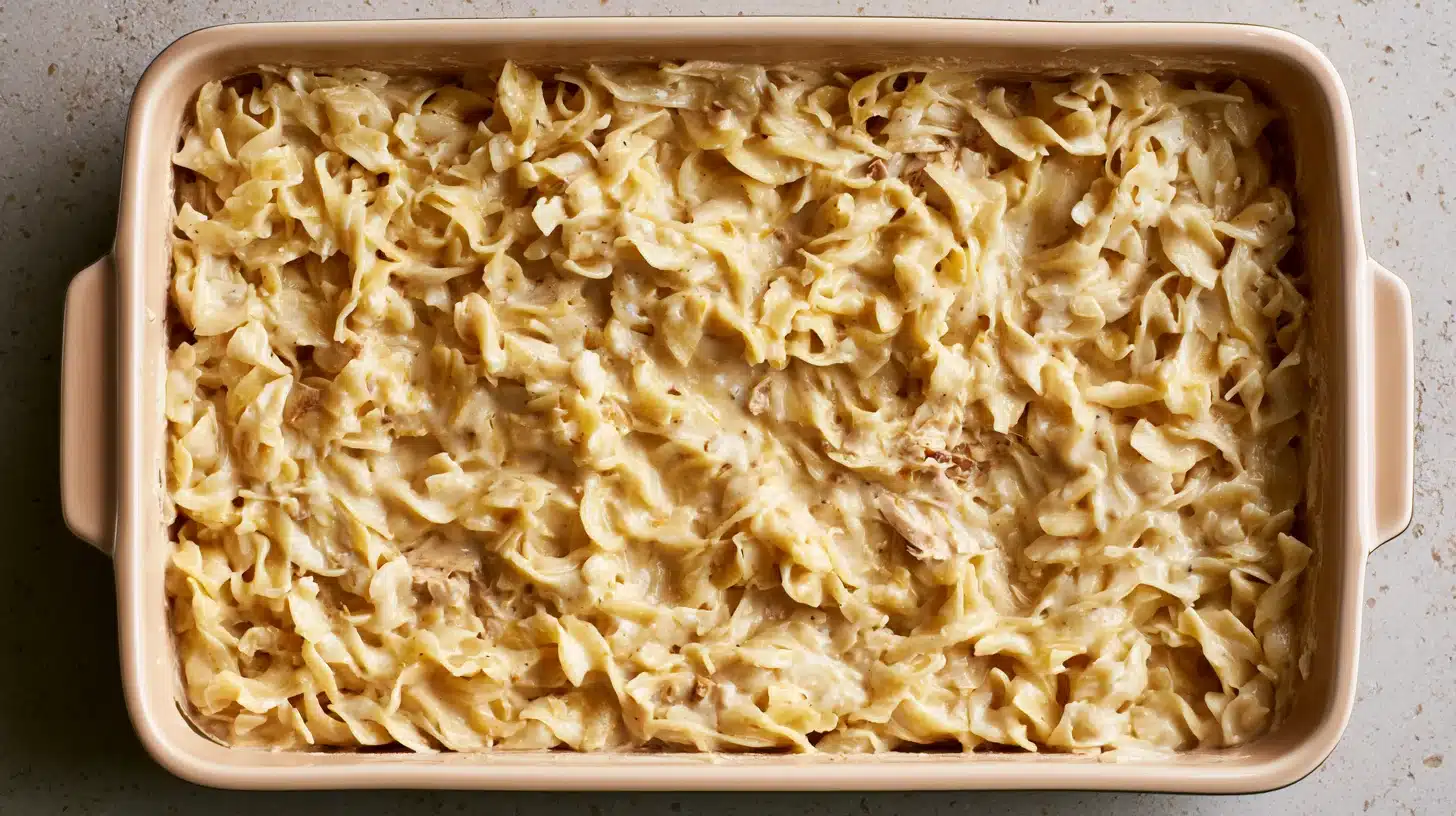
Fold the drained noodles into the filling until coated. Spread everything into a greased 9×13-inch dish. Press it down flat so no dry corners stick up.
A flat, even layer bakes more consistently than one piled higher in the middle.
Step 4: Bake Until Golden
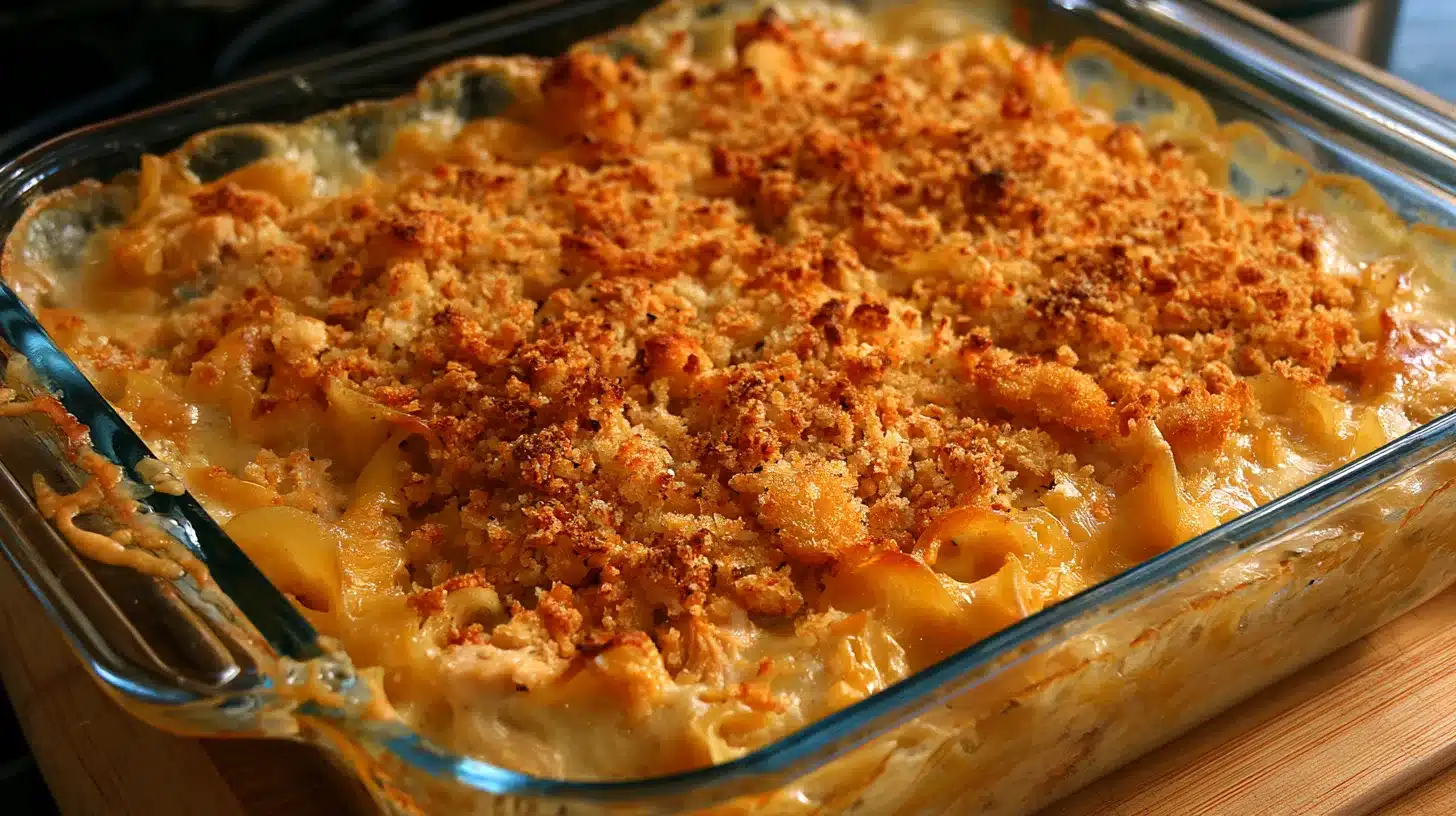
Mix the melted butter into the breadcrumbs and spread the mixture over the top. Bake at 375°F for 20 to 25 minutes.
The edges start bubbling first, then the breadcrumbs turn brown a few minutes later. A toothpick inserted in the center should come out hot to the touch.
Breadcrumbs added before baking turn soggy by the time the casserole finishes. Sprinkle them on right before the dish goes in the oven, not earlier.
Step 5: Let It Rest Before Serving
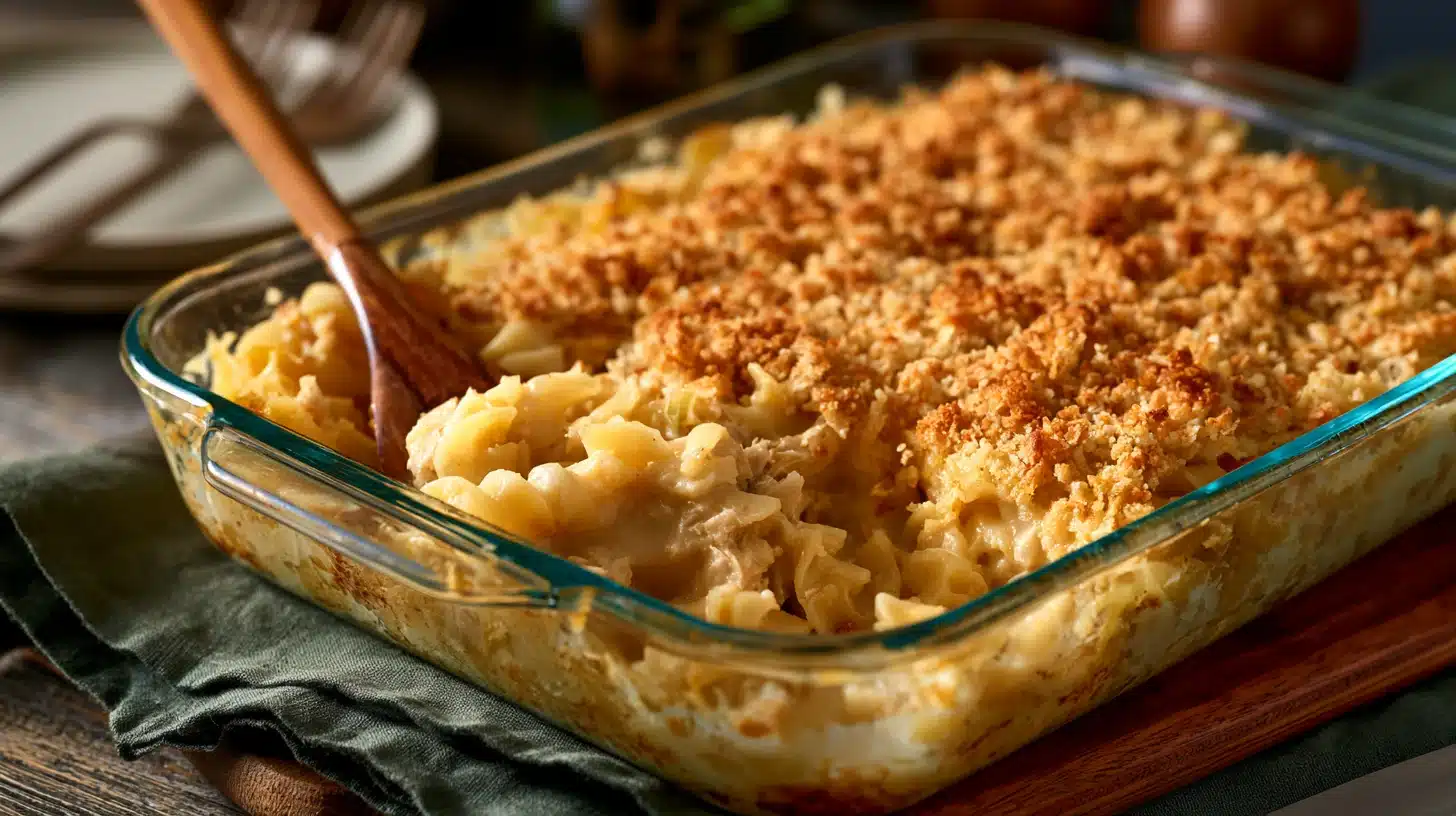
Take the tuna noodle casserole out once the top is golden. Wait five minutes before cutting into it.
The sauce is still loose straight out of the oven and firms up during that short wait. Scoop straight from the dish once the rest time is up, while everything is still warm.
Ways To Make It Your Own
A few versions follow below, starting with the one closest to a can of Campbell’s soup and ending with swaps for gluten and dairy restrictions.
1. The Classic Version Everyone Grew Up With
Cream of mushroom soup, egg noodles, canned tuna, breadcrumbs on top. Peas go in mostly for color. This one’s the same recipe already covered above, no changes.
2. Old-Fashioned Potato Chip Topping
Skip the breadcrumbs. Crushed potato chips go on top instead, pressed down before the last stretch in the oven, or they slide right off.
That chip topping brings a saltier, crunchier bite than breadcrumbs ever do.
3. The Easiest Shortcut Version
No oven needed for this one. Noodles boil, then soup, tuna, peas, and cheese go into the same pot on the stove. Crackers crushed over the top, and that’s dinner in under twenty minutes.
4. A Lighter, From-Scratch Version
Butter, flour, milk- that combination replaces the can of soup. Mushrooms and onions get sautéed first, then the sauce builds around them.
Parmesan works better here than cheddar; it cuts through all that butter.
5. Gluten-Free and Dairy-Free Swaps
Gluten-free pasta and breadcrumbs slot right in, no other changes needed. Dairy-free butter, milk, and cheese take care of the rest.
Gluten-free noodles go soft fast if they sit in boiling water too long. Pull them out a minute or two early, they’ll keep cooking once they hit the oven anyway.
What To Serve Alongside It
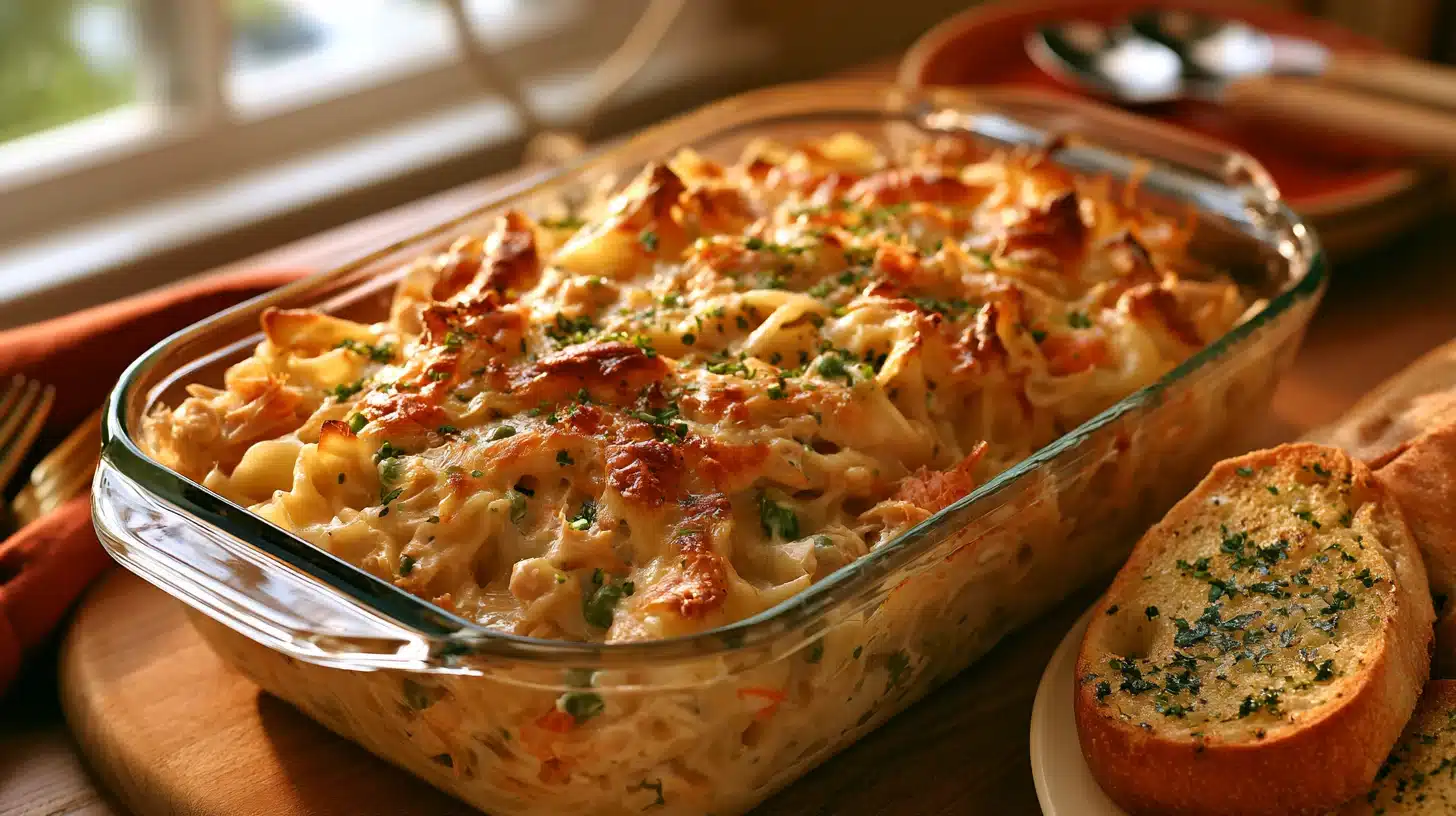
Tuna noodle casserole pairs well with something lighter on the side, since the dish itself is rich enough on its own. A salad, a vegetable, or warm bread does the job without much extra effort.
A Crisp Green Salad
Romaine or mixed greens with a simple vinaigrette cuts the richness of the casserole. A squeeze of lemon works fine too, if there’s no dressing in the fridge.
Roasted or Steamed Vegetables
Broccoli, green beans, or carrots bring some color to the plate. Roasting adds more flavor, though steamed vegetables are quicker on a night with less time.
Warm Bread or Dinner Rolls
Bread on the side works well for scooping up the sauce left in the dish. A plain dinner roll or a slice of garlic bread both do the trick.
A Simple Dessert To Finish
Fruit, a cookie, or a small scoop of ice cream closes out the meal without piling on more richness after a heavy main course.
Make It Ahead, Freeze It and Reheat It!
This casserole travels well beyond the night it gets made. A day in the fridge, months in the freezer, leftovers reheated later; all of it holds up fine.
Prepping It A Day Early
Assemble the casserole and refrigerate it, covered, for up to 24 hours before baking. Hold off on the breadcrumb topping until right before it goes in the oven.
Freezing Before Or After Baking
Wrap it tightly, skip the topping, and freeze for up to three months. Thaw it overnight in the fridge before baking as usual.
Reheating Without Drying It Out
A splash of milk stirred in first helps. Cover with foil and warm it in a 350°F oven for about 20 minutes.
Foil is the part people skip, and it’s the part that matters. Leaving the dish uncovered while reheating is usually why it comes out dry.
How Long Leftovers Last
Three to four days in a sealed container in the fridge. After that, the texture starts to fall apart even if it still looks okay.
Conclusion
Between the method and a few swaps for gluten or dairy needs, there’s a version of tuna noodle casserole for almost any night of the week.
A few tips along the way covered soggy toppings, bland filling, and noodles gone mushy from too much time in boiling water.
Storage and reheating got covered too, so leftovers hold up instead of drying out in the fridge.
Whatever brought someone here looking for this recipe, there’s likely an answer in one of the versions above.
Frequently Asked Questions (FAQs)
1. Can Fresh Tuna Replace Canned Tuna in This Recipe?
Yes, but it needs to be fully cooked and flaked first.
2. Why Did the Casserole Turn out Watery?
The tuna probably wasn’t drained enough before mixing.
3. Does This Work in A Slow Cooker Instead of The Oven?
It does, on low heat for roughly three hours.
4. Is It Fine to Eat This Cold, Right out Of the Fridge?
Plenty of people do, and it’s safe as long as storage time stays within a few days.
5. Can This Recipe Be Doubled for A Crowd?
Yes, split it across two pans instead of cramming everything into one dish.