

Grabbing a carton of Fairlife milk can leave you staring at a nutrition label that looks nothing like the one on regular milk.
That difference comes down to ultrafiltration, a process that reshapes the numbers before milk reaches your fridge.
One cup of Fairlife milk has a higher protein content, half the sugar of regular milk, and no lactose.
Understanding Fairlife milk nutrition so you know what is really inside your everyday cup and how it compares to regular milk.
What Makes Fairlife Different from Regular Milk?
Fairlife starts out as ordinary cow’s milk. The difference happens after that, through a process called ultrafiltration.
This process separates milk into its basic parts. Water, protein, lactose, vitamins, and minerals get filtered apart, then recombined in different amounts. Some parts get concentrated, others get reduced.
That is why Fairlife looks and tastes similar to regular milk but has a noticeably different nutrition label. It is still real milk.
| Nutritional Value | Fairlife Milk | Regular Milk |
| Protein | Fairlife has about 13g per cup | Regular milk has about 8g per cup |
| Sugar | Fairlife has roughly 6g of sugar in an 8-ounce serving | Regular milk has roughly 12g of sugar in an 8-ounce serving |
| Lactose | Fairlife is lactose-free | Regular milk is not |
| Price | Fairlife typically costlier | Regular milk is typically priced less |
Fairlife Milk Nutrition Facts by Variety
The exact numbers shift slightly depending on which type you grab. Here is what one cup (240 milliliters) typically contains.
1. Whole Milk
- Calories: 150
- Total fat: 8g
- Protein: 13g
- Total sugars: 6g
2. 2% Reduced Fat Milk
- Calories: 120
- Total fat: 4.5g
- Protein: 13g
- Total sugars: 6g
3. Fat-Free (Skim) Milk
- Calories: 80
- Total fat: 0g
- Protein: 13g
- Total sugars: 6g
Beyond the milk cartons, Fairlife also makes Core Power protein shakes for post-workout recovery and the Fairlife Nutrition Plan shake for a quick, balanced option on busy days.
The milk itself comes in more than one size, too, including a 52-ounce bottle and a smaller 14-ounce option for a quicker grab-and-go pour.
Reason for the Fairlife Nutrition Value
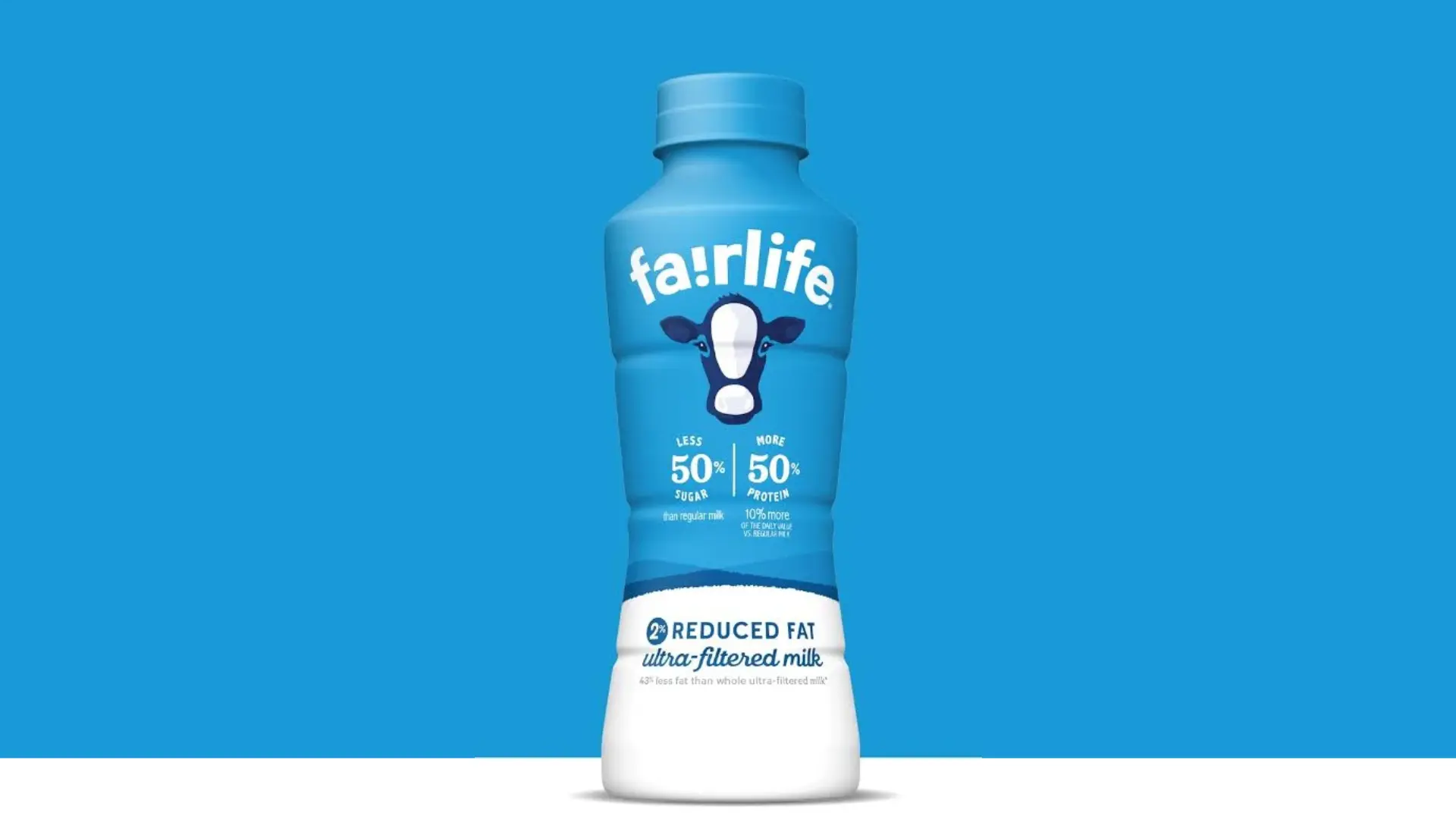
The numbers above are not random. They come directly from how the ultrafiltration process changes the milk at a structural level.
Protein Content
Regular milk has around 8g of protein per cup. Fairlife has 13g.
That jump happens because the filtration process concentrates milk protein before the final product is packaged.
For someone trying to hit a daily protein goal, that extra 5g per cup adds up fast, especially across a few glasses a day.
This is part of why Fairlife has become popular with people focused on fitness or muscle recovery, and with parents trying to get more protein into a picky eater’s diet.
Sugar and Lactose
Regular milk naturally contains lactose, a type of sugar.
Fairlife’s filtration process removes a large portion of that lactose, which is also why the sugar content drops by roughly half compared to standard milk.
To finish the job, lactase is added. This enzyme breaks down any remaining lactose, which is why Fairlife is labeled lactose-free and tends to sit more easily for people with lactose sensitivity.
Vitamins and Minerals
Fairlife retains the vitamins and minerals people expect from dairy and, in some cases, boosts them.
Depending on the variety, a serving typically provides:
- Around 30 percent of daily calcium needs
- A solid source of Vitamin D3
- Vitamin A and Vitamin B12
- Potassium
These nutrients are important for bone strength, energy, and overall daily function, which is part of why milk remains a dietary staple even as filtered and plant-based options grow in popularity.
Is Fairlife Worth The Price
Fairlife usually costs more than a standard gallon of milk.
Fairlife milk typically costs between $5.32 and $6.49 for a standard 52 fl oz bottle, depending on the retailer.
Prices at major stores such as Walmart, Walgreens, Kroger, and regional grocery chains generally fall within this range.
For some households, the higher protein and lower sugar justify that gap, especially if you are managing lactose intolerance or trying to increase protein without extra shopping trips.
For others, particularly if lactose is not an issue and protein needs are already met elsewhere, a regular or organic milk may serve just as well for less money.
Neither option is wrong. It really depends on your goals and your budget.
Conclusion
Fairlife milk nutrition comes down to one process, ultrafiltration, that reshapes a familiar drink into something higher in protein, lower in sugar, and lactose-free.
It is not a magic upgrade, just a different version built for specific needs. If those needs match yours, it is worth trying. If not, regular milk still holds its own.
Frequently Asked Questions (FAQs)
1. Is Fairlife the Only Lactose-Free Milk Option?
No. Some brands use enzyme treatment alone without the ultrafiltration step, so Fairlife is one option among several if lactose is your main concern.
2. Is Fairlife Still Full of Microplastics?
Laboratory tests have not directly targeted microplastics but rather phthalate plasticizers used to make packaging more flexible.
3. What Is the Controversy with Fairlife Protein?
Fairlife protein controversies revolve around severe animal abuse in its supply chain, lawsuits over deceptive marketing, the presence of plasticizers, and the use of artificial ingredients.