


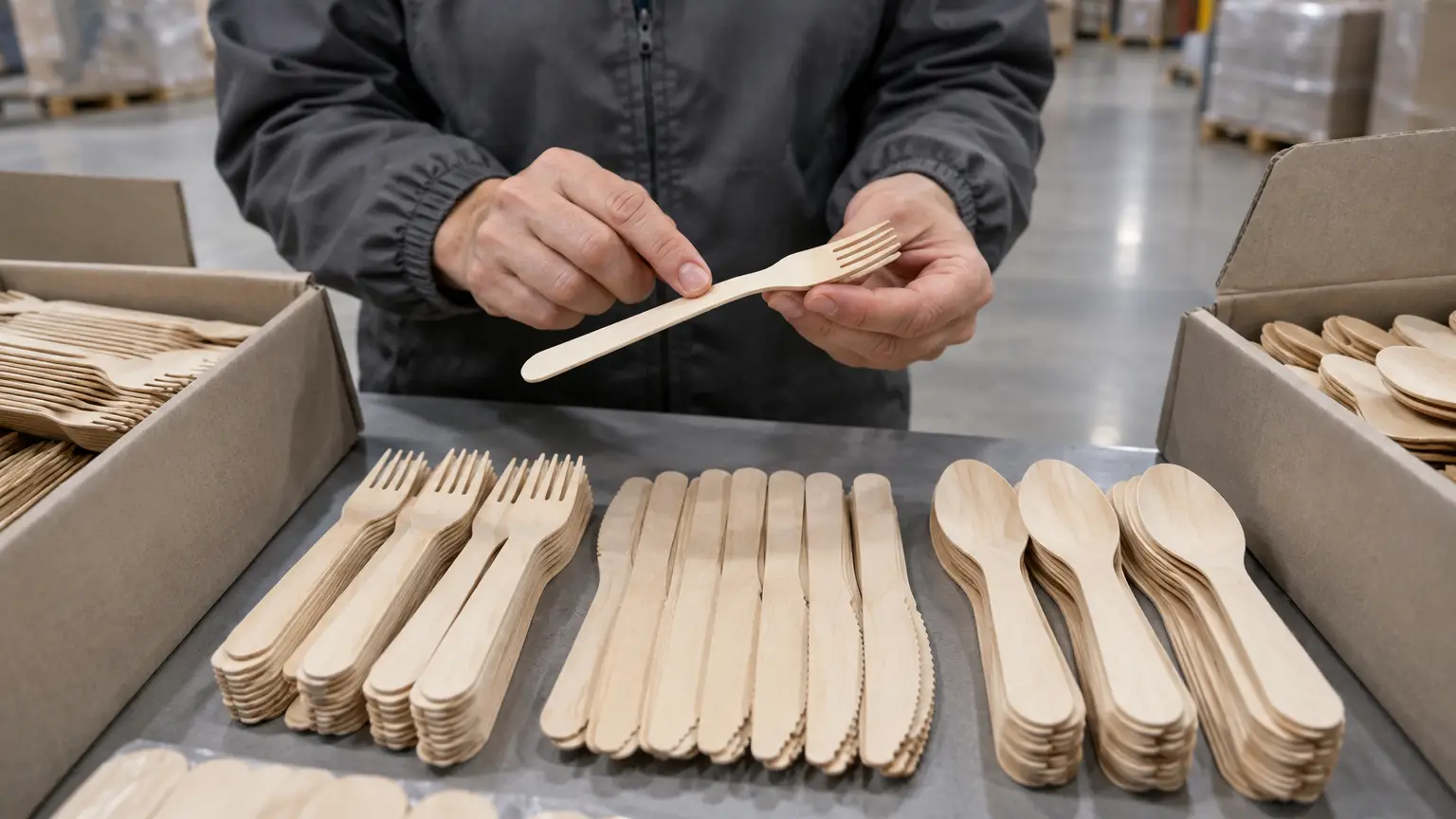
Before buying disposable cutlery, people don’t realize how much it is taken for granted. A fork bends in a hot pasta dish, a knife breaks into pieces, or a pallet comes to you smelling like glue. These minor mistakes become returns, lost accounts, and difficult phone calls for foodservice distributors. Choosing the right Wooden cutlery wholesaler from the start is the easiest way to avoid them.
As eating establishments and food service providers switch away from plastic, demand for wooden cutlery continues to rise. It’s a good group of items to have around the house, provided you purchase them at a proper price. Not all suppliers’ products are created equal, and a low unit price may mask costly issues. With the following 7 specifications, you can compare before ordering in bulk.
1. Wood Type
Wooden cutlery is usually produced from birch, although some are produced from bamboo or hardwood. Birch is popular due to its fine, tight grain, neutral taste, and smooth feel. It is also more resistant to splitting than softer woods.
Inquire from suppliers what kind of wood they use and where it’s sourced from. Any general response, such as “natural wood,” is a red flag. Ask your customers if they are interested in sustainable wood, and determine if the wood is certified by forests.
2. Thickness and Strength
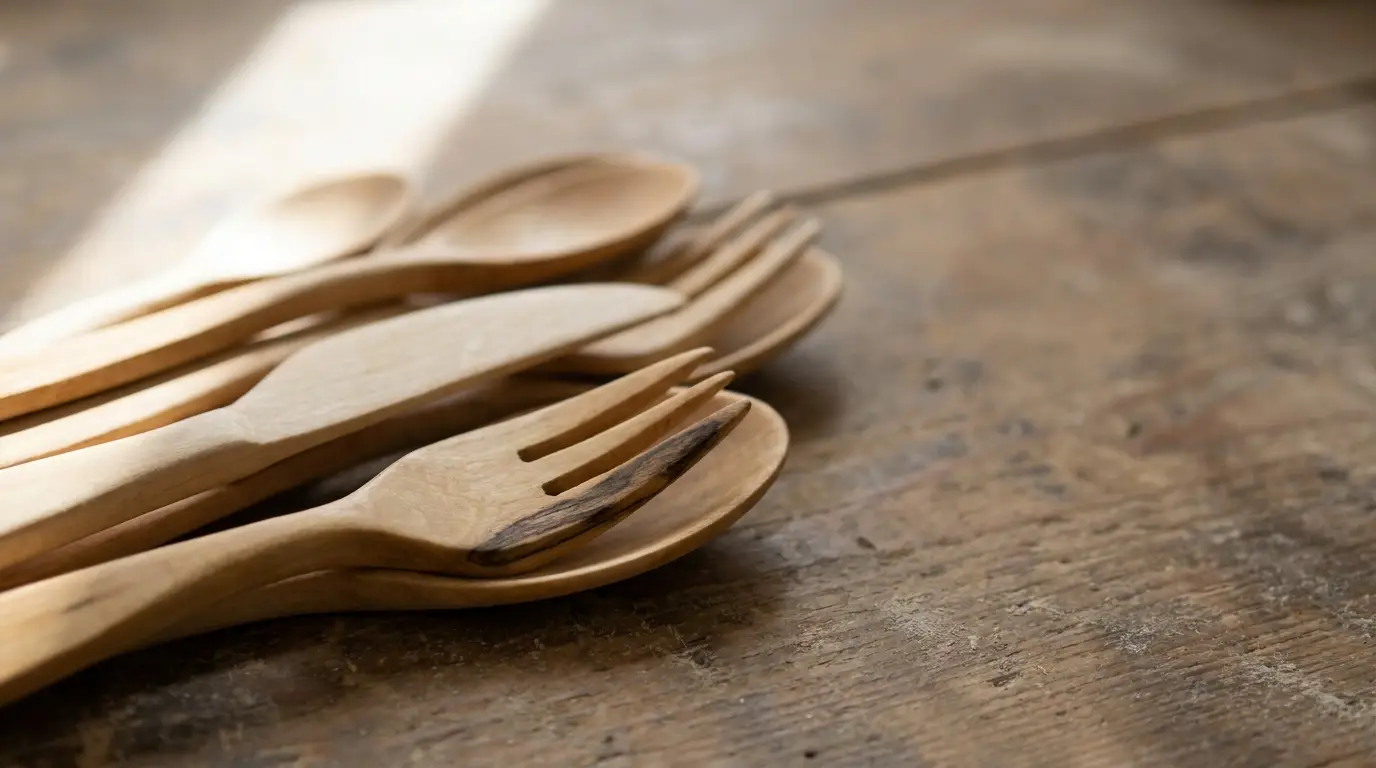
This is where you typically find shoddy cutlery. A thin fork can appear perfect in the sample box, but break or bend upon contact with a thick slice of cake or a dense salad.
Measure thickness (in mm) from different suppliers and try it out yourself. Use a fork on a solid food and then cut it up with a knife and test the spoon with a hot soup! Once you break it in your hands, your customer will also.
3. Surface Finish
Good wooden cutlery should be smooth from the handle to the tip. Scalp damage and splinters can be a danger and a losing customer for any restaurant.
Inspect the working end and handle. Run a finger along the edges, and look for visible fibers or rough spots. The shiny effect also makes a surface feel more premium, something that’s important for cafés interested in making the take-out experience feel thought-out.
4. Food Safety and Certifications
This is a must. Your buyers want the cutlery to be safe for direct food contact, and your supplier should be able to show it.
Request documentation including FDA compliance, LFGB, or EU food contact testing based on the market. Inquire about the treatment of cutlery as well. A good manufacturer won’t use harmful chemical coatings, bleaches, and preservatives. If a supplier is unwilling to provide test reports, then look elsewhere.
5. Moisture Content and Odor
Untreated wood may develop mold during storage and will usually have a musty odor. This odor can pass onto the food, and customers feel it right away.
Inquire about drying and storage procedures. Once samples are received, unwrap the sample pack and smell it. The good cutlery doesn’t smell of anything; it only smells of clean wood. It should be a no-brainer if it is sour, chemical, or musty.
6. Packaging Options
Packaging is more than eye candy. It determines the hygiene rating of your product, space requirement, and ease of use by your customers.
They are often packaged in bulk pack cartons of loose pieces, in 100s in sleeves, or individually wrapped sets, or combo packages with a knife, fork, and napkin. Some foodservice buyers opt for single wrapping for cleanliness and convenience for grab-and-go service; high-volume canteens may opt for bulk packaging for cost savings. Just be sure the outer boxes are robust, as crumbled boxes equate to broken product.
Inquire if there are custom branding or printed wrapping options as well. The private label alternatives can assist you in winning bigger accounts.
7. Pricing, MOQ and Lead Time
The cost of a piece is important, but it’s not everything. Do the same for the minimum order quantity, payment terms, shipping costs, and production lead time.
In the long run, a supplier who can supply at a slightly higher unit price, but delivers on time, will be cheaper than one who does not deliver until the peak season and then lets you down. Inquire about their reorder policy and if they can stock for them during peak seasons such as holidays and events.
How to Put This Into Practice
Make a basic comparison chart before ordering a lot of something. Write each supplier down one line and all of these seven specifications across the top. Ask for samples from 3 of them, test them under real conditions, and give them a score.
Working with an experienced partner makes this process much smoother. A good one will provide clear specifications, consistent quality, test documentation, and flexible order sizes, so you aren’t left guessing about what’s in the box.
Final Thoughts
A wooden tray may be a small item on your price list, but it has an impact on the customer’s perception of the food your restaurant serves and your restaurant as a supplier. When you buy wood – compare type, strength, finish, safety, freshness, packaging and logistics – to defend your margins and your reputation.
Take the time to test and ask questions, and choose a partner who will give true answers. You know even your customer (without conscious thought) feels it while eating with a fork.