

Restaurant Quality Fish With (Basically) Two Ingredients: Scallions + Ginger
You know that moment at a restaurant when the fish hits the table still sizzling, smelling like magic, and you’re like, “How is this so good when it looks so simple?”
Yeah. That.
For the longest time, my home cooked fish was… fine. Not offensive. Not thrilling. Just kind of sitting there like a polite acquaintance. Then I fell hard for the scallion + ginger combo, and suddenly my Tuesday night cod started giving “we have our life together” energy.
And the best part? It’s not complicated. You don’t need a special pan, a fish spatula blessed by Gordon Ramsay, or a 12 step sauce situation. You need scallions. You need ginger. You need to not overcook the fish into sadness. That’s it.
Let’s do this.
Why scallions + ginger work (aka: the world’s easiest flavor upgrade)
White fish is a blank canvas. Scallions bring that fresh, green, oniony thing without screaming “I AM ONION.” Ginger brings warmth and zing without turning the whole dish into a garlic chile brawl.
Also this is underrated the aromatics create this steamy, protective little blanket for your fish. So even if your timing isn’t perfect (hi, it’s me), you’re way less likely to end up with dry, chalky fillets.
If you only memorize one line from this post, make it this: scallions + ginger make fish taste like it came from a restaurant without you needing restaurant skills.
What fish to buy (don’t overthink it, but also… don’t fight me on salmon)
Best picks: cod, halibut, sea bass, branzino, snapper, grouper, tilapia, black cod/sablefish anything mild and white.
Not my favorite for this specific vibe: salmon and mackerel. They’re delicious, but they’re like the extroverts of the fish world. They don’t need subtle aromatics they need bolder flavors (miso, teriyaki, gochujang… you get it).
Whole fish vs. fillets:
- Whole fish (1-1.5 lb): absolutely unbeatable for steaming because you can stuff aromatics inside and get that “seasoned from within” thing.
- Fillets: easiest weeknight option. Thin ish fillets are great for pan searing. Thicker pieces do great with steaming methods.
Prep that matters (and prep that absolutely does not)
Scallions: slice them like you mean it
Use a sharp knife. A dull knife bruises scallions not scallops and makes them taste weirdly harsh (like they’re mad at you).
Here’s my lazy but effective approach:
- White + light green parts: cut into 1-2 inch pieces (these cook down and get sweet).
- Dark green tops: slice thin (these are your fresh finishing confetti).
Also: use more scallions than you think. Fish can handle scallions on fish. Your pan will look like a tiny salad bar at first. That’s correct.
Ginger: don’t wrestle it
Peel ginger with a spoon. Yes, really. It’s faster, less wasteful, and mildly satisfying.
How you cut it depends on the job:
- Thin slices/coins: great for steaming and stuffing into fish (gentler flavor).
- Matchsticks/julienne: great for finishing on top when you want that ginger to pop.
Pick your cooking adventure (based on how tired you are)
I’m giving you a few options because life is unpredictable and sometimes you’re ambitious, and sometimes you’re eating crackers over the sink. No judgment.
Option 1: Crispy pan seared fillets (fast + a little dramatic)
This is the one when you want crisp skin and you’re willing to stand at the stove like a person with purpose.
Do this:
- Dry the fish. Like, really dry it. Paper towels. Pat pat pat. (Moisture is the enemy of crisp.)
- Score the skin a few times so it doesn’t curl up like it’s trying to escape.
- Season with salt (both sides). If you want, dust the skin side lightly with flour for extra crisp.
- Heat a slick of neutral oil in a pan over medium high until it shimmers.
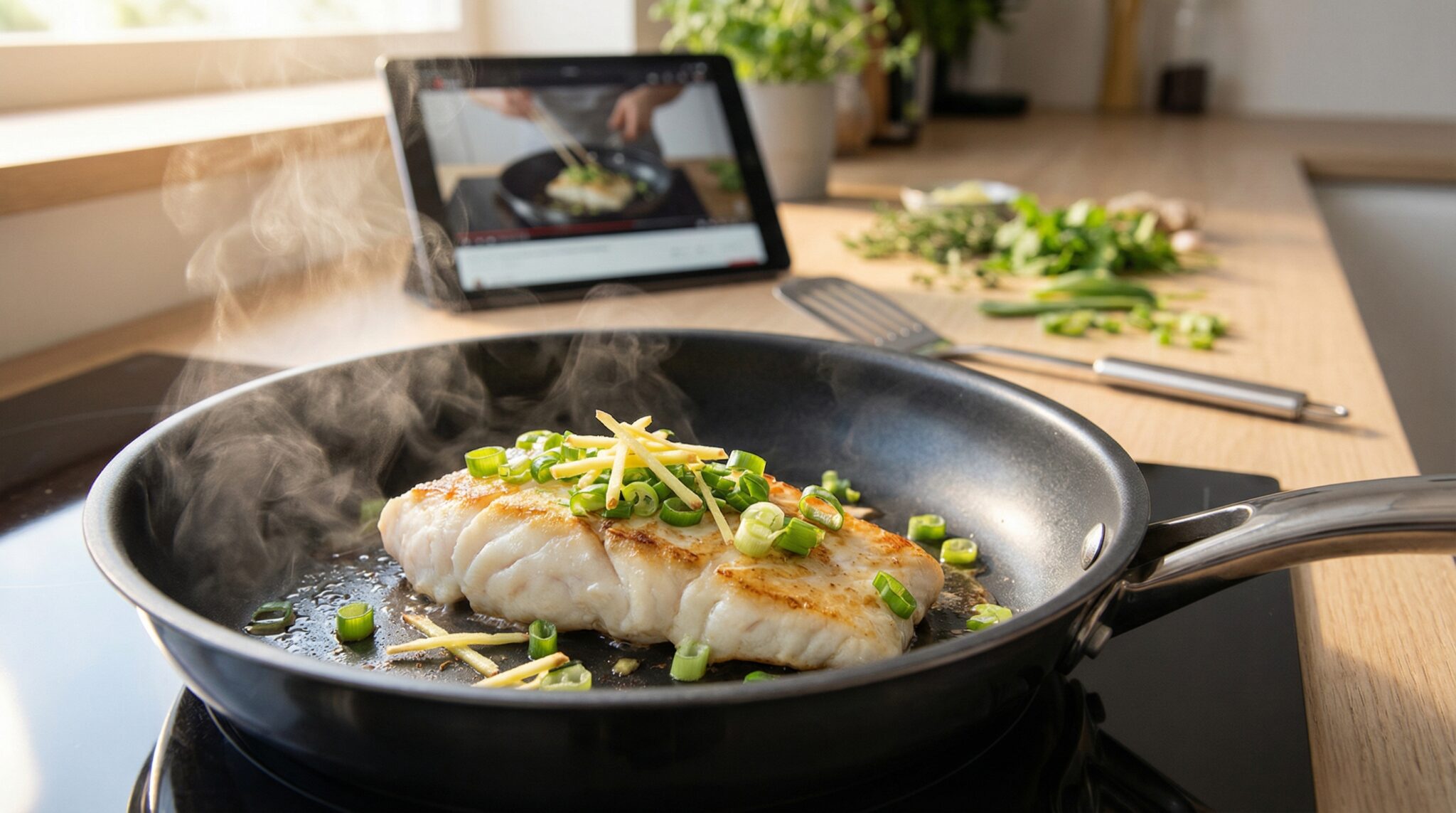
- Fish goes in skin side down. Press gently for the first 20-30 seconds (so the skin actually makes contact), then leave it alone. No poking. No nudging. Let it earn its crust.
- Flip for a quick finish when it’s mostly opaque (usually 5-7 minutes total depending on thickness).
Now the magic part: while it cooks (or right after), warm a little oil with sliced scallion whites + ginger to soften and perfume it, then spoon that over the fish.
If you do nothing else, do this. It’s stupidly good.
Option 2: Classic steamed whole fish (restaurant vibes, surprisingly easy)
If you’ve never steamed a whole fish, don’t panic. It looks fancy, but it’s basically: put aromatics under fish, put aromatics in fish, add steam, become a legend.
Do this:
- Score the fish on both sides (3-4 slashes down to the bone).
- Slide a few ginger slices into the cuts. Add salt.
- Make an aromatic “rack” in your steamer: ginger coins + scallion pieces (and cilantro if you’re into it).
- Stuff a little ginger/scallion into the cavity too.
- Steam over simmering water until done usually 10-15 minutes for a 1-1.5 lb fish.
No steamer? Use a big pot with a plate perched on a couple ramekins or crumpled foil balls. We’re home cooking, not auditioning for a cooking show.
Option 3: Lazy steam (microwave OR foil packet choose your fighter)
When I’m wiped out, I want fish that cooks itself while I stare into the fridge like it’s going to offer suggestions.
Microwave method (single serving, shockingly legit):
- Put a fillet in a microwave safe dish with sliced ginger + scallion pieces.
- Add a splash of soy sauce and a tiny bit of honey (optional, but nice).
- Cover (leave it slightly vented) and microwave at 50% power until it flakes usually 4-5 minutes for a ~4 oz fillet.
Foil packet method (hands off, good for multiple fillets):
- Pile ginger + scallions on foil, set fish on top, splash with soy + a tiny drizzle of honey.
- Seal tightly and bake at 375°F for about 12 minutes (depending on thickness).
If you’re thinking, “Is microwaved fish going to stink up my house?” In my experience: not if you don’t overcook it. Overcooked fish smells like regret. Cook it gently and you’re fine.
The one finishing move that makes it taste like a restaurant: the hot oil sizzle
This is the trick. This is the sound effect. This is where people think you know what you’re doing.
- Scatter fresh scallion greens and/or julienned ginger over the cooked fish.
- Heat 1 tablespoon oil per serving until shimmering (hot, but not smoking like a stress signal).
- Pour the hot oil over the aromatics.
You want a strong sizzle. If it doesn’t sizzle, your oil wasn’t hot enough. If it burns instantly, your oil was too hot and now your scallions are bitter (and they will tell on you).
My go to finishing sauce (plus two quick variations)
You don’t need a complicated sauce. You need balance: salty, a little sweet, and a bit of toasted richness.
My “always works” sauce:
- Soy sauce + a tiny pinch of sugar + a splash of hot water + a few drops of sesame oil
That’s the one. Pour it around/over the fish right before serving.
Two easy upgrades:
- Deeper color: swap in a small splash of dark soy (like 10-20% of your soy total).
- Scallion ginger oil moment: warm oil with scallion whites + ginger until fragrant, then spoon over. (This also makes plain rice taste like a plan.)
How to know it’s done (without living with a thermometer)
Yes, the official safe temp is 145°F, but here’s what I actually do:
- The look: fish turns opaque and flakes when nudged.
- The touch: it should feel like it’s giving slightly, not rubbery.
- The don’t wait too long rule: fish keeps cooking after you pull it. Take it off a little early and let it rest for a minute.
If you overcook it once (you will, we all do), welcome to the club. Just promise me you won’t declare you “hate cooking fish” forever because of one dry tilapia incident in 2017.
What to serve with it (so dinner feels complete)
I like sides that don’t compete with the scallion ginger situation.
- Rice (because sauce + rice = happiness).
- Quick greens: sautéed bok choy, steamed broccoli, Chinese broccoli, whatever’s in the crisper that’s trying to die politely.
Personally, I skip garlic heavy sides here. Garlic is great, but it bulldozes the delicate thing we’re doing.
Tiny troubleshooting corner (because things happen)
- Skin not crispy? Fish wasn’t dry, pan wasn’t hot, or you kept moving it around like a nervous chihuahua. Dry it more, heat more, touch less.
- Fish sticking? Your pan needed more oil or more preheating. (Stainless steel is a diva, but we love her.)
- Sauce too salty? Add hot water + a pinch of sugar. You can always add more soy, but you can’t un-salt a situation.
The whole point (aka: why you should keep scallions + ginger on standby)
Once you get this scallion ginger routine down, fish stops being that intimidating “special occasion” protein and becomes a very normal weeknight hero.
Keep scallions and ginger in your fridge, buy a mild fish you like, pick the cooking method that matches your energy level, and hit it with the hot oil sizzle if you want to feel fancy.
And if you do the sizzling oil thing once, fair warning: you’ll start doing it on everything. Eggs. Tofu. Vegetables. Possibly your personality.