



Gefilte fish has a long history at Jewish holiday tables. It started as a clever way to stretch fish and avoid bones on the Sabbath.
It is cooked by grinding freshwater fish, then mixing it with eggs and matzo meal, and then poaching it into patties.
For many families, the smell of it simmering means Passover is near.
The name means “stuffed fish” in Yiddish.
Cooks once ground the flesh of a whole fish, seasoned it, and stuffed it back in the skin to cook. That step faded over time, so now most people just shape the mix into ovals and poach them.
The base is a mild freshwater fish such as carp, pike, or whitefish blended with eggs, onion, matzo meal, salt, and pepper.
Some add sugar, depending on where the family is from. The result is soft and mild, served cold with horseradish.
The Story Behind Gefilte Fish
These fish date back to at least the Middle Ages, among Ashkenazi Jewish communities in Eastern Europe. It grew out of a Sabbath rule, since Jewish law forbids work on that day.
Picking bones out of fish counted as work, so cooks got around it by grinding the fish and removing the bones.
Fish also held meaning at the Sabbath table, standing for plenty and a blessed home.
But whole fish cost a lot, so grinding it let poor families stretch a small amount to feed everyone.
Over the years, the dish split into regional styles. Polish families added sugar for a sweet version, while Lithuanian families kept it peppery and savory.
Those choices were passed down, and today many people can guess where a family came from a single taste.
Gefilte Fish vs Jarred Fish
| Features | Gefilte Fish | Jarred Fish |
| Taste | Fresh, mild, clean fish flavor | Muted and a bit bland from sitting in liquid |
| Texture | Soft but firm, holds its shape | Softer and mushier overall |
| Ingredients | Whole fish, eggs, onion, matzo meal, your own seasoning | Fish, fillers, preservatives, packed in jelly broth |
| Prep Time | Takes a few hours of real work | Ready to eat right out of the jar |
| Cost | Higher, since fresh fish costs more | Cheaper and easier to grab at the store |
Ingredients Needed
- 2 pounds of mild freshwater fish, like carp, pike, or whitefish, ground
- 2 large eggs
- 1 medium onion, grated or finely chopped
- 3 tablespoons matzo meal
- 1 to 2 teaspoons salt
- ½ teaspoon black pepper
- 1 tablespoon sugar (optional, for the sweeter style)
- ¼ cup cold water
- Fish bones and head from your whole fish
- 2 onions, sliced
- 2 carrots, sliced
- 1 teaspoon salt
- ½ teaspoon black pepper
- Enough water to cover
These amounts make a standard batch, but you can scale them up for a big holiday table.
How Do You Make Gefilte Fish at Home?
Making them takes time, but each step is simple once you get going.
Step 1: Prep the Fish
Start with a whole mild fish, such as carp, pike, or whitefish.
Fillet it and set aside the bones, head, and skin, since those go into the broth later.
Grind the flesh in a food processor or meat grinder until smooth but still with a little body. Do not over-grind it, or the patties turn pasty.
Ask your fishmonger to fillet and grind the fish for you. It saves a lot of work at home.
Step 2: Make the Broth
Drop the saved bones, head, sliced onions, and carrots into a large pot. Cover everything with water and bring it up to a gentle simmer.
This broth gives the fish its flavor as it cooks, so do not skip it.
Let it bubble softly while you mix the base.
Step 3: Mix the Base
In a big bowl, combine the ground fish with eggs, grated onion, matzo meal, salt, and pepper. Add sugar here if you want the sweeter kind.
Pour in cold water a little at a time, stirring until the mix feels soft and slightly sticky.
The water keeps the patties light instead of dense.
Step 4: Shape the Patties
Scoop up the mixture and form it into small ovals or balls, each about the size of an egg.
Try to keep them the same size so they all cook at the same rate. Smooth the surface as you go, since cracks can widen during cooking.
Step 5: Poach Gently
Lower the patties into the simmering broth one at a time.
This keeps them from crowding or sticking together in the pot. Cover the pot and let them cook on low, steady heat. They will firm up and float a bit as they set.
Do not let the broth boil hard. A rough boil breaks the patties apart, making them ragged.
Step 6: Cook Through
Let the patties simmer for about 60-90 minutes, until they feel firm and are cooked all the way inside. Check the pot now and then.
Then add more water if the level drops below the fish. Keep it low and slow.
Step 7: Cool And Serve
Turn off the heat and let the fish cool right in the broth, which keeps it moist. Move everything to the fridge and chill for a few hours or overnight.
Serve cold with a soft carrot slice on top and a spoon of horseradish on the side.
Gefilte Fish Styles
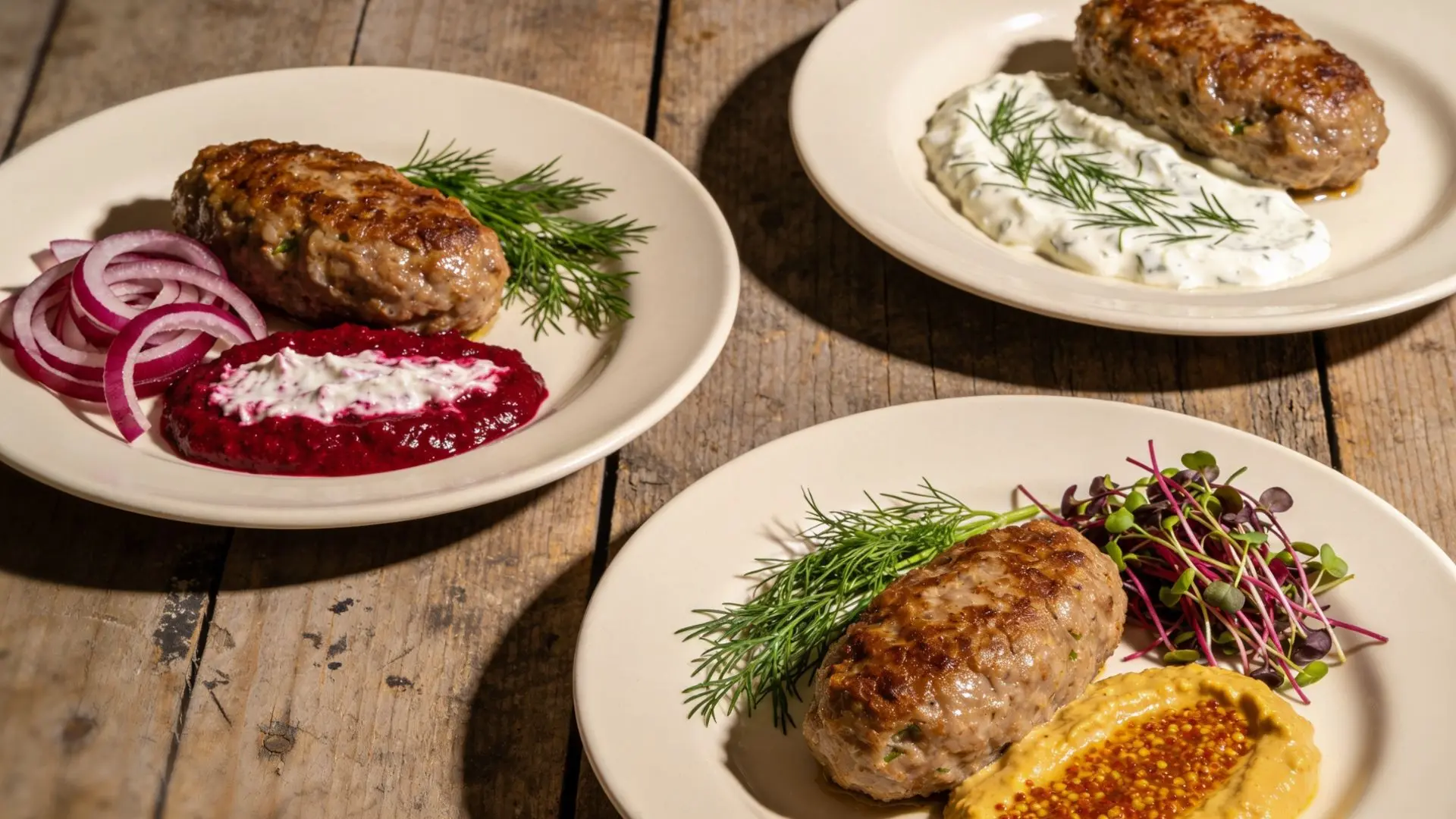
This fish does not taste the same everywhere. The style on your plate often points straight to where a family came from.
1. Polish Style
This is the sweet version. Cooks add a fair amount of sugar to both the fish mix and the broth, which gives it a mild, candy-like edge.
It is the kind many people in the United States grew up with, since many American Jewish families have Polish roots.
2. Lithuanian Style
This one goes the other way. There is no sugar, and the flavor leans peppery and savory instead.
Some cooks add extra black pepper to give it a bit of a bite. People who find the sweet kind strange usually prefer this one.
3. Hungarian Style
This version sits in the middle and often carries a hint of paprika.
The spice adds a gentle, cozy flavor and a light color to the fish. It is less common than the Polish and Lithuanian kinds but has its own following.
4. Modern Takes
Some home cooks now use salmon instead of the usual freshwater fish, which gives a richer taste and a pink color.
Others bake the patties or serve them warm rather than cold. These newer versions break from tradition but keep the basic idea alive.
Conclusion
These fish carry a lot of history, from quiet Sabbath tables in Eastern Europe to holiday meals today.
It started as a smart way to feed a family and turned into a dish people either love or skip. So how do you make Gefilte fish worth the effort? You make it fresh.
Once you know how to make it from scratch, the jarred kind starts to feel like a sad stand-in.
The fresh version is mild and soft, and it tastes like something someone actually made for you. So grab a good fish, take your time, and give it a try.
Frequently Asked Questions (FAQs)
1. What is the Jelly in Gefilte Fish?
The jelly is set in fish broth. As the broth cools, natural gelatin from the bones and skin firms it up into a soft jelly.
2. Is Gefilte Fish Only for Passover?
No. It most often shows up on Passover, but many families also serve it on the Sabbath and other Jewish holidays.
3. Why is Gefilte Fish Served with Horseradish?
The sharp bite of horseradish cuts through the mild fish and adds a kick. The pairing is old and just tastes right together.
4. How Many Calories Does it Contain?
One piece has roughly 70 to 100 calories, though it varies by recipe. The sweeter styles with added sugar tend to run higher.
5. Do You Eat These Fishes Hot or Cold?
Most people eat them cold, straight from the fridge. Some families do serve it warm, but cold is the classic way.