

When you buy a big bundle of parsley or basil and then use only a few leaves, the rest spoils.
Freeze the extra leaves before they turn yellow, mushy, or unusable.
This teaches you to freeze fresh herbs, so you still have flavor in your dishes, soups, sauces, drinks, and cooked meals!
You could pack whole leaves, chopped pieces, water, and oil.
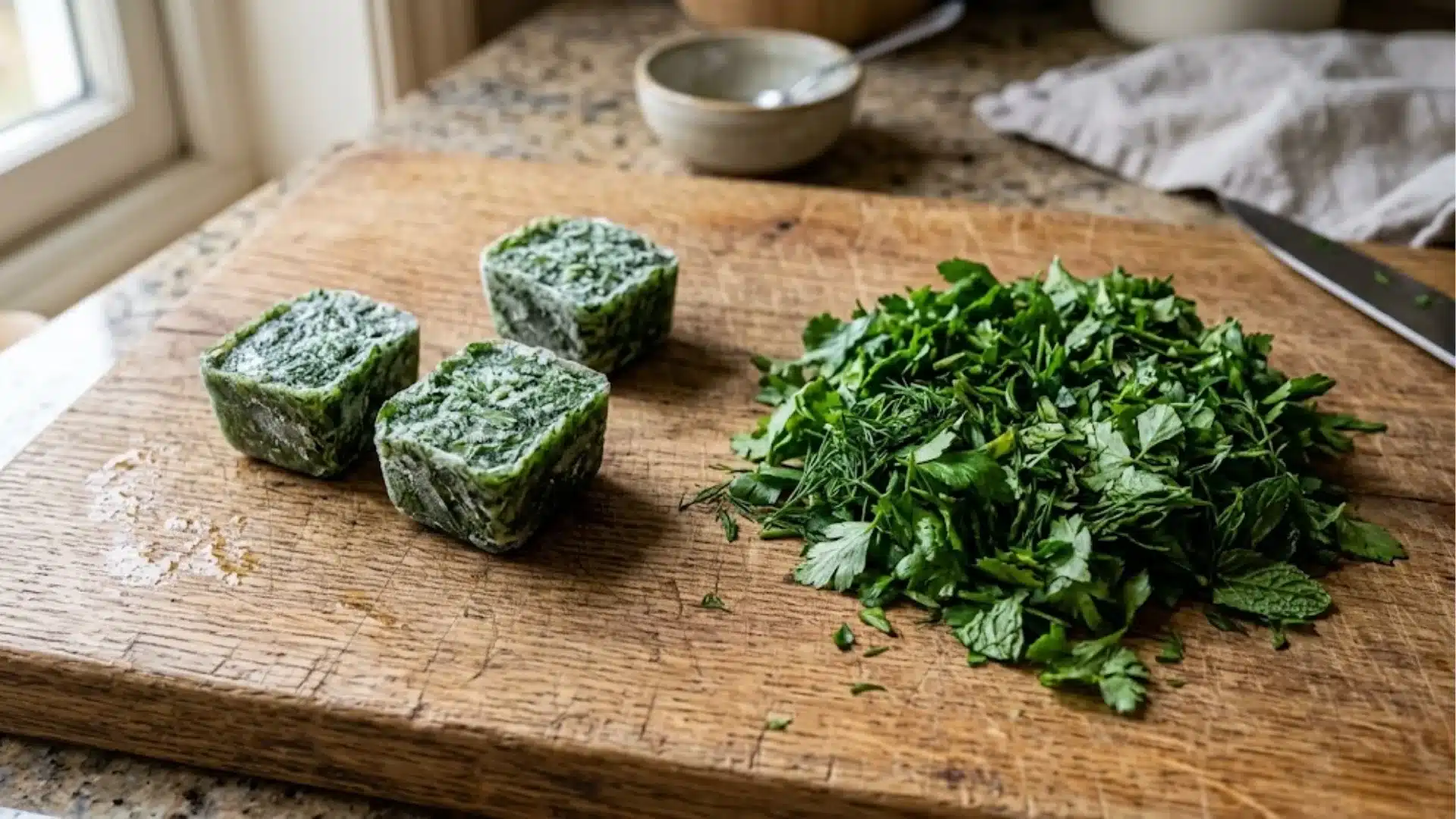
Freezing them means they’re not really crisp anymore, but they are a fantastic addition to prepared dishes.
Which Fresh Herbs Freeze Well?
Many culinary herbs can be frozen, but the best method depends on the leaf texture and common cooking uses.
Basil, Parsley, and Cilantro
The basil works well in oil cubes, pesto bases, or flat oil sheets. Freezing is especially useful because dried basil loses much of its fresh character.
Parsley and cilantro can be frozen whole, chopped, pressed into logs, or stored in cubes. Use the thawed leaves in prepared dishes rather than crisp garnishes.
Chives, Dill, and Tarragon
Chives can be chopped and placed in small jars or pressed into freezer-bag logs. Dill may remain on its tender secondary stems.
Tarragon can be stored whole or chopped. Small portions help control its stronger flavor when it is added to sauces, eggs, or cooked vegetables.
Mint, Lemon Balm, and Lemon Verbena
Water cubes suit these herbs because they are often used in tea, lemonade, syrups, and desserts.
Whole leaves can also be frozen when they are intended for cooked recipes.
Central Texas Gardener lists lemon balm and lemon verbena among seasonal herbs worth freezing.
Rosemary, Thyme, and Bay
Freeze rosemary, thyme, and bay directly on their stems. Spread the sprigs on a tray first, then pack each variety in a separate labeled bag.
Remove a sprig when needed or loosen the leaves from fully frozen stems before repacking them quickly.
How to Freeze Fresh Herbs Step by Step?
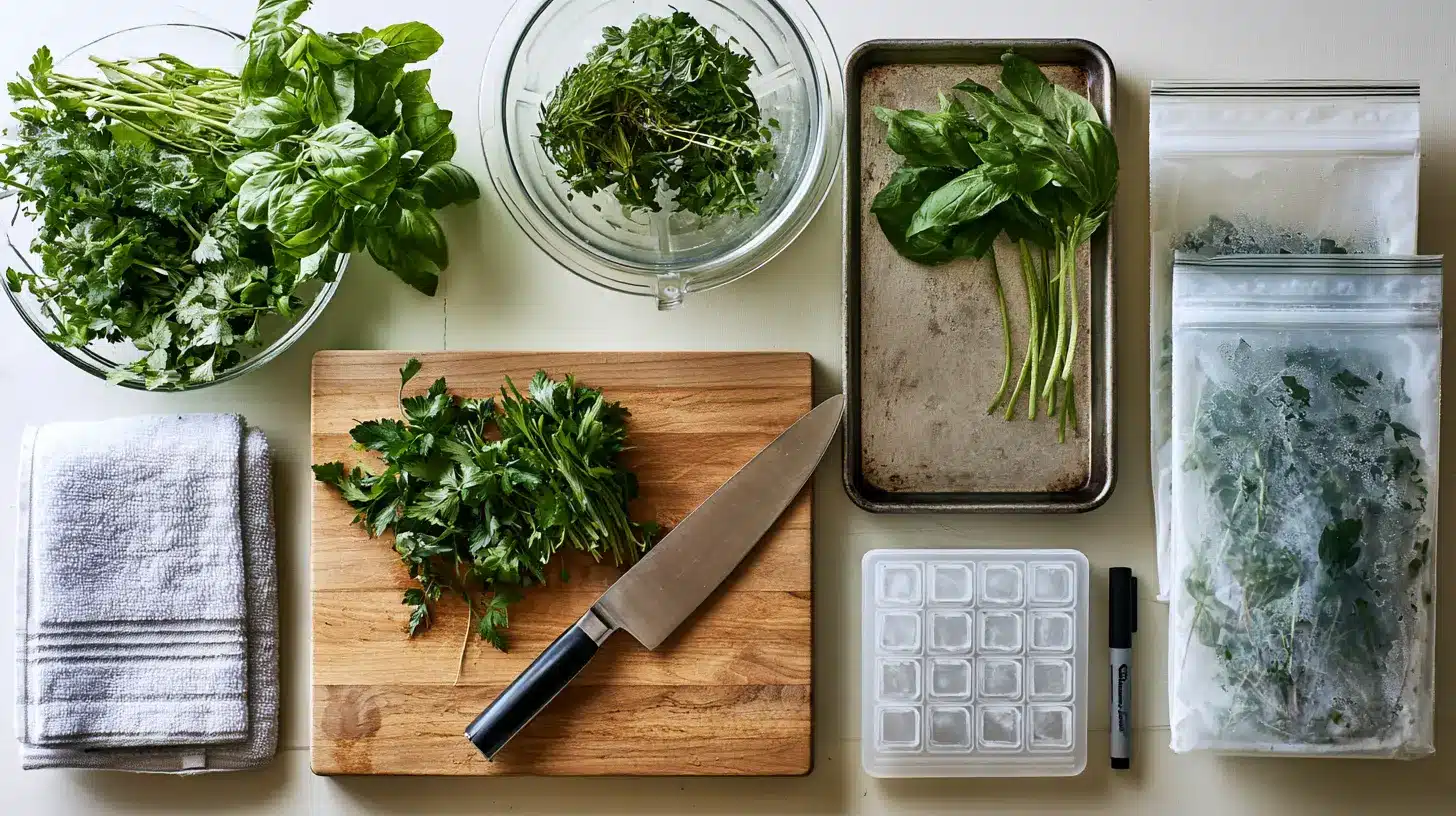
Gather a clean towel or salad spinner, cutting board, knife, tray, freezer bags, ice cube tray, and permanent marker before starting.
Step 1: Pick Fresh, Healthy Herbs
Choose leaves with a fresh color and firm texture. Remove anything wilted, yellow, bruised, slimy, or damaged.
Freezing preserves herbs in their current condition but cannot improve leaves that have already started to spoil.
Prepare garden herbs soon after harvesting and store-bought bunches before they begin to decline.
Step 2: Wash the Herbs Gently
Rinse the herbs under cool water to remove soil, insects, and other debris. Handle tender leaves carefully because rubbing or crushing can bruise them.
For dirtier bunches, swish the stems gently in a bowl of water.
Lift the herbs out so any grit remains at the bottom.
Step 3: Dry the Herbs Completely
Shake off loose water, then use a salad spinner or clean kitchen towel. Spread the herbs in one layer until no visible moisture remains.
Drying limits surface ice and keeps loose leaves from freezing into a solid clump.
Step 4: Remove Tough Stems
Separate thick or woody stems that would not normally go into a recipe.
Tender parsley, cilantro, and dill stems can often remain with the leaves.
Rosemary, thyme, and bay are exceptions because their sprigs can be frozen whole. The leaves are easy to remove from the stems once they become firm.
Step 5: Leave the Herbs Whole or Chop Them
Keep leaves and sprigs whole for stocks, soups, stews, and roasted dishes. This option works well when the recipe does not require an exact measurement.
Chop herbs when quick, measured portions are more useful.
Cut them to the size normally used in cooking rather than chopping them finer than needed.
Step 6: Choose a Freezing Method
Match the method to the final recipe. Whole leaves and chopped herbs offer flexibility, while water cubes suit drinks and broths.
Oil cubes work better in savory sauces, stews, and pan-cooked meals.
Herbs frozen in oil also melt faster in hot food than equal-sized water cubes.
Step 7: Pack, Label, and Freeze
Use freezer-safe bags, jars, trays, or containers. Write the herb name, freezing method, and date on each package.
Press excess air from bags before sealing them.
Too much space exposes the herbs to frost damage and may reduce their quality during storage.
Choose the Best Freezing Method
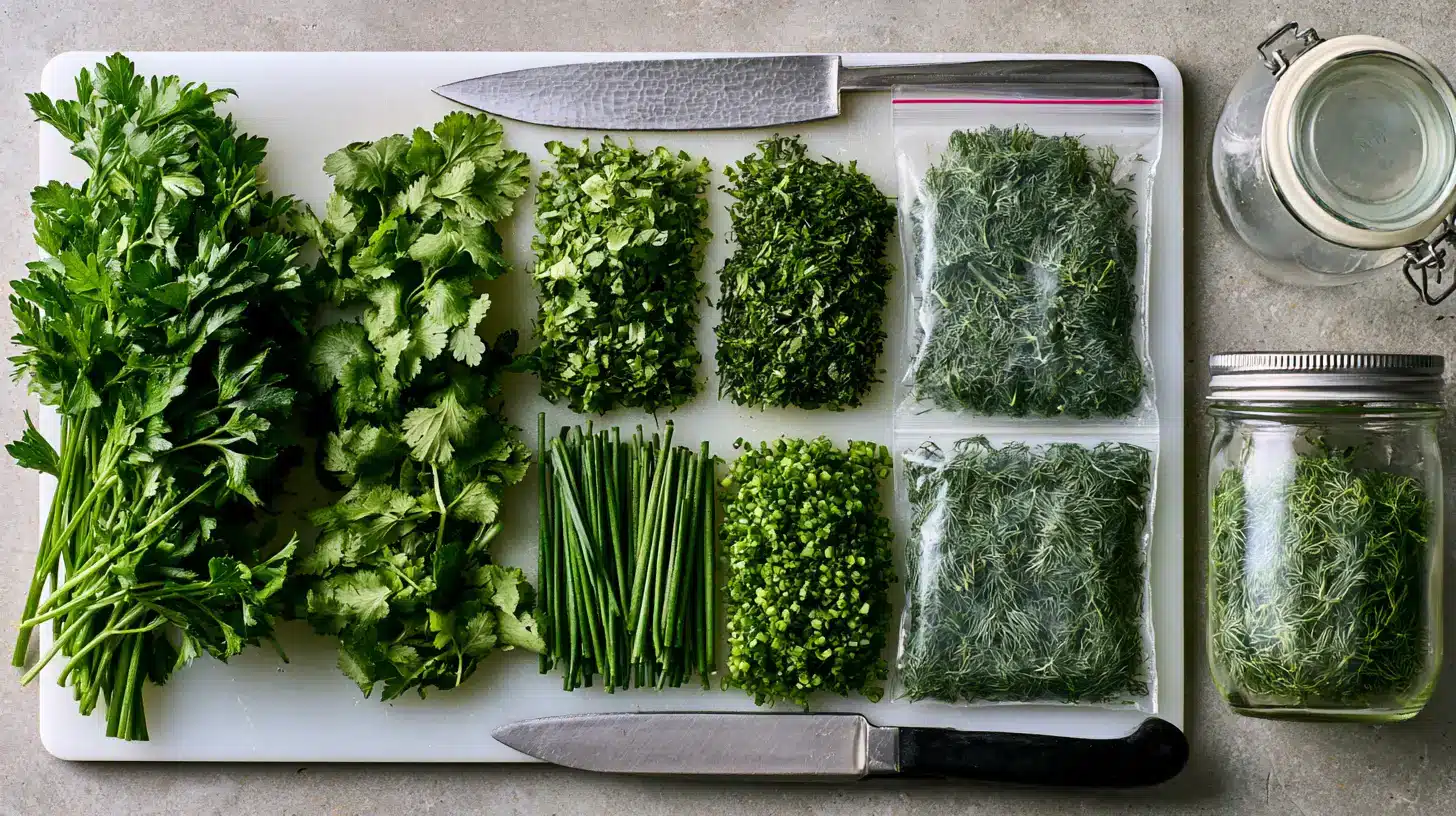
Choose the method based on the planned recipe rather than the herb alone. One bunch can also be divided between two methods when its future uses vary.
Method 1: Freeze Whole Herb Leaves and Sprigs
Freezing whole leaves and woody sprigs requires minimal preparation. Arrange clean, dry herbs in a single layer on a tray, keeping each leaf or sprig separate so they freeze individually.
Place the tray in the freezer until the herbs are firm, then remove it promptly to reduce moisture loss.
Transfer the frozen herbs to freezer bags or airtight containers, carefully pressing out excess air before sealing.
Remove only the amount needed for each recipe, and return the remaining herbs to the freezer immediately.
Method 2: Freeze Chopped Herbs
Chopped herbs save preparation time during cooking. They suit meals where the leaves would normally be minced before being added.
Chop clean, dry herbs to the size you normally use in recipes, keeping varieties separate unless they are often cooked together.
Divide them into small meal-sized portions using freezer bags, jars, or containers. Parsley and chives can be pressed into freezer-bag logs so small discs are easy to slice off later.
Pack each portion with as little air as possible, and freeze bags flat for easy stacking. Chives can go into small jars, while dill may stay on tender stems.
Method 3: Freeze Herbs in Water Cubes
Water cubes work well for herbs used in drinks, soups, broths, and recipes where oil is not suitable, especially mint and lemon balm.
Place whole or chopped herbs into ice cube tray compartments and gently press them down. Cover with water, partially freezing first if light leaves float, then top up with more water.
Once the cubes are fully frozen, transfer them to a labeled freezer bag. Portioning the herbs this way makes it easy to add the right amount to recipes.
Method 4: Freeze Herbs in Oil Cubes
Oil cubes provide measured portions for savory cooking and work well with basil, thyme, sage, and parsley.
Chop the herbs and place them in an ice cube tray, then cover with a suitable cooking oil. For larger batches, pulse the herbs with a little oil before portioning.
Freeze the mixture immediately rather than storing fresh herbs in oil at room temperature.
Once firm, transfer the cubes to an airtight, labeled freezer bag and add them directly to sauces, stews, or hot pans.
Ways to Freeze Herb Paste
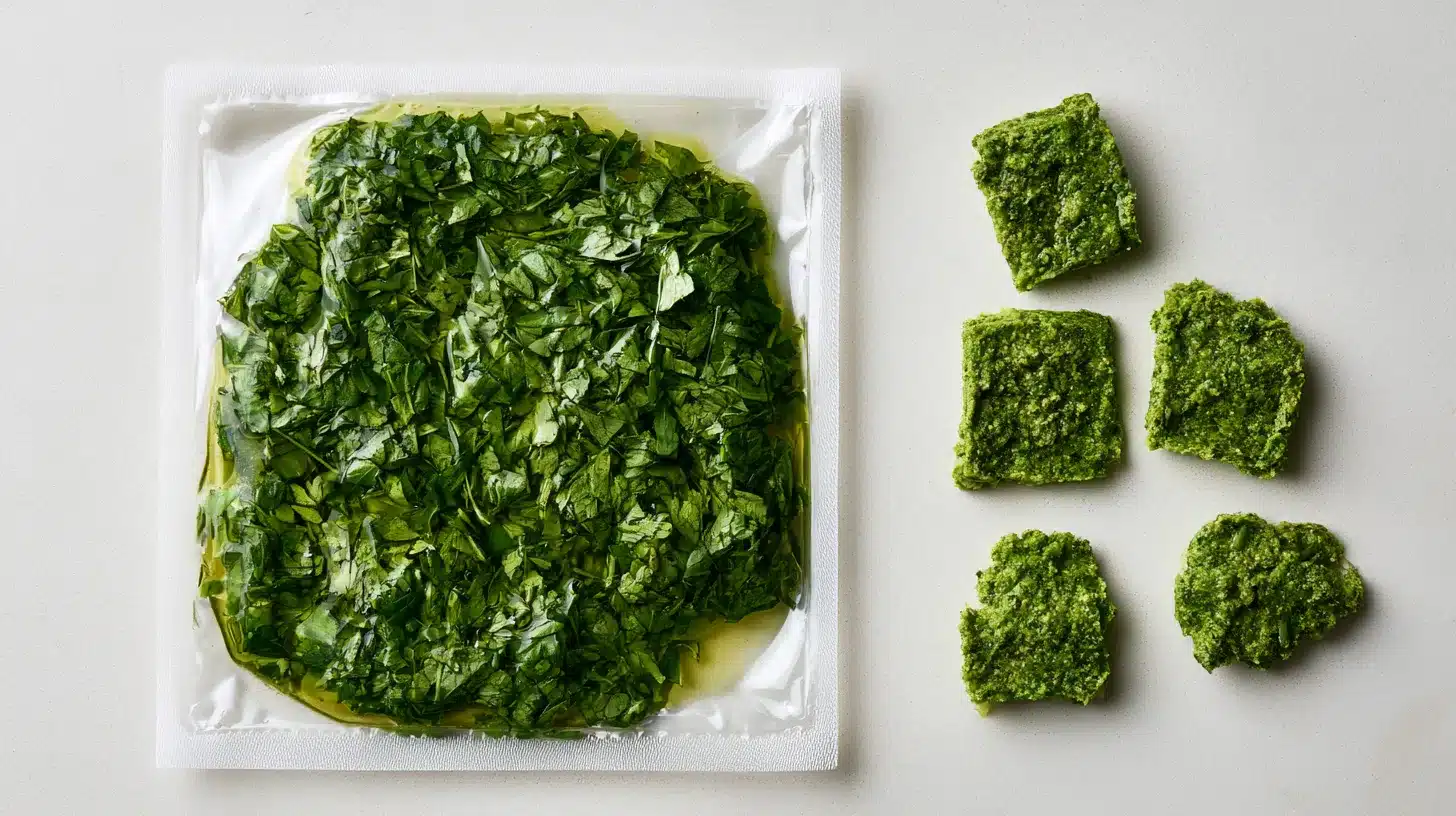
Herb paste is useful when storing larger batches and preparing quick portions for cooked meals. Mixing herbs with oil also helps create a compact, freezer-friendly base.
Freeze Flat
Chop the herbs, mix with enough oil to coat them, and spread the mixture in a thin layer inside a freezer bag. Remove excess air and freeze flat. Break off the amount needed for cooking.
Freeze in Portions
Process basil, parsley, cilantro, chives, or similar herbs with a little oil. Spoon the thick paste into ice cube trays or small freezer containers.
For a more flexible base, leave out nuts and cheese before freezing. Add them later when preparing the final dish.
How to Use Frozen Herbs?
Frozen herbs can usually go straight from the freezer into cooked dishes without thawing, which helps avoid a wet, limp texture.
Add whole leaves, sprigs, or chopped herbs to soups, stocks, stews, casseroles, sauces, eggs, and cooked vegetables. Remove woody sprigs before serving, while chopped herbs can stay in the dish.
Water cubes work well in broths, tea, syrups, lemonade, and other cold drinks, but remember they add extra liquid to the recipe.
Oil cubes can melt directly in a pan or go into pasta sauces, stews, and roasted vegetables.
Because frozen herbs lose their fresh texture after thawing, use them in cooked meals, dips, dressings, and pesto rather than salads or garnishes, where their softer texture is less noticeable.
Final Takeaway
Freezing fresh herbs becomes simpler when each batch is matched to its future use.
Whole leaves suit stocks and stews, chopped portions save preparation time, water cubes fit drinks and broths, and oil cubes work well in savory meals.
Keep each batch small, clearly labeled, and protected from excess air.
Good timing is also central to harvesting lemon balm, since healthy leaves picked before flowering provide better material for storage.
Start with fresh herbs, dry them well, and use the frozen portions while their flavor remains strong.
Frequently Asked Questions (FAQs)
1. How Long Do Fresh Herbs Last in the Freezer?
For their best flavor, use frozen herbs within three to six months. Quality depends on airtight packaging, stable freezer temperatures, and limited exposure during use.
2. Can Store-Bought Fresh Herbs Be Frozen?
Yes. Remove slimy or damaged leaves, then follow the same washing, drying, and freezing steps used for garden herbs.
3. Can Different Herbs Be Frozen Together?
Combine herbs that regularly appear in the same recipe. Keep them separate when their future uses are uncertain, or their flavors vary greatly.
4. Can Herb Stems Be Frozen for Stock?
Clean parsley, dill, cilantro, thyme, and rosemary stems can be frozen for stocks or sauces. Store them in a separate labeled bag.
5. Why Do Frozen Herbs Turn Dark?
Some darkening is normal after freezing. Cold temperatures and damaged leaf cells can change the color, even when the herbs remain useful in cooked meals.