

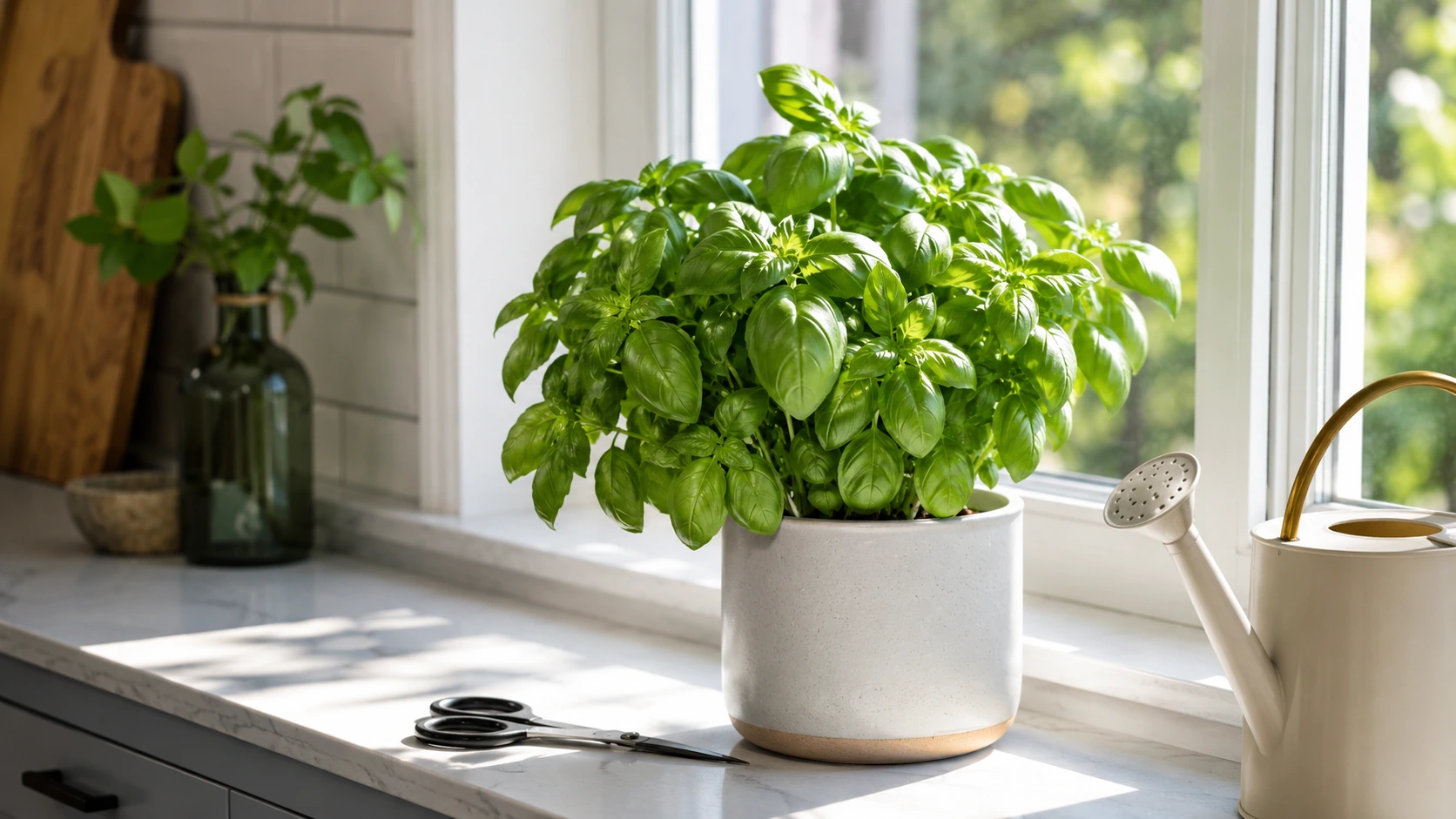
Basil can liven up your pasta, salad, soup, or your very own pesto.
When grown inside, however, a basil plant will often get floppy, pale, and a bit spindly a few short weeks after purchase.
Most commonly, this can be caused by root-bound plants, insufficient light, poor drainage, and watering while the soil is still wet.
If you’re hoping to successfully grow basil indoors, this blog is for you.
Let’s get into it.
Basil Care Requirements for Indoor Growth
Knowing basil growing needs means recognizing the signs it’s happy and healthy. Watching your plant for these cues gives you the chance to fine-tune your care and keep it growing at its best.
A well-balanced, healthy basil plant will typically show:
- Firm, upright stalks with minimal bending, rather than the soft, slender stems associated with problems
- Evenly distributed leaves, spaced closely together
- No widespread discoloration, browning, or pale patches
- Balanced, upright growth, unless it’s leaning noticeably toward its light source
It’s also worth remembering that basil’s growth naturally shifts with the seasons.
Slower growth is normal in winter or on low-light days, and the plant’s overall growth habit can change from season to season.
Steps for Growing Basil Indoors
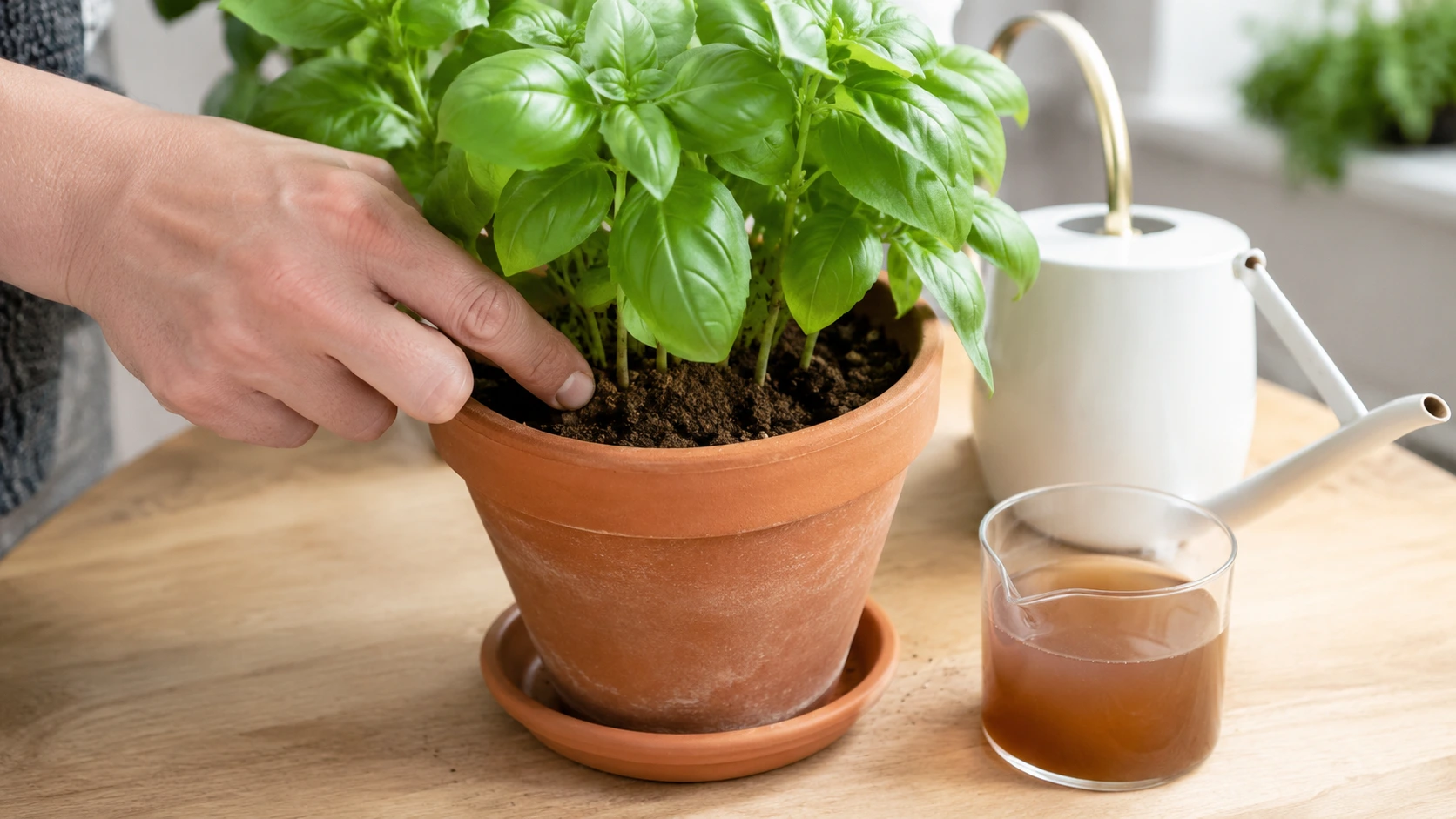
Choosing a healthy basil plant and preparing the right pot, soil, light, and temperature can prevent many common indoor growing problems.
Step 1: Choose the Best Starting Method
Basil can be grown from seeds, nursery plants, any pots, or cuttings. Seeds cost less and offer more variety, while nursery plants provide a faster harvest.
Sow seeds in moist seed-starting mix and place them in a warm location. Give the seedlings strong light as soon as they emerge.
Supermarket basil usually contains several crowded seedlings. Divide the root mass into smaller groups before repotting so the plants have enough root space.
Step 2: Prepare the Pot and Soil
Choose a six- to eight-inch pot with open drainage holes.
Fill it with loose indoor potting mix and add perlite when the soil feels dense or drains slowly.
Avoid using an oversized container because unused soil can remain wet for too long.
Place the pot on a saucer and empty the collected water after each watering.
Step 3: Plant Basil at the Correct Depth
Gently remove the basil from its original container and loosen the tightly circling roots.
Place the plant at the same depth it was previously growing, keeping the lower stem above the soil line.
Fill around the roots with potting mix and press lightly. Water until moisture drains from the bottom, then empty the saucer.
Allow the upper soil layer to begin drying before watering again.
Step 4: Set Up Light and Temperature
Place the pot near a bright south- or east-facing window.
South-facing windows usually provide stronger light, while east-facing windows supply gentler morning sun.
When daylight is limited, position a grow light directly above the foliage and follow the manufacturer’s spacing instructions.
Keep the room between 65 and 80°F.
Avoid exterior doors, cold glass, radiators, air-conditioning vents, and areas with sudden temperature changes.
Step 5: Water and Fertilize Carefully
Check the upper inch of soil before watering.
Add water when it feels dry, then continue until excess moisture drains from the container.
Do not water on a fixed schedule. Light, season, plant size, temperature, and container material all affect how quickly the soil dries.
After four to six weeks, apply a diluted balanced liquid fertilizer every three to four weeks during active growth.
Reduce or pause feeding when winter growth slows.
Step 6: Prune Basil for Fuller Growth
Wait until the plant has several healthy pairs of leaves before harvesting. Cut each stem just above a pair of leaves to encourage two new branches.
Inspect the longest stems once or twice a week and trim them before the plant becomes tall or sparse.
Avoid removing more than one-third of the plant at one time.
Remove flower buds early when continued leaf production is the priority, since flowering slows new stem and leaf growth.
How Much Light Does an Indoor Basil Plant Need?
For strong, upright stems and healthy green leaves in a compact habit, indoor basil needs at least 6 hours of bright light.
Using the following practices ensures even light distribution and protection against problems associated with light quality that vary with season and temperature.
Rotate the plant pot ¼ turn every few days to expose all sides to similar amounts of light and to ensure upright stems.
Consider adding a grow light when stems begin to thin out, internodes lengthen, or new leaves are pale and small.
Keep the surfaces of the windows and grow light panels dust-free, so more light can reach the plant.
Ensure that the leaves are not touching warm glass in summer and cold glass in winter.
These few practices will help ensure your plant is in a balanced habit with strong stems and healthy green leaves year-round.
Common Indoor Basil Problems
Always check your plant to be sure the problem isn’t due to your soil, roots, light, or temperature before trying to change several different factors.
| Problem | Likely cause | Best response |
|---|---|---|
| Tall, thin stems | Weak light | Move the plant to stronger light |
| Yellow lower leaves | Wet soil or crowded roots | Check drainage and root space |
| Pale new growth | Weak light or low nutrients | Improve the light before feeding |
| Wilting in dry soil | Lack of water | Water thoroughly and drain |
| Wilting in wet soil | Root stress | Let the soil dry and inspect the roots |
| Mold on soil | Excess moisture | Allow surface drying and improve airflow |
| Early flowering | Heat, age, or dry soil | Remove buds and correct growing conditions |
| Brown leaf edges | Dry air or uneven watering | Check moisture and move away from vents |
Change one condition at a time and monitor the newest leaves. Existing damage may remain, but fresh growth can show whether the plant is recovering.
Pests and Diseases Basil Plants Are Prone To
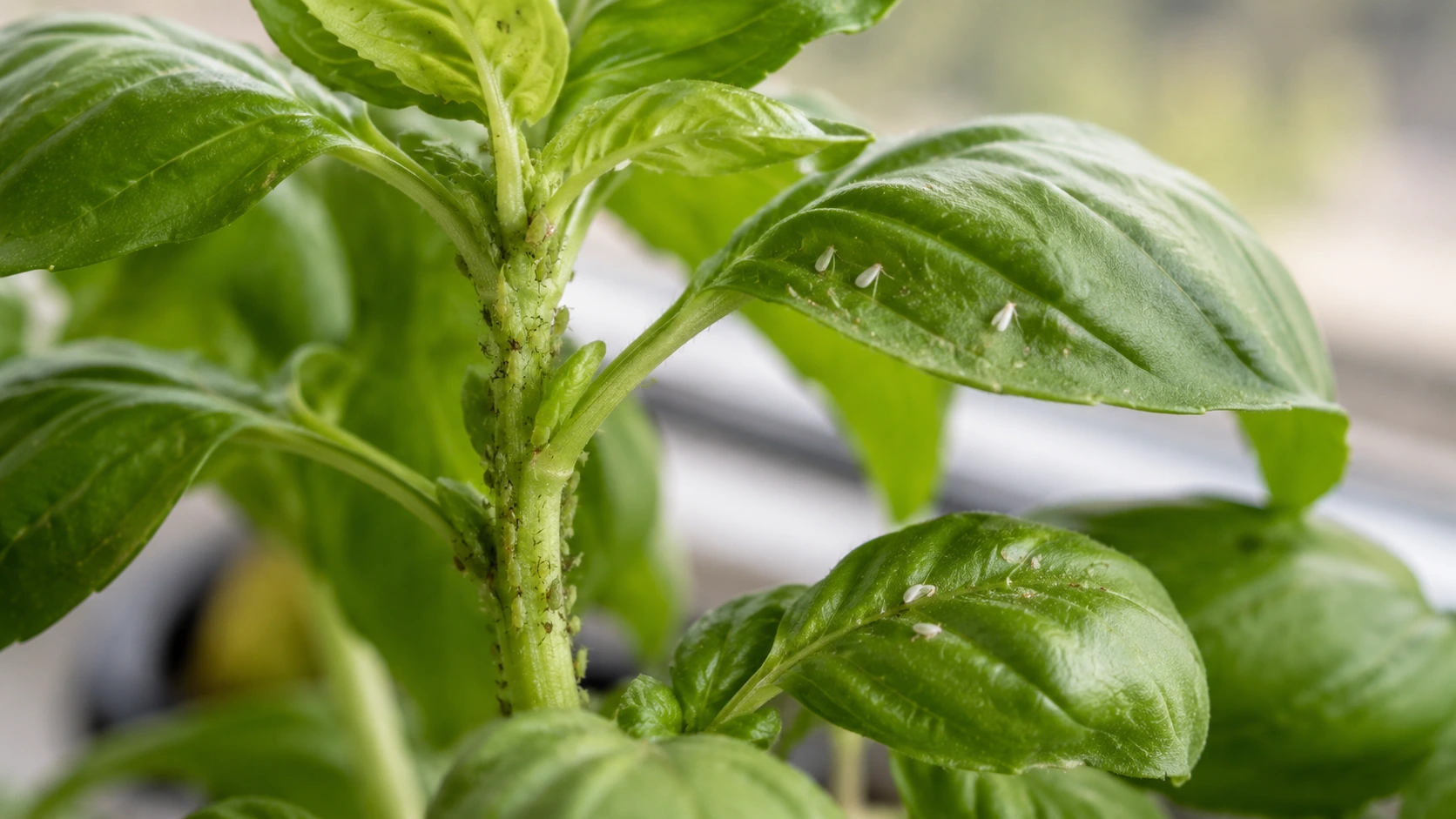
Indoor basil can attract pests or develop disease when the plant is stressed, crowded, or kept in damp conditions.
Check the leaves, stems, and soil regularly so problems can be addressed before they spread.
1. Aphids and Whiteflies
Aphids gather around new stems and leaves, while whiteflies often scatter when the plant is disturbed.
Move the affected pot away from other plants, remove badly damaged leaves, and rinse the foliage carefully.
Use only treatments approved for edible herbs and follow the harvesting directions.
2. Fungus Gnats
Fungus gnats often appear when potting mix remains damp for long periods. Allow the surface layer to dry before watering again.
Sticky traps can catch adult insects, but improving drainage and correcting excess moisture provide the main control.
3. Root Rot
Dark, soft roots, yellow leaves, a sour smell, and constant wilting can indicate root rot. Cut away damaged roots and repot the plant in fresh, well-draining soil.
Clean the container before reusing it and make sure every drainage hole is open.
4. Leaf Spots
Leaf spots are more common when foliage remains wet, and airflow is limited.
Remove affected leaves, water the soil rather than the foliage, and leave enough space around the plant to allow air to circulate.
Keep Basil Alive Through Winter
Slow growth is normally associated with indoor basil during the winter because less daylight means less production, and it takes the soil takes longer to dry out.
Add a grow light if stems start to stretch, or leaves get small. Check soil before every watering; hold off on fertilizer if new growth is just developing.
Place it away from drafty window panes, heaters, exterior doorways, and air vents.
Prune sparingly and harvest leaves from plants when growth slows.
Since the oldest basil plants gradually become less potent, sow new seeds or root a cutting while the old plant is still healthy and full.
How to Grow New Basil From Cuttings?
Cuttings are an easy way to start a new plant or replace a more mature one.
- Snip off a 4-6 inch long non-blooming stem from a healthy plant.
- Strip all of the leaves off of the bottom half.
- Place this stripped area into a clean glass of water.
- Keep any existing leaves well above the waterline.
- Change the water every two to three days.
- When the roots are 1-2 inches long…
- Transfer the cutting to a small pot of moist potting soil.
Do not disturb the roots too much; keep the cutting in a brightly lit location; wait until new leaves begin to grow before starting any regular harvesting.
Final Takeaway
Successfully grow basil indoors with an eye on light, drainage, temperature, and humidity.
Plant the basil in a pot with drainage holes and loose potting mix, and place it in a sunny spot indoors.
Water only when the top inch of the potting mix is dry. Trim back stems to above a pair of leaves to make your plant grow fuller.
Pay attention to the new leaves – you can spot many of the warning signs in their healthy glow.
Weak, flimsy stems typically indicate insufficient light, while yellow leaves in a moist setting indicate that the plant is receiving too much moisture.
Correct one factor at a time; allow your plant time to respond.
Examine your pot, soil, and light conditions and address the worst part of the system first.
Frequently Asked Questions (FAQs)
1. Can Basil Grow without A Sunny Windowsill?
Yes. Use a grow light positioned directly above the plant. Keep the setup away from heat from the stove, steam, grease, and sudden temperature changes.
2. How Long Does Indoor Basil Live?
Indoor basil can remain productive for several months with strong light, proper watering, and regular pruning. Growth often weakens as the plant ages or as winter light decreases.
3. Can Basil Share a Pot with Other Herbs?
Basil can be grown alongside herbs that have similar light and moisture needs. Separate containers are usually easier, as basil grows quickly and can crowd slower-growing plants.
4. Why Are Indoor Basil Leaves Curling?
Curling may result from heat, dry air, pests, uneven watering, or intense light. Inspect the soil, stems, and both sides of the leaves before changing the feeding routine.
5. Should Basil Flowers Be Removed?
Remove flower buds when leaf production is the main goal. Flowering redirects energy toward seed formation and slows the growth of soft new stems.