

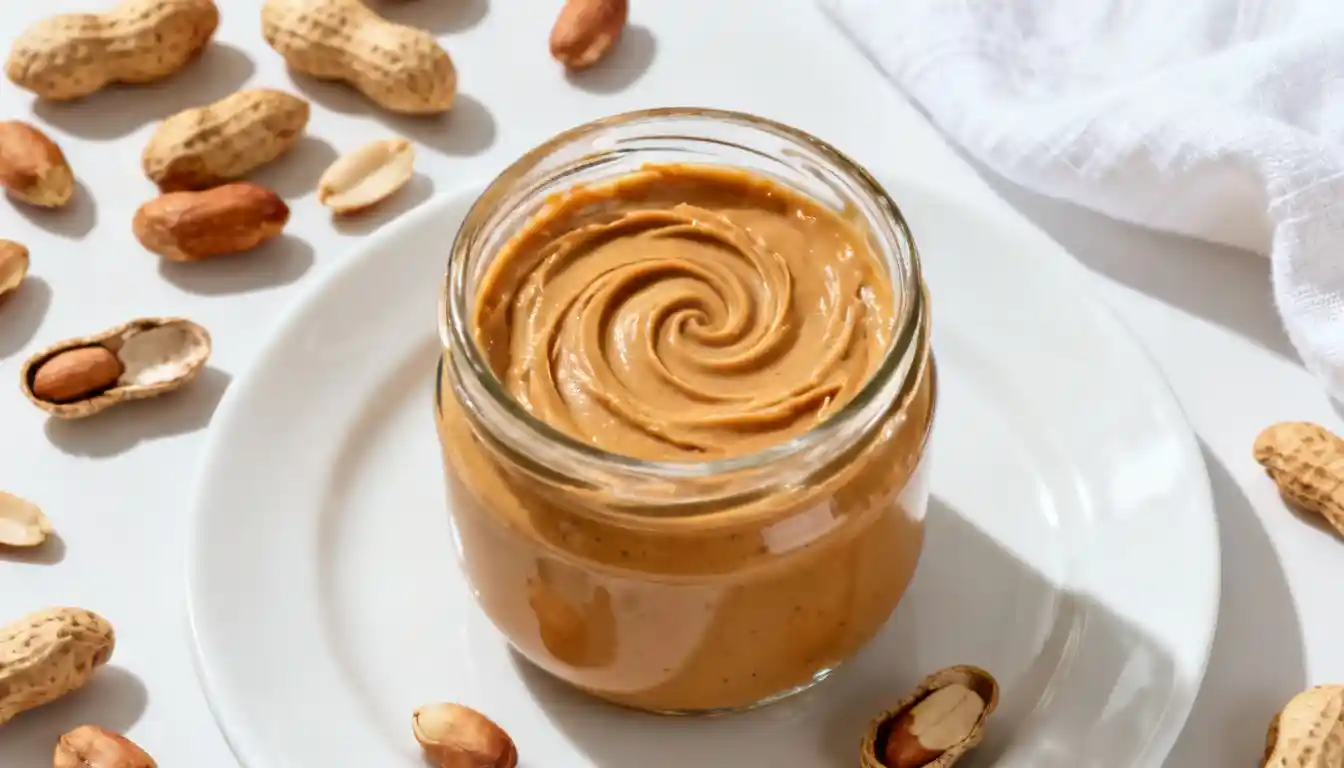
If you grab a jar of Jif off the shelf, you might wonder what you are actually spreading on your bread every morning.
Morning toast, afternoon snacks, and late-night spoonfuls keep Jif peanut butter in regular rotation for many families. How well does the nutrition profile hold up for everyday family routines?
Let’s walk through the Jiffy peanut butter ingredients and explain what each one means for health.
The jar is open. Now comes the chance to know what is really inside.
History of Jif Peanut Butter
Jif got its start in 1958 when Procter & Gamble launched it in Lexington, Kentucky. They wanted a smoother, better-tasting peanut butter than what was common at the time.
The brand quickly grew popular thanks to its creamy texture and that signature fresh-roasted flavor.
Over the decades, Jif expanded its line to include a wide variety and became a pantry staple across America.
In 2001, The J.M. Smucker Company bought the brand, yet it kept its focus on quality and innovation. Today, Jif remains one of the best-known peanut butters in the country.
Jif Peanut Butter Nutrition
One standard serving of Jif Creamy Peanut Butter delivers solid protein and healthy fats, but it also includes added sugar and a bit of sodium.
Most people use a 2-tablespoon (33g) serving from the regular jar, which comes in at 190 calories.
| Nutrient | Amount Per Serving | % Daily Value |
|---|---|---|
| Calories | 190 | – |
| Total fat | 16g | 21% |
| Saturated fat | 3.5g | 17% |
| Carbohydrates | 8g | 3% |
| Dietary fiber | 2g | 9% |
| Total sugars | 3g | – |
| Added sugars | 2g | 4% |
| Protein | 7g | 7% |
| Sodium | 140mg | 6% |
Jif also supplies some helpful micronutrients in every serving. You get a nice boost of Vitamin E (about 10% of the DV), which supports your immune system and skin health.
It provides niacin (about 30% DV), which helps convert food into energy.
You will find small amounts of iron (2% DV) and potassium (4% DV) for muscle function, as well as calcium (2% DV).
Always check your specific package, as formats can vary slightly.
The Ingredients of Jif Peanut Butter
Many people search for Jiffy peanut butter ingredients, but the brand is actually Jif. It is one of the most popular choices on store shelves.
- Roasted peanuts form the main base, delivering rich flavor, natural protein, and fats.
- Sugar adds a touch of sweetness that many people enjoy.
- Molasses brings a mild caramel-like depth and helps with color and moisture.
- Vegetable oils (fully hydrogenated) work as stabilizers.
- Salt boosts overall taste and balances the sweetness.
- Mono- and diglycerides act as emulsifiers that keep everything smooth and well-blended.
Jif products contain peanuts as a main ingredient which is not suitable for anyone with a peanut allergy. Always check the label for the latest details since manufacturing conditions can change.
Nutrition and Ingredients by Jif Variety
Jif offers many options, so it helps to see how they stack up. There is a practical comparison of the main varieties.
1. Jif Creamy Peanut Butter
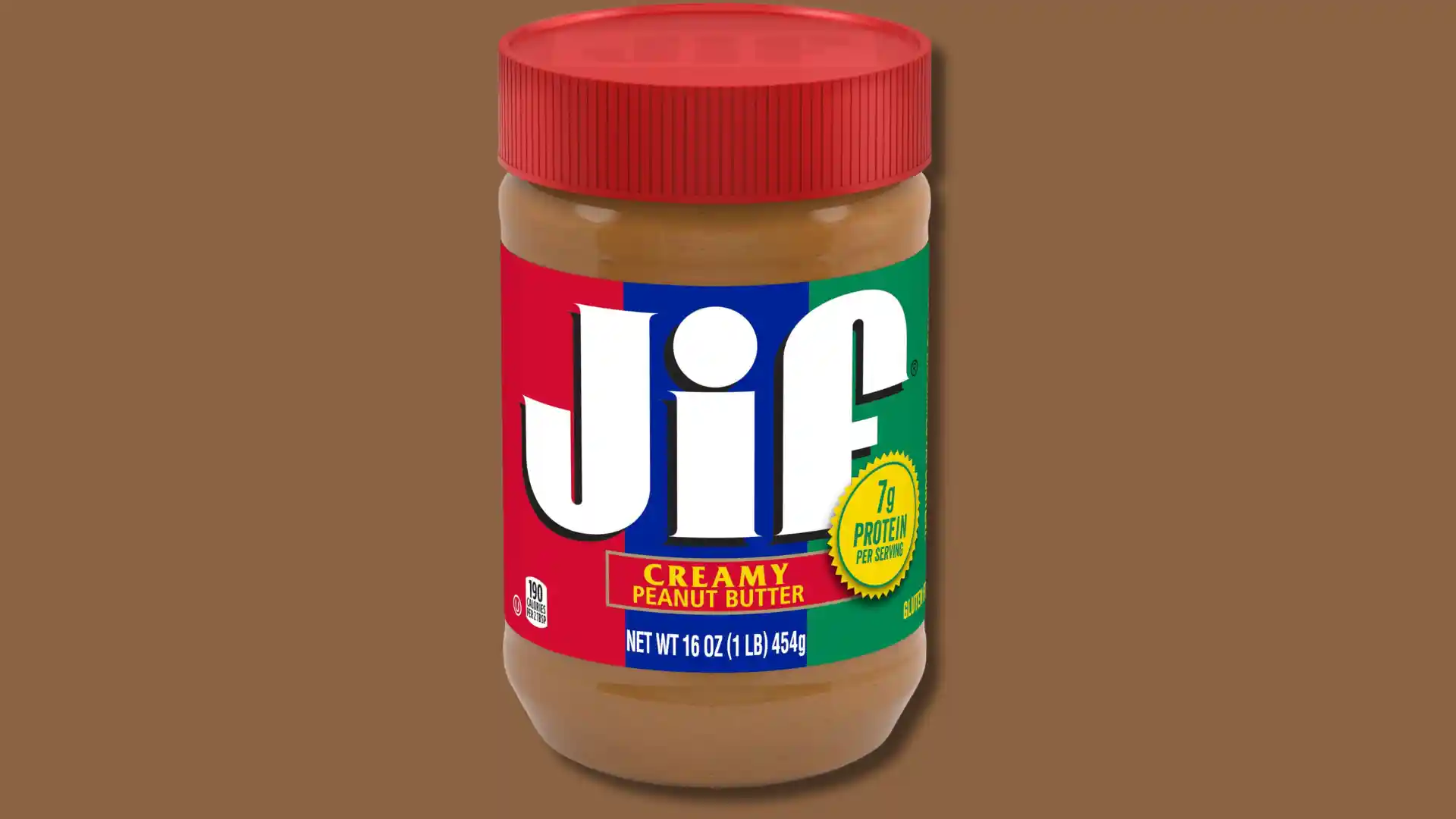
This is the classic. The ingredient list has six items total.
A 2 Tbsp (33g) serving gives 190 calories, 7g protein, 3g total sugars (2g added), 140mg sodium, and 16g total fat.
2. Jif Extra Crunchy Peanut Butter
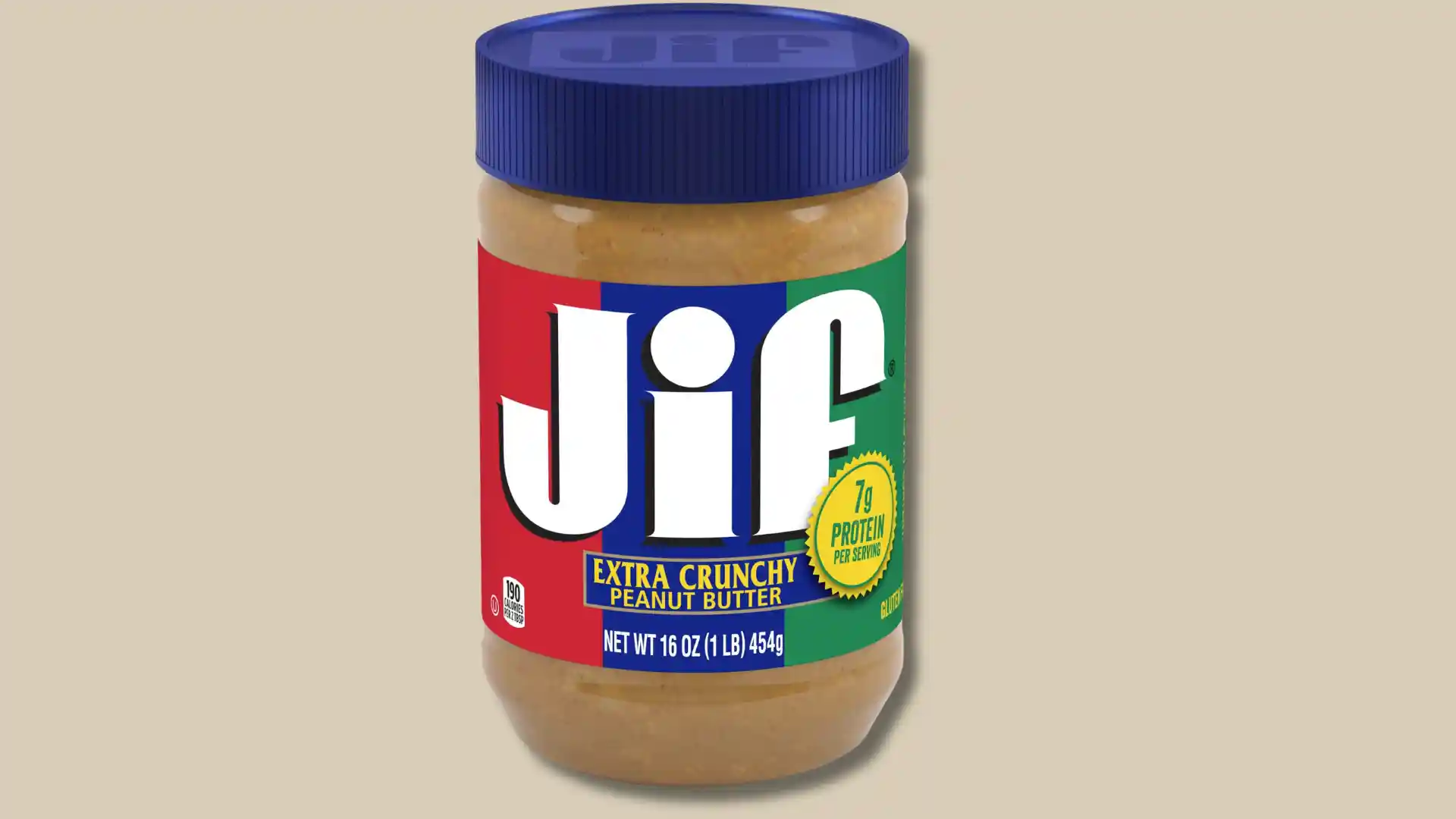
The crunchy version stays very close to the creamy one.
A 2 Tbsp (33g) serving also delivers 190 calories, 7g protein, 3g total sugars (2g added), and 16g fat.
The peanut pieces add nice texture but do not meaningfully change the nutrition profile. Sodium is a bit lower at 110mg.
3. Jif Natural Creamy and Natural Crunchy
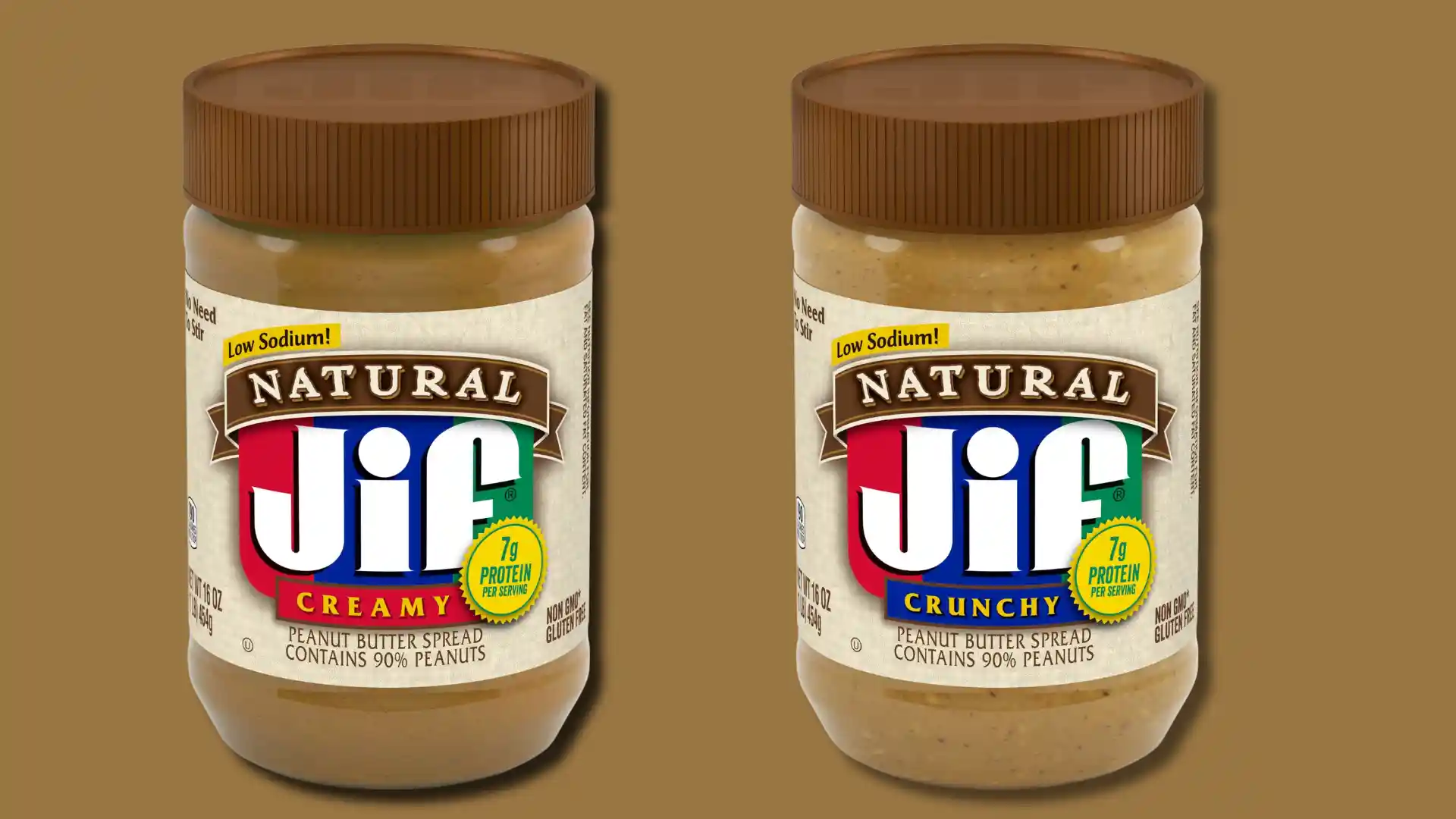
These use just five ingredients and contain 90% peanuts. Natural Creamy has peanuts, sugar, palm oil, salt, and molasses.
Nutrition looks similar (190 calories, 7g protein per serving), but it offers lower sodium (around 80mg) and slightly more fiber.
Natural Crunchy follows the same simple approach with added peanut pieces.
4. Jif No Added Sugar and Simply Unsweetened
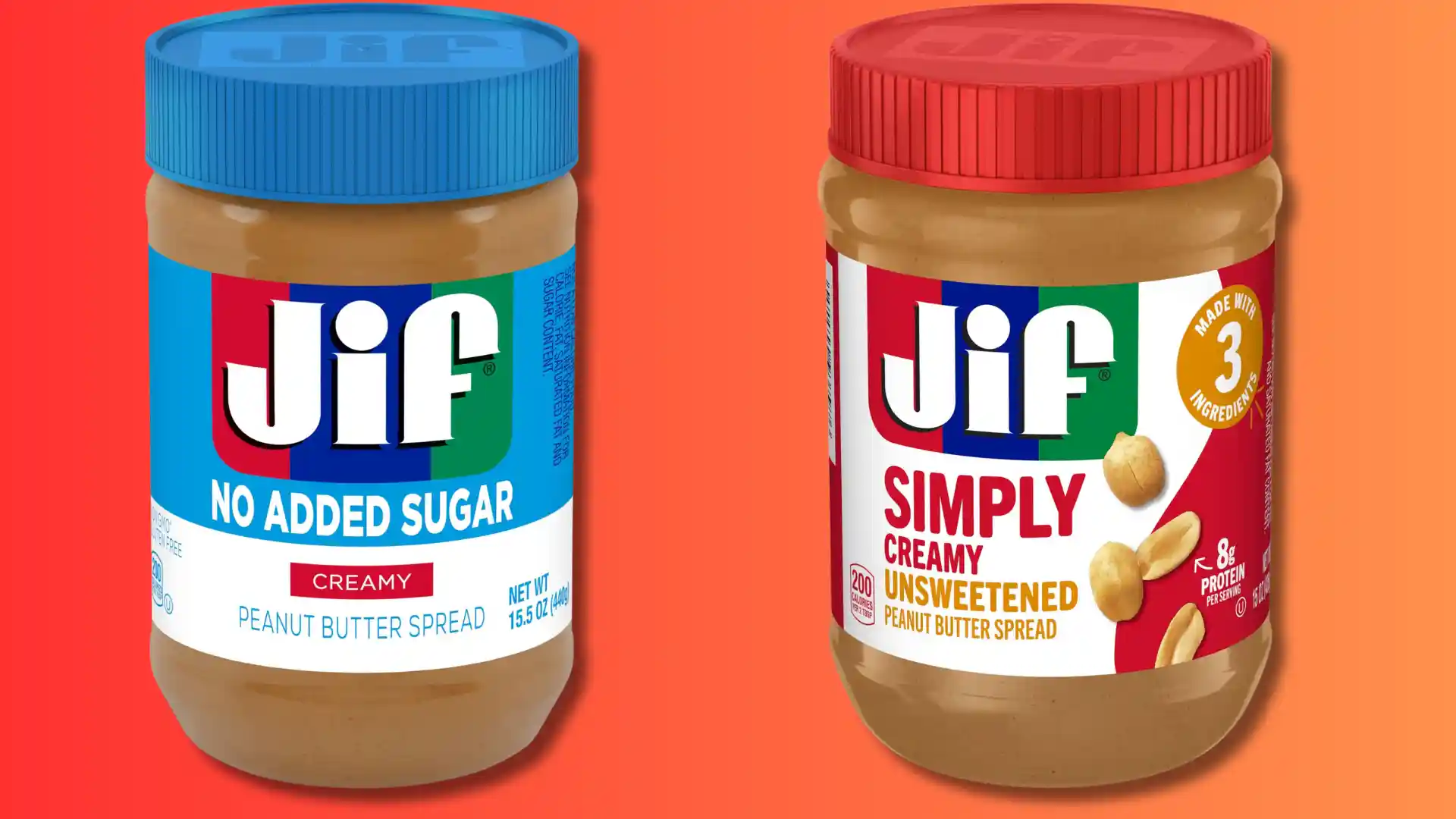
These differ from regular Jif in that they remove added sugars.
They list three main ingredients and provide about 200 calories, 8g protein, and 0g added sugar per 33g serving.
They are not sugar-free (they still have natural sugars from peanuts) or low-calorie, but they cut the added sweeteners completely.
5. Jif Simply Lightly Sweetened
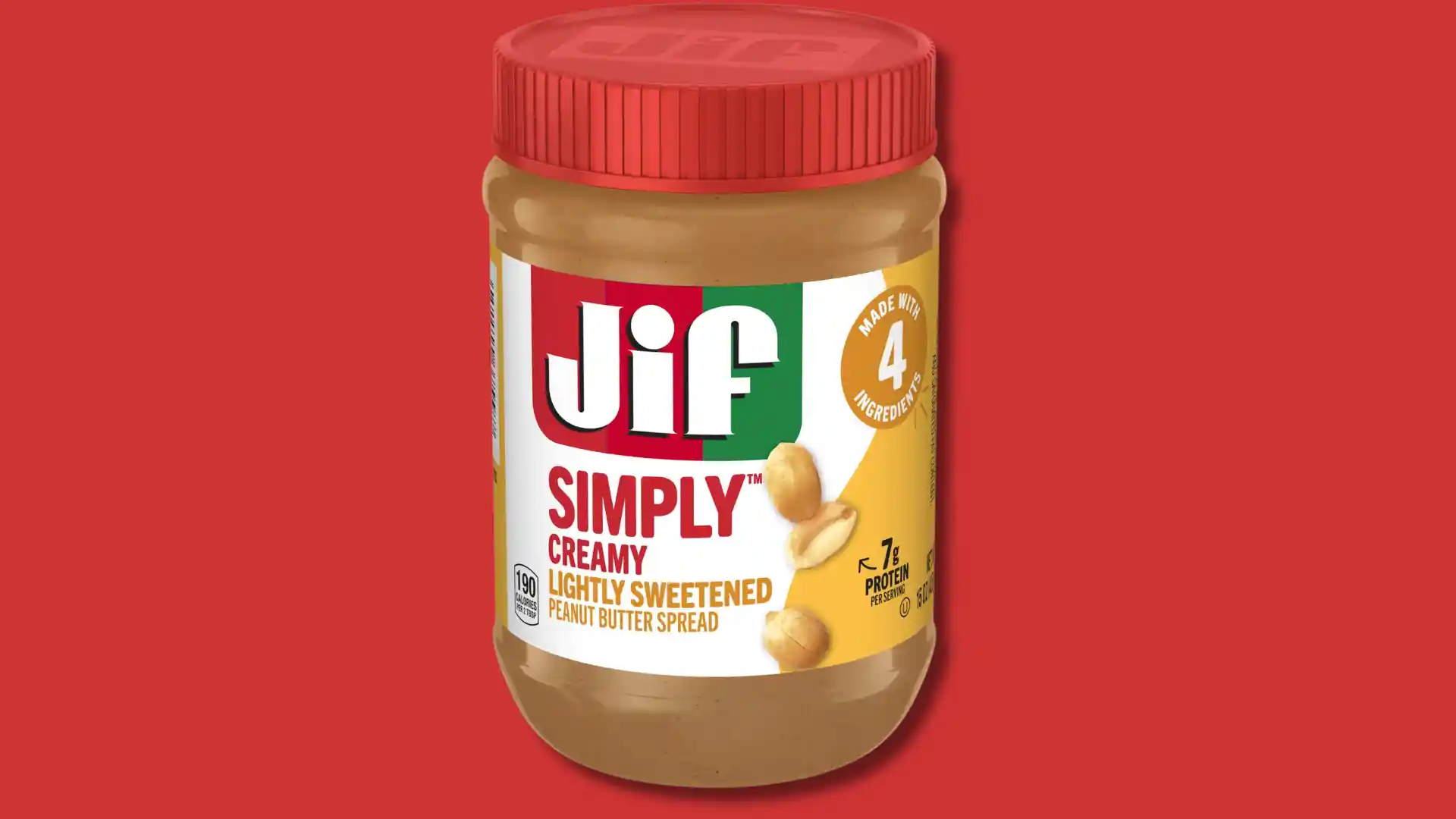
This option sits between the unsweetened and original versions. It uses four ingredients and delivers 190 calories, 7g protein, and just 1g added sugar per serving.
The light sweetness comes from a minimal amount of sweetener while keeping the ingredient list short.
6. Jif Reduced Fat Peanut Butter
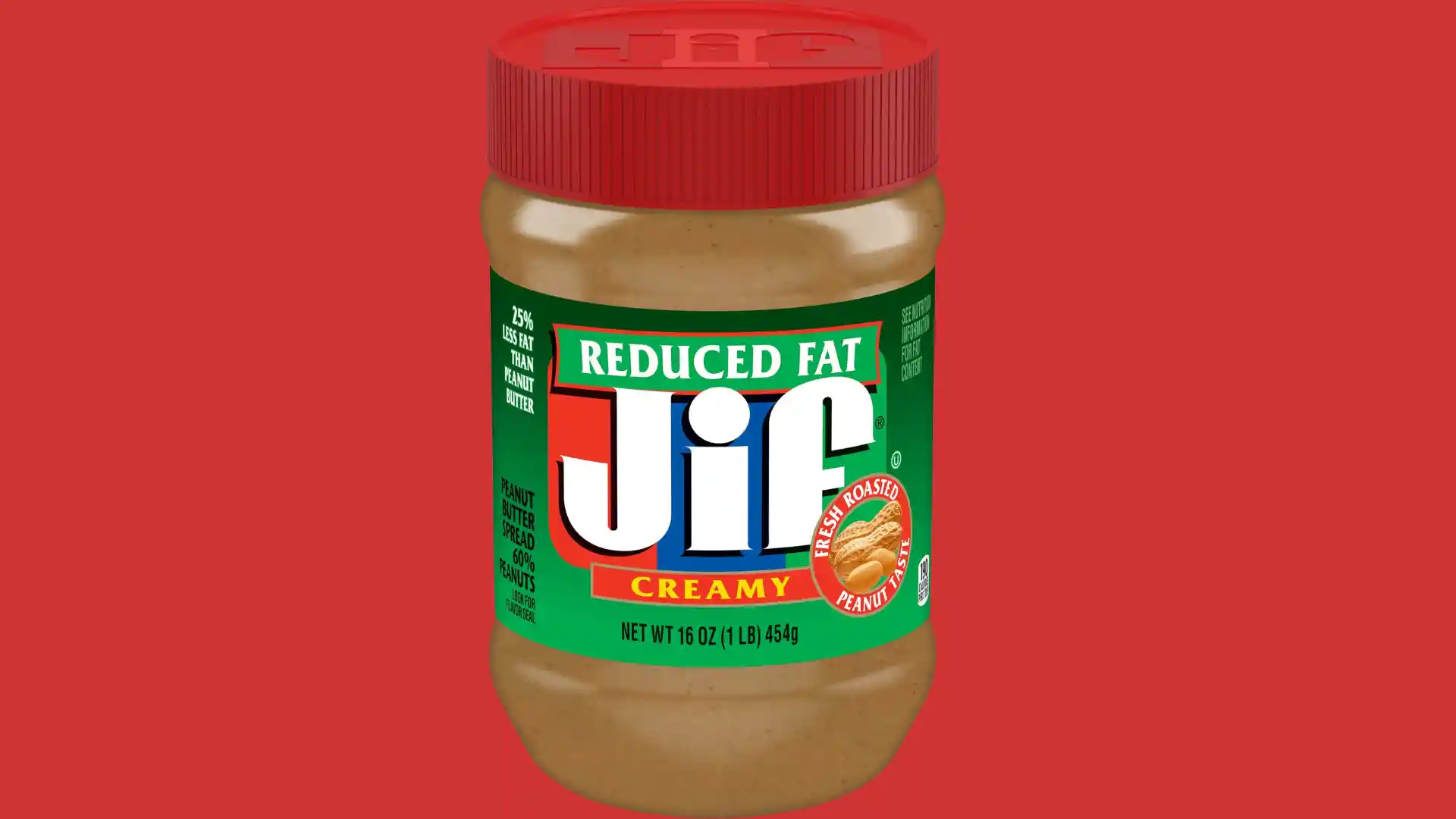
Do not assume reduced fat means fewer calories.
It drops total fat to 12g per serving (versus 16g in regular), but calories stay around 190 because it increases carbohydrates and sugars to compensate.
The ingredient list is longer, and peanut content is lower (around 60%).
7. Jif Natural Peanut Butter With Honey
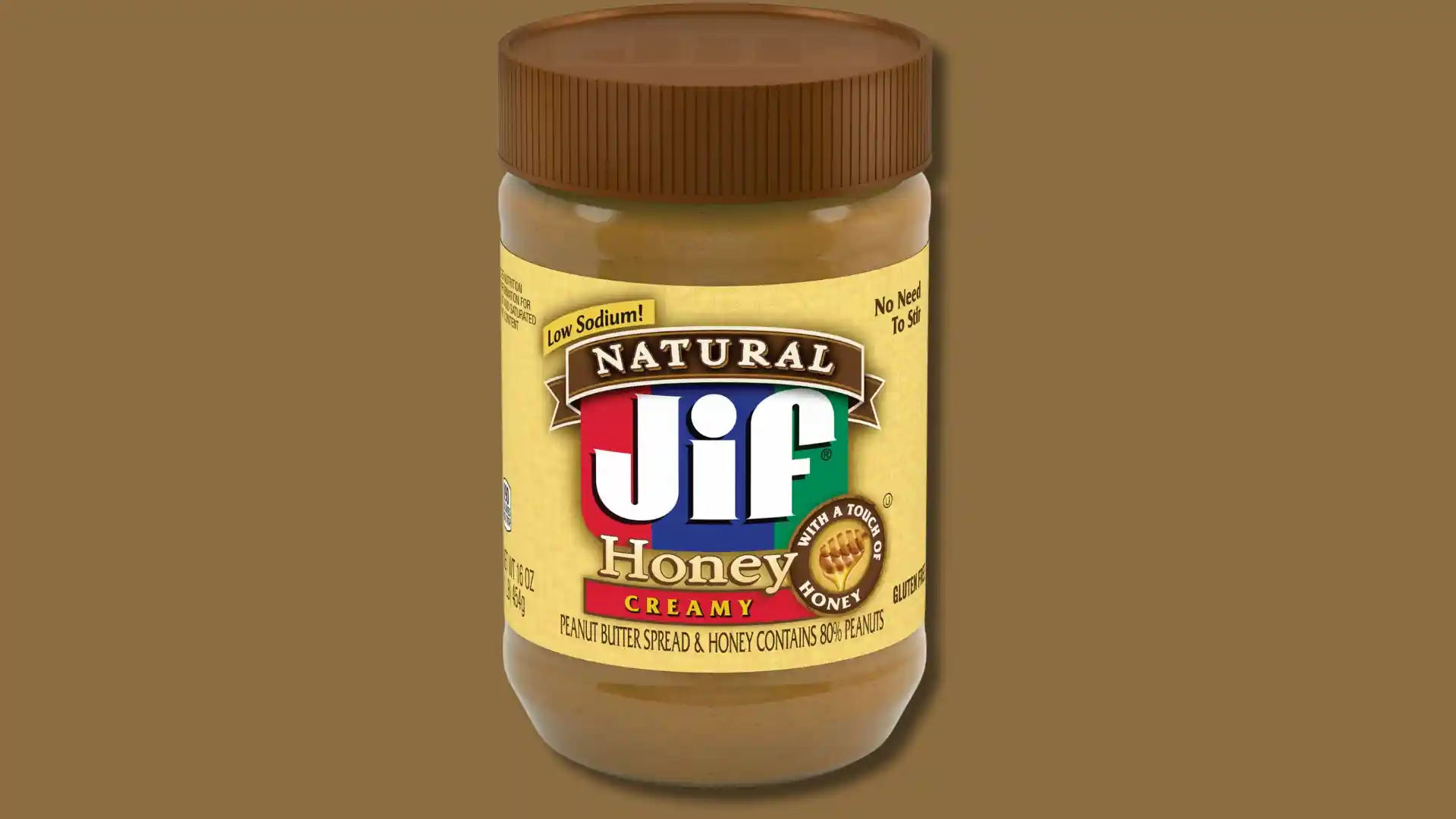
Honey adds natural sweetness and boosts total sugars to about 6g per serving, with added sugars around 4g.
Calories remain near 190, and protein stays at 7g, but the honey gives it a distinct flavor and a slightly higher carbohydrate count.
8. Jif To Go Cups and Squeeze Packs
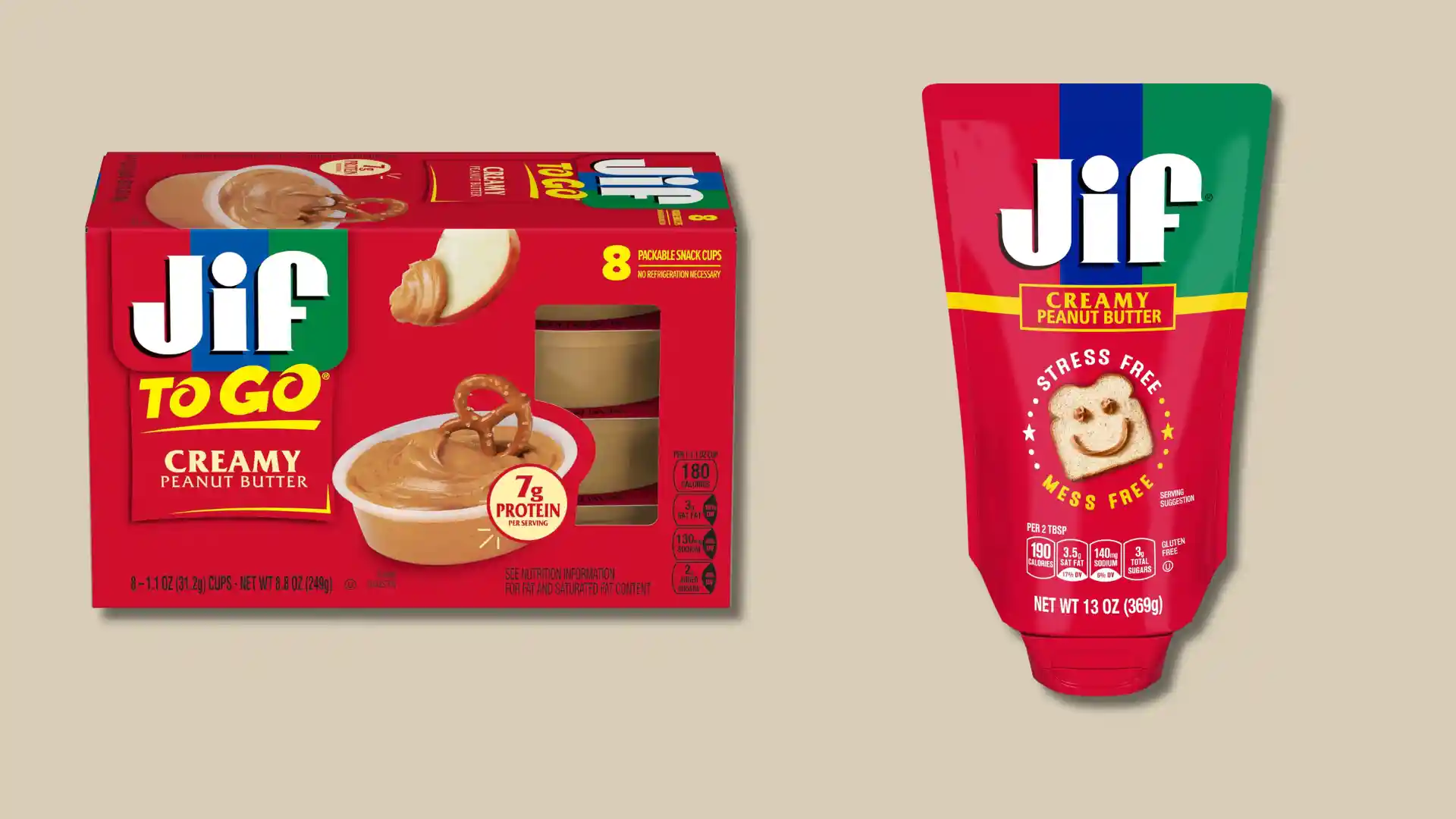
These single-serve options make portion control easy, but serving sizes differ slightly.
Many To Go cups use 31.2g instead of 33g, so they deliver around 180 calories instead of 190.
Always check the package because squeeze packs and cups can vary, which affects your calorie and nutrient calculations.
Is Jif Peanut Butter Healthy?
Yes, but it depends on your goals.
A serving gives you 7 grams of protein and healthy fats from peanuts. You also get some vitamin E and niacin, but it also has added sugar, salt, and hydrogenated oils.
If you eat it in moderation, it fits into a balanced diet just fine.
If you watch your sugar intake or want fewer ingredients, try the Natural or No Added Sugar versions instead.
So it is a solid pick, but not the healthiest spread on the shelf.
Conclusion
The jar of Jif holds more than just creamy comfort. It delivers protein and familiar taste while quietly packing a few extras like added sugar and stabilizers.
Understanding Jif peanut butter nutrition and the Jif peanut butter ingredients really puts the power back in your hands.
Peanut butter should bring joy, not constant label worry.
Spread it on toast, swirl it into smoothies, or sneak a spoonful straight from the jar on tough days. Life tastes better with a little peanut butter in it.
The next time you twist open that blue lid, you will know exactly what you are getting and why it matters.
Grab your favorite variety, enjoy it guilt-free, and keep the pantry adventures going. Happy spreading!
Frequently Asked Questions(FAQs)
1. Should Heart Patients Eat Peanut Butter?
Heart patients can eat peanut butter in moderation. Choose unsweetened, low-sodium varieties rich in unsaturated fats, and follow individual medical or dietary advice.
2. Can Diabetics Eat Jif Natural Peanut Butter?
People with diabetes can eat Jif Natural peanut butter in measured portions. Check carbohydrates and added sugar, and pair it with fiber-rich foods.
3. Is Jiffy Peanut Butter Ultra-Processed?
Standard Jif peanut butter is generally considered ultra-processed because it contains added sugar, oils, salt, and emulsifiers in addition to roasted peanuts.