


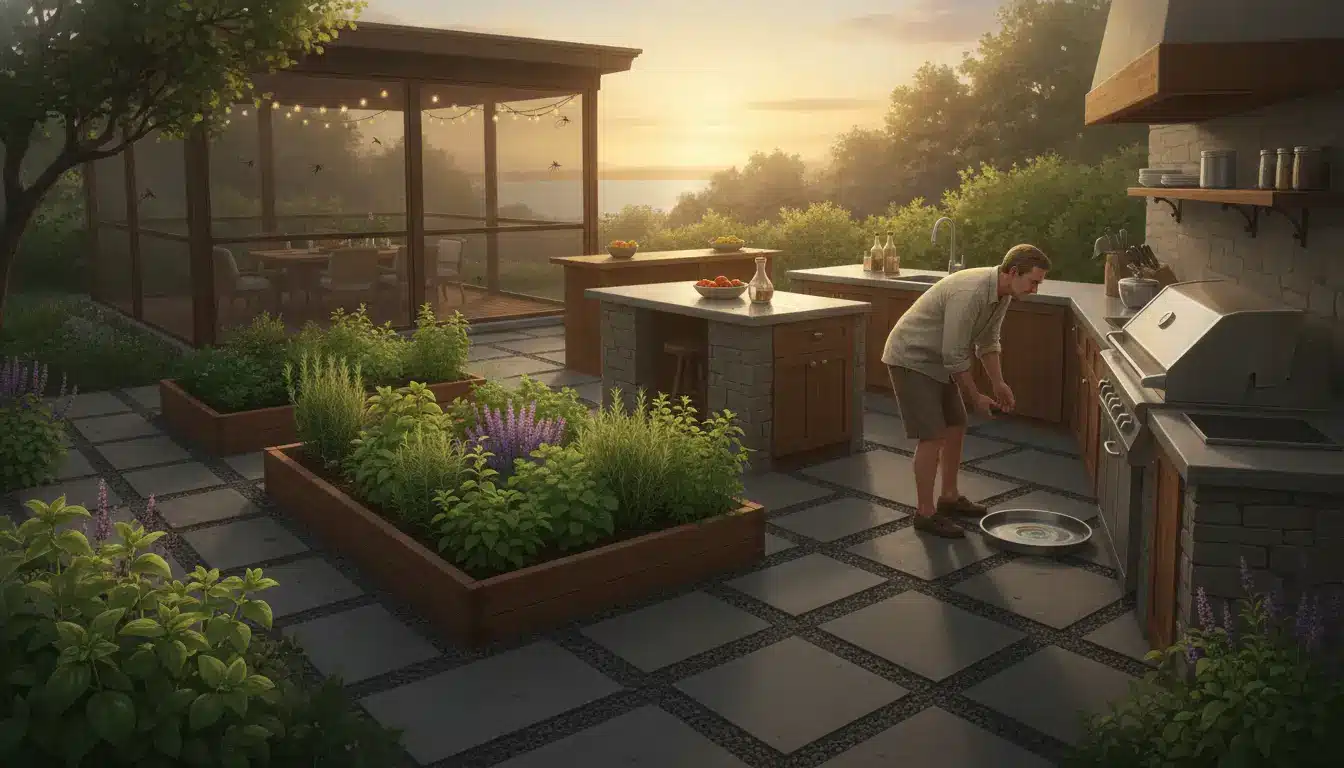
If you have ever tried to plate a fresh seafood dinner on the patio only to spend the whole meal swatting at your ankles, you already understand why this topic matters to home cooks as much as it matters to gardeners. Many of our readers grow their own herbs and vegetables to pair with the fish and shellfish they prepare, and they rely on outdoor kitchens to sear, grill, and steam their catch in the open air. That entire lifestyle depends on a yard that is actually usable in the evening, not one that drives everyone indoors after sunset.
In humid coastal regions, mosquitoes are not a minor nuisance, they are a design problem that touches everything from where you plant your basil to how you set up your outdoor grill station. Warm, moisture-heavy air is exactly what mosquitoes need to thrive, and gardens with irrigation systems, mulch beds, and decorative water features can unintentionally become breeding grounds. Understanding the local environmental drivers behind mosquito activity is the first step toward reclaiming your outdoor cooking and growing space.
Why Warm, Humid Climates Create Year-Round Mosquito Pressure
Mosquito development is directly tied to temperature. In optimal warm-water conditions between 77 and 86 degrees Fahrenheit, mosquitoes can complete their full life cycle from egg to adult in as little as seven days, compared to ten to fourteen days in cooler climates. That faster cycle means a single missed puddle or clogged gutter can produce a new generation of biting adults in about a week. Add heavy seasonal rainfall, and the problem compounds quickly because every storm refills the small containers and low spots that mosquitoes depend on.
Cities like Fort Lauderdale see nearly 61 inches of rain annually, with the heaviest stretches running from late spring into fall, which keeps soil and landscaping features consistently damp for months at a time. Homeowners in that kind of climate deal with a longer active mosquito season than those in drier regions, which is why a complete guide to mosquito control in Fort Lauderdale is such a useful reference for understanding what year-round pressure actually looks like on the ground. The combination of warmth, rainfall, and dense residential landscaping creates conditions that are difficult to manage with a single treatment or a one-time cleanup.
Water Management: The Single Most Effective Prevention Strategy
Nearly every mosquito control expert agrees that eliminating standing water is the most impactful thing a homeowner can do, and the threshold for what counts as breeding habitat is surprisingly small. Mosquitoes can lay eggs in water no deeper than what collects in a soda can or a leaf puddle, and those eggs can hatch within 24 to 48 hours once conditions are warm enough. According to this article, mosquitoes only need a small amount of standing water to breed, and their life cycle can be as short as seven days in warm conditions, which makes weekly water elimination critical in humid climates rather than an occasional chore.
For outdoor kitchens, this means checking drip trays under grills, ice bucket drainage, and any decorative planters near the cooking area at least once a week. Garden beds deserve the same scrutiny, since saucers under potted herbs, birdbaths, and even folds in tarps or covers can hold enough water to matter. Rain barrels and irrigation systems, while useful for keeping a garden productive, need tight lids or screens to prevent them from doubling as mosquito nurseries during the wettest months of the year.
Landscaping and Structural Design Choices That Reduce Breeding Sites
Beyond water removal, the physical layout of a garden and outdoor kitchen can either invite mosquitoes or discourage them from settling in. Dense, low-growing shrubs and overgrown groundcovers create shaded, humid microclimates where adult mosquitoes rest during the heat of the day, so trimming back vegetation near seating and cooking areas reduces the places they can hide. Raised garden beds with good drainage are preferable to low, flat plots that pool water after a storm, and mulch should be turned occasionally to prevent it from staying saturated for days at a time.
Outdoor kitchen structures themselves matter too. Screened enclosures, ceiling fans that keep air moving across dining surfaces, and citronella or other mosquito-repelling plants placed strategically near entry points can all reduce the number of mosquitoes that reach your cooking and eating space. Positioning herb gardens and vegetable plots slightly away from dense tree cover, where airflow is better and shade is less constant, also helps keep humidity from concentrating in one corner of the yard. These design choices will not replace active control methods, but they meaningfully reduce the baseline pressure your yard has to deal with.
Integrated Control: Combining Environmental Management with Professional Treatment
Even the most diligent homeowner cannot eliminate every mosquito breeding opportunity across a full property, especially one with a mix of garden beds, cooking areas, and mature landscaping. This is where professional treatment schedules become part of a realistic long-term plan rather than a luxury. In climates with sustained warmth and humidity, treatment every three to four weeks during peak season is generally recommended, since that interval lines up with how quickly new mosquito populations can establish themselves in warm standing water.
The stakes go beyond comfort during an outdoor dinner. Florida alone accounts for roughly 20 percent of the nation’s mosquito-borne illness cases, according to data compiled by the American Mosquito Control Association, which underscores why regional, climate-specific strategies matter more than generic advice. A property that combines consistent water management, thoughtful landscaping, and scheduled professional treatment is far better positioned to stay both livable and safe throughout a long, humid mosquito season.
Factor | Statistic |
Mosquito life cycle in warm water (77-86°F) | As fast as 7 days, egg to adult |
Mosquito life cycle in cooler climates | 10 to 14 days |
Fort Lauderdale annual rainfall | Nearly 61 inches per year |
Minimum water needed to breed | Soda can or leaf puddle amount; eggs hatch in 24-48 hours |
Recommended treatment frequency in peak season | Every 3 to 4 weeks |
Florida’s share of U.S. mosquito-borne illness cases | Approximately 20 percent |
For anyone who spends real time outdoors, whether tending a vegetable garden or firing up a grill for a fresh seafood dinner, mosquito pressure in humid climates is not something that resolves on its own. It takes a combination of habits: checking for standing water weekly, designing landscaping that limits resting spots, and scheduling professional treatments frequently enough to keep pace with the local climate.
Treated as an ongoing part of yard maintenance rather than a one-time fix, these steps make it realistic to enjoy an outdoor kitchen and garden throughout the entire warm season without giving up the evenings to bites and itching.