

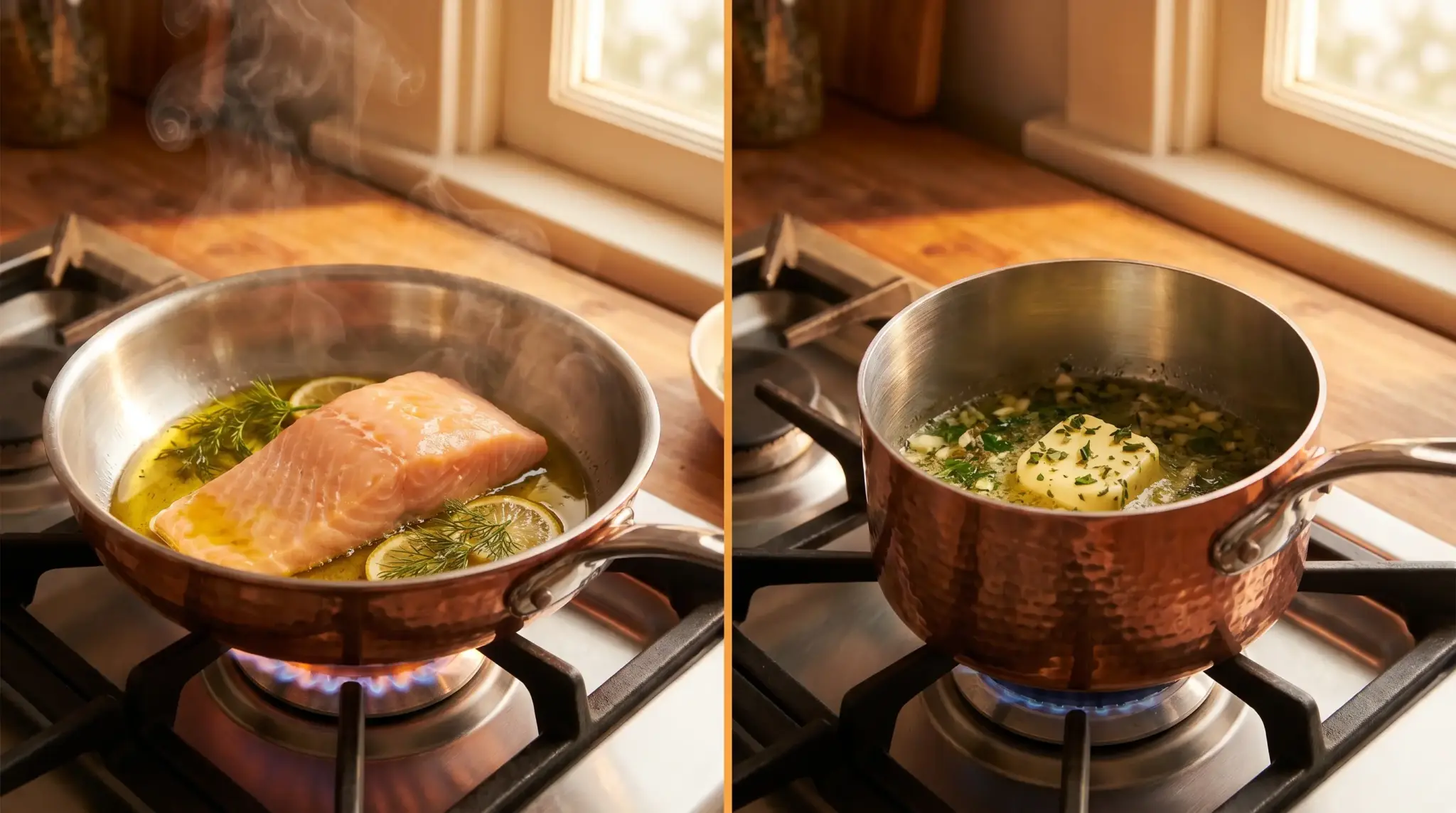
Anyone who’s burned cannabis butter on a stovetop knows what it smells like before the pot even comes off the heat. Hot fat, scorched plant matter, that telltale acrid edge that says most of the cannabinoids you’d been trying to capture just left through the exhaust fan.
That smell has a cousin. It’s the one you get when you pan-sear salmon at too high a heat – watching the white fat squeeze out of the flesh and pool around the fillet, knowing dinner is already compromised.
Two different ingredients. Two different kitchens. Same root failure: rushing fat through heat it can’t handle. The chemistry behind it isn’t complicated. It’s just usually invisible until you’ve already ruined something.
The Shared Chemistry
The central fact is dumber than it sounds. Fat-soluble compounds need fat. Without one, the other goes nowhere.
Take salmon. Farmed Atlantic runs around 13% fat by weight, wild king goes higher. That fat is the whole flavor story – omega-3s, faint iodine, the sea-derived aromatics that build up over a fish’s lifetime in cold water. None of those flavors live in the protein. They live in the lipids.
Push the heat too hard and the lipids render out. White fat beads up on the pan. The flesh gets gray and grainy. Whatever made the salmon taste like salmon ends up in the sink at washing-up time.
Cannabis runs on the same physics, just with different molecules. THC and CBD are lipophilic – they dissolve in fat, not water. To move them out of dried flower and into something a kitchen can use, you need fat acting as the carrier. Butter does the job because butter is roughly 80% fat. Olive oil does it because olive oil is essentially all fat. Boiling water won’t pull the compounds out of the plant. It’ll just produce green water and waste your morning.
Anyone who’s ever made a herb-infused olive oil, a citrus-flecked compound butter for finishing fish, or a garlic confit at low temperature has done the same thing cannabis butter requires – with different inputs. For the curious, there are detailed walkthroughs of DIY cannabis edibles that lay out the temperature targets and timing in proper detail.
Why Salmon Demands Patience
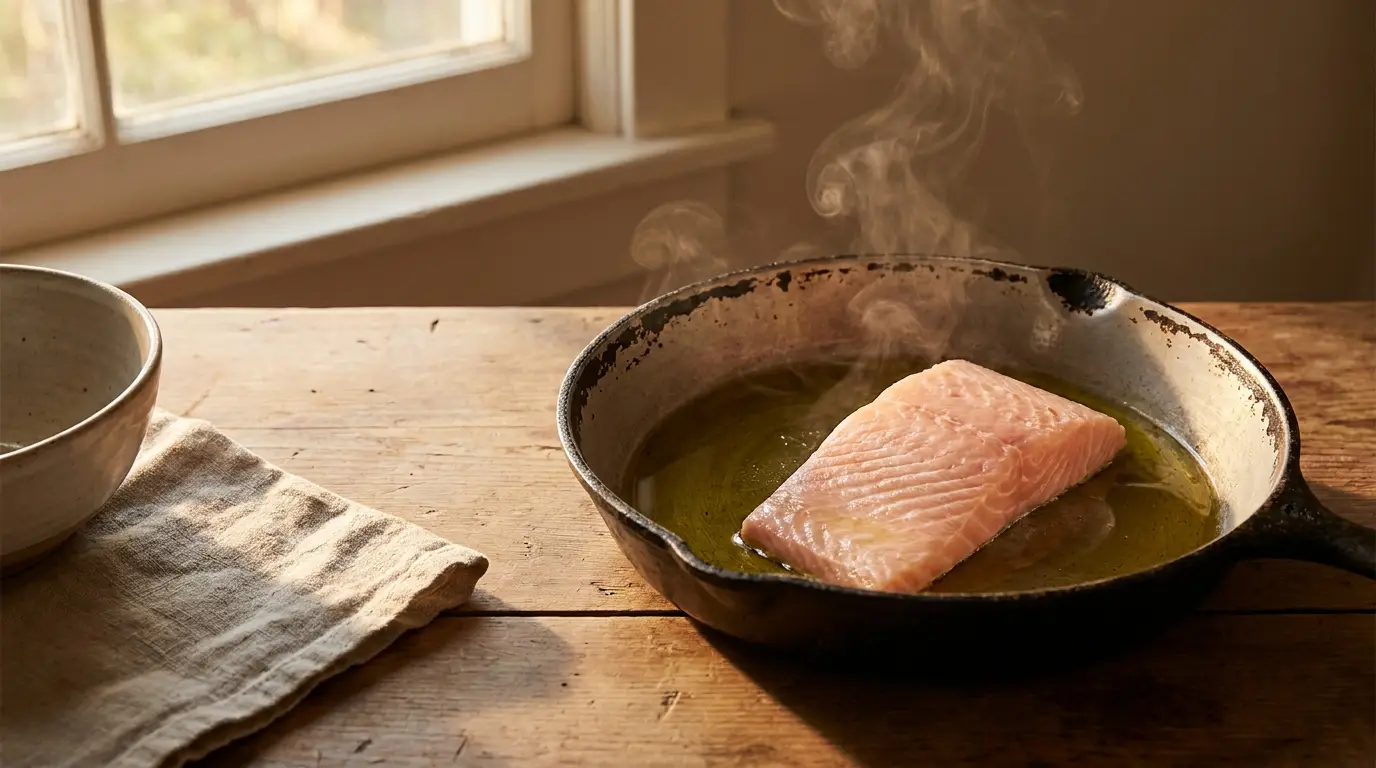
Salmon proteins start tightening around 125°F. Moisture squeezes out by 135°F. The window is narrow. By 145°F – the FDA’s recommended safe internal temp – you’re already at the edge of overcooked.
The technique that gets the best results isn’t the fanciest. It’s just slow. Confit-style preparations cook salmon in olive oil at 120-125°F for 25-30 minutes. The flesh stays translucent. The fat distributes evenly through the muscle fibers instead of weeping out. Texture turns silky, almost lacquered.
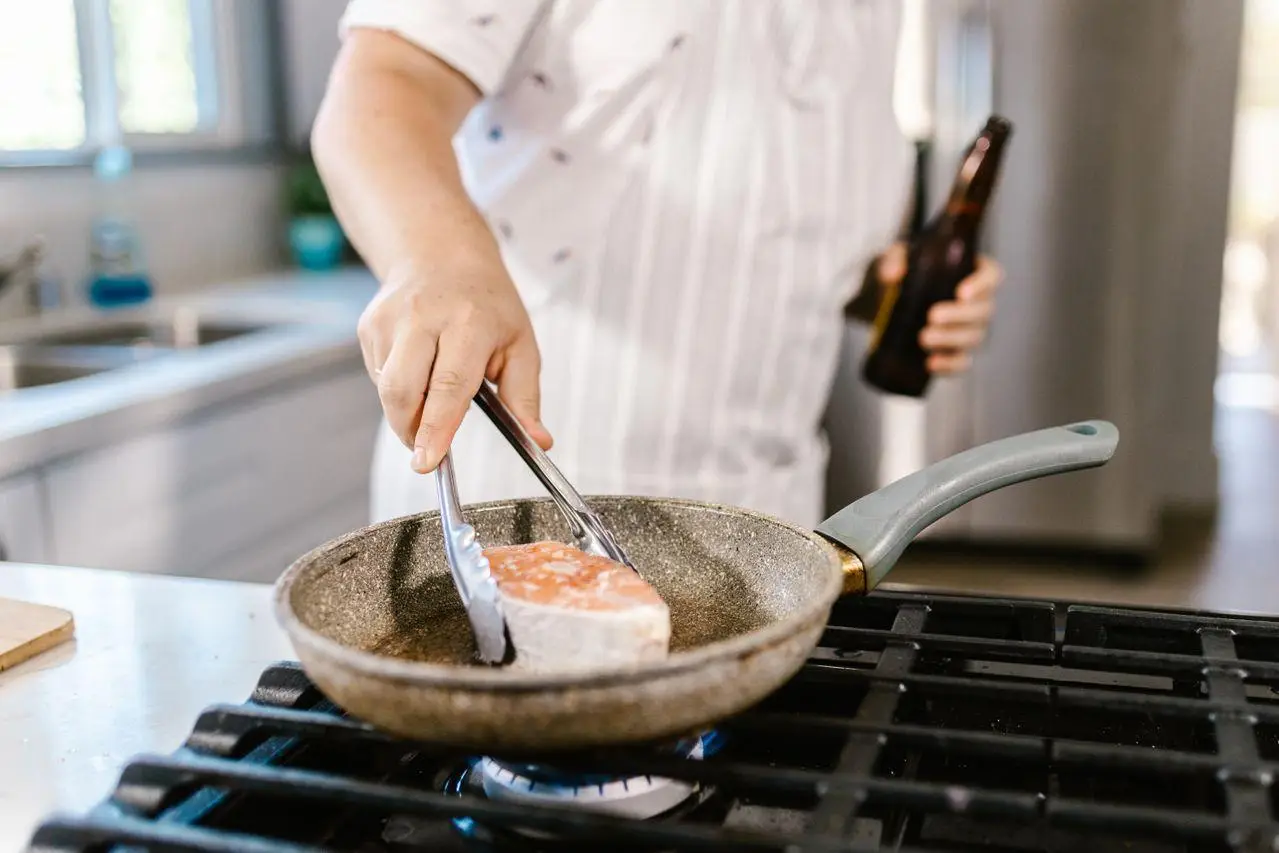
Pan-searing works too, but only if you accept that the goal is medium-rare. Skin side down for most of the cook. Brief flip at the end. Pull it off before the center is fully opaque – residual heat will finish the job on the plate.
The mistake home cooks make is treating salmon like chicken. Chicken can take a beating. Salmon cannot.
Why Cannabis Butter Demands the Same
Raw cannabis flower doesn’t contain THC in the form people associate with effects. It contains THCA – an acid that needs heat conversion to become active. The conversion process is called decarboxylation, and the sweet spot sits around 240°F for 30-40 minutes in a dry oven.
Then comes the infusion. Butter melts into a pot over the lowest heat your stove will allow. Decarboxylated flower goes in. The mixture sits for 2-4 hours, stirred occasionally, never boiled. Above 320°F, cannabinoids start degrading and harsh-tasting byproducts develop. The goal is steady warmth, not active cooking.
Low heat. Long contact between fat and substrate. Patience over force. Watching the temperature so nothing breaks. If that list sounds familiar, it should – because it’s the same list a good salmon cook already keeps in their head.
The Bigger Lesson About Fat-Based Cooking
Most American home cooking trains people in the opposite habits. Crank the burner. Get a sear. Move fast. The high-heat aesthetic dominates everything from grilled chicken to stir-fries to weeknight dinners.
Fat-based slow cooking sits in a different lineage. French confit traditions. Italian olive-oil-poached fish. The whole world of compound butters and herbed oils that finish a plate without dominating it. Cannabis butter, in this context, is a relatively recent addition to a very old category – fat as carrier, low temperature as technique, time as the secret ingredient.
Salmon belongs in the same family, even though most home cooks never think of it that way.
The Practical Takeaway
If you’ve ever made a good confit salmon, you can make a good cannabis butter. The techniques transfer directly. If you’ve ever ruined a salmon by overcooking, you understand exactly what goes wrong with a rushed infusion.
What links them is the underlying respect for fat as a flavor carrier. Once you start thinking of butter, olive oil, and fish fat the same way – as a medium that holds and protects delicate compounds – a lot of home cooking starts making more sense. The herb butter on top of your grilled scallops. The compound butter melting on your steak. The infused oil drizzled over crudo. The cannabis butter in someone’s brownie. All from the same family.
Slow down with the salmon. Slow down with the butter. The patience pays back in flavor either way.