

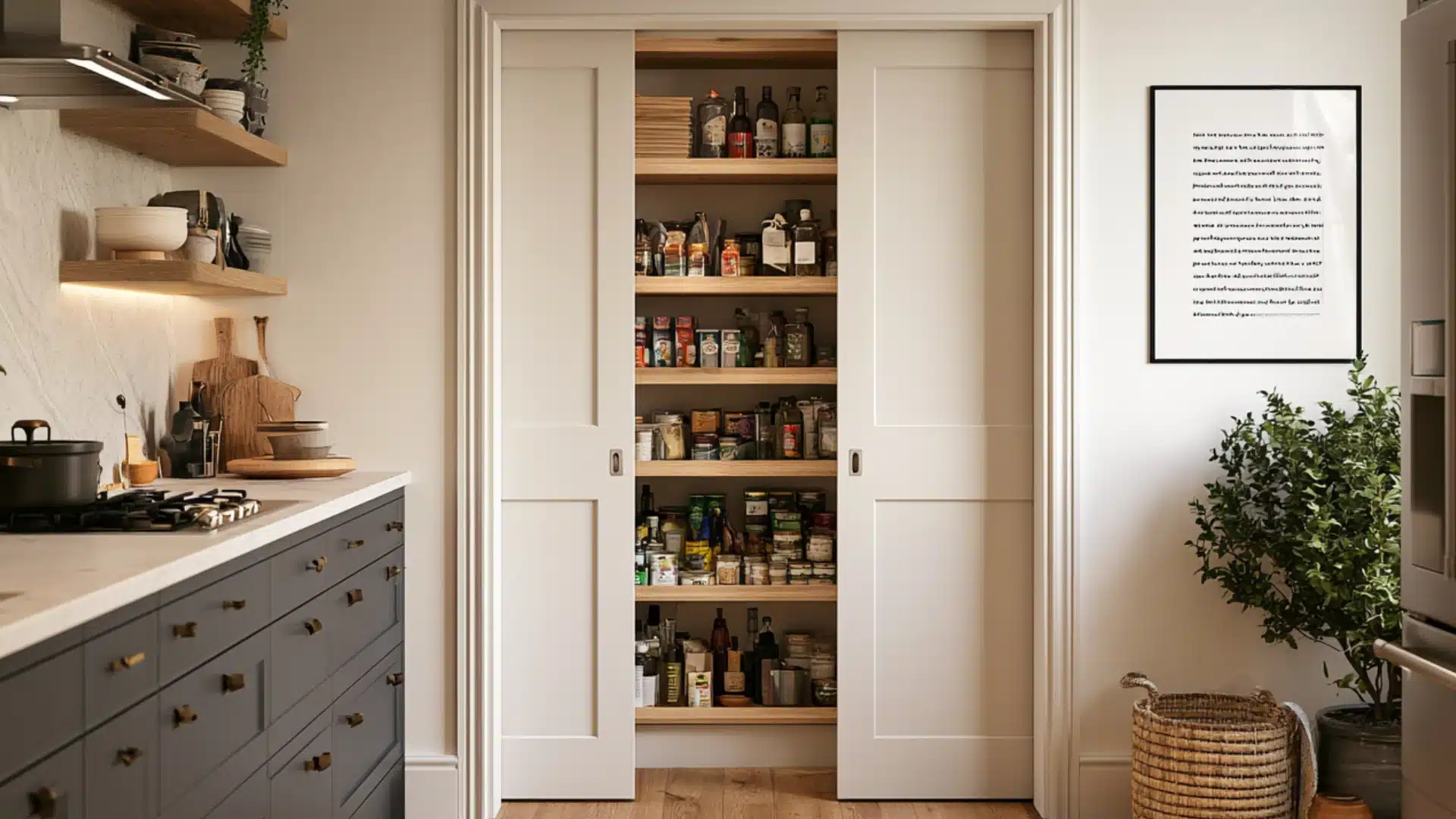
Open the pantry door and something always looks off. Maybe it’s the crackers wedged sideways, or that jar of pasta sauce nobody remembers buying.
A small kitchen pantry fills up fast, and after a while nothing has a real spot anymore. Shelves get crowded, snacks end up buried in random corners, and the whole space feels tighter than it actually is.
Small pantry ideas can fix most of this mess without knocking down a single wall.
A few better shelves, some basic habits, and small style touches go a long way toward making the space work again.
Plan Your Small Pantry Before Organizing
Before buying bins or adding new shelves, take everything out first. An empty pantry shows what needs a spot and what belongs in the trash.
Check expiration dates along the way, since old spices and stale crackers eat up space.
A few things to check before restocking anything:
- Height, width, and depth of each shelf
- Whether tall cereal boxes need to stand up or lie flat
- Which snacks get grabbed the most
- Which meals happen on repeat during a busy week
Pantry space fills up fast when it does not match how the kitchen gets used day to day. A plan built around real habits works better than one built around looks alone.
Small Pantry Ideas That Maximize Storage
A few smart shelving choices turn wasted air into real storage. Structure comes first, since the right shelf setup makes everything else easier to sort out later.
1. Take Shelving up to the Ceiling
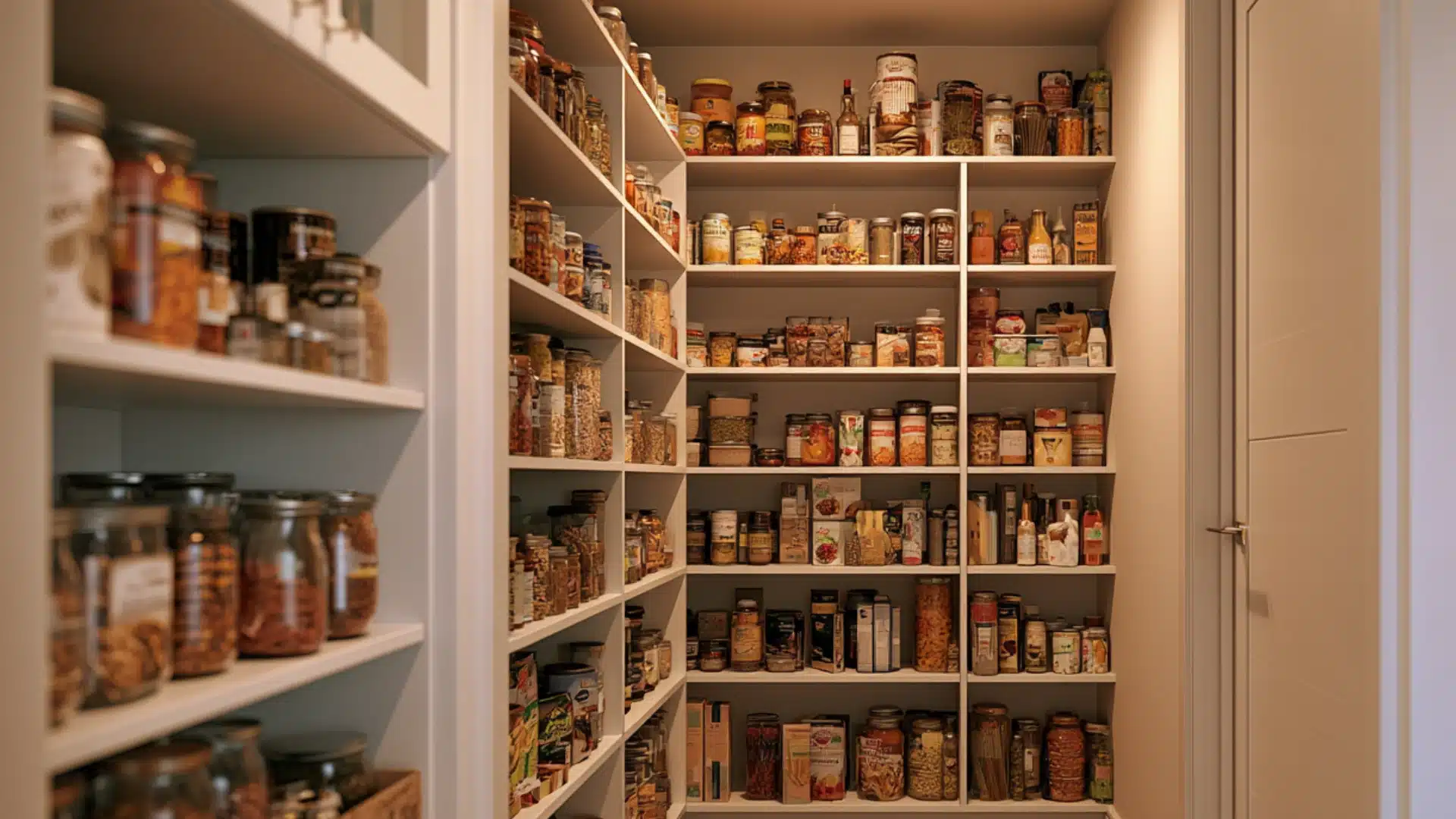
That gap near the ceiling usually sits empty in most pantries.
Floor-to-ceiling shelving puts it to work for bulk items, small appliances, or backstock that doesn’t need daily access. It adds more room than most bins or baskets ever will.
2. Install Adjustable Pantry Shelving
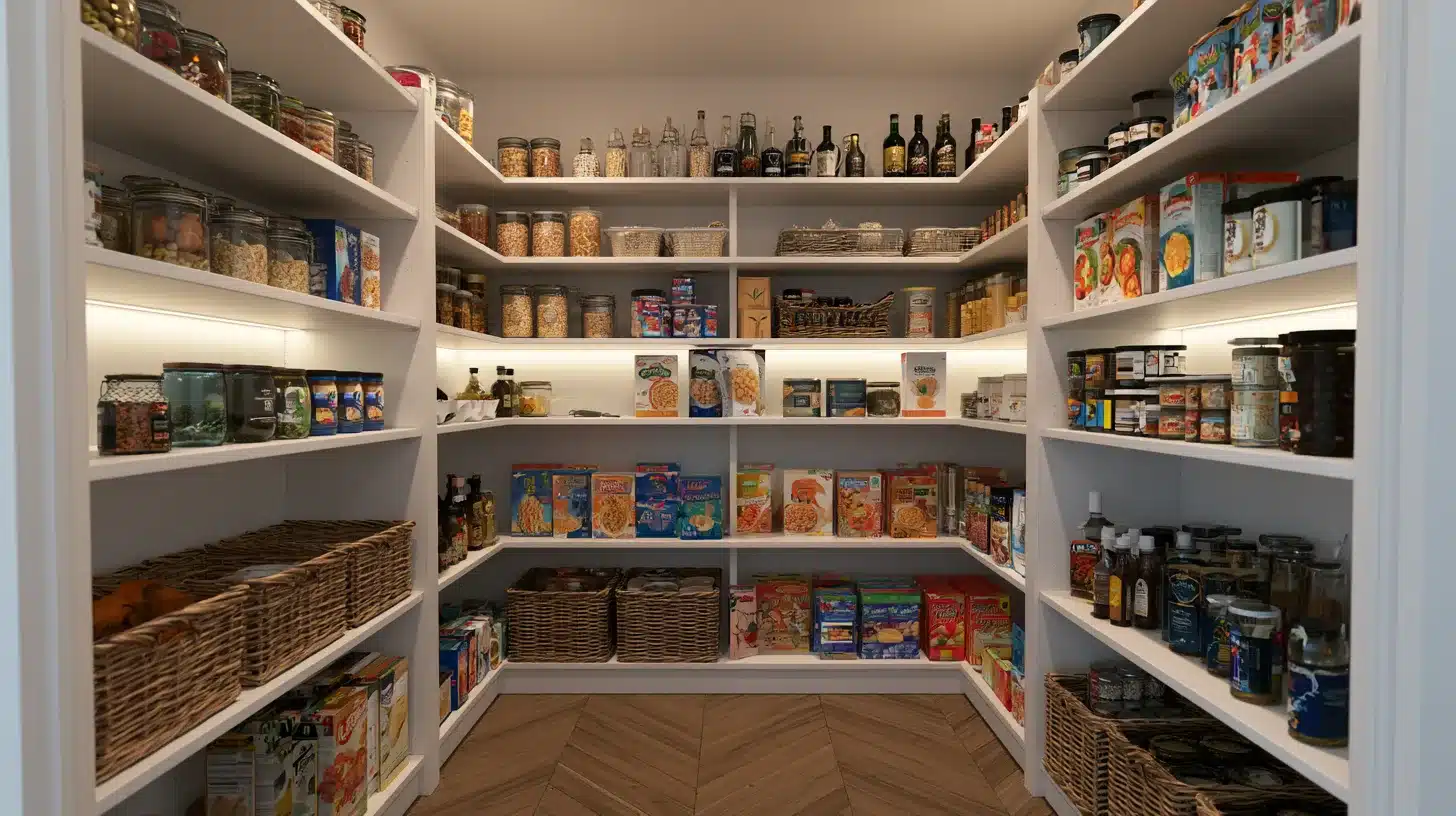
Cereal boxes need more height than spice jars, and fixed shelves rarely allow for that. Adjustable shelving moves to fit whatever sits on it.
Grocery habits change over time, and the shelf can change right along with them. Nothing gets stuck squeezing into a gap that never quite works.
3. Add Full-Extension Pull-Out Shelves
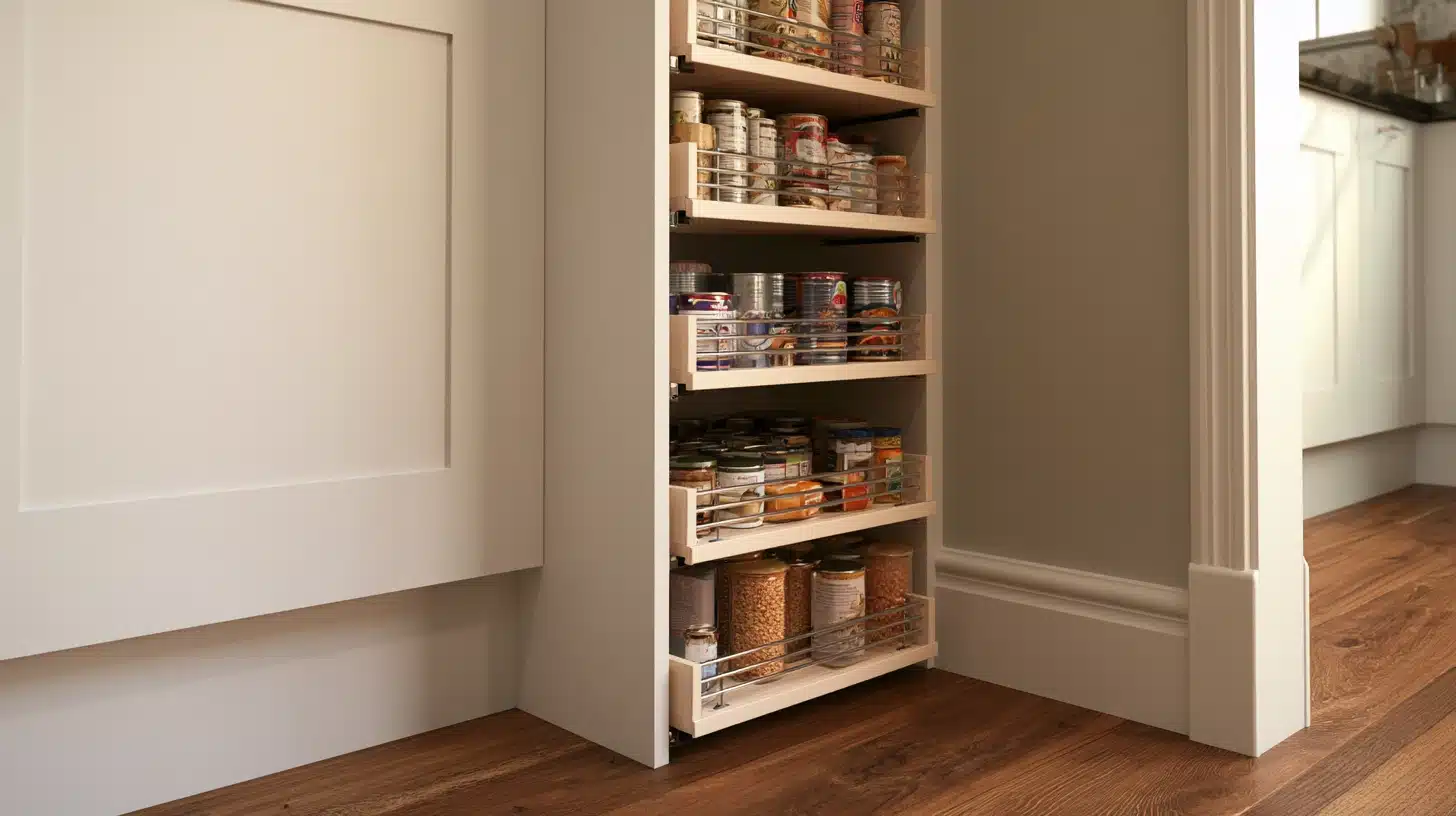
Grabbing one can from the back of a deep shelf usually means unloading half of it first.
Pull-out shelves slide all the way forward, bringing everything into view at once. Nothing at the back stays hidden or hard to reach anymore.
4. Use Tiered Risers for Cans
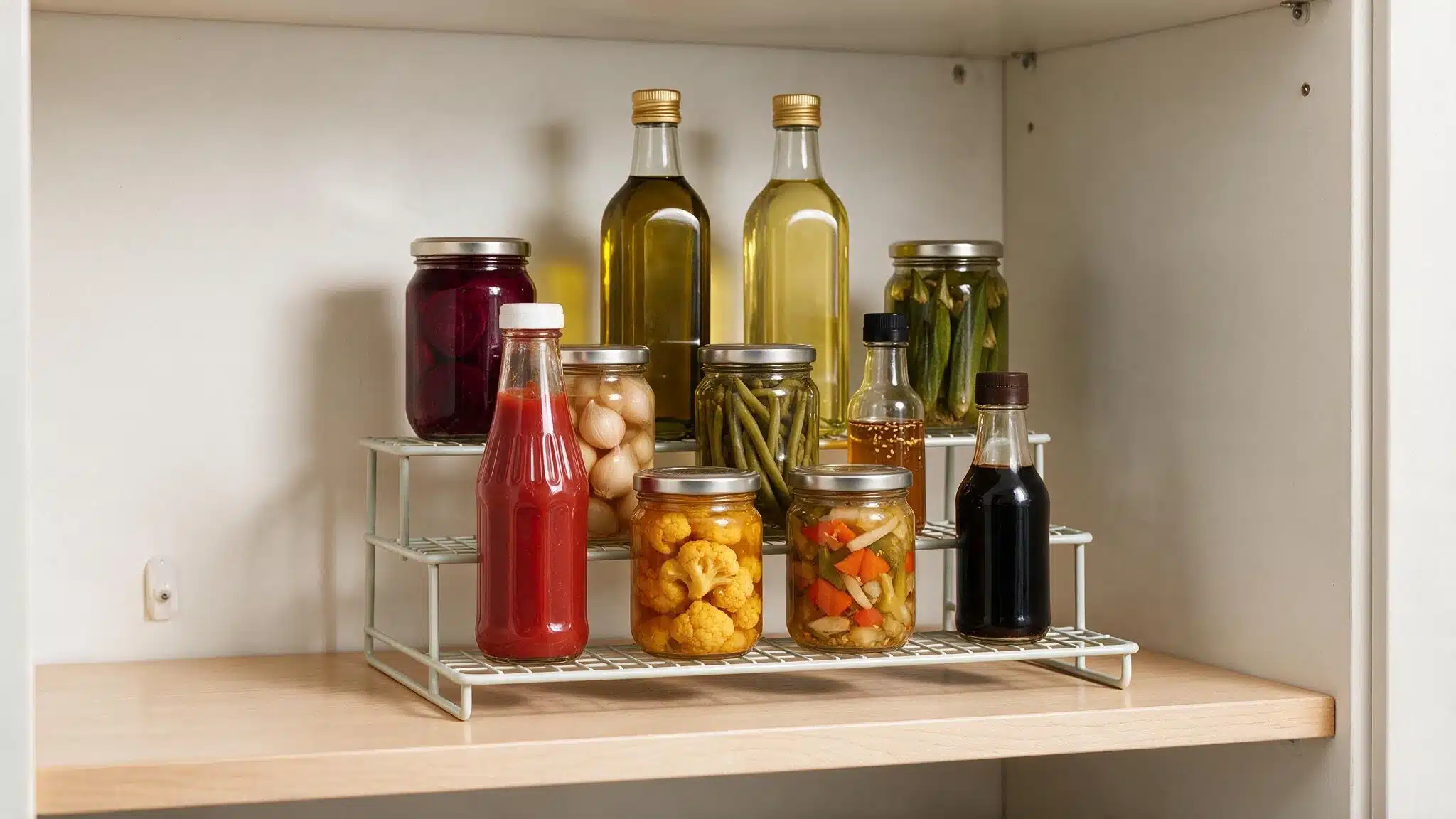
Cans stacked behind each other on a flat shelf turn into a bit of a guessing game. Risers create small steps so every row stays visible from the front.
Nothing gets buried or left to expire quietly in the back. A narrow shelf holds a lot more once nothing overlaps.
5. Turn Corners with Lazy Susans
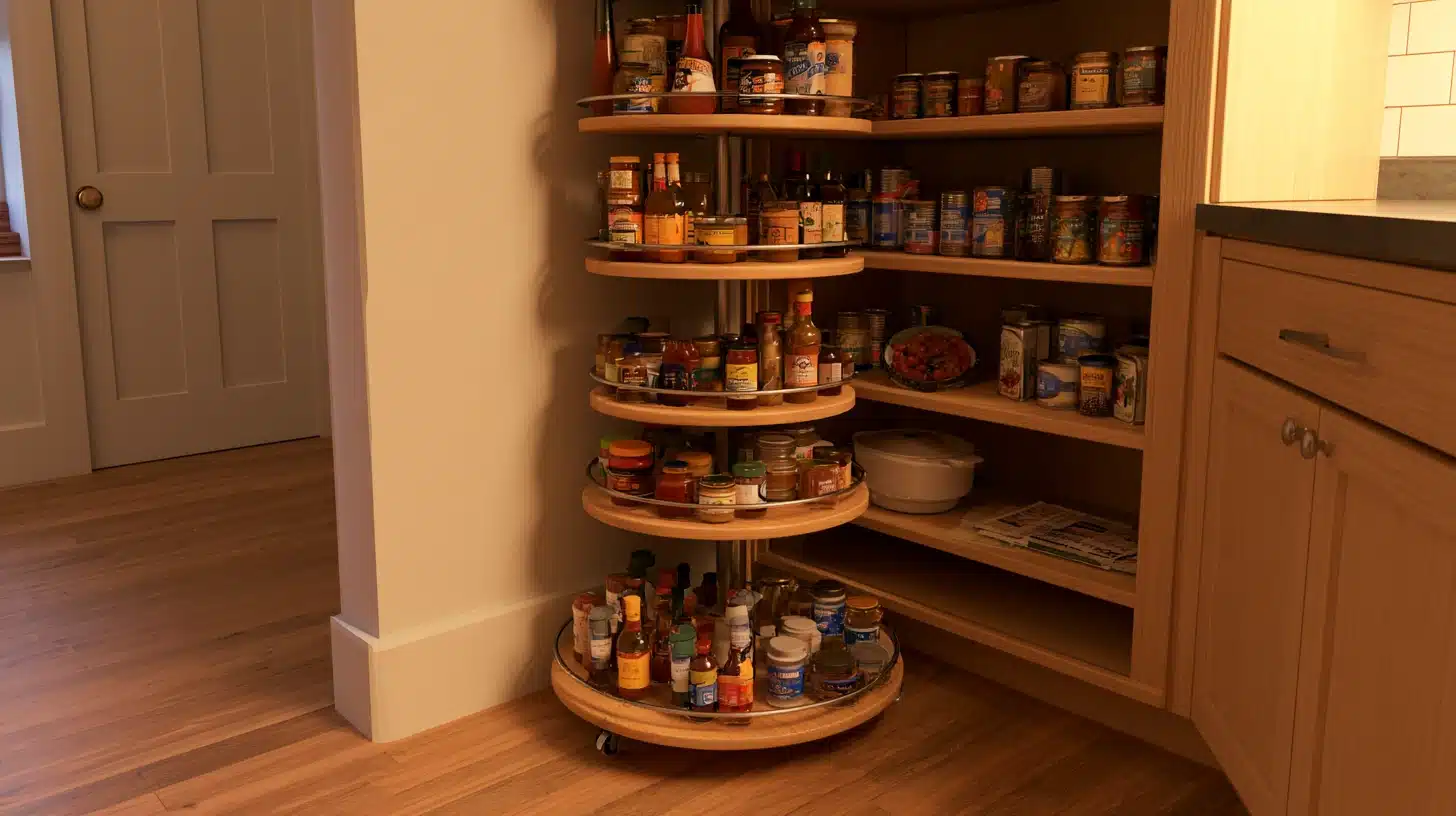
Corners rarely fit anything well on their own. A lazy Susan spins around and brings oils, sauces, or jars right to hand with one turn.
Everything stays visible and easy to grab.
6. Use the Pantry Door for Slim Storage Racks
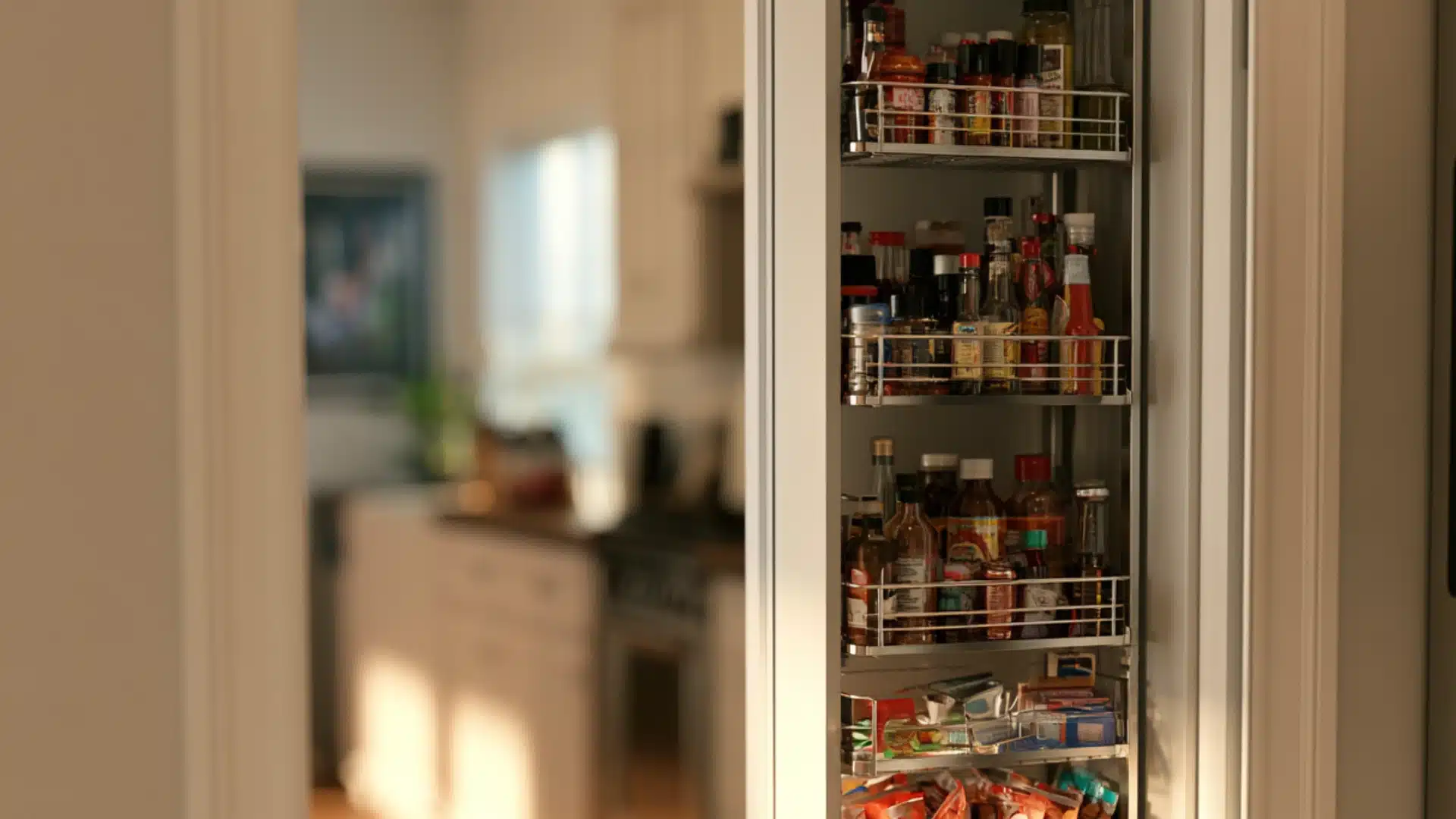
A plain door is really just wasted space. Slim racks mounted on the inside store spices, snack packets, or small bottles.
This keeps shelf space open for bigger items instead of crowding it. One rack can free up an entire row inside.
Organize Food for Faster Everyday Access
Good shelving only goes so far without a system behind it. These small pantry ideas turn stocked shelves into something that actually saves time during a busy week.
7. Create Zones Based on Use
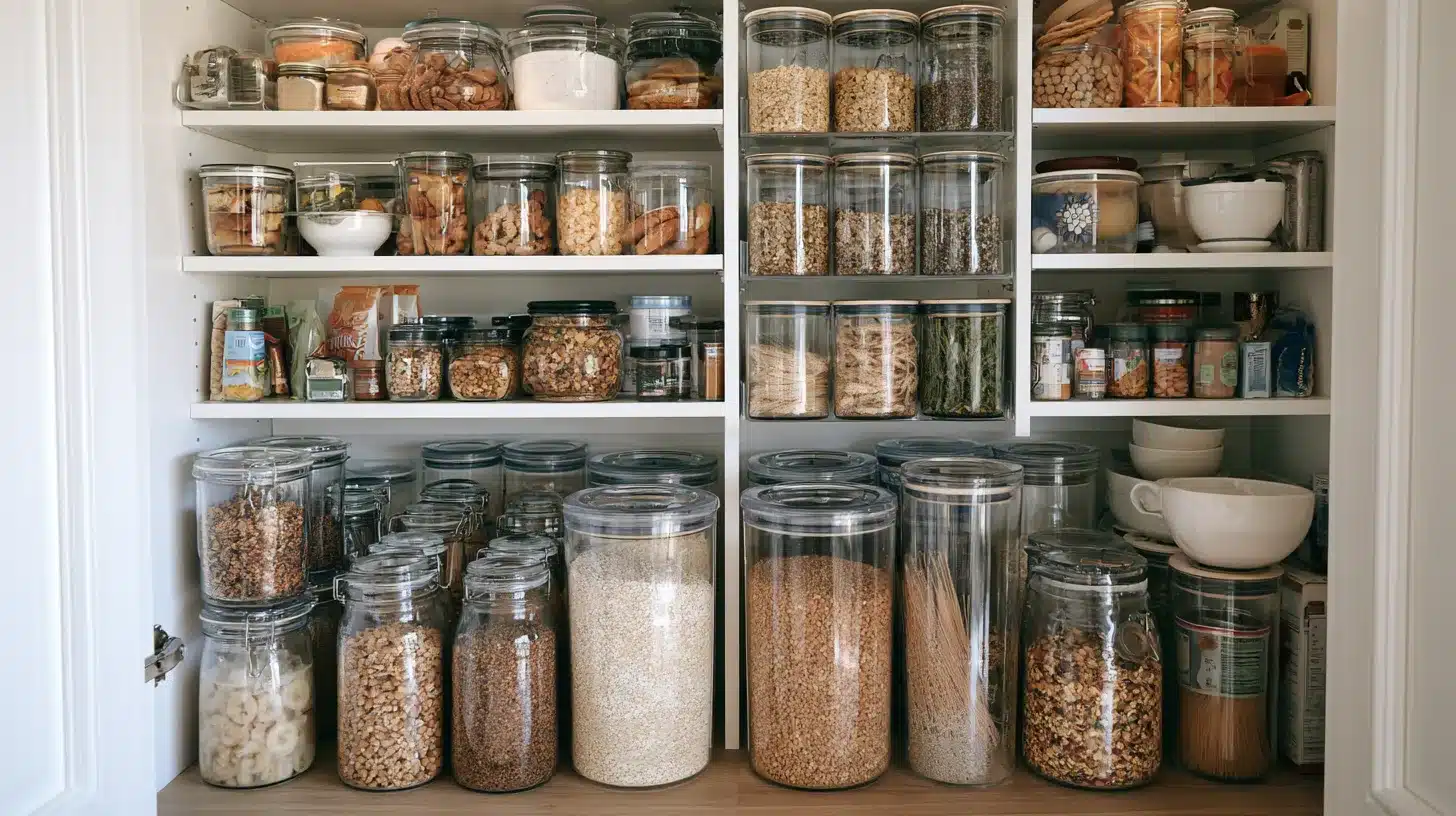
Grouping food by how it gets used works better than grouping by size. Breakfast items, snacks, baking supplies, and dinner staples each get their own section.
Finding anything means walking to the right zone instead of searching the whole pantry.
8. Keep Similar Foods Together
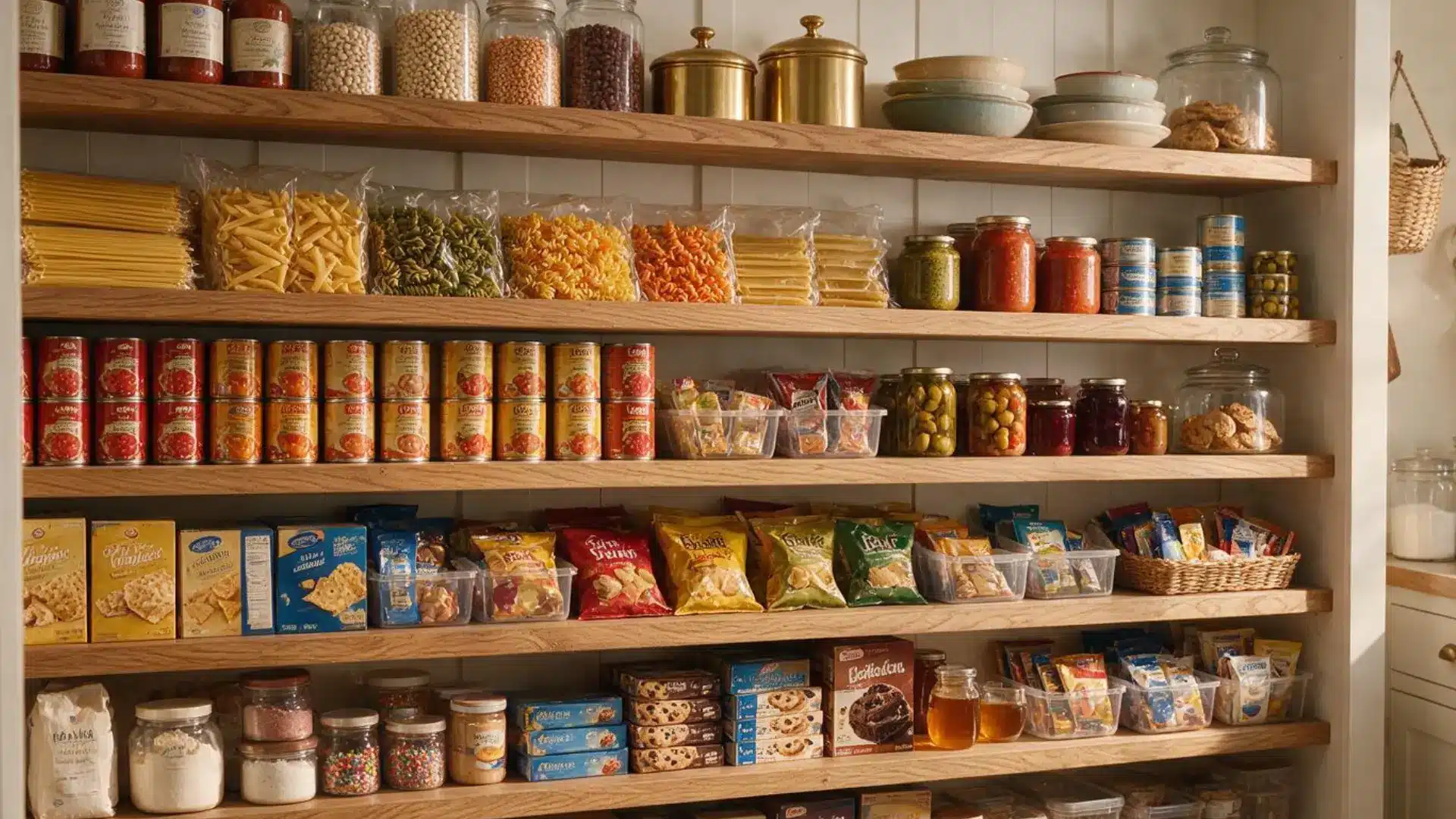
Pasta scattered across three different shelves makes it easy to buy a fourth box by mistake. Keeping similar items in one spot shows what you already have and quickly cuts down on duplicate purchases.
9. Store Bulky Items Down Low
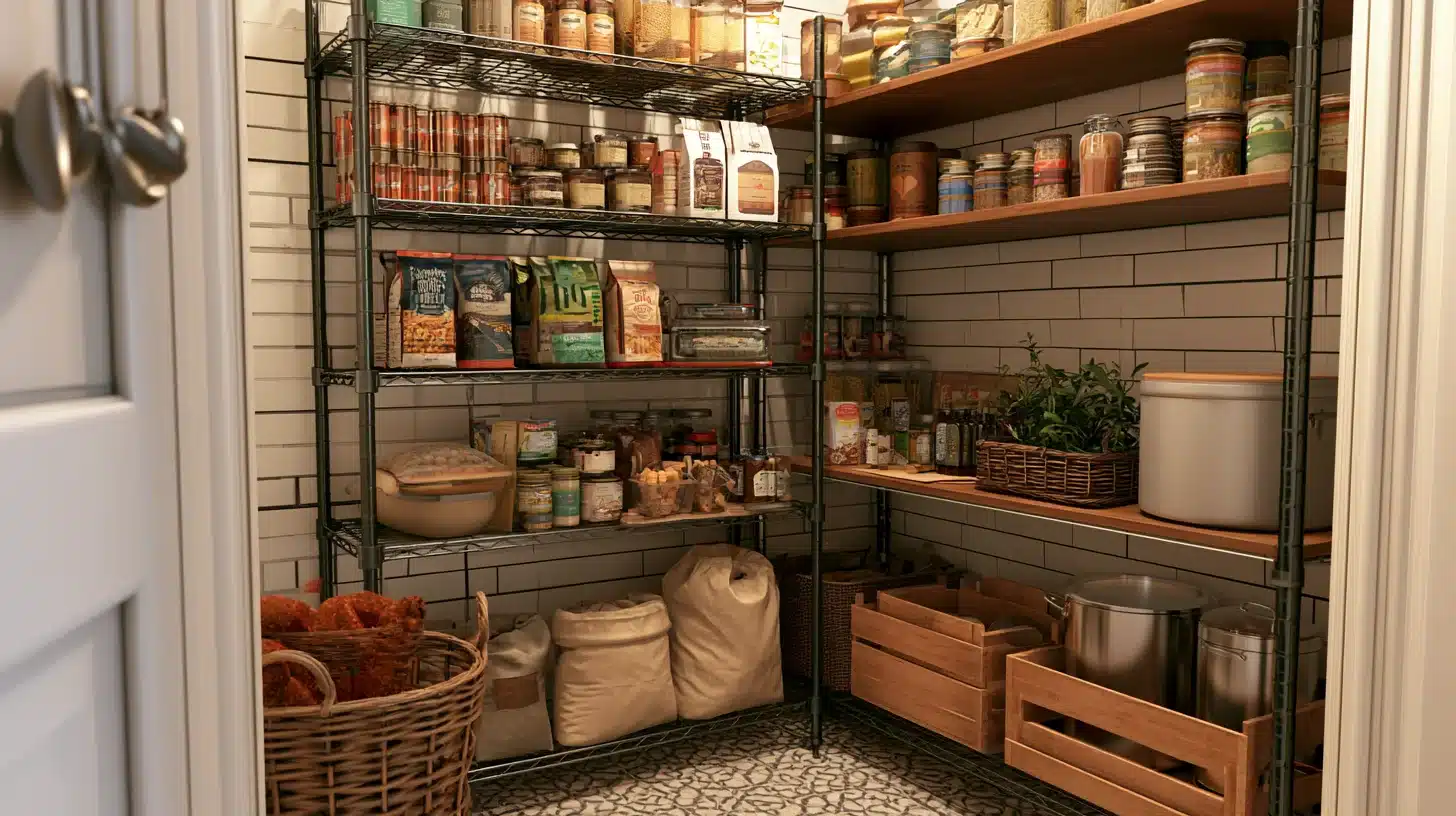
Heavy bags of rice, large jugs, and bulk packages belong on the floor or the lowest shelf.
Storing weight down low keeps upper shelves lighter and lowers the risk of anything toppling over during a quick grab.
10. Decant Staples Into Clear Containers
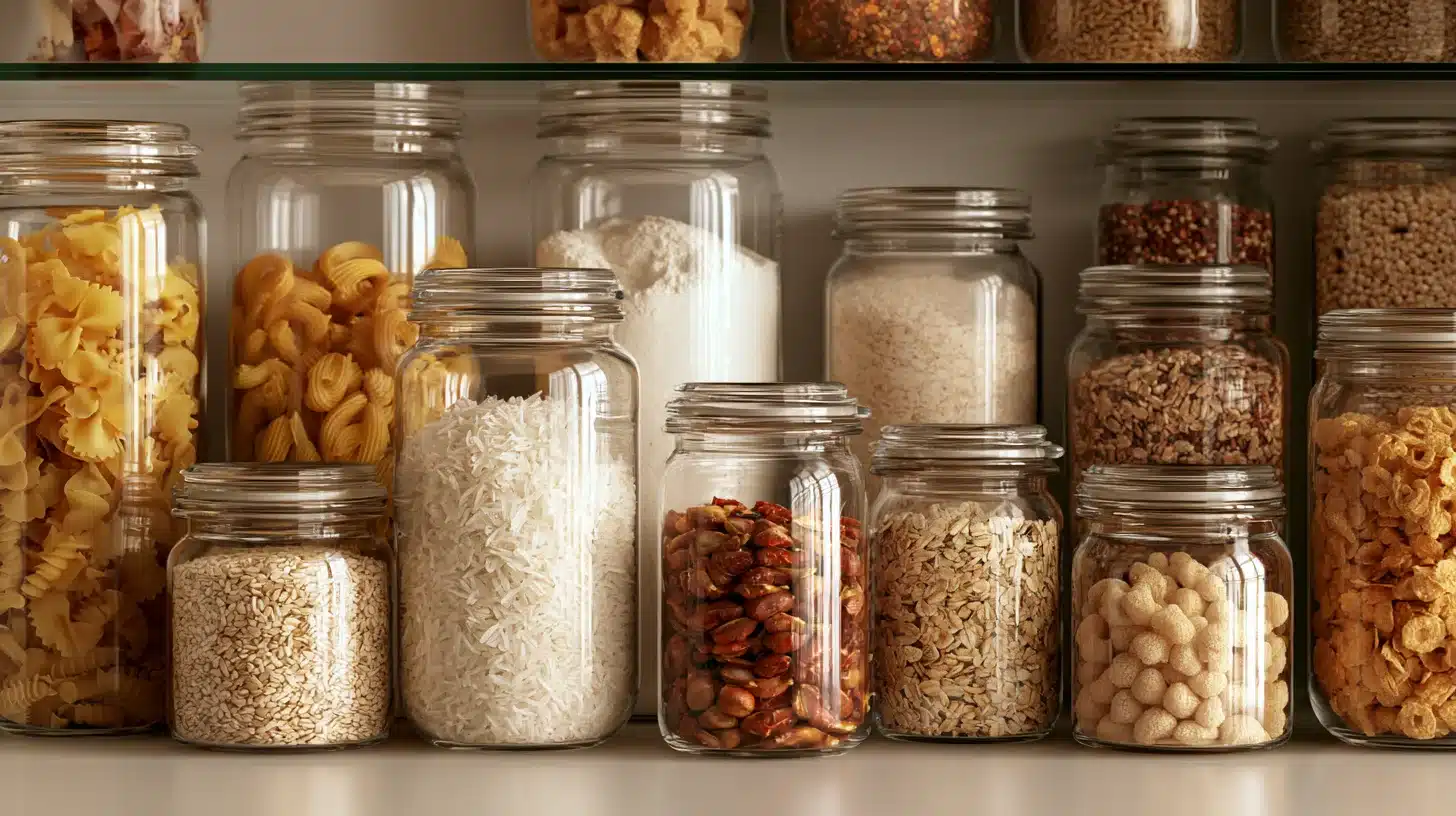
Cardboard boxes and bags take up more room than needed and hide how much is actually left.
Clear containers show contents at a glance, whether it is flour, oats, or pasta, and airtight lids keep food fresher longer.
11. Corral Packets Inside Open Baskets
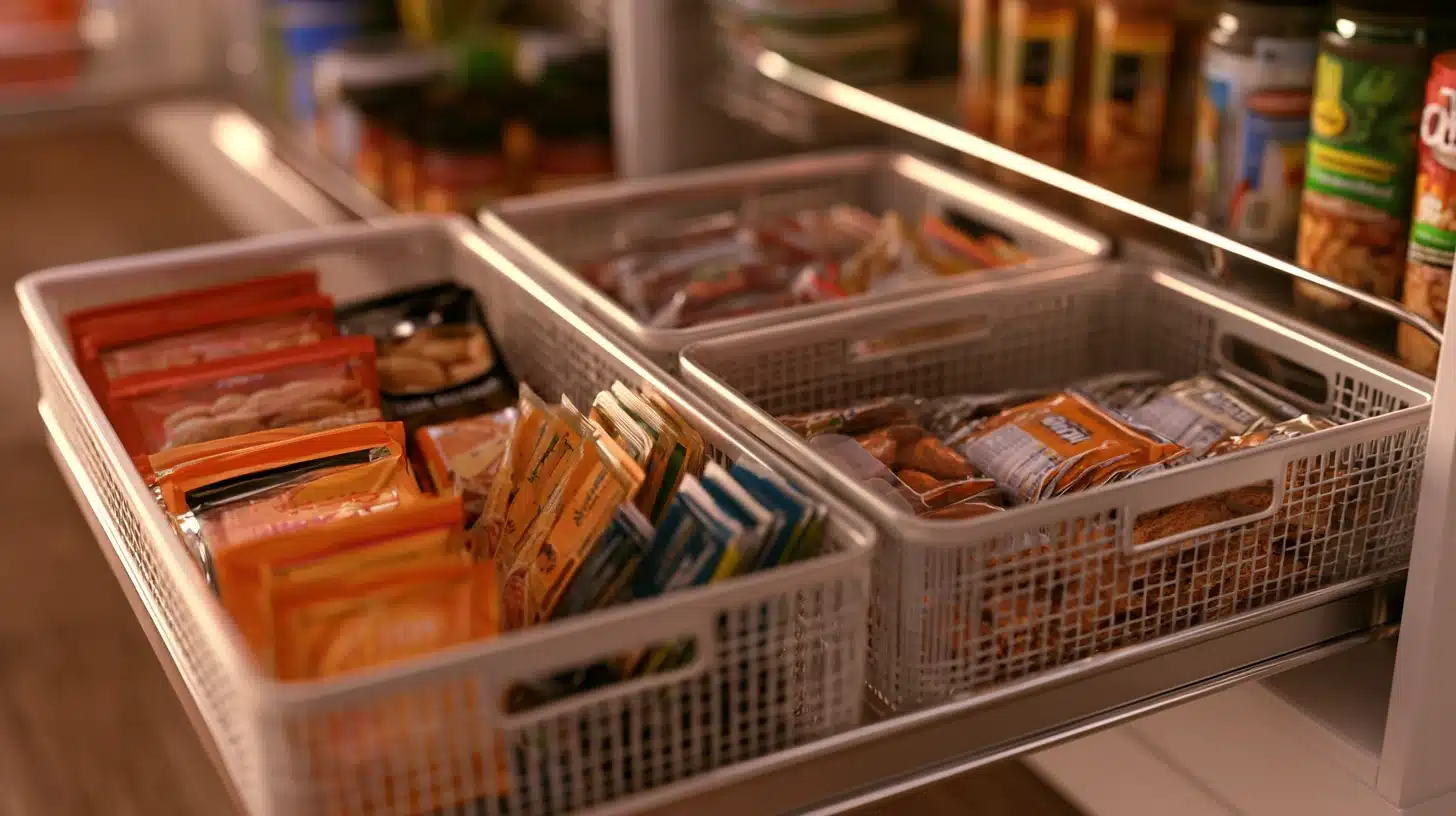
Granola bars, seasoning packets, and snack pouches slide around and get lost between other items on a shelf.
An open basket keeps them all in one place, so grabbing a snack takes seconds instead of a full search.
12. Label Containers Where It Helps
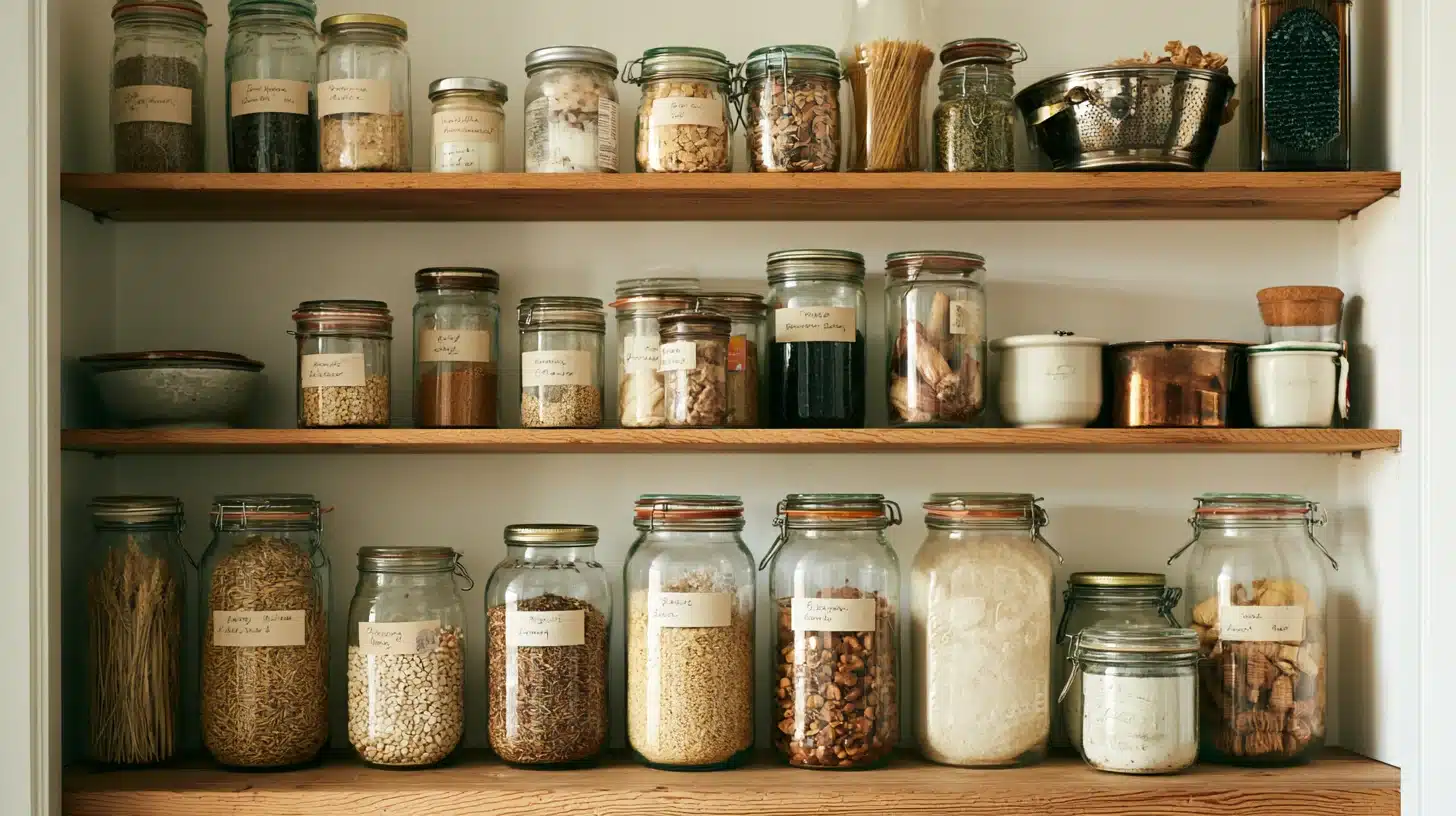
Not every container needs a label, but a few make a real difference.
Ingredients that look alike, like sugar and salt, benefit most from a clear label, saving confusion during a quick recipe for anyone in the kitchen.
Make Awkward Pantry Spaces Work Harder
Not every kitchen comes with a neat, square pantry, and leftover corners, gaps, and odd spots often sit empty instead.
13. Turn Cabinets or Unused Corners Into Mini Pantries
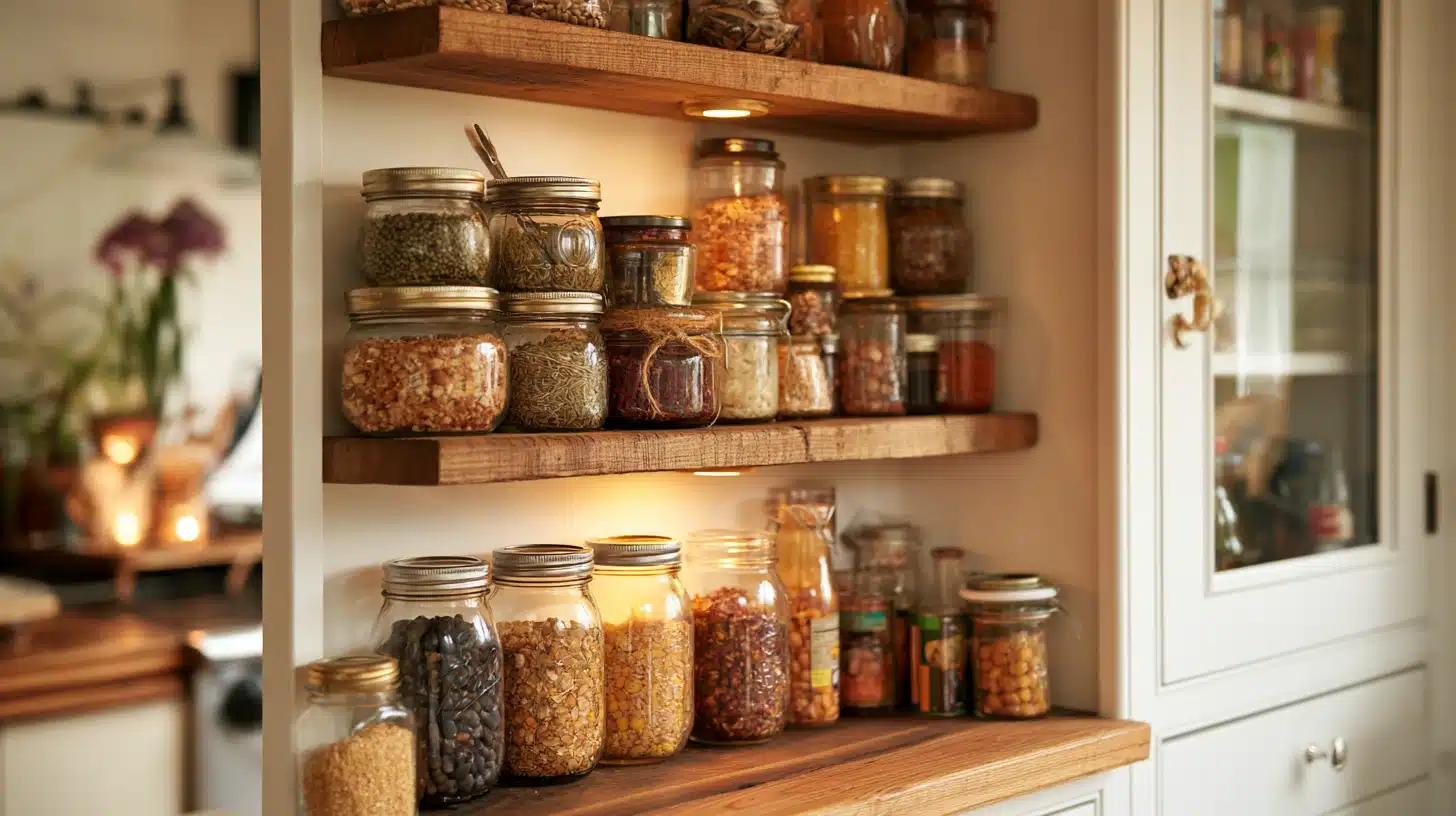
Skipping a real pantry does not mean skipping storage altogether. A tall kitchen cabinet or bare corner can do the job just fine, especially once you add an inside shelf.
14. Install a Slim Pull-Out Pantry
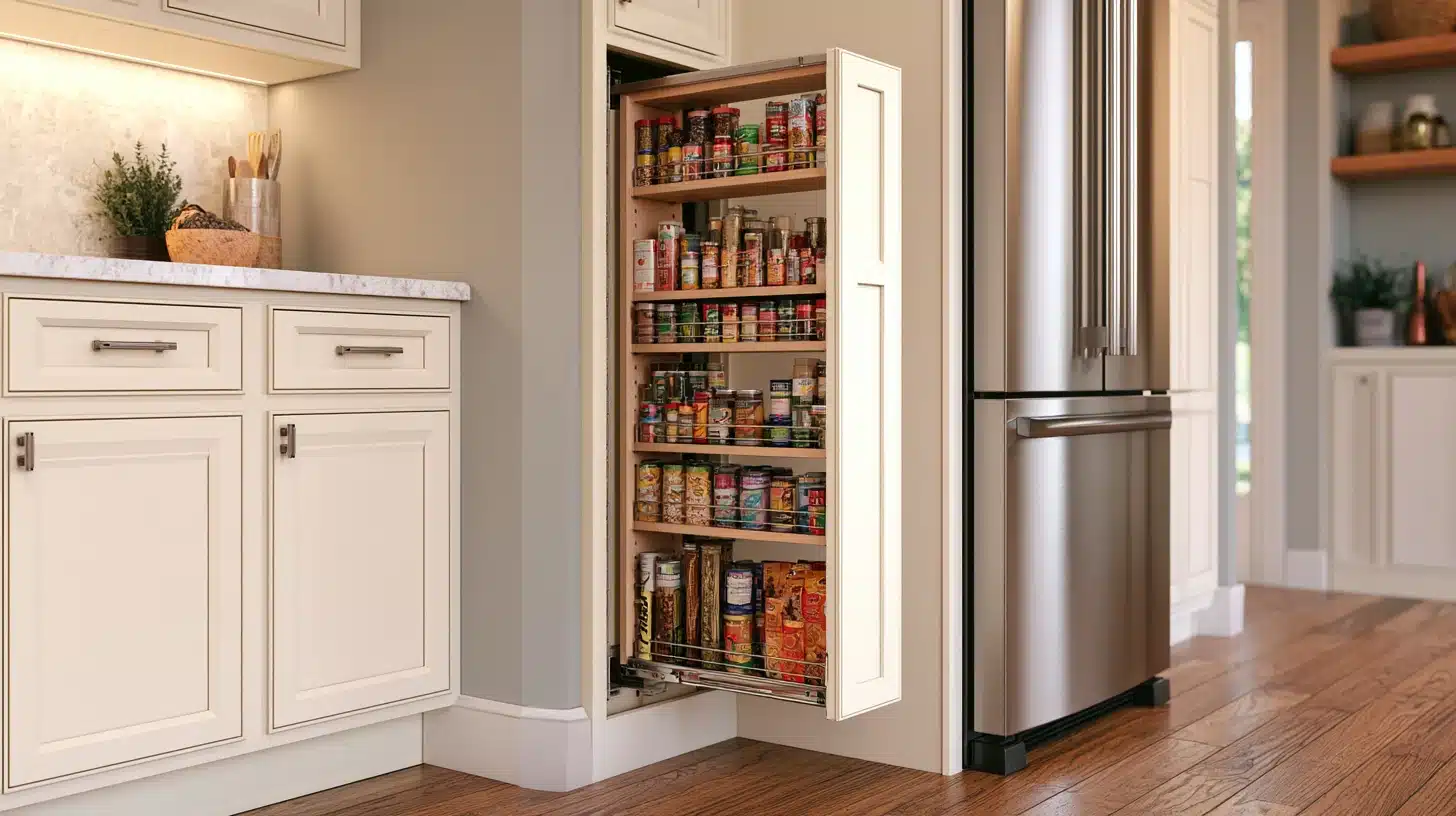
That narrow strip next to the fridge usually collects dust and crumbs. Slide a pull-out unit into it, and suddenly there is room for spices, cans, or snacks.
Dead space like that can turn into real storage almost overnight.
15. Add Floating Shelves to Corners
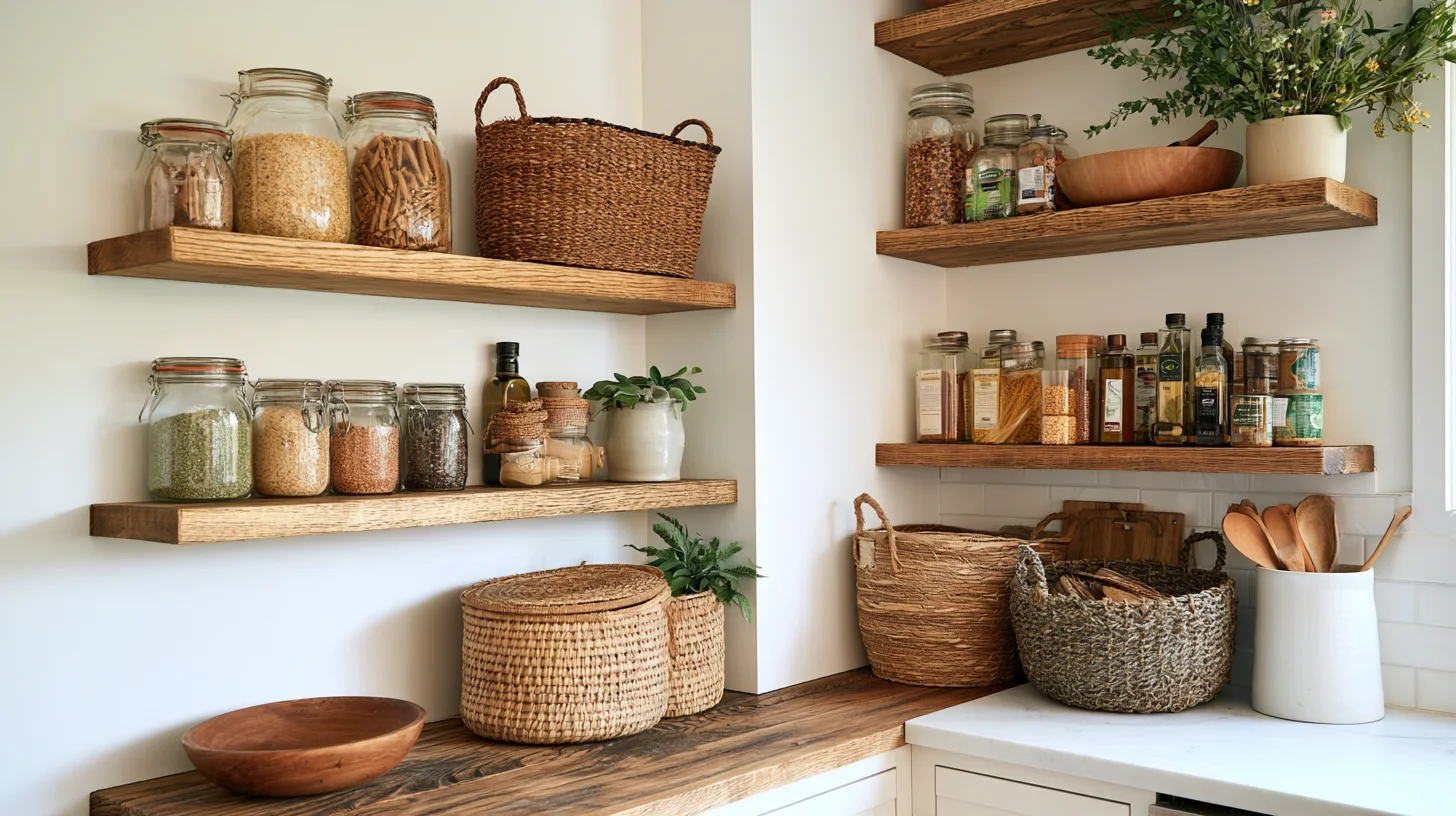
A bare wall near the kitchen often stays that way because filling it feels like a hassle.
A couple of floating shelves fix that without the cost of a full cabinet. Jars, baskets, or boxes sit on top with no trouble at all.
16. Convert an Under-Stair Space
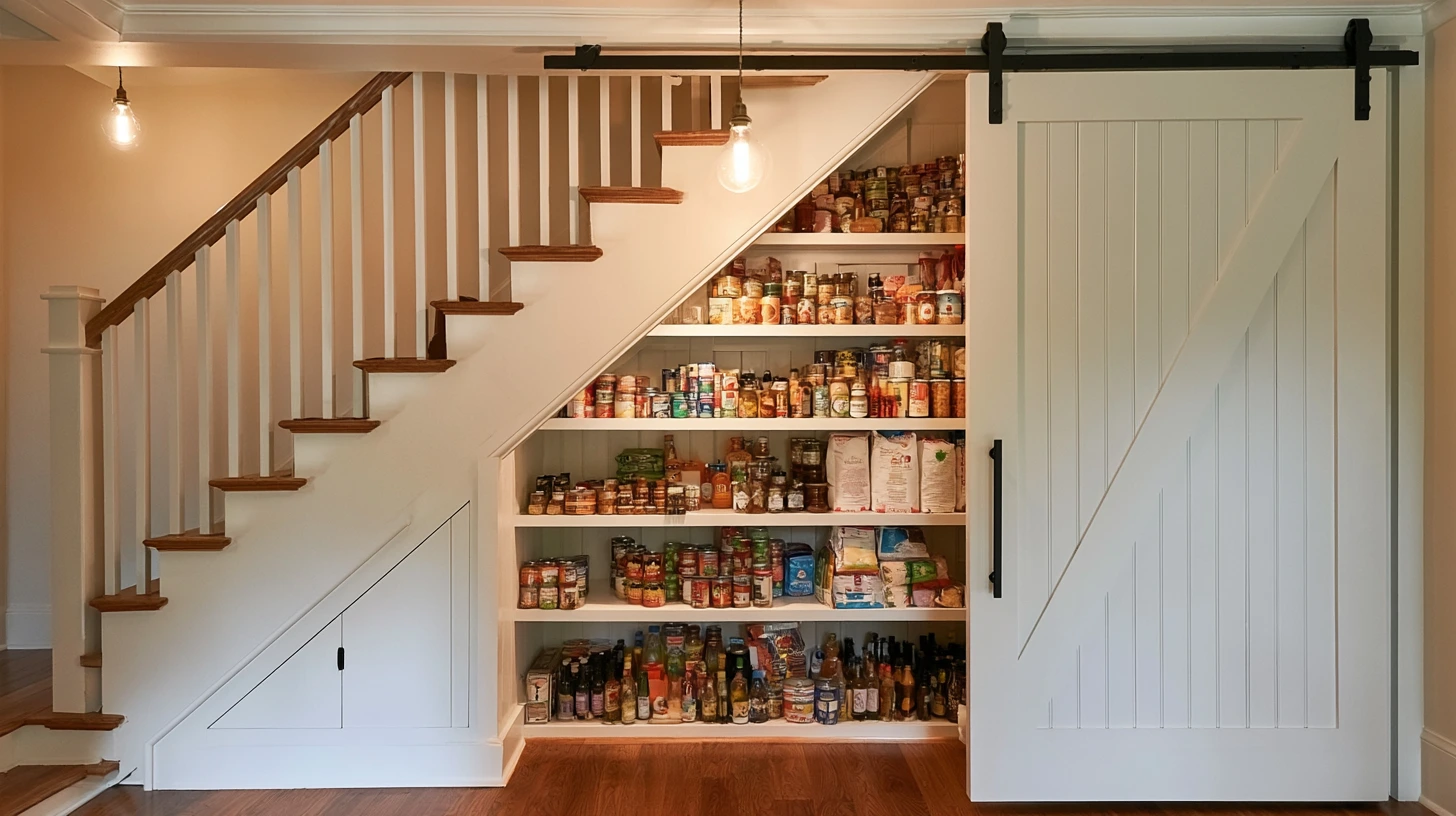
Most staircases hide a chunk of wasted space underneath, good for maybe a coat hook.
Add a few shelves or a small cabinet, and that gap starts pulling its weight as extra pantry room. Kitchens without much storage to begin with benefit the most here.
17. Customize Shelves Around Obstacles
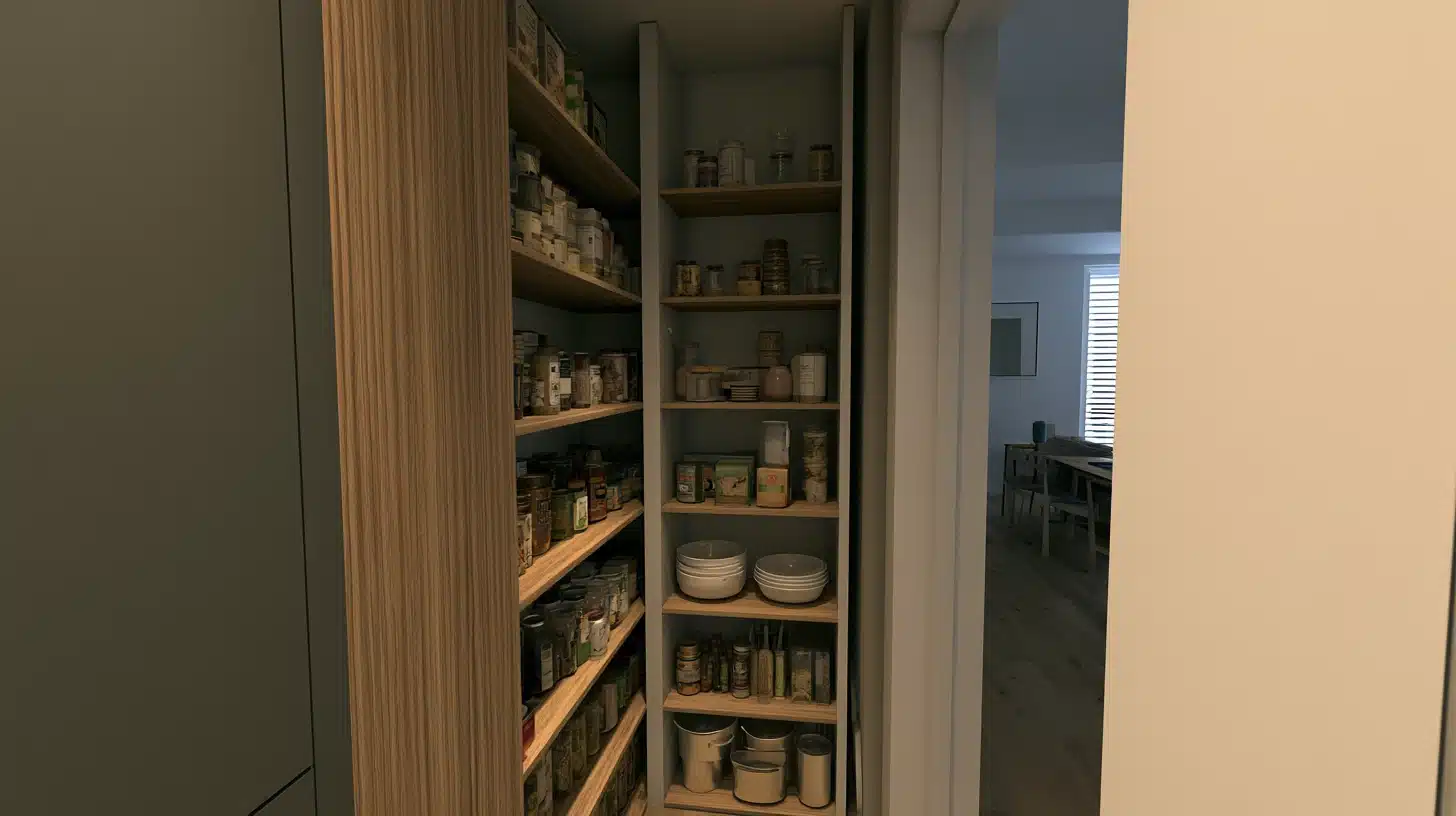
A stray pipe, an outlet, or a slanted wall can make a pantry feel impossible to plan around. Shelves cut to match those exact spots put the space to work instead of writing it off.
A standard shelf cannot compete with one built for the actual wall.
18. Add a Narrow Rolling Cart for Slim Gaps
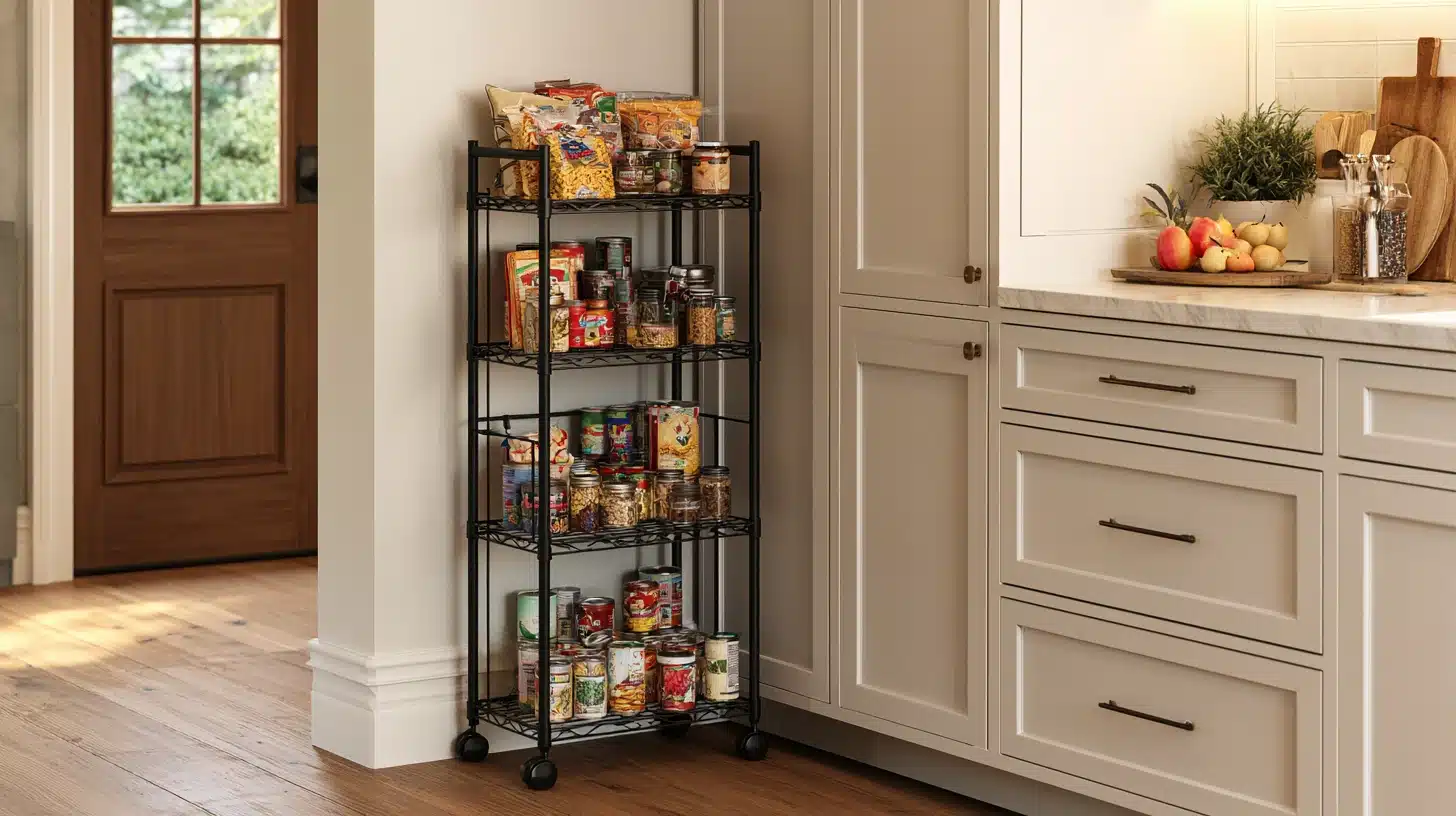
That thin gap beside the fridge or oven usually sits empty since nothing seems to fit. A narrow rolling cart slides right in and rolls back out just as easily when needed.
Snacks, spices, or backup pantry stock all find a spot there, no drilling required.
Add Style Without Sacrificing Function
A pantry can look nice and still work hard. Small pantry ideas at this stage add character without messing with what already works.
19. Pick a Pantry Look that Fits the Kitchen
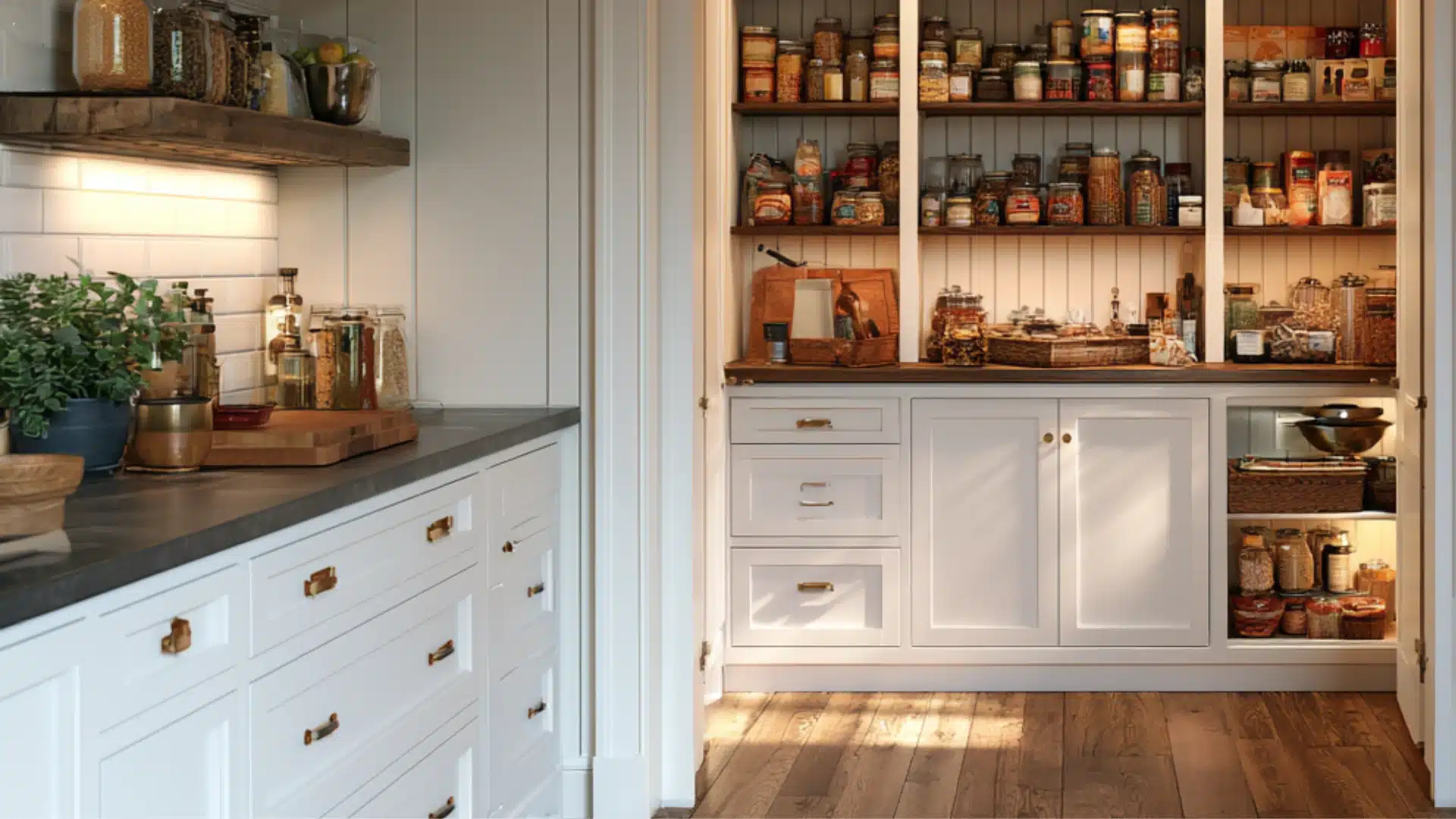
A pantry can lean moody with dark shelving and brass hardware, or airy with light wood and woven baskets.
Coastal, cottage, or minimal all work just as well, depending on the rest of the kitchen. Picking one direction keeps the shelves from feeling like a random mix.
20. Add Motion-Sensor Pantry Lighting
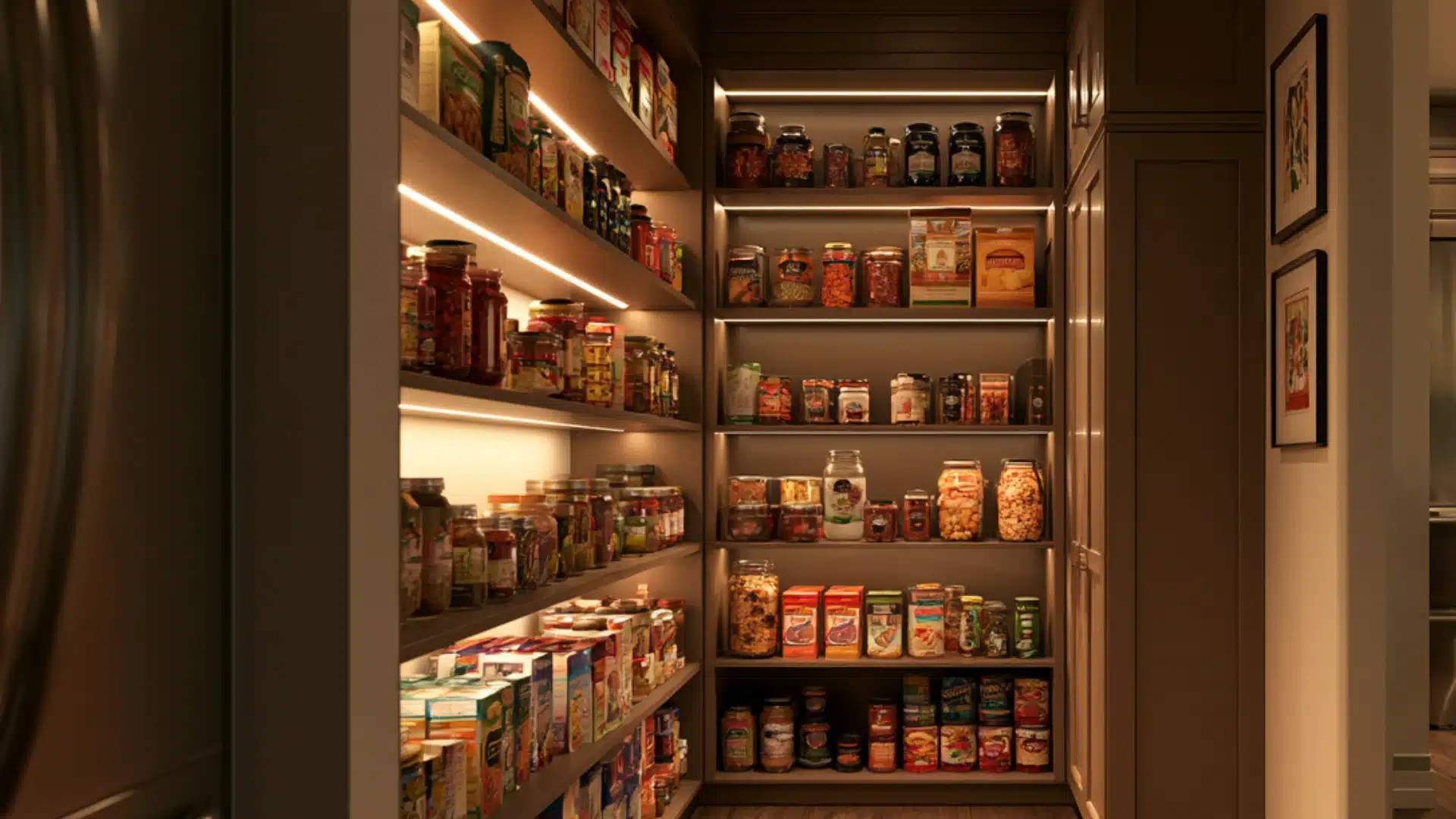
Nobody wants to hold a phone flashlight to find the pasta sauce. A motion sensor light flips on the second the door opens. Midnight snack runs get a lot less annoying.
21. Brighten Walls with Light Finishes or High-Gloss Paint
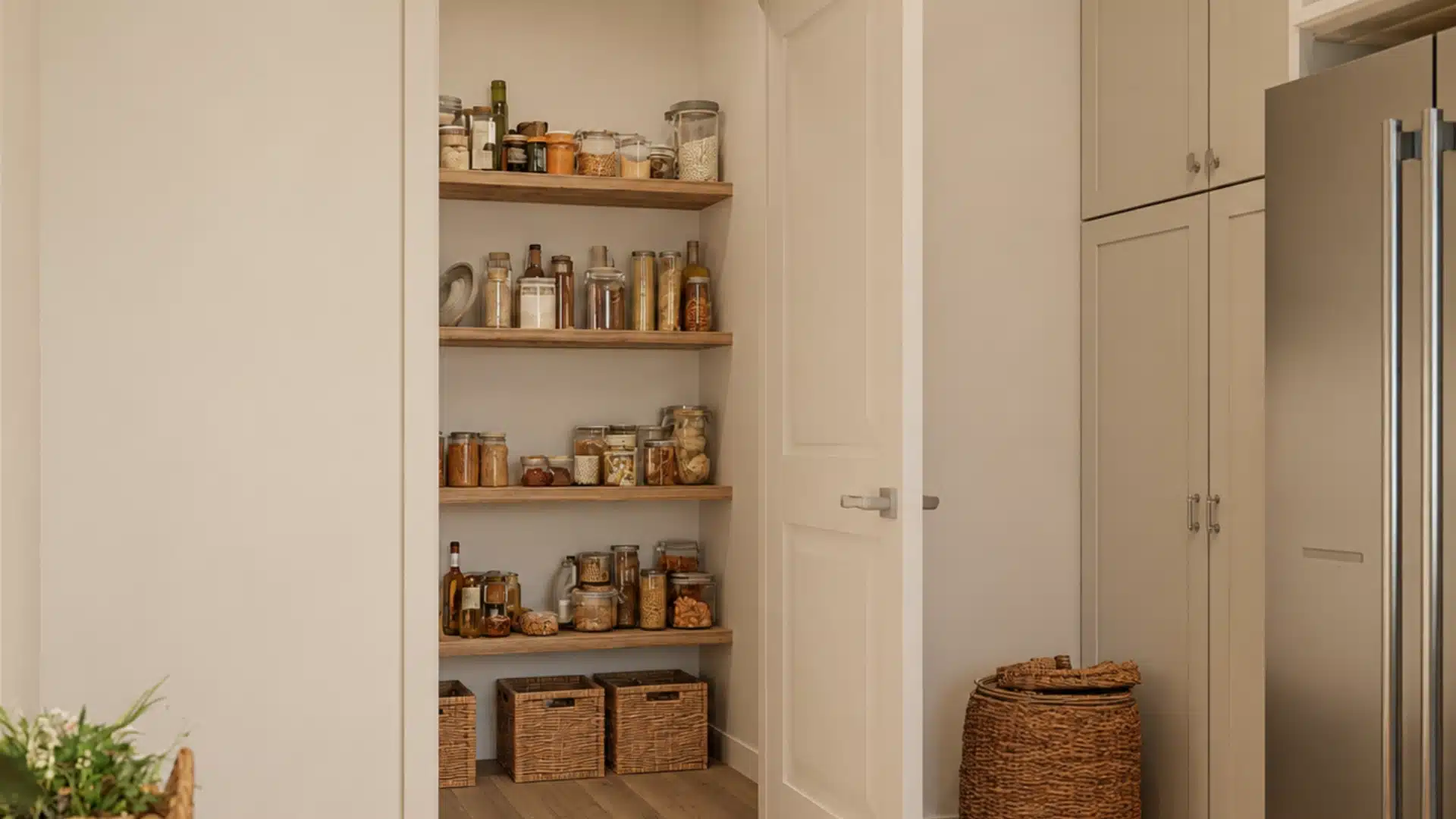
Dark walls make a small pantry feel like a cave. Lighter paint bounces the light around and helps the space breathe a little. Go glossy if the goal is extra shine off the shelves.
22. Add Personality With Wallpaper
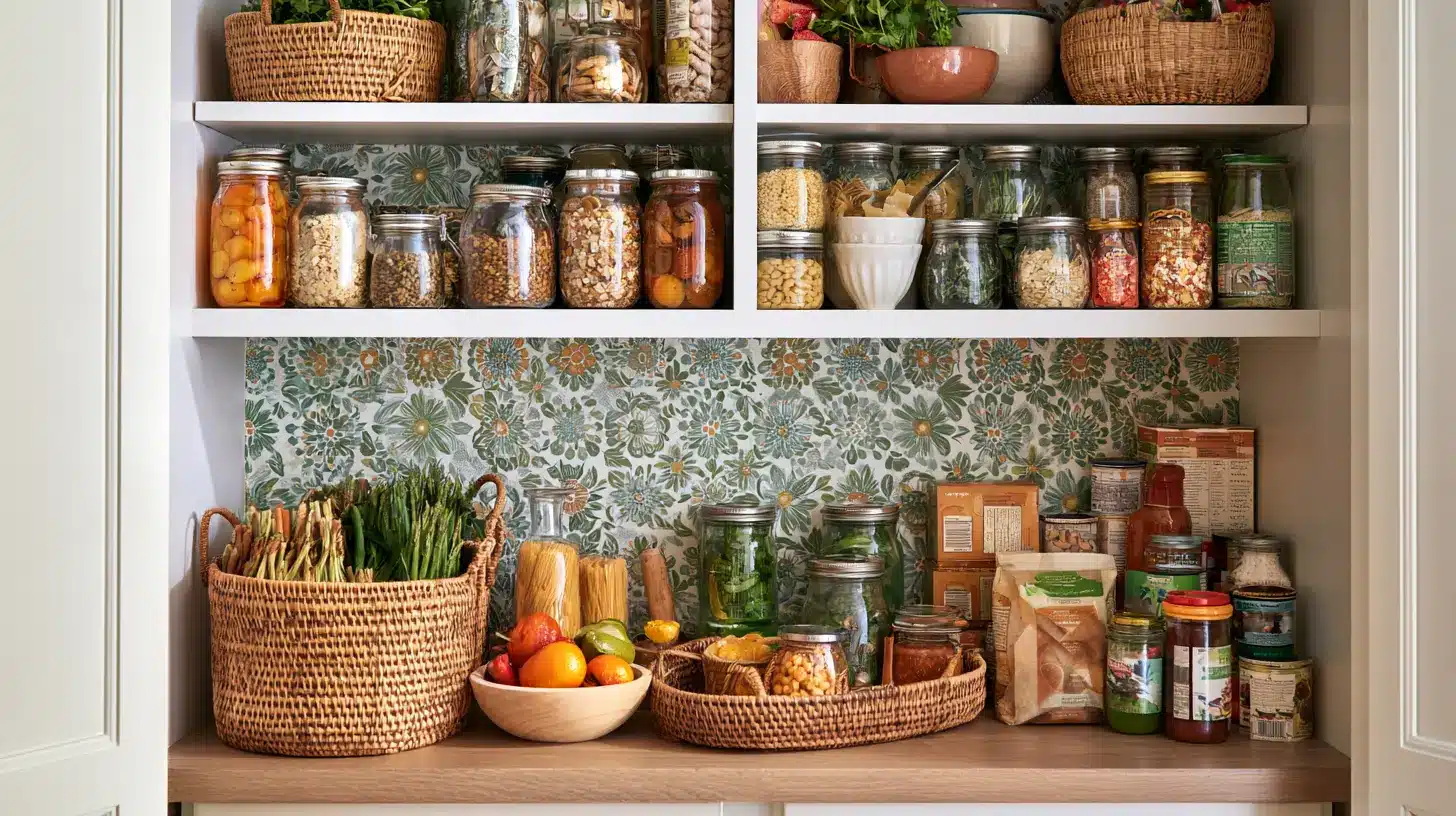
Plain white walls work, but nobody gets excited opening a blank pantry door.
Peel-and-stick wallpaper on the back wall costs almost nothing and adds a lot of color. You can peel it off later if the pattern gets old.
23. Upgrade the Pantry Door
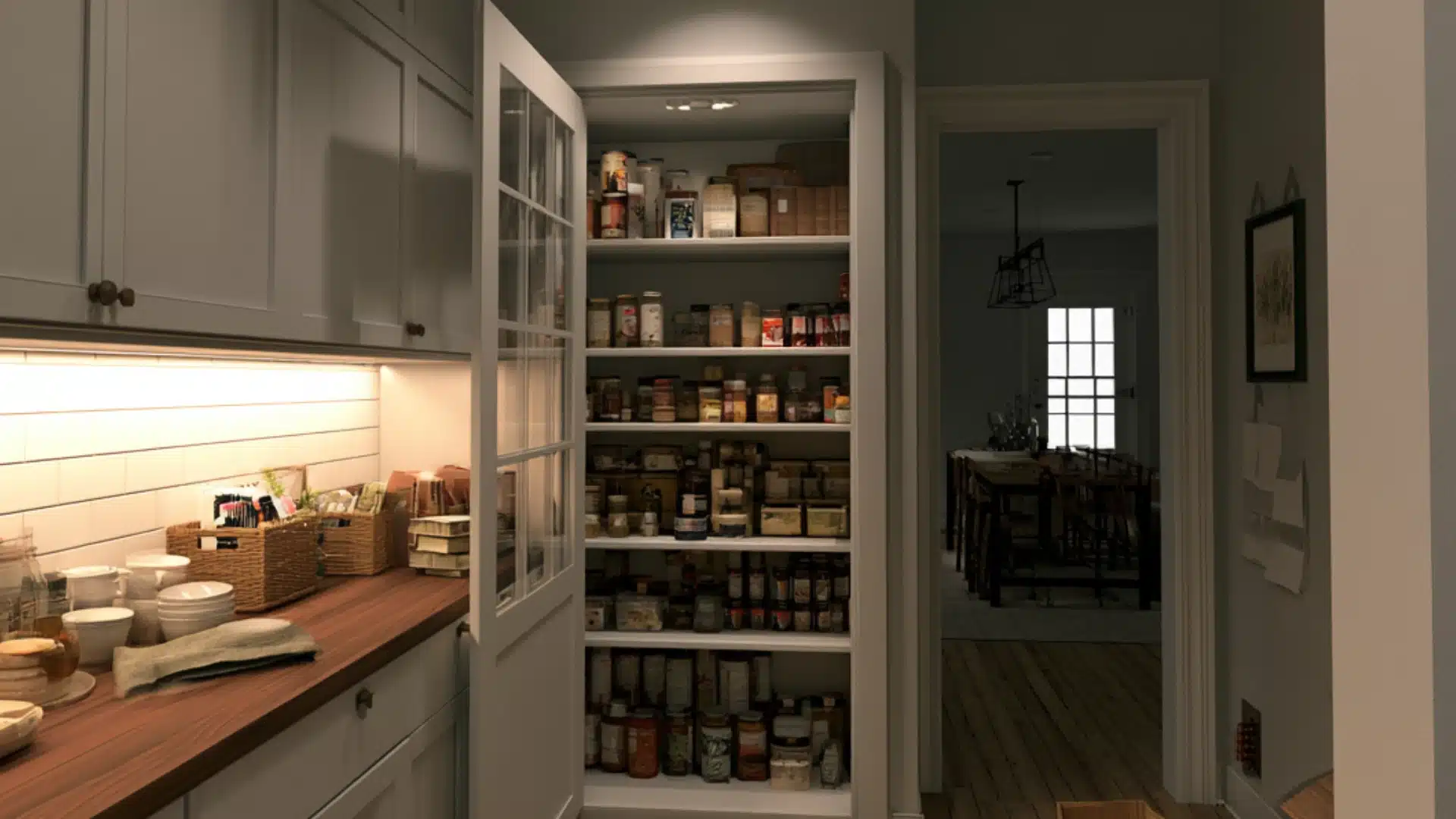
The door gets seen every single day, yet it usually stays whatever came with the house.
Paint it, swap in glass, or find something older with more character. That one change can shift how the whole room feels.
24. Build a Mini Coffee Station or Appliance Garage
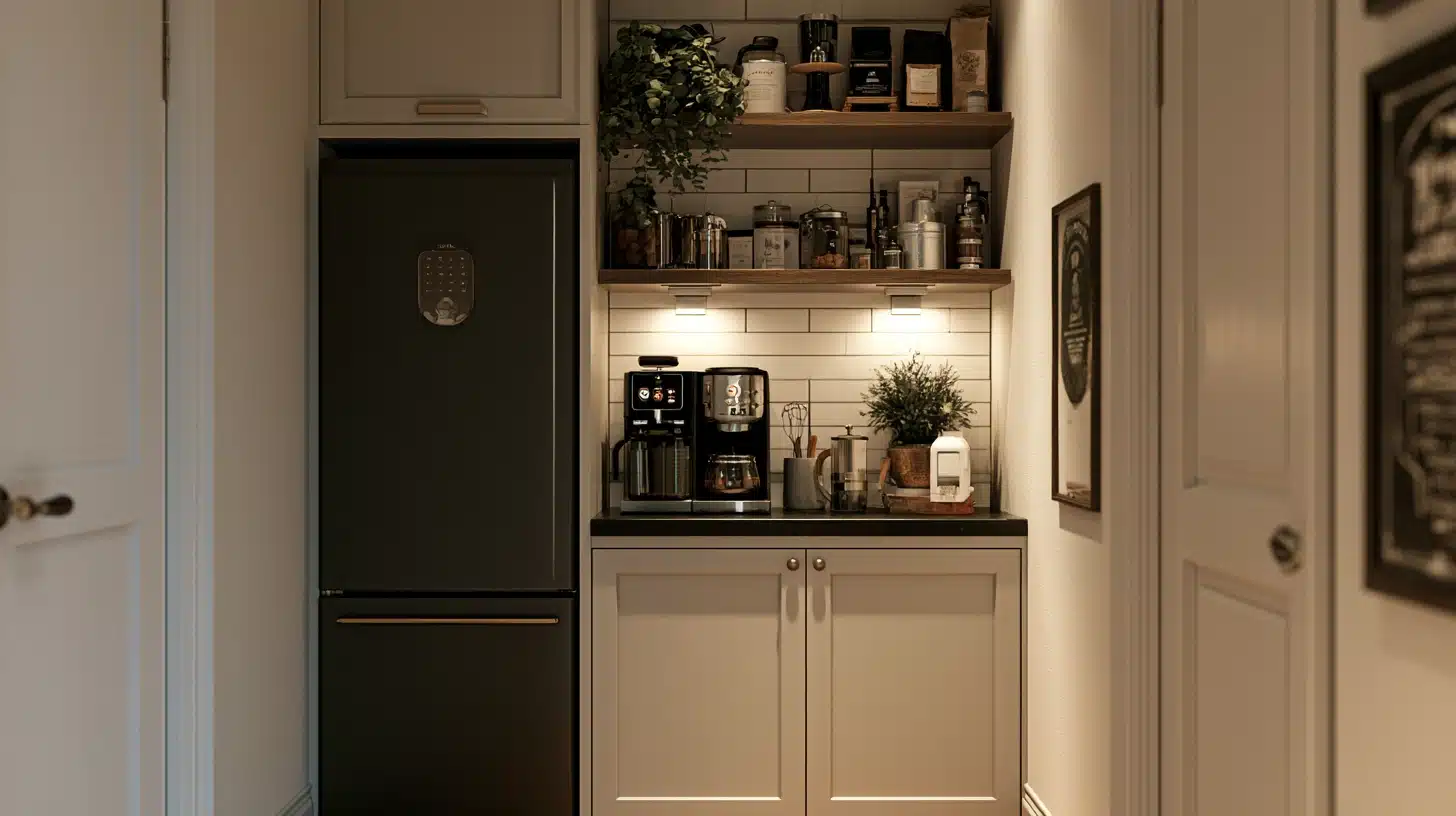
Coffee makers and toasters hog the counter fast in a small kitchen. Move them onto a shelf inside the pantry instead. Mugs, grounds, and the machine all end up in one spot, out of the way.
25. Add a Butcher Block Countertop for Prep Space
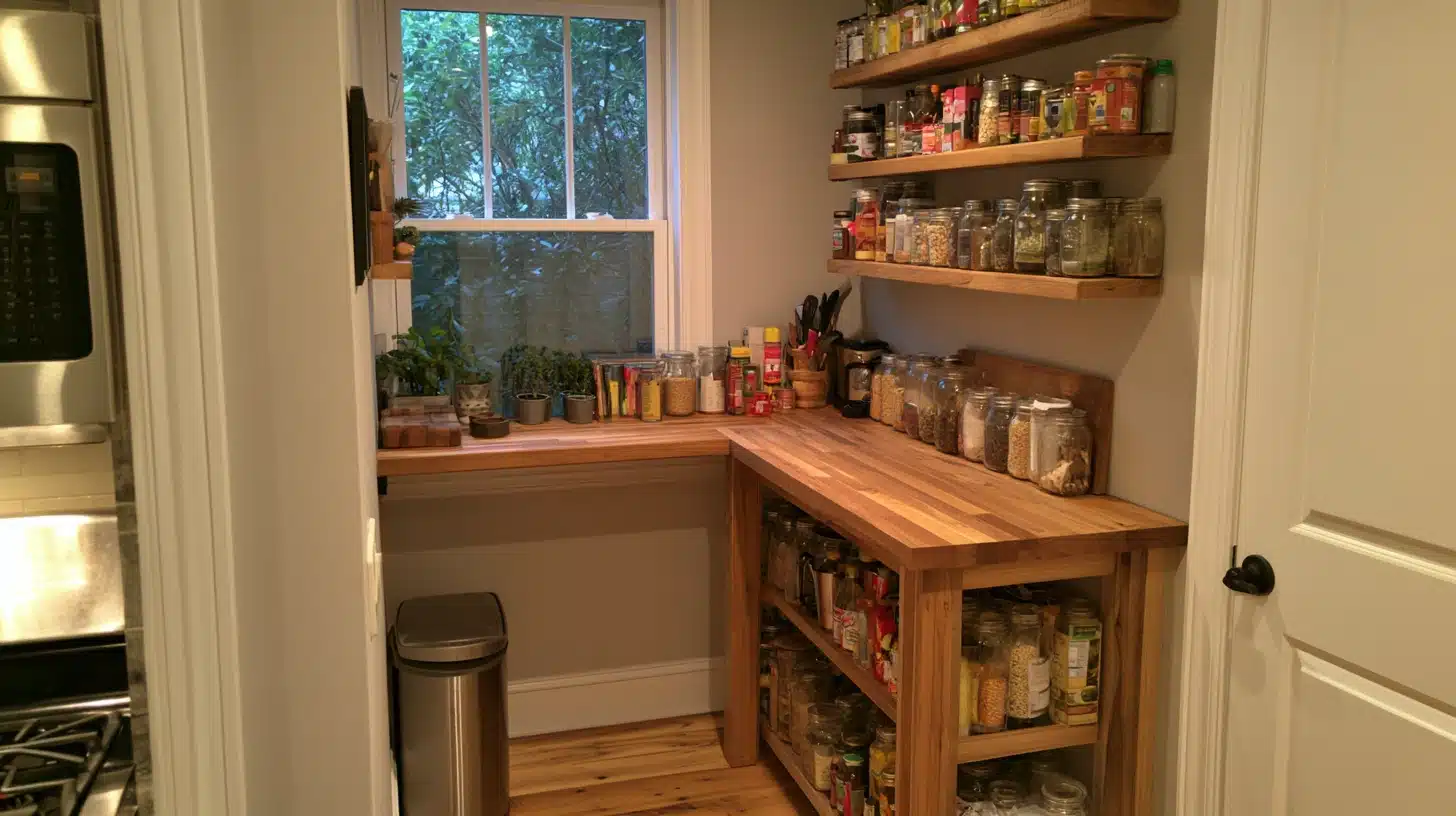
A little extra space in the pantry can hold more than food. A butcher block counter gives somewhere to set down groceries or chop something quick. It looks warm too, which is a nice bonus.
Keep Your Small Pantry Organized for Longer
Getting a pantry organized once is the easy part. Staying on top of it takes a few small habits, none of which eat up much time.
26. Avoid Overstocking Limited Pantry Space
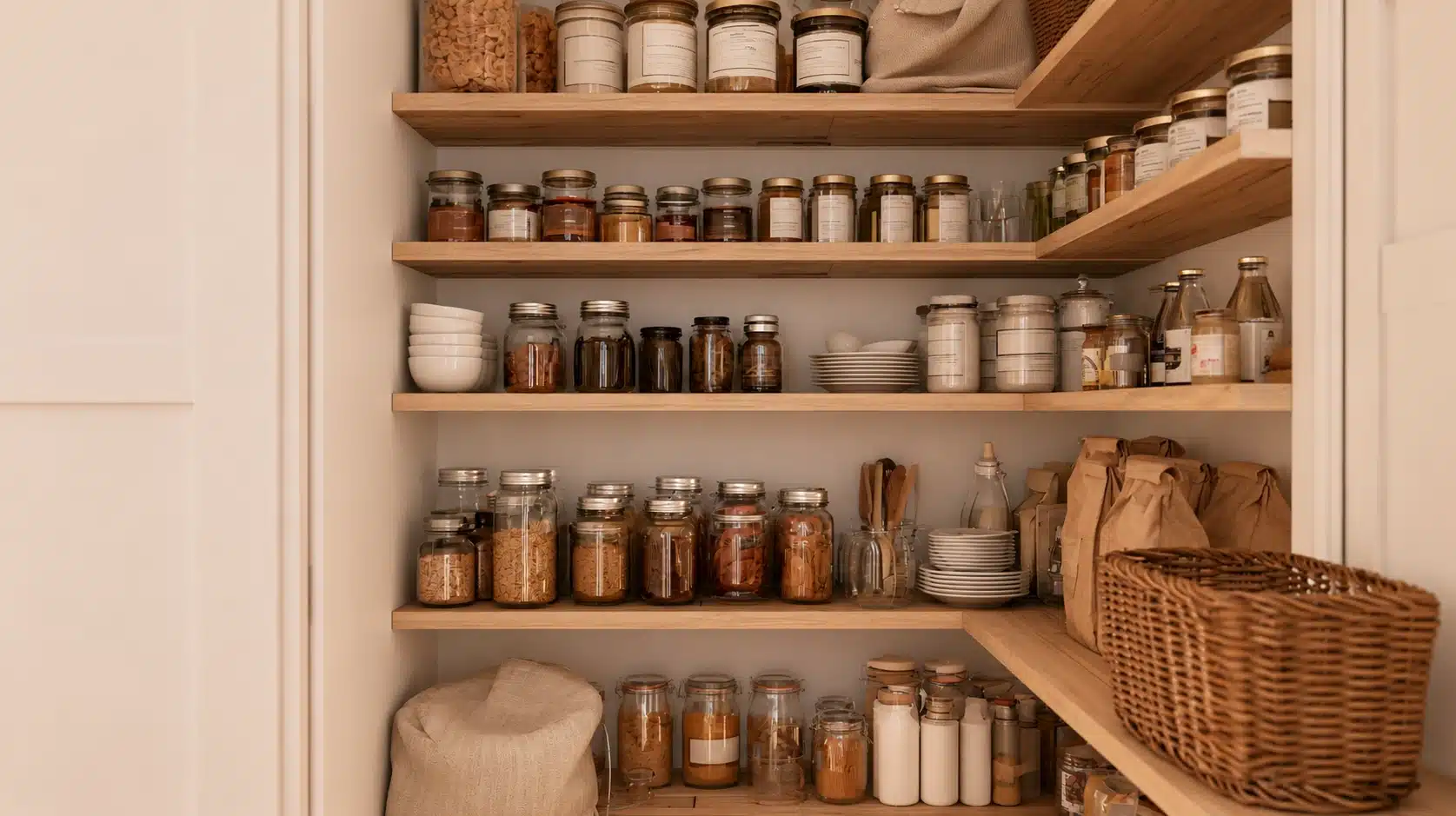
A sale on canned tomatoes does not mean the shelf needs twelve extra cans. Buying more than the space can actually hold leads to squished boxes and a jammed-up shelf.
Sticking closer to what fits keeps everything easier to see and grab.
27. Reset Pantry Zones Every Month
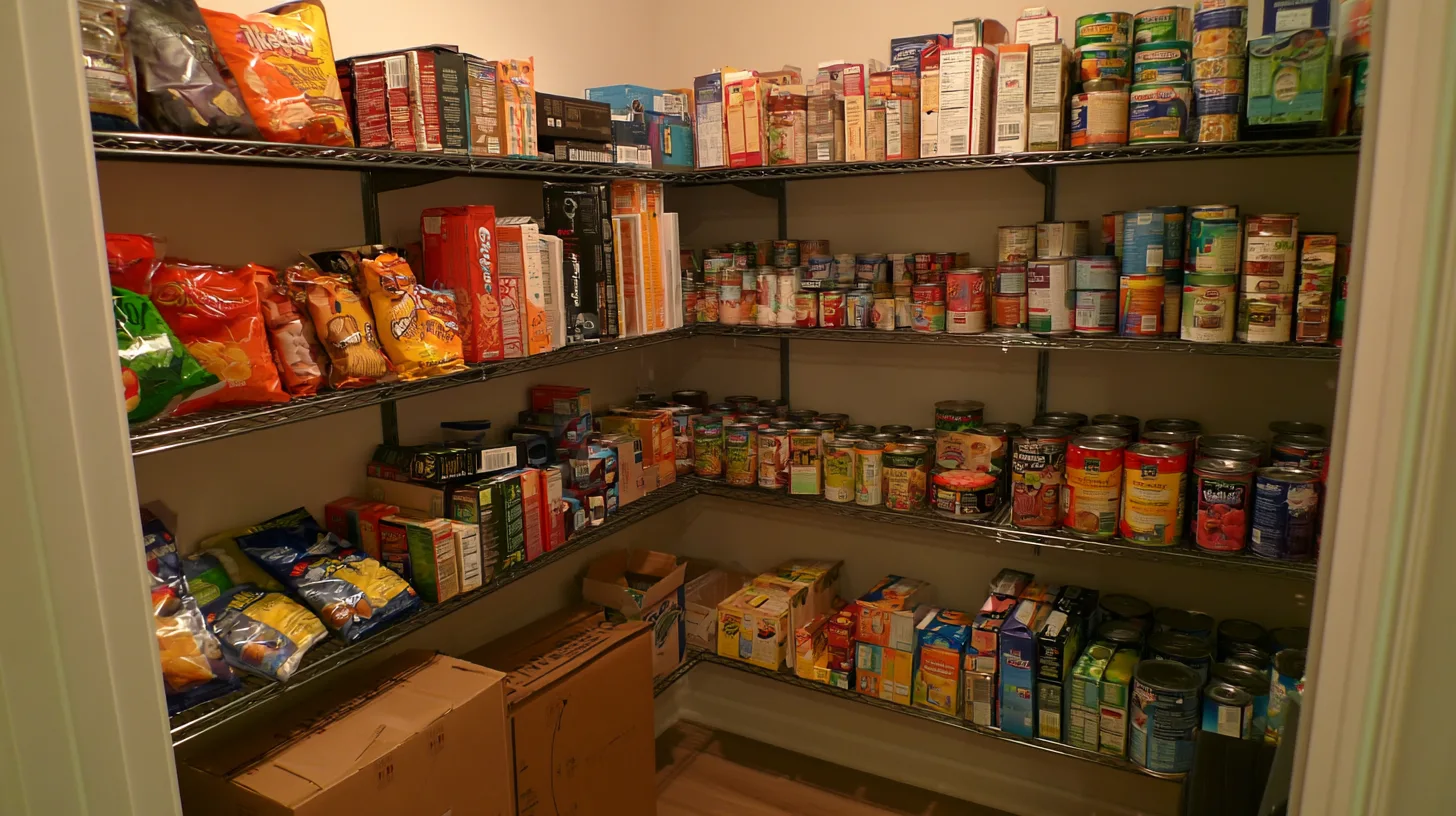
Zones drift out of place over time, usually because you put things back in a rush.
A quick monthly reset gets everything back where it belongs. It also catches expired items early, before they sit forgotten any longer.
28. Adjust Storage as Needs Change
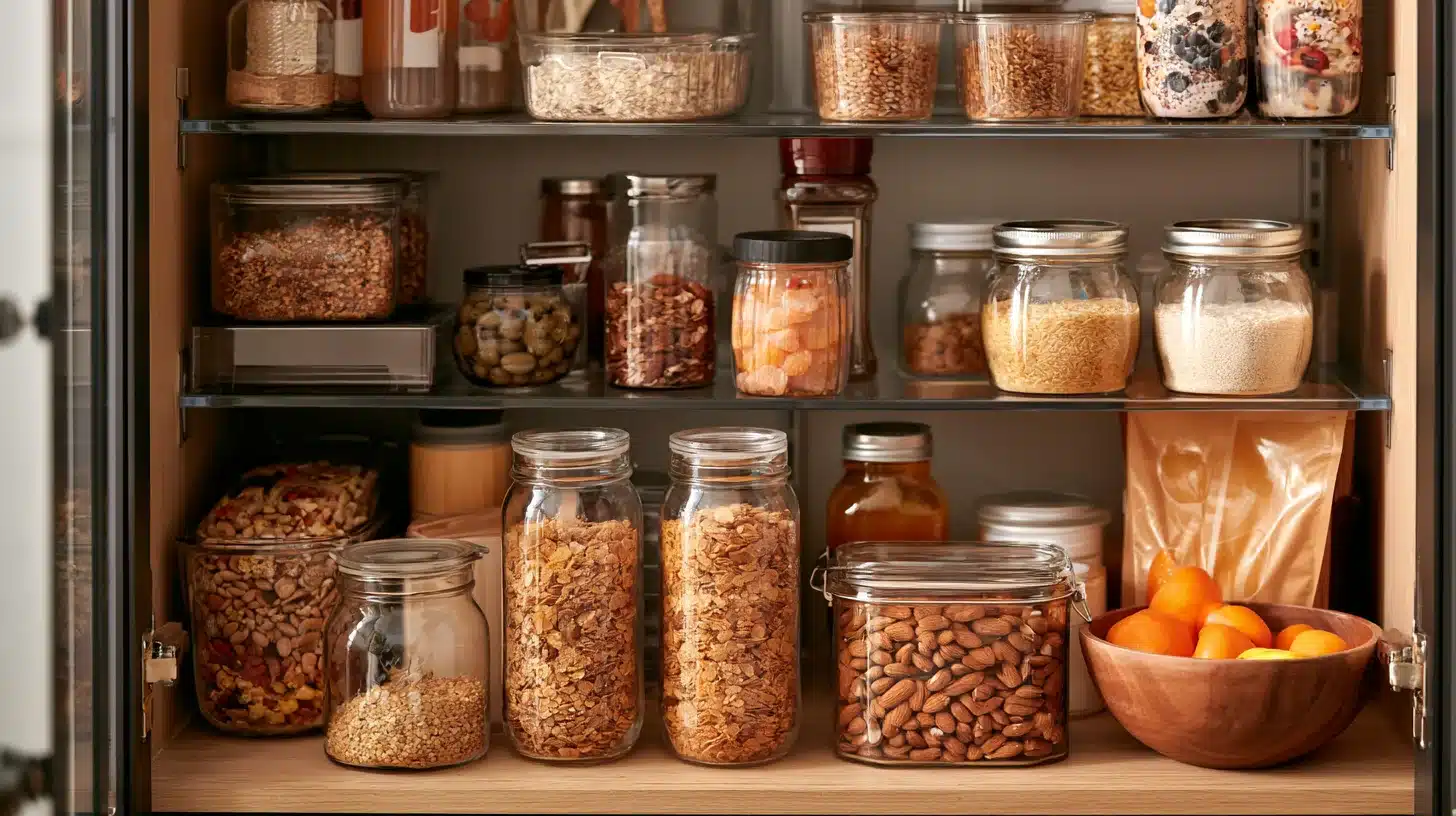
A setup that works fine now might not fit the next stage of a household. Growing kids, new diets, or a busier week can all shift what the pantry needs to hold.
A pantry stays useful longer when the system flexes along with real life instead of staying fixed.
Wrapping Up
A cramped pantry can turn around with less effort than expected. Shelves that reach the ceiling and a lazy Susan in that one awkward corner already make a difference.
Small pantry ideas like zoning food by use and keeping snacks at eye level cut down on the daily hunt.
Even a painted door or a peg rail adds some personality without touching the layout. Pick one shelf or one habit to fix first, and the rest tends to follow from there.
Frequently Asked Questions
1. Do Pantry Moths Mean the Whole Pantry Needs a Deep Clean?
Yes, moths spread fast, so every shelf, jar, and crack needs a full wipe-down.
2. How Often Should a Pantry Actually Get Restocked?
Most households restock weekly, based on whatever the inventory list shows running low.
3. Can a Small Pantry Work without Any Shelves at All?
Yes, stackable bins and floor baskets can stand in for shelving in a pinch.
4. Is Buying Pantry Staples in Bulk Worth It for A Small Space?
Not really, since bulk buying usually fills shelves faster than it saves money.