

Quick Answer
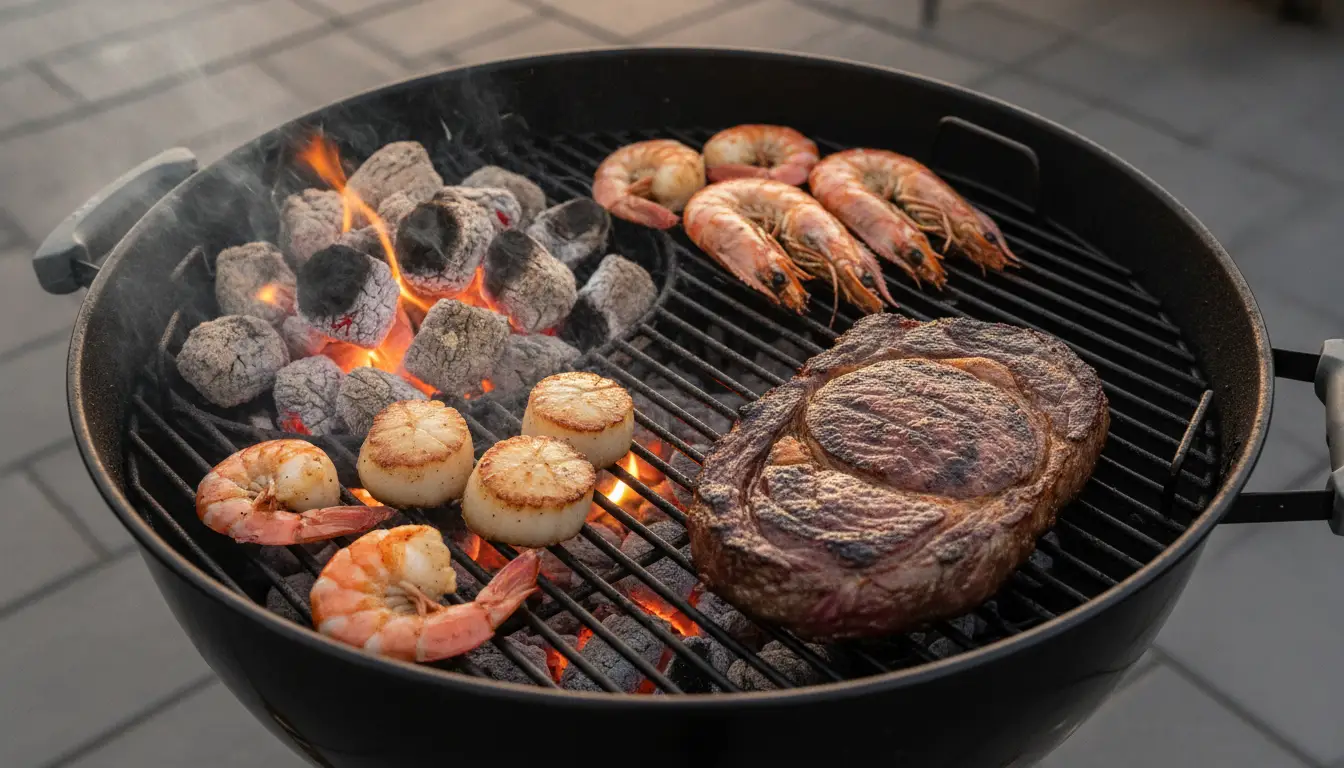
Cooking surf and turf on a charcoal grill means managing two proteins that behave completely differently over heat. The key is a two-zone fire setup: a hot direct zone for searing steak, and a cooler indirect zone for delicate seafood. Shrimp cook in 2–3 minutes per side; salmon fillets need 4–6 minutes; scallops go 2 minutes per side max. Steaks (depending on thickness and doneness) take 4–12 minutes total. Start the steak first, get your sear going, then move it to the cooler side and add your seafood to the hot zone. A thermometer is non-negotiable. Steak target: 130°F for medium-rare. Salmon: 125–135°F. Shrimp: 120–145°F. Get the sequence right, and you’ll have everything land on the plate at the same time, which is the actual dream.
The Combo That Either Impresses Everyone or Goes Completely Wrong
Surf and turf sounds fancy. It looks fancy. And for the most part, it is — until you try to cook both proteins at once on a charcoal grill and realize you have about twelve things happening simultaneously and no idea which one to panic about first.
I’ve been there. Steak going in too late, shrimp going in too early, salmon falling through the grates because I didn’t oil them properly, and a glass of wine in hand that was supposed to calm me down but just made the timing worse.
Here’s the thing, though: once you understand how a charcoal grill actually behaves, surf and turf becomes one of those meals that feels hard but isn’t. It’s about setup, sequence, and not trying to wing it. If you’re new to cooking over charcoal or want to sharpen your approach, having a solid grasp of grilling basics makes everything else click into place.
Why Charcoal Makes Surf and Turf Better
Gas is fine. Gas is convenient. Gas is also, in my opinion, a little boring for a meal like this.
Charcoal gives you something gas can’t: actual fire, smoke, and heat that radiates from the coals in a way that creates a crust on steak that makes people ask, “Wait, where did you get this?” It also adds a subtle smokiness to seafood that you genuinely cannot replicate any other way. The tradeoff is that you have to manage the fire. But that’s also the fun part — if you let it be.
The Two-Zone Setup: Your Most Important Move
Before anything goes on the grill, set up your coals in a two-zone arrangement. All the hot charcoal goes on one side. The other side stays empty or has just a thin layer of coals.
This gives you:
- A hot direct zone (600–700°F surface temp) for searing, getting crust, cooking fast proteins like shrimp
- A cooler indirect zone (300–400°F) for finishing thicker cuts without burning the outside, and for cooking delicate fish
Without this setup, you’re stuck guessing whether your salmon is done in the middle while the skin is turning to carbon on the outside. The two-zone method eliminates most of that stress.
Choosing Your Proteins: What Actually Works Together
Not every seafood plays well in a surf and turf situation. Here’s what I actually recommend:
Great for surf and turf on charcoal:
- Salmon fillets — Bold enough to stand up to smoke, forgiving texture
- Jumbo shrimp (shell-on) — Cook fast, stay juicy, char beautifully
- Scallops — Incredible with a quick sear, but you need high heat and speed
- Lobster tails — Impressive, worth the effort, slightly more complex
For the turf side:
- Ribeye, sirloin, or filet mignon are the classics. If you’re not sure which cut to go with, it depends on what you want from the meat — understanding the difference between something like sirloin vs filet can save you from choosing wrong at the butcher counter.
Your Temperature Cheat Sheet (Non-Negotiable)
This is the table I have essentially memorized. Or written on a sticky note on my fridge. Doesn’t matter which.
Protein | Target Internal Temp | Pull Off At | Notes |
|---|---|---|---|
Salmon | 125–135°F | 120–130°F | Carryover cooks it the rest of the way |
Shrimp | 120–145°F | When pink and C-shaped | Visual cues actually work here |
Scallops | 115–130°F | 115°F | Goes rubber fast if you overshoot |
Steak (medium-rare) | 130–135°F | 125–130°F | Rest 5 min minimum |
Steak (medium) | 140–145°F | 135–140°F | Pull early, rest, let carryover finish |
Step-by-Step: The Surf and Turf Sequence That Actually Works
Step 1: Prep everything before the coals are ready
Season your steak at least 30 minutes before grilling (or overnight — honestly preferred). Pat your seafood completely dry. Wet seafood steams instead of searing, and you came all this way for a sear.
Oil your grill grates once they’re hot. Use tongs and a folded paper towel dipped in oil — don’t spray aerosol over an open flame unless you want a dramatic evening.
Step 2: Get your coals right
Use a chimney starter and wait until the coals are ashed over — not just glowing, actually gray with ash on the outside. This takes about 15–20 minutes. Dump them all to one side. Let the grill preheat for another 5 minutes with the lid closed.
Step 3: Sear the steak first
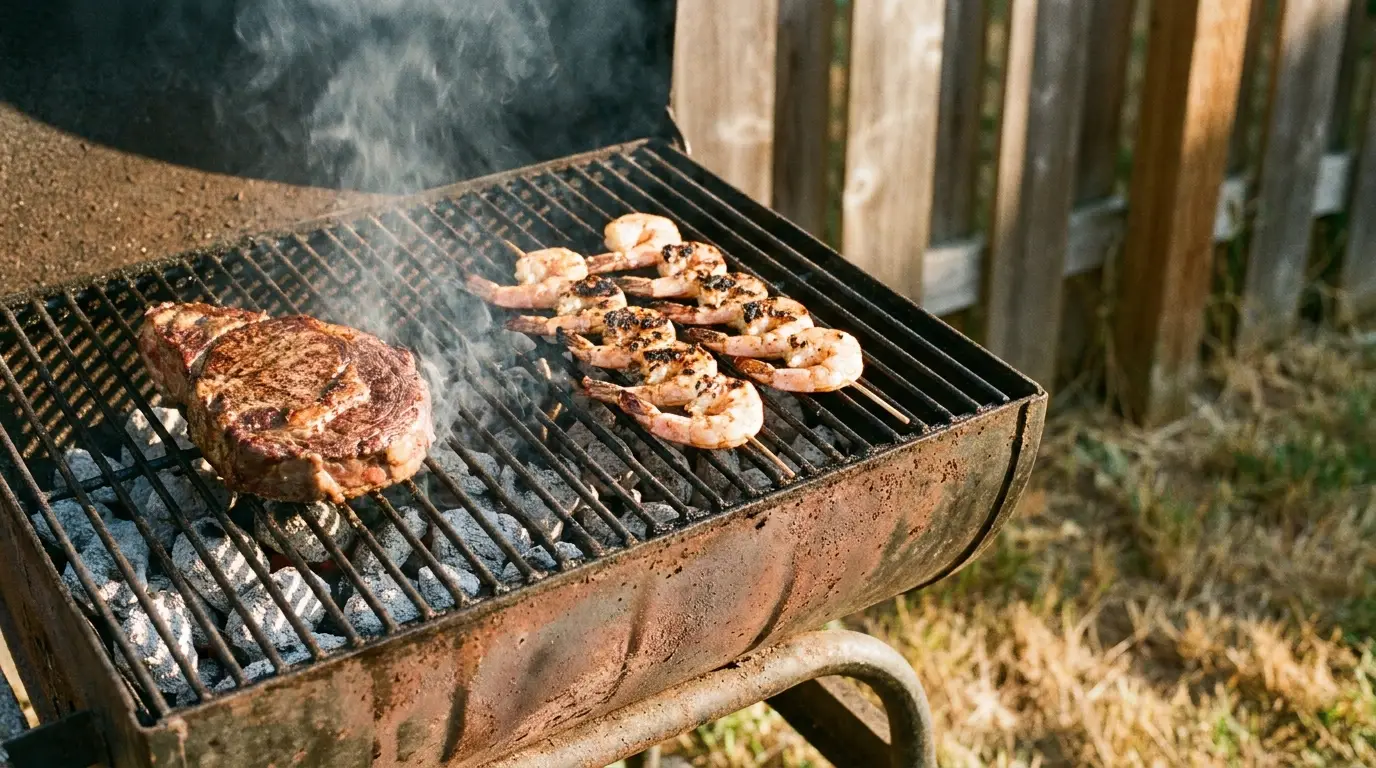
Place your steak in the direct heat zone. Don’t move it. Let it sear 3–4 minutes per side for a decent crust, then move it to the indirect zone. It’ll finish cooking there while your seafood goes on the hot side.
Step 4: Add the seafood to the hot zone
Shrimp go directly over the coals: 2–3 minutes per side, done when they’re pink, opaque, and curled into a loose C shape. If they curl into a tight O, they’re overcooked.
Salmon goes skin-side down on the hot zone for about 4 minutes, then flip once and finish 2–3 more minutes on the other side. If you’re tracking salmon doneness, aim for that buttery medium at 125–130°F internal. The color change guide for salmon can help if you don’t have a thermometer within reach.
Scallops need a hot, clean, well-oiled grate and your full attention: 2 minutes per side, maximum. Don’t touch them while they cook or you’ll break the sear.
Step 5: Pull, rest, plate
Everything comes off within a minute or two of each other when you time it right. Let the steak rest 5 minutes. Seafood doesn’t need much rest — plate it immediately.
The Mistakes That Will Ruin Your Surf and Turf
Skipping the drying step. If your salmon or shrimp have any moisture on the surface, they will steam and stick. Dry them completely with paper towels before they hit the grate.
Cooking everything at once in the same zone. Your steak needs sear time. Your shrimp need 2 minutes. Put them in the same zone at the same time, and something will be wrong.
Using too light coals. If the coals aren’t ready, the grill isn’t hot enough, and you’ll end up steaming everything instead of searing it. Wait for the ash.
Forgetting about shrimp size. Jumbo shrimp are forgiving. Small shrimp cook in under 90 seconds and dry out just as fast. Size matters.
Not having a plan for leftovers. If you actually have leftovers (rare, but possible), knowing how to reheat seafood without ruining it is its own skill set worth knowing.
Frequently Asked Questions
Can I Cook Seafood and Steak on the Same Charcoal Grill at the Same Time?
Yes, and it’s easier than it sounds with a two-zone fire. The key is starting your steak first on the hot side, moving it to indirect heat to finish, then adding your seafood to the vacated hot zone. The timing works out naturally because steak takes longer overall, even though it can handle higher direct heat.
What Seafood Is Easiest to Grill for Beginners?
Jumbo shrimp are the most forgiving. They cook fast (2–3 minutes per side), give clear visual cues (pink and curled = done), and don’t fall through the grates if they’re large enough. Salmon is a close second once you understand heat management. Scallops and lobster tails require more attention and are better once you’ve done a few cooks.
How Do I Stop Fish From Sticking to the Grill?
Three things: clean grates, hot grates, and oiled grates. Don’t try to move the fish until it releases naturally — when it’s properly seared, it will let go on its own. Forcing it early is how fillets break. Also, patting the fish completely dry before it hits the grill makes a bigger difference than most people expect.
What’s the Best Cut of Steak for Surf and Turf?
Ribeye for flavor, filet mignon for tenderness, and sirloin for a good balance of both at a lower price point. The right answer depends on the budget and what you prioritize.
Do I Need a Thermometer for Surf and Turf on the Grill?
Yes. Seafood overcooks in minutes, steak doneness is a matter of personal preference and precision, and relying on color alone for either one is asking for inconsistent results. A decent instant-read thermometer costs under $20 and will immediately make your grilling better.
How Do I Keep Seafood From Drying Out on a Charcoal Grill?
Don’t overcook it — that’s the main thing. Pull seafood a few degrees before your target temperature since it continues cooking off the heat. For salmon specifically, tucking the thin tail end under itself so the fillet is a more even thickness helps it cook evenly and avoids the “sawdust tail, undercooked center” problem.
Final Thoughts: It’s Actually Not That Hard
Surf and turf on a charcoal grill sounds impressive because it is — but the actual execution, once you have the setup right, is just a matter of sequence and temperature. Two-zone fire. Steak first. Seafood second. Thermometer in hand.
The charcoal does the heavy lifting. You’re really just managing the timing and staying off your phone long enough not to miss a flip.
Do it right once, and you’ll be the person your friends call when they want to do a “fancy” cookout. Which is exactly the kind of reputation worth earning.