

What temperature should salmon be cooked to?
If food safety is your primary concern, you should follow the USDA’s recommended internal cooking temperature for salmon.
However, many skilled cooks actually remove the salmon from the flame before it reaches that stage.
This blog explains the everything from different methods to visual signals and texture checks.
What Temperature Should Salmon be Cooked to and How Long?
The USDA recommends cooking salmon to an internal temperature of 145°F (63°C).
At this point, harmful bacteria and parasites that can be present in raw fish are killed off, making the salmon safe to eat.
Check the temperature at the thickest part of the fillet, since that’s the last place to finish cooking.
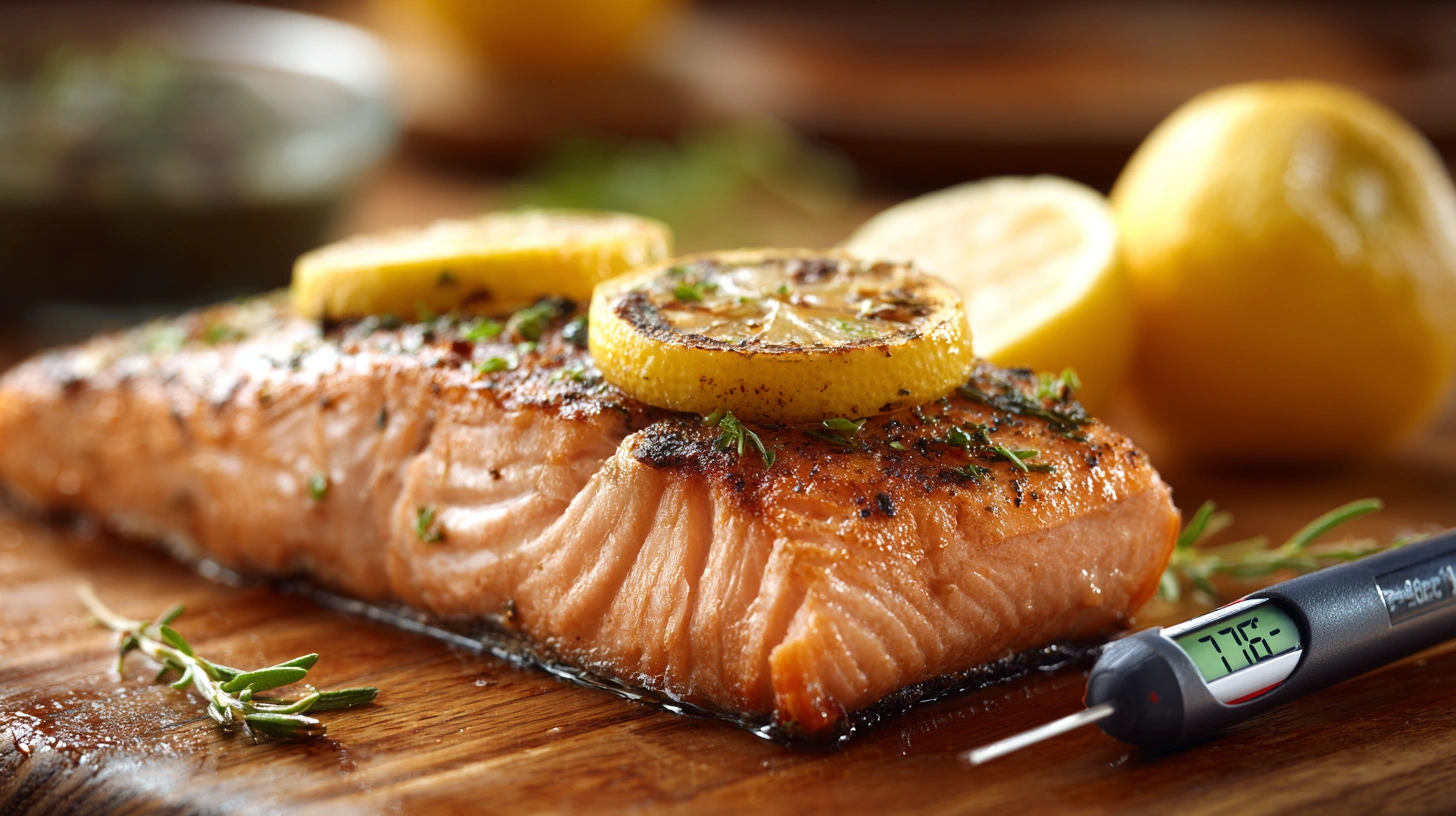
Insert an instant-read thermometer horizontally into the center of the thickest section, avoiding the bone, as bone conducts heat differently and will give you a false reading.
145°F is the same safe-minimum-temperature standard the USDA sets for other fish and shellfish. It’s a food-safety floor, not a doneness preference.
Plenty of cooks pull salmon earlier and let it finish via carryover, but 145°F is the number that guarantees the fish is fully safe regardless of technique.
Best Internal Temperature for Different Levels of Doneness
| Pull Temperature | Final Temperature | Doneness | Texture |
|---|---|---|---|
| 115–120°F | 120–125°F | Medium Rare | Soft and silky |
| 120–125°F | 125–130°F | Medium | Moist and flaky |
| 125–130°F | 130–135°F | Medium Well | Firm and flaky |
| 140°F | 145°F | Well Done (USDA) | Fully opaque and firm |
Once rested to 120–125°F, the center stays translucent and jammy, close to what you’d get at a good seafood restaurant. This range works best for cooks who trust their thermometer and know their salmon is fresh.
Resting to 125–130°F gives the easiest range for most home kitchens. The fish flakes with a fork, the center is barely pink, and it stays moist instead of drying out.
Resting to 130–135°F cooks the fish further while still keeping some flake and moisture. It suits anyone who wants less pink but still wants the fillet to hold together.
At 145°F, the salmon turns fully opaque and firm, and flakes cleanly. It’s the only number here that the USDA guarantees as safe.
Cooking Salmon Using Different Methods
Every cooking method heats salmon differently, which changes both the timing and how early you should pull it off the heat.
Oven-Baked Salmon
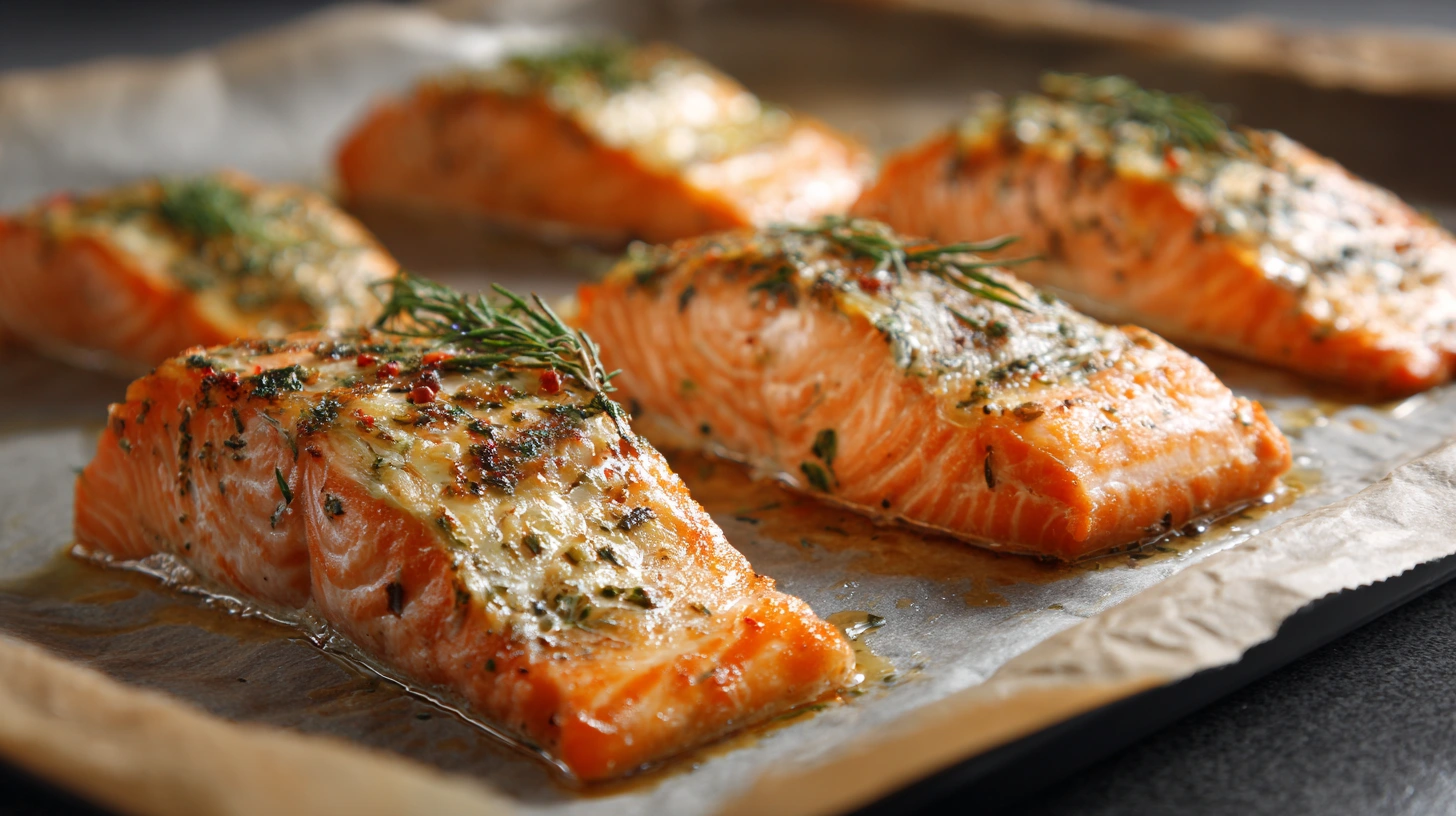
Preheat the oven to 400°F and place the fillets on a lined baking sheet, skin-side down if the skin is on.
Drizzle with oil and season, then bake for about 12–15 minutes, depending on thickness. Start checking the temperature around the 10-minute mark, and pull the fish once it reads 115–130°F, depending on your preferred doneness.
The dry, even heat of the oven makes this one of the more forgiving methods for even cooking.
Pan-Seared Salmon
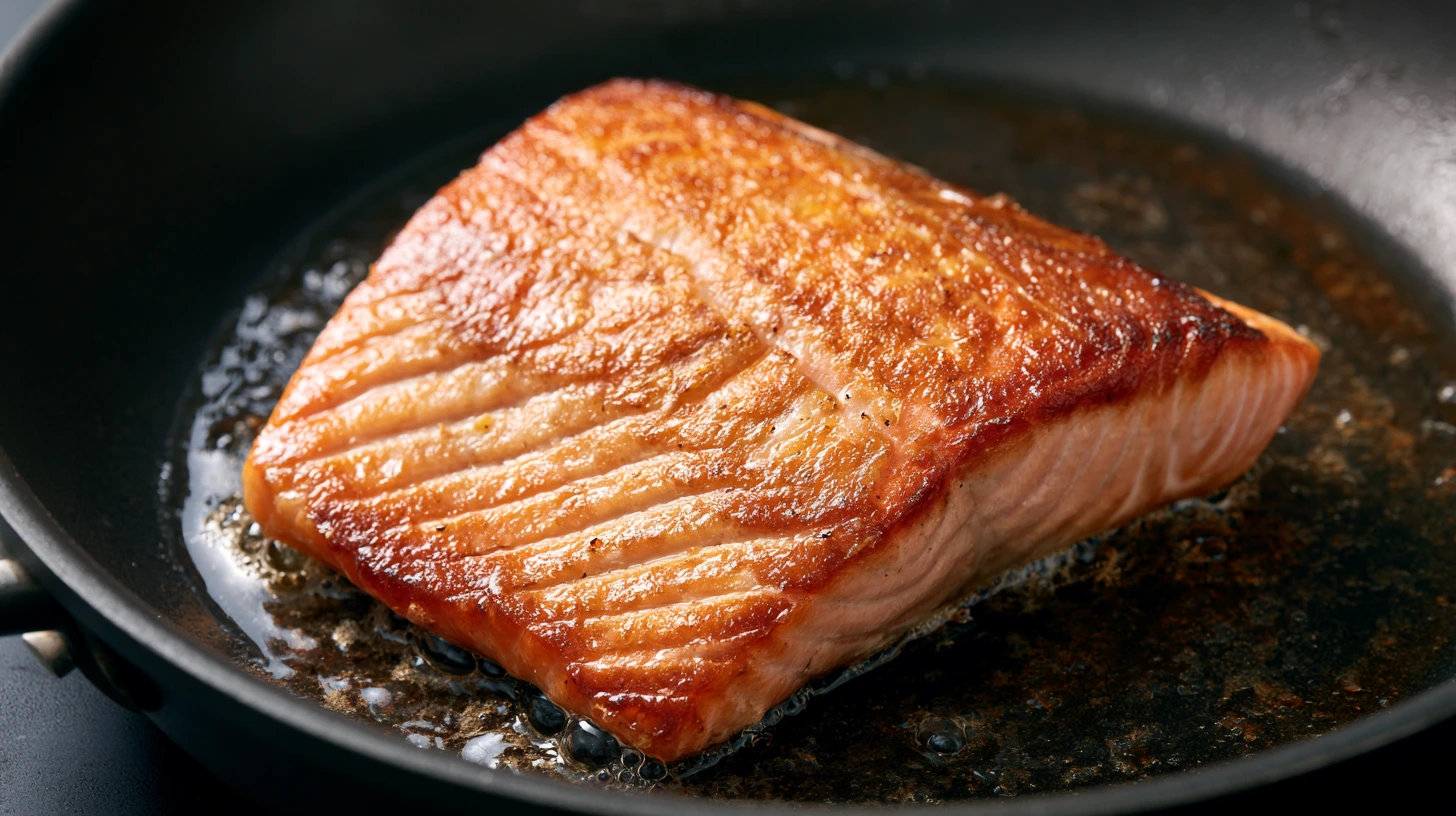
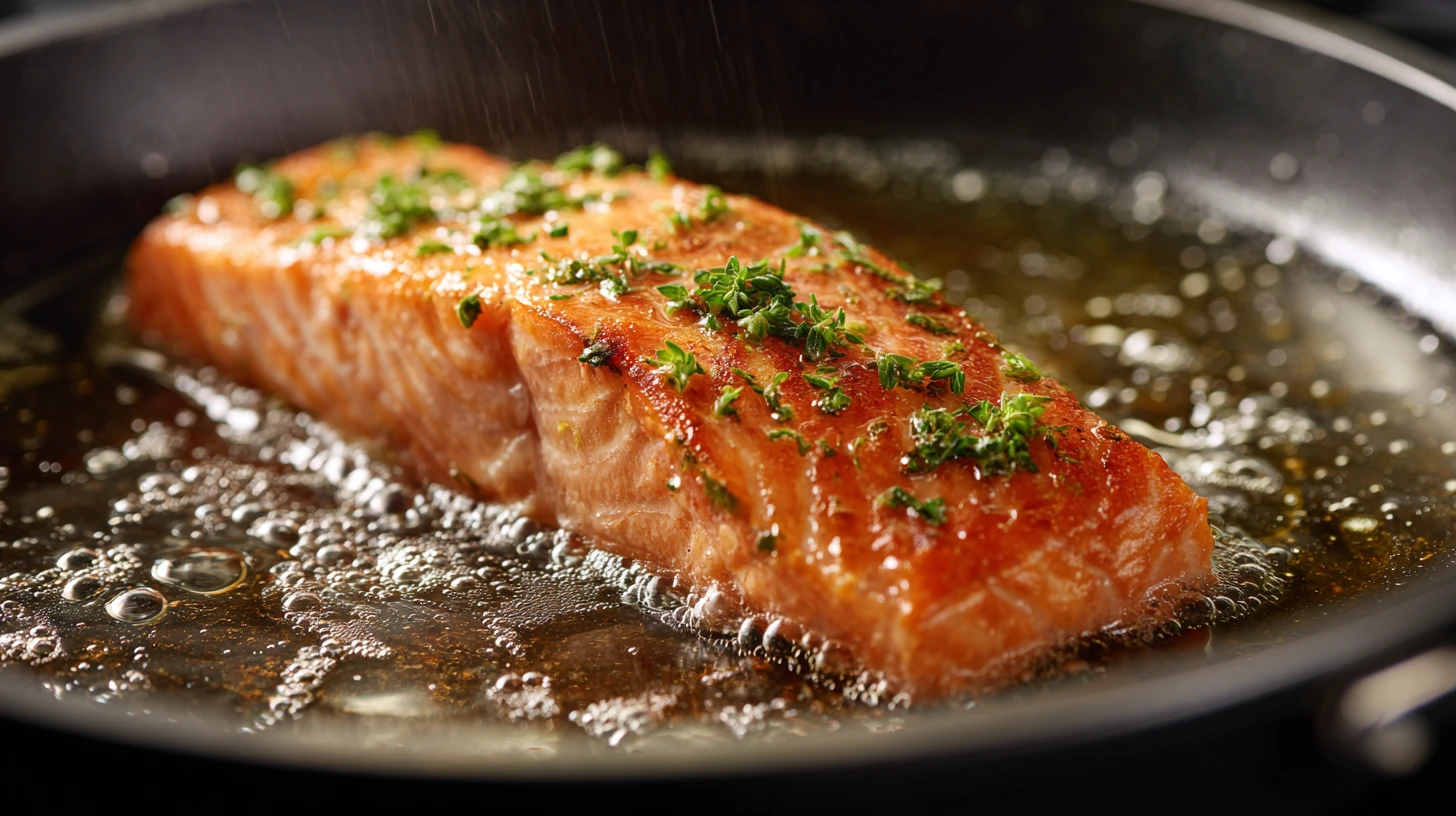
Heat a skillet over medium-high heat with a thin layer of oil until it shimmers.
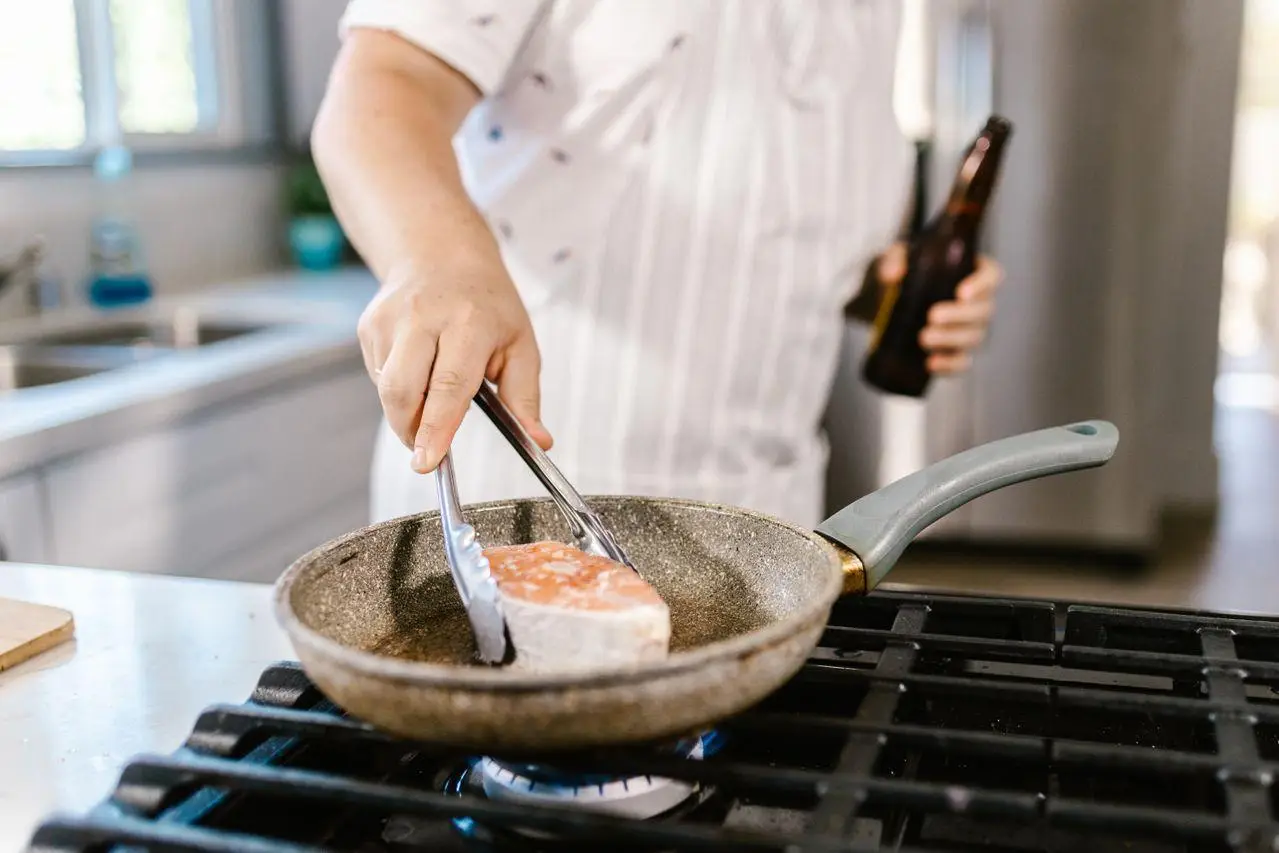
Lay the fillets skin-side down and press gently for the first minute so the skin makes full contact and crisps evenly. Cook about 4–5 minutes on that side, then flip and cook another 3–4 minutes.
Pull it at 115–130°F, depending on your preferred doneness, since the hot pan holds heat and keeps cooking the fish for a bit after it comes off the burner.
Grilled Salmon
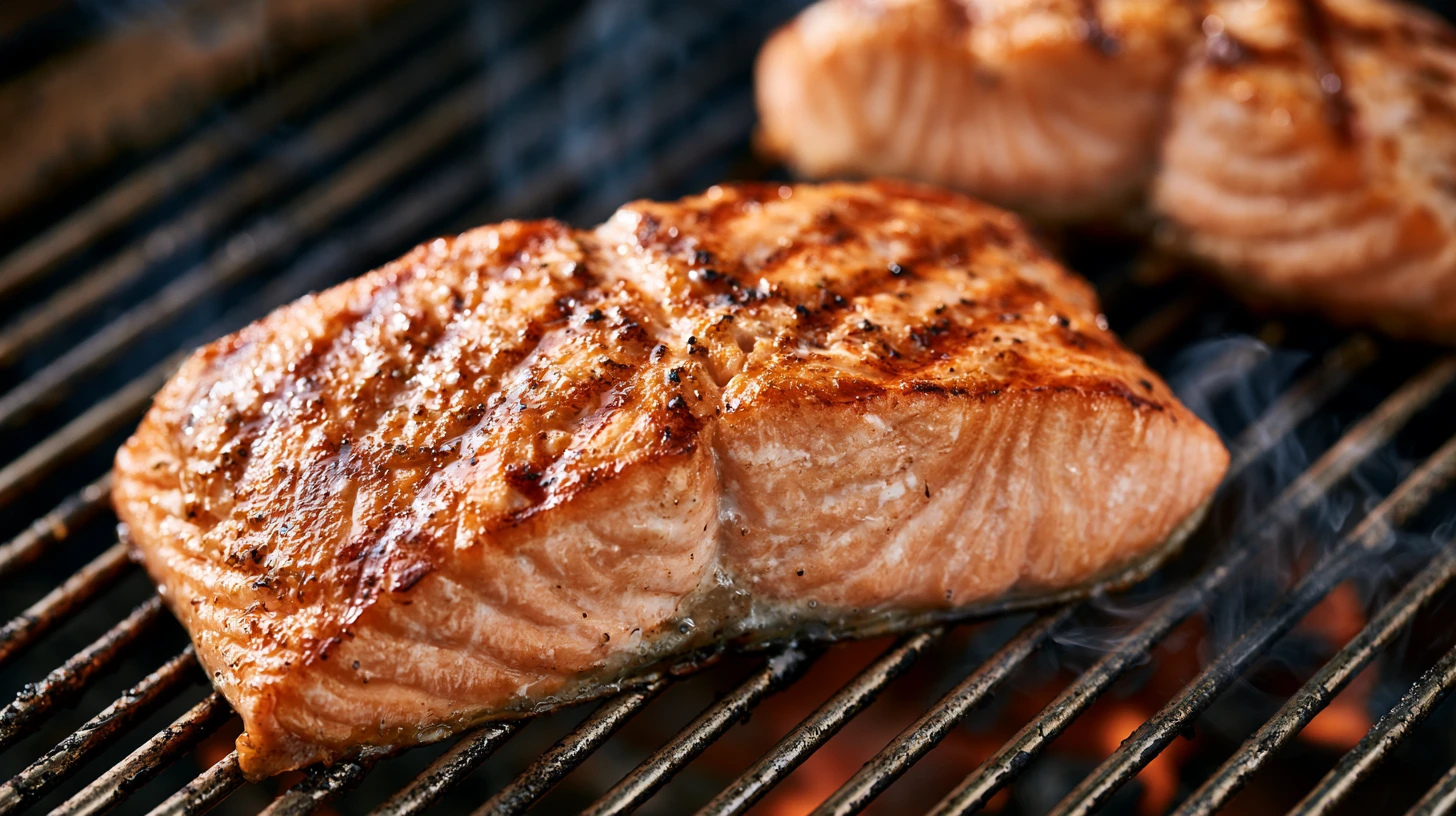
Oil the grates well before you start, since salmon sticks easily.
Grill over medium heat, skin-side down first, for about 4–6 minutes per side, depending on thickness. Move the fillet as little as possible while it cooks, so it doesn’t tear.
Check the temperature early, since grill heat varies from spot to spot, and pull it at 115–130°F, depending on your preferred doneness.
Air Fryer Salmon
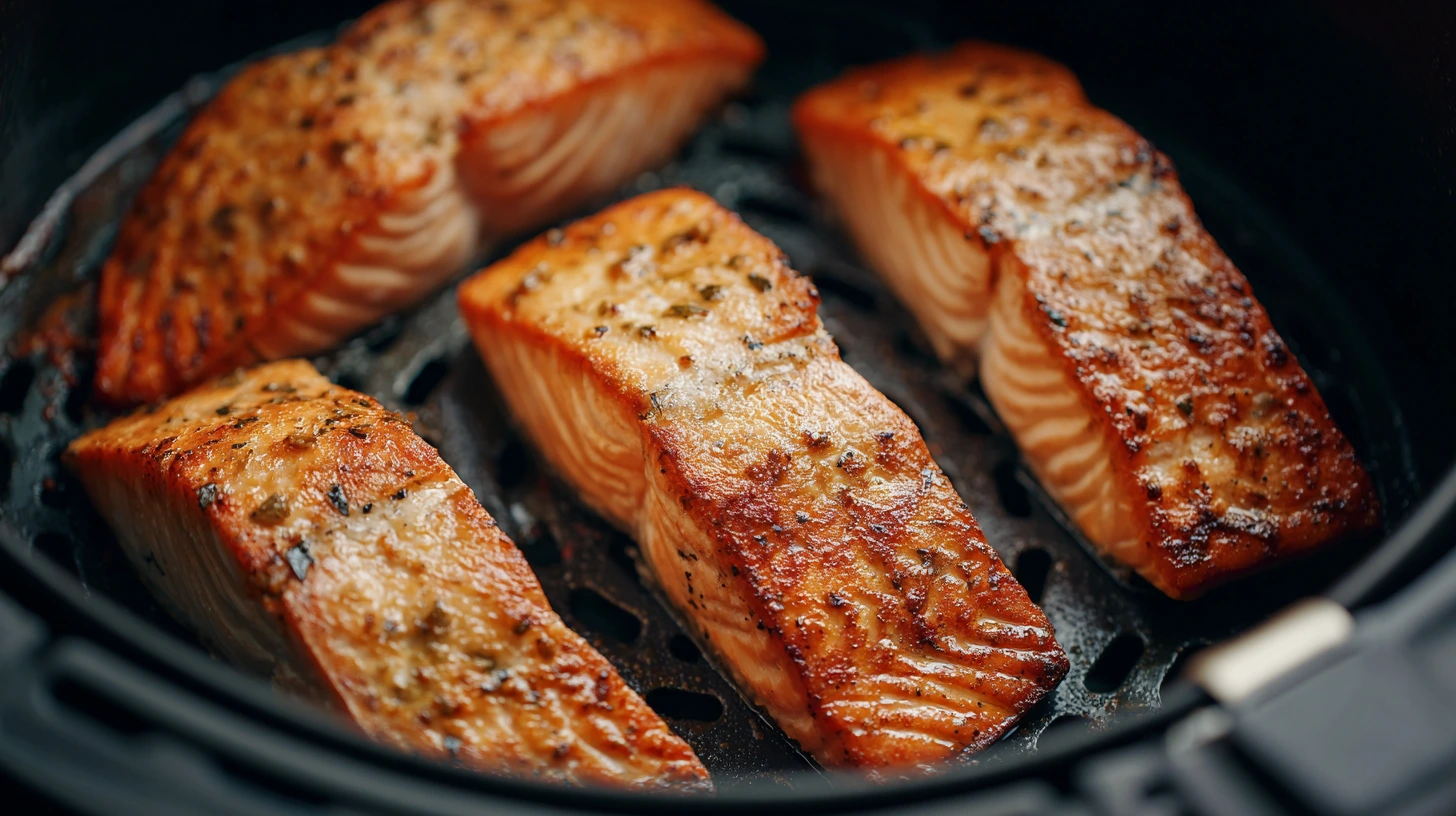
Set the air fryer to 400°F and place the fillets in the basket without overlapping, skin-side down if applicable.
No flipping needed. Cook for 8–10 minutes, starting to check around the 7-minute mark.
Pull the fish once the center reads 115–130°F. The air fryer’s quick air circulation crisps the outside while keeping the center from drying out.
Poached Salmon
Bring a pot of seasoned liquid, water, wine, stock, or a mix, to a gentle 160–180°F, with just a few small bubbles breaking the surface.
Slide the fillets in and cook for 10–15 minutes, depending on thickness, keeping the heat low the entire time.
Pull the fish at 115–130°F; since the heat is gentle and even, there’s less carryover to plan for than with high-heat methods.
How to Check the Internal Temperature of Salmon?
Getting an accurate reading is less about the thermometer and more about how and where you use it. A few small habits make the difference between a guess and a precise result.
Use an Instant-Read Thermometer
You can get a reading from an instant-read thermometer in a matter of seconds, which is important when it comes to fish since once it’s in a hot skillet or oven, its internal temperature increases quickly.
Digital models are easier to read at a glance and more accurate than dial models.
To ensure it remains accurate, periodically calibrate yours in ice-cold water (it should read 32°F).
Where to Insert the Thermometer
Insert the probe into the thickest part of the fillet, since that’s the last section to finish cooking.
Push it in sideways rather than straight down, so the tip sits at the center of the fish rather than near the top or bottom surface.
Avoid the bone if there is one, and avoid the thin edges, which cook faster and will give you a falsely high reading.
When to Remove Salmon from the Heat
Remove the salmon from the heat a few degrees ahead of the desired temperature.
A fillet pulled at 135°F might easily finish resting closer to 140°F since the fish continues to cook after it leaves the pan or oven.
To catch the fish at the proper time rather than overshooting, check the temperature about a minute before you expect it to be done and again just before you want to serve it.
Why Use a Meat Thermometer for Cooking Salmon?
Salmon doesn’t give visual cues the way meat does. It can look done on the outside while the center is still raw, and the gap between undercooked and overcooked is often just a few degrees.
A thermometer removes the guesswork. Instead of cutting into the fillet or timing by guesswork, you get a direct reading from the thickest part, the last spot to finish cooking.
This matters most with salmon, where the safe window is narrow.
A minute too long turns silky fish dry. A thermometer catches that window every time, and helps you plan for carryover so the fish lands right where you want it.
How to Tell When Salmon is Done Without a Thermometer?
A thermometer is the most reliable way to check, but these visual and tactile cues can get you close if you don’t have one on hand.
The Flake Test
Press a fork into the thickest part and twist gently. If it flakes apart easily into clean sections, it’s done.
Check the Color
Raw salmon looks deep pink and translucent. Cooked salmon turns lighter and more opaque, with just a hint of pink left at the center for medium doneness.
Feel the Firmness
Raw salmon feels soft and yields easily to touch. Cooked salmon firms up and springs back slightly when pressed.
What White Albumin Means
The white substance that seeps out is albumin, a protein that coagulates with heat. A little is normal; a heavy amount usually means it’s overcooked.
To Wrap Up
So, what temperature should salmon be cooked to? For guaranteed safety, that’s 145°F.
Most home cooks pull the fish early and let carryover cooking do the job, setting the temperature between 125°F and 135°F for texture and flavor.
A thermometer eliminates the need for guesswork, regardless of the target figure.
If you don’t have one on hand, use the flake, color, and hardness checks as a backup. Examine the thickest portion of the fillet and pull it a few degrees ahead of your target.
It becomes simple to hit it again once you’ve reached your preferred doneness.
Frequently Asked Questions (FAQs)
1. Can Salmon Still be Pink when it’s Done?
Yes, a slight pink center is normal at medium doneness (125–130°F) and isn’t a safety issue if the fish reached a safe temperature.
2. Should Salmon Rest Before Serving?
Yes, let it rest for 3–5 minutes before serving. This gives carryover cooking time to finish, and lets the juices redistribute through the fillet instead of running out onto the plate.
3. Does Frozen Salmon Have the Same Target Temperature?
Yes, frozen salmon has the same target temperature once fully thawed and cooked: 145°F for guaranteed safety, or 125–135°F if you prefer it less done.