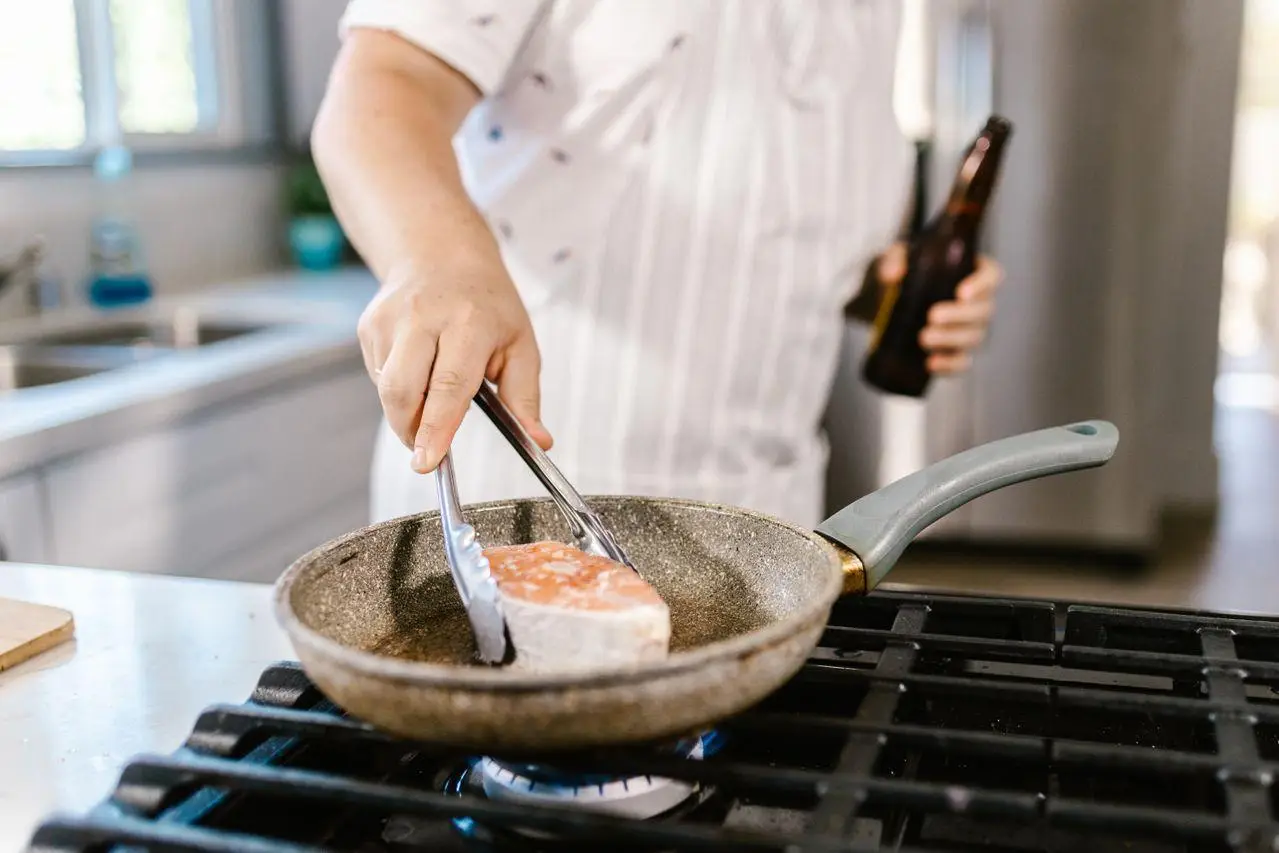


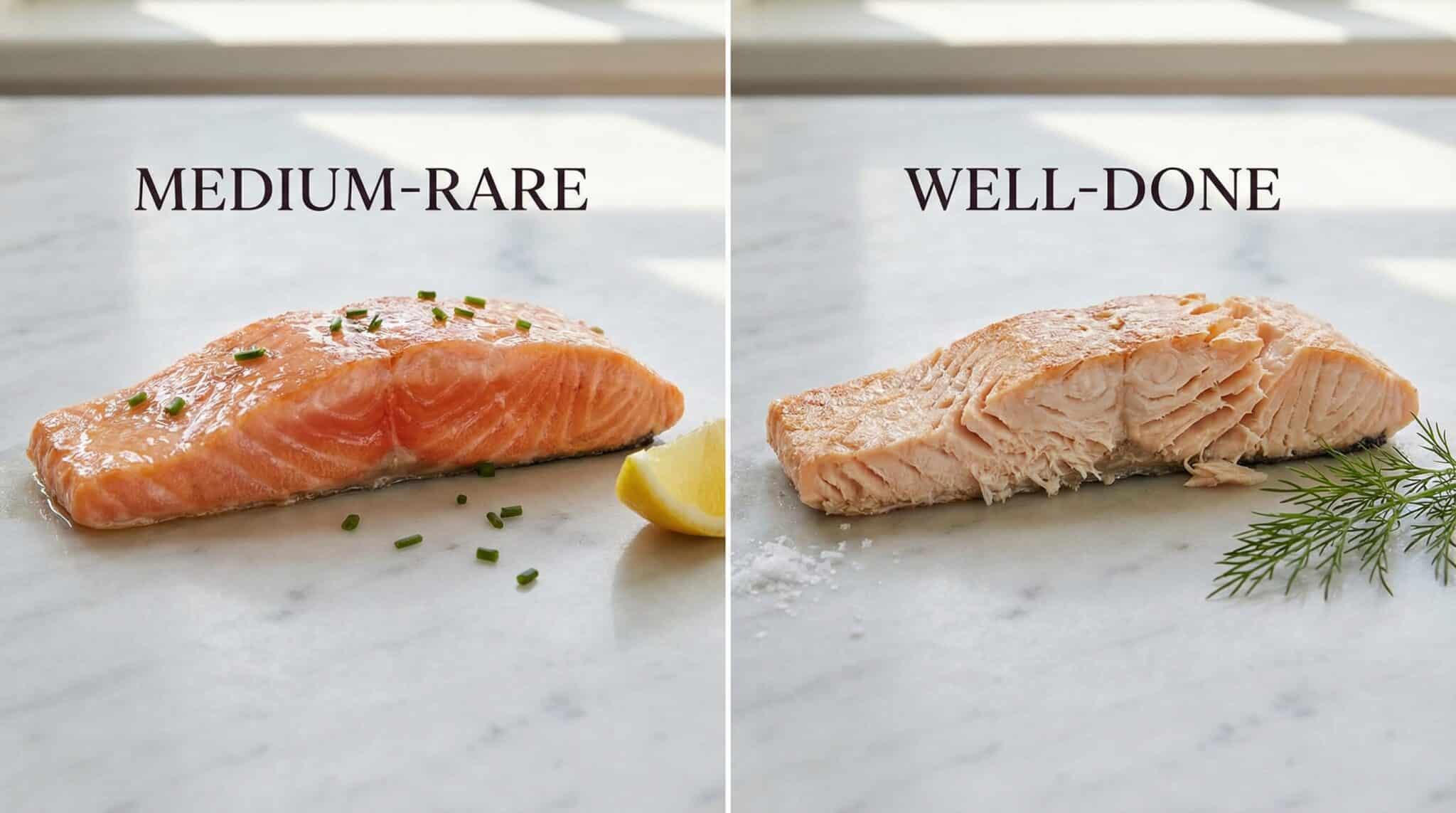
Salmon is the most dramatic protein in my kitchen. Chicken will forgive you. Pot roast will basically raise itself. Salmon? Salmon will go from buttery and glorious to sad and chalky in the time it takes you to answer a “quick question” text that is, of course, not quick.
The difference is often less than 10°F. Not “a little.” Not “kinda.” TEN. So if you’ve ever wondered why your salmon is sometimes restaurant level and sometimes… aggressively fish jerky, it’s not you. It’s the temperature.
Let’s talk numbers, what they look like in real life, and how to stop guessing like we’re on a cooking game show with no prize.
The only salmon temperature guide you actually need
Here’s the cheat sheet I keep in my head (and sometimes scribble on a sticky note because I’m a whole adult who still loses the plot mid-dinner).
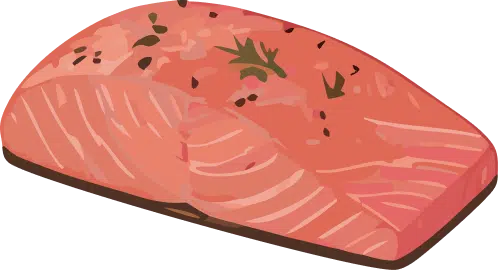
This is the “wow, I made salmon” temperature. The center is a deeper pink and can look a little translucent. Texture is tender, silky, and moist like the fish is wearing a tiny cashmere sweater.
Downside: it’s not the safest choice for everyone. This is very much a “know who you’re feeding” situation.
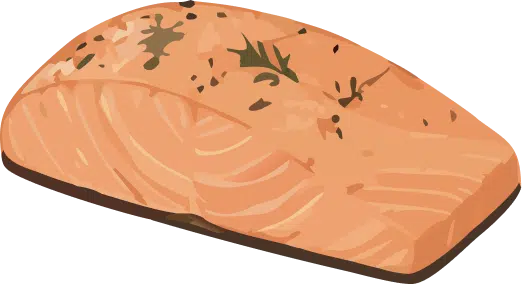
If you want salmon that’s clearly cooked but still juicy, this is the sweet middle ground. The center is pink (not raw looking, just pink), the flakes separate nicely, and you don’t need to drown it in sauce to make it feel alive again.
If you’re standing there thinking, I want it good but I also don’t want to play Temperature Roulette, aim here.
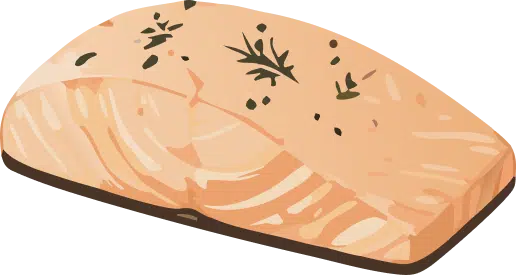
145°F is the food safety gold standard. It’s the safest option across the board.
Trade off: it’s firmer and flakier, and yes, it’s more likely to dry out. Not automatically terrible just… more “bring on the lemon butter” and less “silky chef’s kiss.”
A quick (important) safety pause: who should eat salmon fully cooked?
If you’re cooking for anyone in a higher risk group, do not get cute with medium rare. I love you, but I will flick you with a wet dish towel.
Stick to 145°F if you’re serving:
- pregnant people
- kids under 5
- adults over 65
- anyone immunocompromised
Also: sourcing matters. In general, farmed salmon tends to have lower parasite risk than wild salmon because of controlled feed. Wild salmon can be totally wonderful (I love it), but if it’s not specifically handled for raw-ish consumption (often marketed as “sushi grade” and deep frozen appropriately), the safest move is cooking it to 145°F.
Bottom line: pick your temperature based on who’s at your table, not what TikTok said was “the perfect doneness.”
“But how do I tell?” Visual cues that actually help
Here’s the annoying truth: color is a clue, not a guarantee. Salmon can stay pink even when it’s fully cooked even with a doneness color reference. Lighting lies. Your eyes lie. That one overhead bulb in your kitchen is basically a villain.
Still, these cues help you sanity check:
If it’s around 120-125°F (medium rare)
- center is darker pink and slightly translucent
- flesh is cohesive and very moist
- it resists flaking a bit (in a good way)
If it’s around 130-135°F (medium)
- center is pink but mostly opaque
- flakes separate cleanly with gentle pressure
- still juicy, not weeping all over the plate
If it’s 145°F (well done)
- flesh is opaque and lighter pink (sometimes leaning pale)
- flakes easily
- you may see more white stuff (albumin) on the surface
Albumin note: That white stuff isn’t “bad” or unsafe. It’s just protein squeezing out as the fish cooks (and it tends to show up more the hotter/faster you cook). It’s not a failure. It’s just salmon being salmon.
Stop guessing: how I check doneness without losing my mind
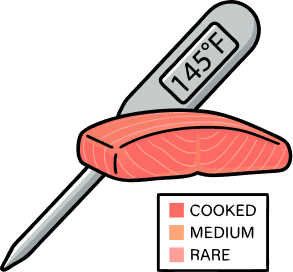
If you cook salmon even semi-regularly, get a thermometer. It’s the easiest way to stop overcooking fish out of fear.
How to do it without messing it up:
- Stick the probe into the thickest part of the fillet.
- Don’t hit the pan. Don’t hit the bone. (That’ll give you a fake high reading.)
- Wait a couple seconds for it to settle.
That’s it. No vibes. Just facts.
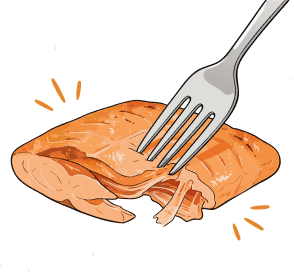
Slide a fork into the thickest part at about a 45° angle and twist gently for doneness checks without gadgets.
- If it barely flakes and feels a little resistant, you’re closer to medium rare.
- If it flakes easily into big, juicy pieces, you’re in medium territory.
- If it crumbles like dry sand at the beach… you went too far. (Still edible! Just needs a sauce and maybe a small apology.)
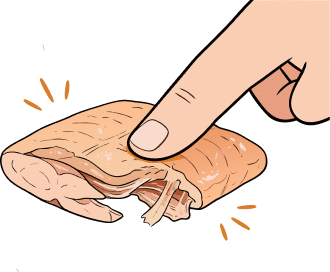
Press the top of the fillet:
- springy with some give = less done
- stiff, no bounce = more done
This takes practice, and I’ve absolutely stood over a pan poking salmon like it owed me money. So yes, it works just don’t make it your only method.
The #1 trick to keep salmon moist: pull it early and let it rest
Salmon keeps cooking after you take it off the heat. This is called carryover cooking, and it’s the reason you can “technically” cook salmon perfectly and still end up with dry fish five minutes later.
My rule: pull it about 5°F before your target.
So if you want:
- 145°F final, pull around 140°F
- 135°F final, pull around 130°F
Then let it rest 3-5 minutes. Not an hour. Not until you “get around to it.” Just a short rest while you plate the sides and pretend your kitchen isn’t a disaster.
One more moisture saving move: fix the thin tail
You know that thin tapered end of the fillet that always turns into salmon sawdust while the thick part is still catching up? Yeah. That.
Tuck the thin end under itself so the fillet is a more even thickness. It’s like folding a too long sleeve so it doesn’t get caught in the door.
This one tiny move has saved me from serving “two textures of salmon” more times than I’d like to admit.
My quick takeaways (steal these and sound smug at dinner)
- Medium rare: 120-125°F = tender and silky, but not for high risk groups
- Medium: 130-135°F = juicy, cooked, and my safest “best of both worlds” pick
- Well done: 145°F = safest for everyone, firmer texture
- Thermometer beats vibes. Always.
- Pull 5°F early + rest 3-5 minutes to avoid overcooking
- Tuck the thin end so it cooks evenly
My favorite mantra for salmon night: Temperature is truth. Timers are just suggestions.
Common salmon temperature questions (because yes, everyone asks)
Is pink salmon safe to eat?
Pink doesn’t automatically mean raw. Salmon can be pink at 130-135°F and totally cooked. Trust temperature over color.
What if the salmon is white inside?
It’s fully cooked (likely well done). Safe, yes. If it tastes dry, don’t suffer add sauce (lemon butter, yogurt dill sauce, teriyaki… whatever makes you happy).
Is 135°F safe?
Many healthy adults choose 130-135°F for texture, especially with quality farmed salmon. But it’s below the FDA’s 145°F recommendation, so don’t serve that doneness to anyone pregnant, very young, older, or immunocompromised.
Now go cook that salmon like you meant it. And if you overcook it once? Congratulations, you’re officially a real person who makes dinner. Add a sauce and try again tomorrow.