

Ever grabbed a sleeve of saltines with soup and wondered what was actually inside them? These thin, salty squares sit in almost every American pantry.
Most people know little beyond the taste and the crunch. Saltine crackers nutrition covers calories, carbs, sodium, and nutrients the box never mentions.
Here you’ll find what a single serving contains, how portion size affects those numbers, and whether saltines deserve a regular spot in your diet.
What Are Saltine Crackers
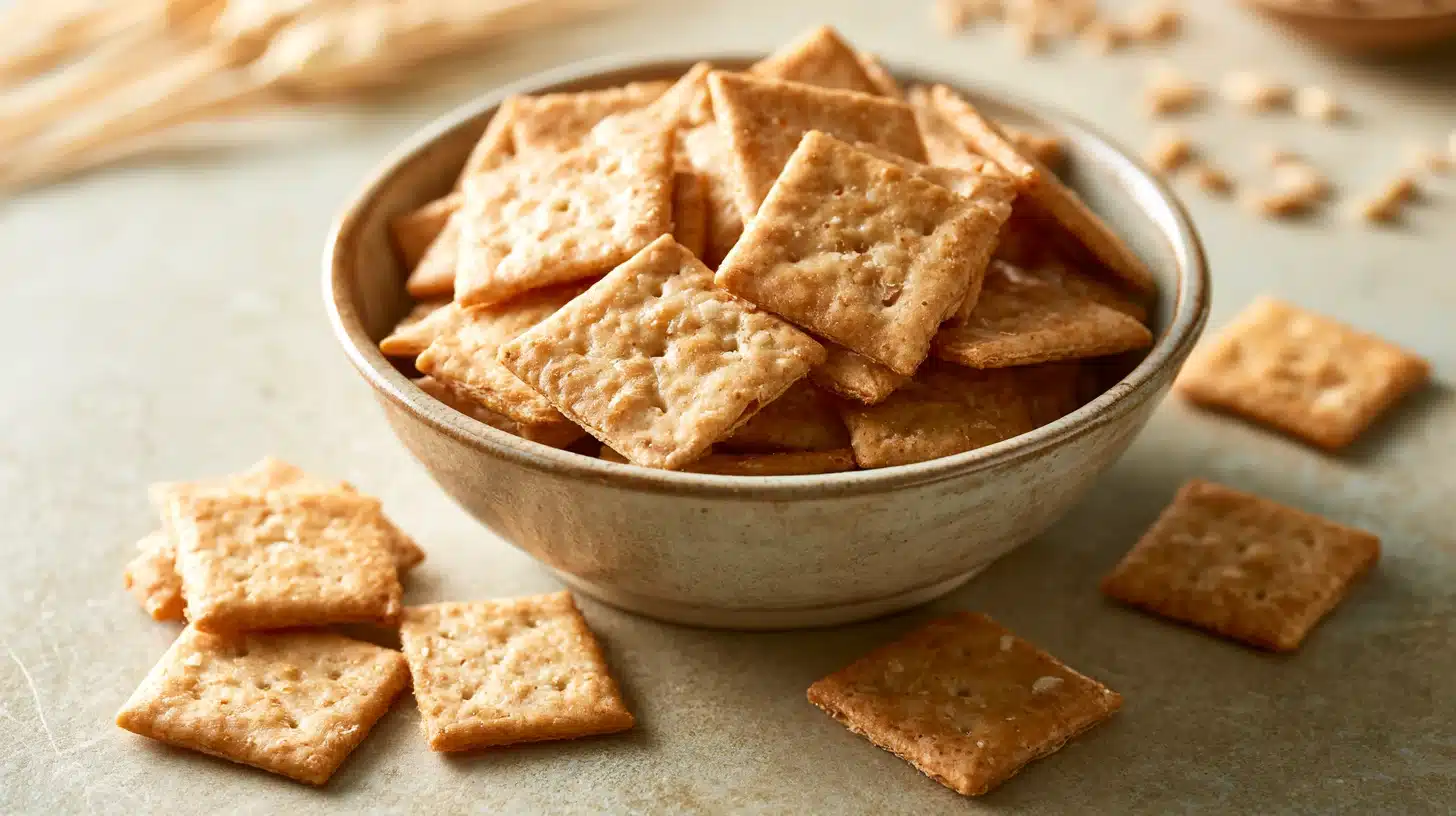
Saltine crackers are thin, square-shaped crackers made mostly from white flour, a leavening agent like baking soda or yeast, shortening, and a topping of coarse salt.
The dough gets rolled thin and baked until light and crisp, giving saltines their signature dry, flaky texture.
Small holes run across the surface of each cracker. These let steam escape while baking, keeping the cracker flat instead of puffing up.
The result is a simple, mild-tasting cracker that pairs easily with soups, dips, spreads, or cheese.
Saltines are sold in individual sleeves inside a larger box, with several varieties available depending on the brand.
Saltine Crackers Nutrition at A Glance
Saltine crackers might look plain, but the numbers behind them tell a fuller story. Here’s a quick snapshot of what one serving actually contains, based on 5 crackers (15g):
| Nutrient | Amount | % Daily Value |
|---|---|---|
| Calories | 60-65 kcal | 3% |
| Carbohydrates | 11 g | 4% |
| Protein | 1.4 g | 3% |
| Fat | 1.3 g | 2% |
| Sodium | 140-150 mg | 6-7% |
| Folate | Small amount | 5% |
Serving Size, Macros, and Label Basics
Here’s a look at the core numbers behind a single serving of Saltines, from calories to what actually shows up on the label.
1. Carbs
Carbs make up most of what’s in a saltine, mainly from the flour used in the dough. A single serving delivers around 10 to 12 grams of carbohydrate, most of it starch rather than sugar.
This is why saltines pair well with soups, spreads, or dips without adding much sweetness.
2. Protein and fat
Protein and fat both remain low because the recipe uses minimal shortening and no added protein source. Expect less than 2 grams of protein and around 1.5 to 2 grams of fat per serving.
That low-fat content is part of why Saltines feel light rather than greasy compared to butter crackers.
3. Sodium
Sodium is where Saltines stand out, and that percentage climbs fast with larger portions or multiple servings in one sitting.
A single serving carries around 135 to 150 milligrams, which can add up quickly for anyone managing blood pressure or following a low-sodium plan.
4. Folate and B vitamins
Saltines also carry small amounts of folate and B vitamins, though not enough to call them nutrient-rich.
These trace nutrients come mostly from the enriched flour used in most commercial recipes. They contribute a small percentage of daily needs but shouldn’t be relied on as a meaningful source of nutrients.
Portion Size Changes the Numbers
Portion size changes the picture fast with saltines. What looks like a small snack can add up quickly once you go past the standard serving.
- One cracker: About 13 calories and around 30 milligrams of sodium. On its own, one cracker barely registers on a daily nutrition count.
- Five crackers (1 serving): The standard serving size listed on most boxes, holding around 60 to 65 calories and roughly 140 to 150 milligrams of sodium.
- One sleeve (40 crackers): Pushes calories close to 480 and sodium well past 1,000 milligrams, nearly half the recommended daily limit for many adults.
Are Saltine Crackers Healthy?
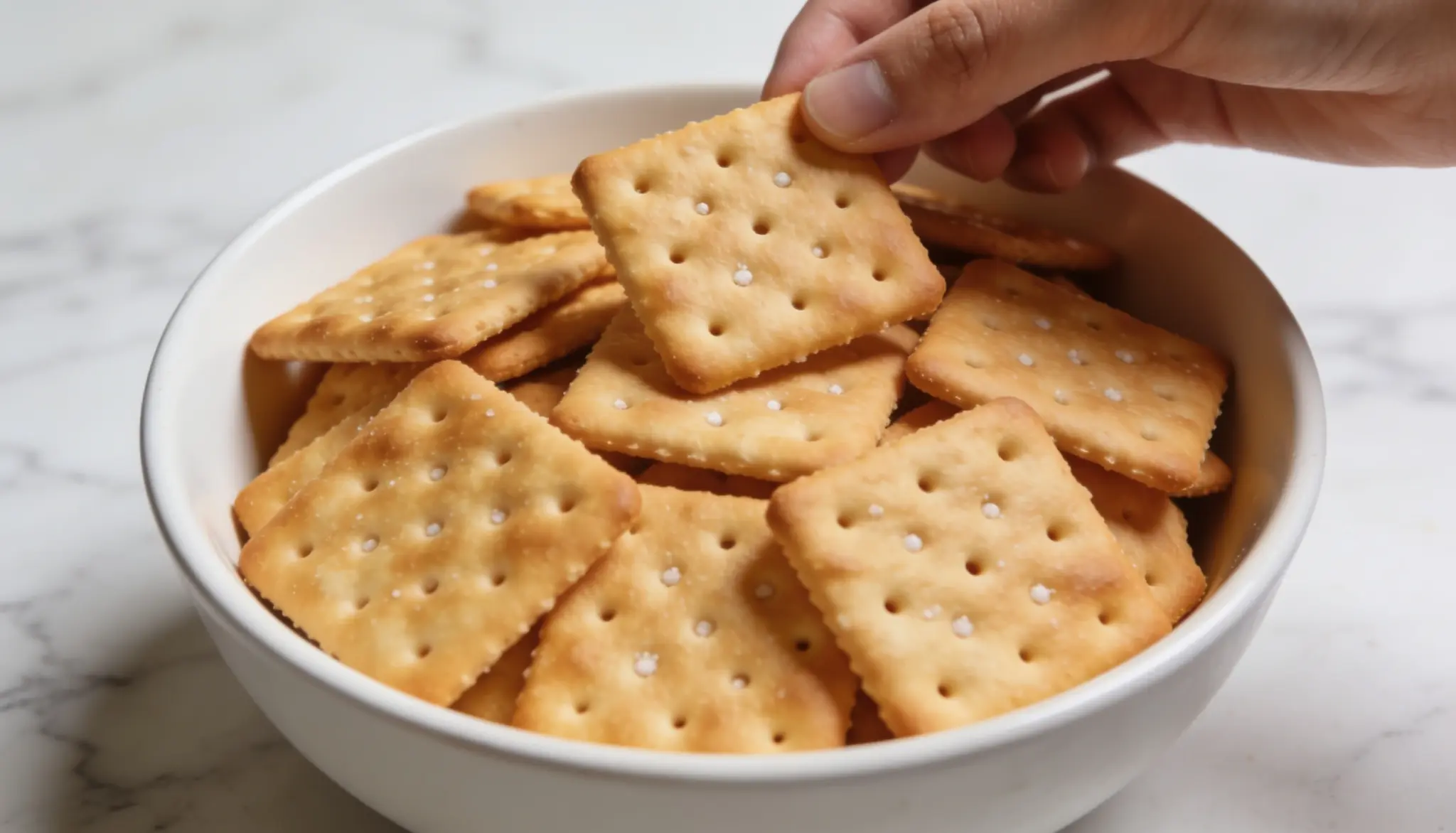
Saltines earn their spot in the pantry and in almost every “sick day” kit for reasons beyond mere habit. Here’s what makes them worth keeping on hand.
- Easy to digest: The plain, low-fiber texture makes saltines gentle on the stomach.
- Low in fat: Most saltines carry only a gram or two of fat per serving.
- Convenient snack: They travel well, need no refrigeration, and pair with almost anything.
- Nausea relief: The bland, dry texture makes saltines easy on a queasy stomach, since the body doesn’t have to work hard to digest them.
- Upset stomach relief: Saltines can help absorb excess stomach acid and are gentle enough to eat without causing further irritation, making them a go-to snack for morning sickness and stomach bugs.
- Doctor-recommended: Many doctors suggest bland, low-fat foods like saltines as a first step before resuming regular meals, often alongside other BRAT-diet foods such as bananas, rice, and toast.
Between their gentle digestibility and their place in doctor-backed recovery diets, saltines have earned their reputation as the go-to snack when your stomach needs a break.
Where They Fall Short?
While saltines are easy to eat and simple to store, a few drawbacks are worth knowing before making them a regular habit.
- High sodium: A few servings can quickly add up toward the daily sodium limit, especially if paired with other salty foods.
- Refined flour: Saltines use white flour, which offers little nutritional value on its own.
- Low fiber and protein: Saltines won’t keep you full for long or support steady energy, so they work better as a side than a main snack.
People managing blood pressure or sodium intake should watch portion sizes closely.
Anyone following a high-fiber or high-protein diet may also want to pair saltines with other foods rather than eating them alone.
For most healthy adults, saltines fit fine as an occasional snack rather than a daily staple.
Smarter Ways to Eat Saltines
Saltines don’t have to sit alone on a plate. A few simple additions turn them into a snack that actually holds you over.
Small changes like these can make a big difference without much extra effort.
1. Protein Toppings
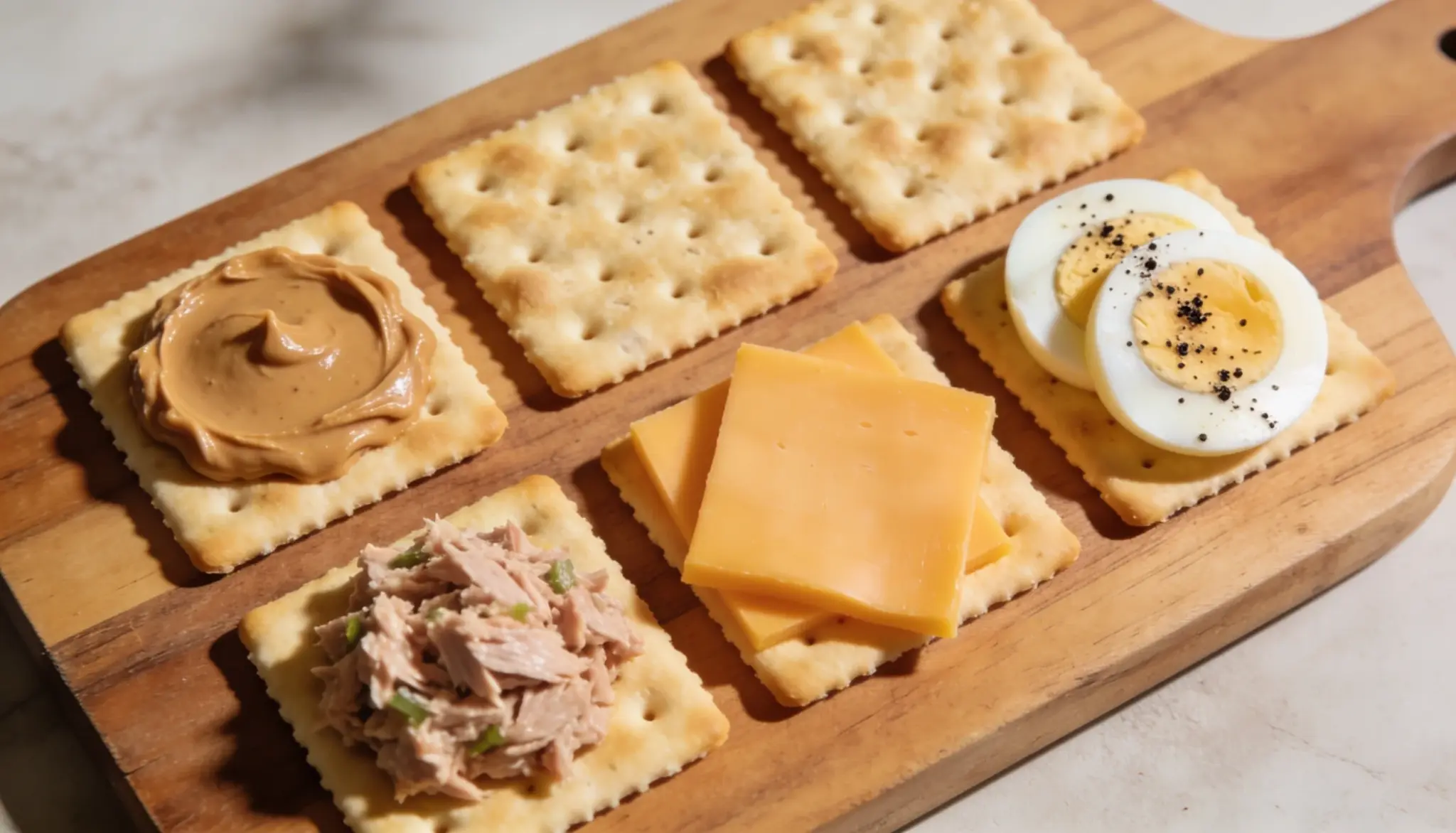
Adding protein makes the biggest difference. Nut butter, sliced cheese, or a spoonful of tuna salad turns a light cracker into something more filling.
Even a boiled egg on top works well. These small additions help balance out the low protein content that saltines carry on their own.
2. Pairing With Soups and Salads
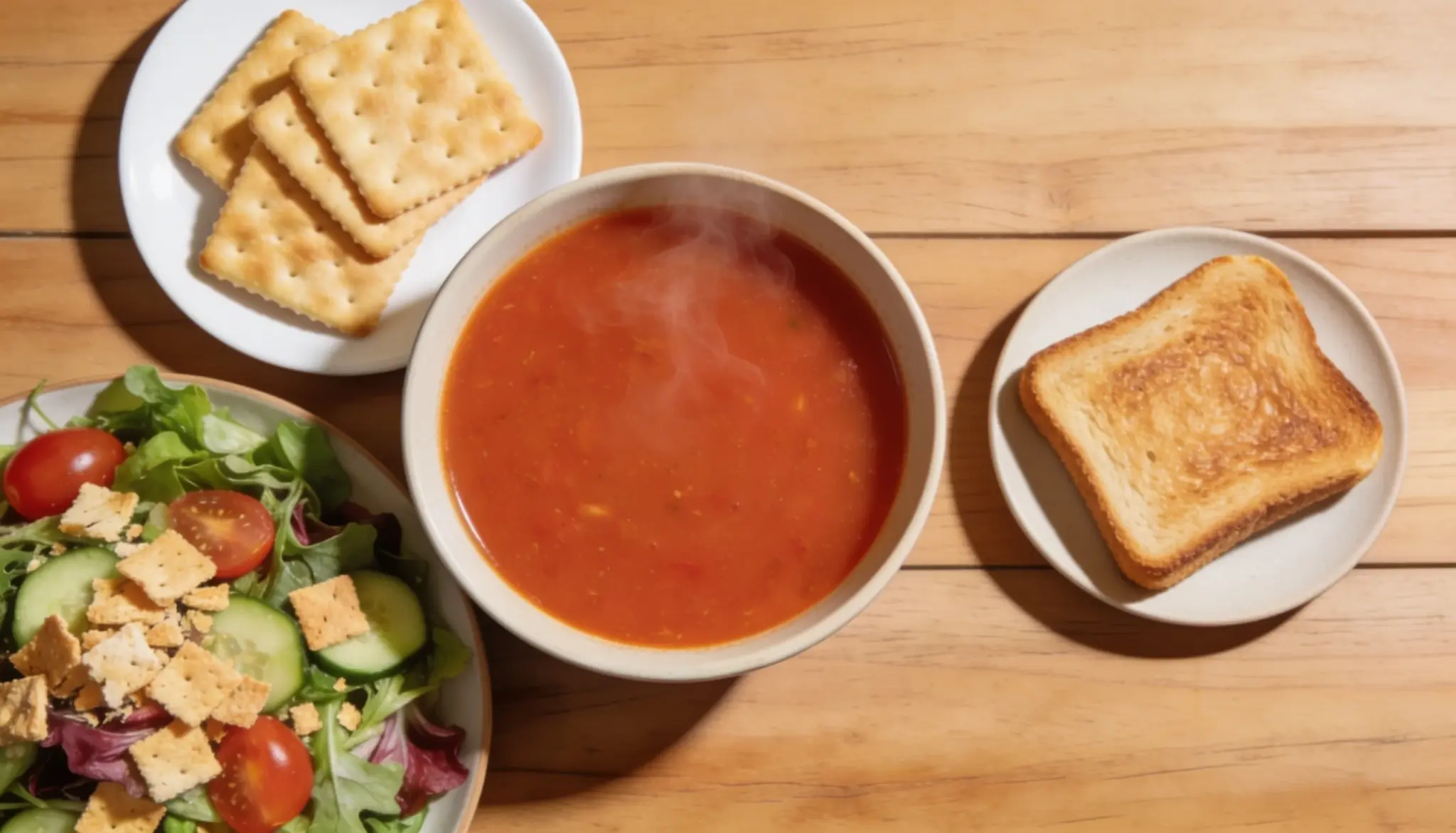
Saltines pair naturally with soup, adding crunch without overpowering the dish. They also work well when crumbled over salads or served alongside chili, giving texture to softer meals.
3. Better Snack Combos
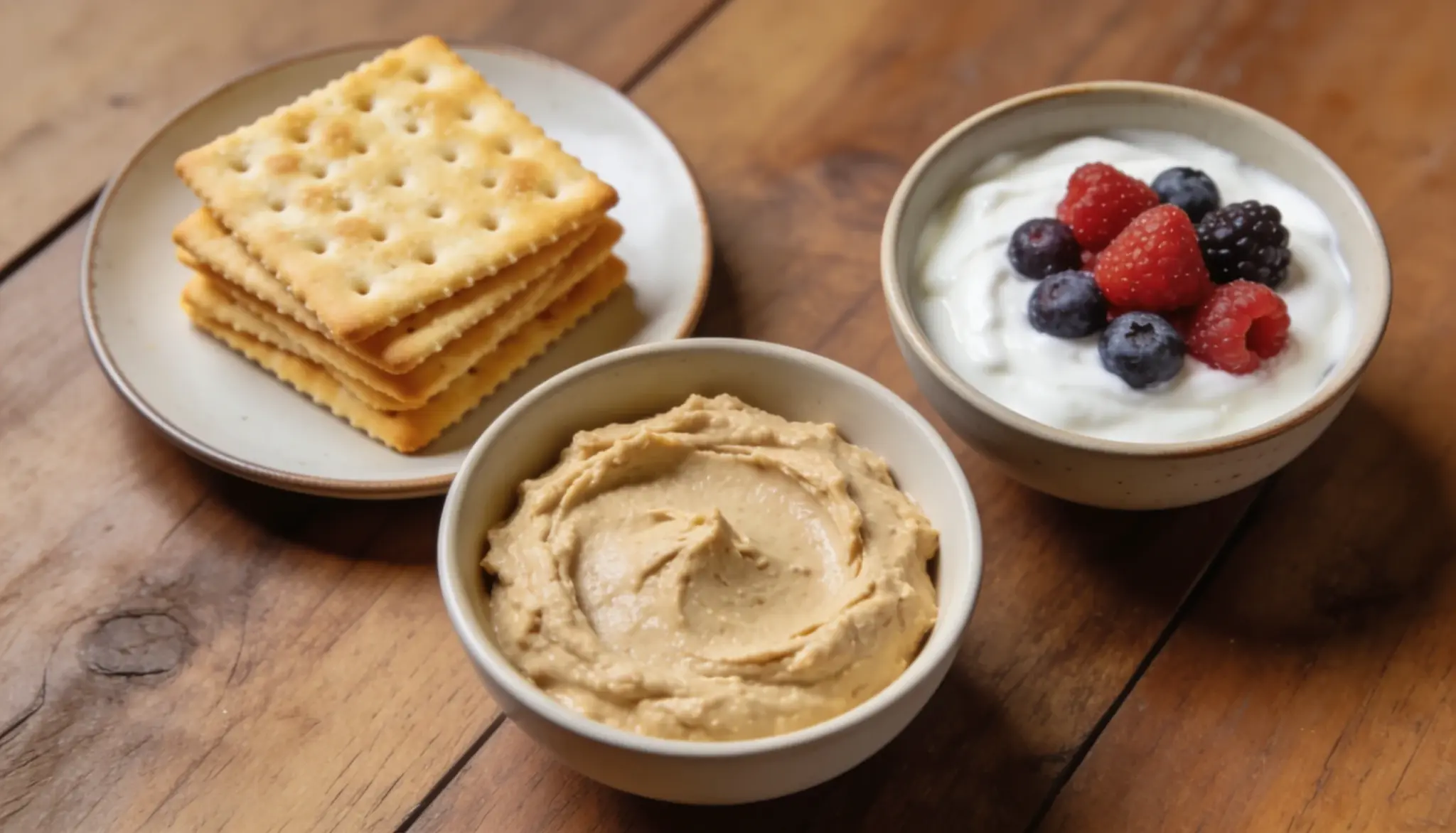
Pairing saltines with fruit, hummus, or Greek yogurt rounds out the snack with fiber and protein.
These combinations balance out the low nutrient content of the crackers alone, making the overall snack more satisfying.
Wrapping It Up
Saltine crackers turn out to be more than a plain pantry staple. This section covered what saltines are made of and the numbers behind a single serving.
It also showed how quickly those numbers shift with portion size. Sick-day habits and a few simple topping ideas rounded out the rest.
Saltine crackers nutrition isn’t complicated once the numbers are laid out. Knowing them makes this everyday snack easier to enjoy.
Frequently Asked Questions
1. Are Saltine Crackers Gluten-Free?
No, traditional saltines contain wheat flour. Anyone avoiding gluten should choose gluten-free crackers instead.
2. Do Saltine Crackers Contain Sugar?
Most saltine crackers have little to no added sugar, since the main ingredients are flour, oil, and salt.
3. Are Saltine Crackers Vegan?
It depends on the brand. Some use plant-based oils, while others include dairy-based shortening, so check the label.
4. How Long Do Saltine Crackers Stay Fresh After Opening?
Opened saltines usually stay fresh for one to two weeks in an airtight container at room temperature.
5. Can Saltine Crackers Be Frozen?
Yes, saltine crackers freeze well in a sealed container and can last several months without losing their texture.