

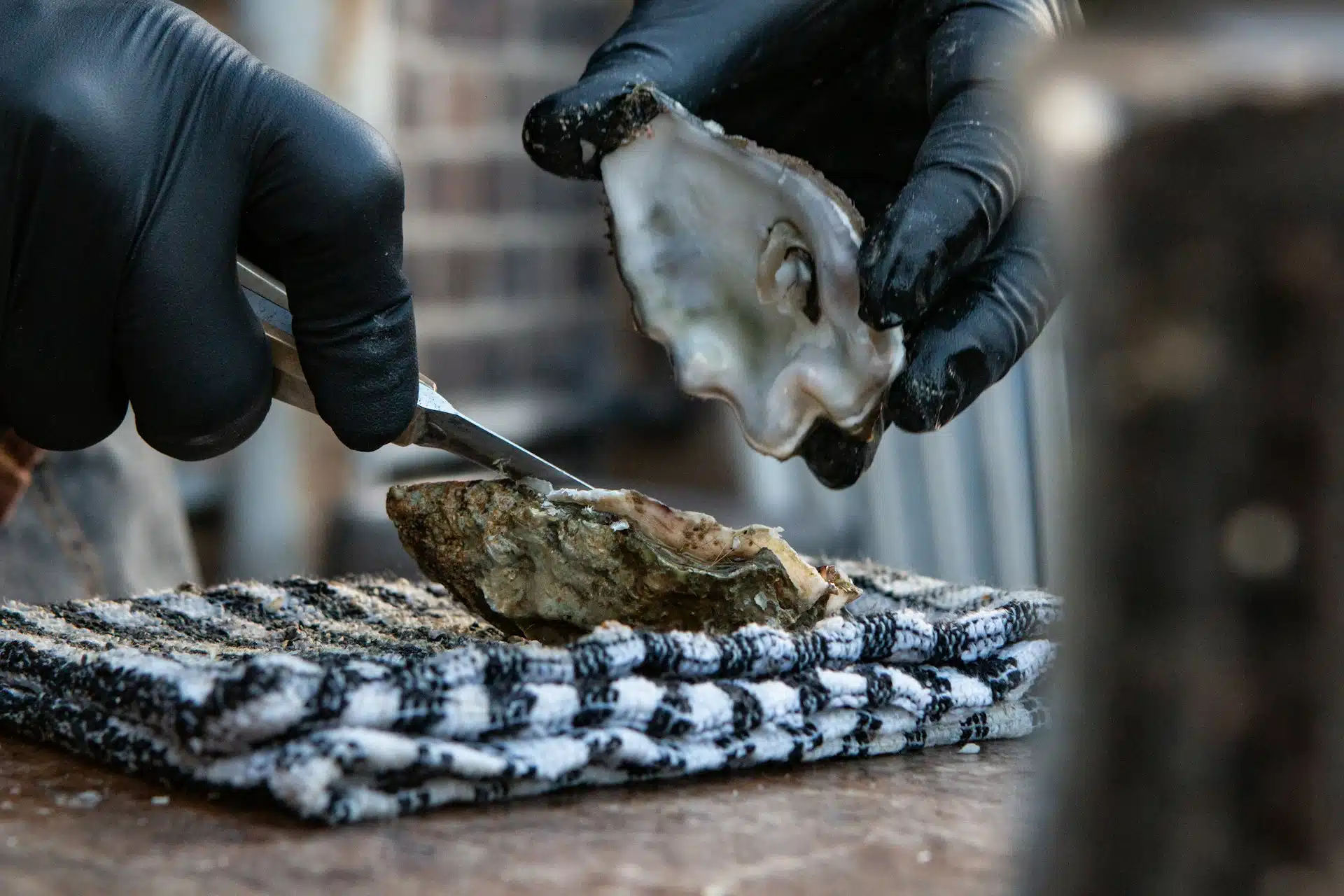
Clams are the undisputed gems of the coastline, offering a briny explosion of flavor that feels like a summer vacation in every bite. To reach a level of true kitchen confidence, you need to understand that different clams require different thermal roadmaps.
It is all about managing protein denaturation – the process where heat causes those tightly coiled proteins to unwind and then bond together. If the heat is applied for too long or too aggressively, those proteins cross-link into a rubbery mesh that no amount of butter can save.
Balancing a busy life is much like balancing flavors in a white wine sauce; sometimes you have to delegate the heavy lifting to ensure every part of your day turns out exactly right, which is why some choose to pay Essaypro to do homework while they master the art of the sauté. But now – let’s learn the science-backed way to master the clam!
1. The Purge: Science-Backed Grit Removal
Before a single flame is lit, you must deal with the “sand factor.” Clams are filter feeders, meaning they naturally pull in sediment from their environment. If you don’t encourage them to “spit” that sand out, your meal is ruined.
The most effective method is a saltwater soak that mimics the ocean’s natural salinity. When clams feel they are in their natural habitat, they relax their shells and begin to cycle water, effectively pushing out any grit trapped in their internal siphons.
- The Ratio: Use about 3.5% salinity, which is roughly 35 grams of sea salt per liter of water. This is the global average for seawater. Using fresh water will actually kill the clams, causing them to shut tight and keep the sand inside.
- The Temperature: Keep the water cold. If it’s too warm, the clam gets stressed and won’t open to breathe. A stressed clam is a tough clam.
- The Cornmeal Myth: Science suggests adding cornmeal is mostly a placebo, but a little bit of black pepper can irritate the clams just enough to make them more active in their purging without affecting the flavor of the final dish.
2. Little Necks and Cherrystones: The Steam Method
These are the “hard-shell” beauties most common in pasta dishes. Research shows that clam meat begins to firm up significantly at 60°C. However, the adductor muscles – the tiny hinges that keep the shell shut – don’t relax until they hit a slightly higher temperature.
This is why we steam; it creates a pressurized environment that cooks the meat evenly. You want the water or wine at the bottom of the pot to be boiling vigorously before you add the clams, as a slow ramp-up in temperature can lead to uneven cooking.
| Clam Type | Avg. Steam Time | Texture Profile |
|---|---|---|
| Little Necks | 5 – 7 Minutes | Tender, sweet |
| Cherrystones | 8 – 10 Minutes | Firm, briny |
| Quahogs | 12+ Minutes | Chewy, best for chowder |
3. The Expert’s Corner: Achieving Culinary Balance
To ensure you aren’t overworking yourself at the stove, you might choose to pay for homework help when the workload gets too heavy. Just like a perfectly timed steam, having the right support ensures you don’t “overcook” your own mental well-being.
When we look at the intersection of expertise and execution, we find that the best results come from those who have spent years studying the nuances of their craft. Adam Jason, a renowned academic consultant, often emphasizes that the secret to a great dish is the same as the secret to a great education: knowing when to seek professional insight.
Whether you are looking for an essay writing service or the perfect recipe for a butter-poached clam, the goal is always high-quality output that meets professional standards.
4. Soft-Shell Clams: The Delicate “Steamers”
Soft-shell clams have a brittle shell and a long siphon that acts as a powerful pump. Because their shells don’t close completely, they are more prone to drying out or absorbing off-flavors from their environment. The science-backed approach here involves a “two-stage” hydration process.
First, they are steamed in a flavorful broth, and then they are served with a side of the strained cooking liquid for dipping.
This dipping liquid serves a dual purpose. First, it adds a concentrated punch of flavor back into the meat. Second, it acts as a final rinse. Even a thorough purge can leave a few grains of sand tucked into the folds of the siphon. By swishing the clam in the broth before eating, you ensure a perfectly smooth experience.
If your schedule is so packed that you can’t even find time to boil water, you might want to hire someone to do my homework so you can reclaim your evening for a proper, slow-cooked meal.
5. Razor Clams: The Flash-Sear Technique
Razor clams are the “steaks” of the clam world. Because the meat is quite muscular and contains less water than other varieties, it can become tough very quickly.
Instead of steaming, which can be too slow for these elongated bivalves, try a high-heat flash sear. You want your pan to be screaming hot – almost at the smoke point of your oil.
Add the razor clams for no more than 60 – 90 seconds per side. This triggers the Maillard reaction on the surface, creating a savory, caramelized crust while keeping the interior tender and succulent. The Maillard reaction is a chemical reaction between amino acids and reducing sugars that gives browned food its distinctive flavor. Without it, the razor clam can taste somewhat one-dimensional.
6. Common Pitfalls and Real-World Success
Even with the best intentions, things can go wrong in the kitchen. If a clam doesn’t open after the allotted time, do not panic. Give it a gentle tap with a spoon or try to pry it slightly. Often, the hinge is just stuck by a bit of grit or a stubborn muscle.
If it smells like a crisp sea breeze once opened, it is likely safe to eat. However, if it smells “fishy” or pungent, that is the chemical sign of spoilage, and it should be tossed.
The chemical responsible for that “rotten fish” smell is trimethylamine, which is produced when bacteria begin to break down the proteins in the meat. Master the tap test and the scent check, and you will elevate a simple bag of shellfish into a legendary feast.
Final Thoughts: The Philosophy of the Pot
Cooking clams is as much about restraint as it is about heat. It requires you to be present, watching for that first crack of the shell and listening for the gentle hiss of steam.
In a world that often feels like it is moving at a million miles an hour, the act of preparing a proper seafood meal forces us to slow down and respect the ingredients. There is a certain biological beauty in how these creatures respond to our culinary efforts.