


Packing a kitchen seems easy. Then you open the first cabinet. Glassware. Plates. Appliances. Knives. Food. Cookware in shapes that don’t fit anything. And a startling amount of stuff that can crack, spill, or disappear somewhere between your old place and the new one.
Most people leave the kitchen for last, which makes sense. You still have to eat. You still need coffee. Life keeps happening while boxes swallow the rest of the house. The better move is packing in stages, protecting the fragile stuff properly, and holding back just the essentials until the end.
Start With What You Never Touch
No need to empty the whole room at once. Start with what you won’t miss for a week or two. Serving platters. Specialty appliances. Extra mugs. Holiday dishes. Baking tools you use twice a year, maybe.
This part also forces a reckoning. Moving exposes everything that’s been sitting untouched in the back of a cabinet since who knows when.
Chipped mugs nobody reaches for. Three vegetable peelers. That appliance you completely forgot you owned. Ask if any of it deserves space in the truck. Every item you cut is one less thing to wrap, carry, unpack, and find a home for later.
Small Boxes for Heavy Stuff
Kitchen boxes get heavy fast. Faster than you’d think. Plates, canned goods, pots, pans, small appliances. Fill a big box with any of it, and suddenly nobody can lift the thing safely.
Small boxes solve this on their own, because they cap how much you can cram in. Save the big ones for lightweight stuff. Plastic containers, dish towels, baking sheets, mixing bowls.
Feels inefficient using more boxes. It isn’t. Fewer blowouts at the bottom, fewer near-disasters on the stairs.
Wrap Every Dish on Its Own
Plates feel solid in your hand. Put them in a box, and they turn fragile. Pressure, vibration, one hard brake, and something cracks.
Wrap each plate separately, then stand them vertically instead of stacking flat. Vertical spreads the load out instead of dumping it all on whatever’s at the bottom.
Crumpled paper down first. Then fill the gaps once everything’s packed. Give the box a gentle shake. If anything slides, add more.
Give Glassware More Room Than Feels Right
Glasses, mugs, wine glasses, small bowls. They all need space between them. Packing tight feels safer, but glass touching glass over three hundred miles means small impacts happening over and over until something gives.
Wrap each piece separately. Stuff a little paper inside hollow glasses and mugs before you wrap the outside. Got dividers? Use them for stemware and anything you’d be sad to lose.
On a long haul, those extra minutes matter. Experienced cross-country movers see the same failure constantly. Fragile pieces packed too close together, not enough cushioning to stop them from moving.
Fill the Empty Space
Carefully wrapped things still break when they have room to move. Empty space means sliding and knocking every time the truck turns.
Crumpled paper handles most of it. Clean dish towels, oven mitts, and soft linens work too.
Don’t overstuff though. You want things held still, not glass pressed hard against ceramic for six hours.
Pots and Pans Without Wasting Space
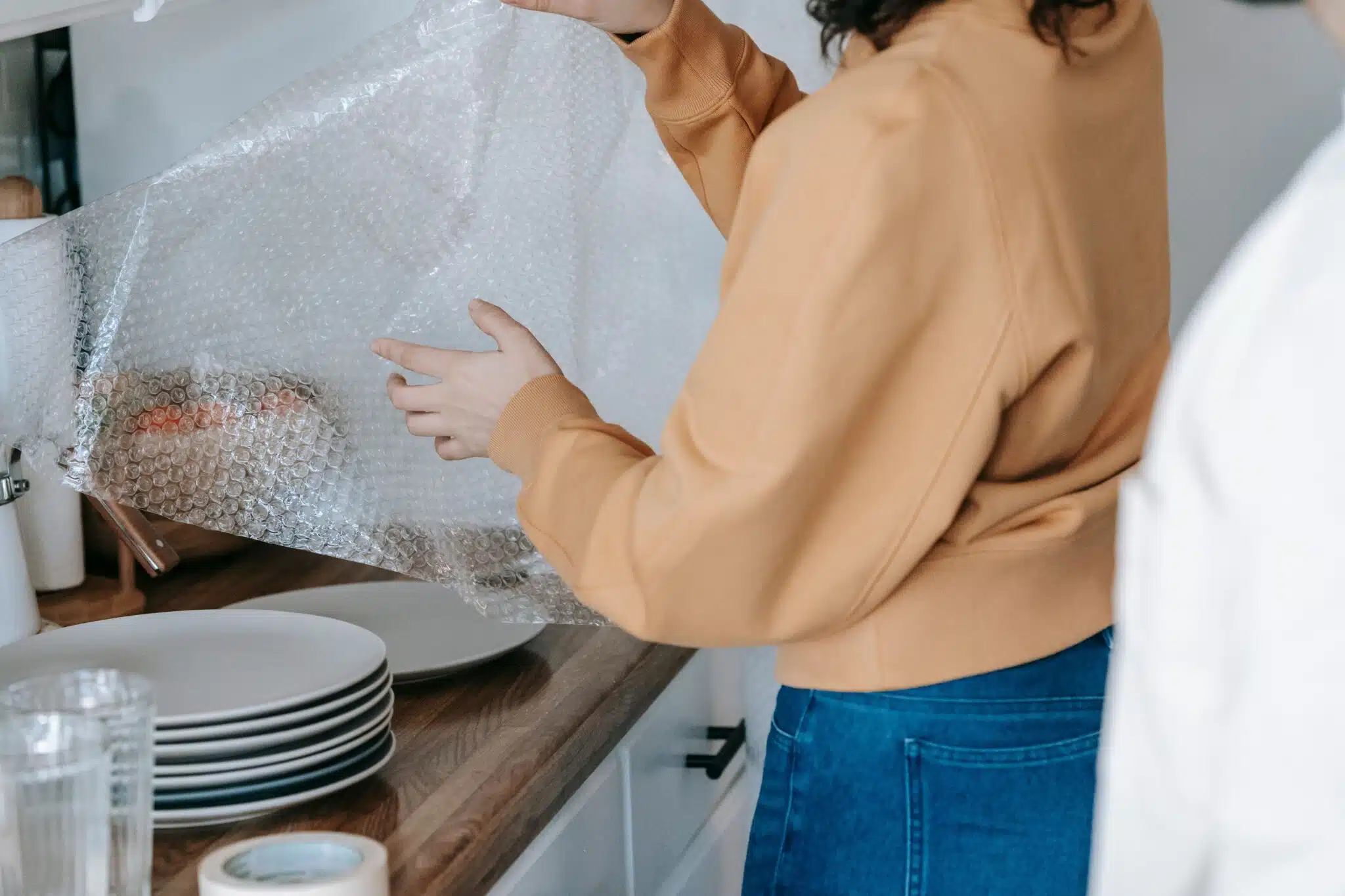
Cookware is the easy part. Most of it isn’t especially fragile. It can still scratch, dent, and beat up whatever’s nearby, though.
Nest smaller pots inside larger ones. Slide paper or a clean towel between them if you’re protecting nonstick or polished surfaces.
Use the empty space inside the big pots for lightweight stuff. Measuring cups, wrapped utensils, small containers. Keep breakables out of there.
Wrap Lids Separately
Lids are always the annoying part. Metal ones hold up fine. Glass lids crack easily when they’re floating loose next to heavier things.
Wrap glass lids individually, stand them vertically when you can. Metal lids can be grouped; just secure them so they’re not clanging around the whole drive.
Keep lids near the pots they belong to. Otherwise you arrive with every pot in one box and every matching lid in another, which is its own special frustration.
Knives Need Real Attention
Never toss knives loose in a box. Even if nothing’s exposed when you pack it, things shift, and that’s a nasty surprise for whoever opens it.
Still have the block? Use it, and secure the knives so they can’t slide out. For loose knives, wrap the blades in several layers of paper and tape it down firmly.
Then label the bundle clearly. One small step that keeps someone from reaching blindly into a box and grabbing a blade.
Prep Appliances First
Small appliances usually have parts that shift or break in transit. Pull the trays, blades, glass containers, and attachments out before packing.
Clean them, too. Crumbs and grease turn into real smells when a box stays sealed for a week.
Original packaging is best if you kept it. It was built for this. Otherwise, grab something sturdy with room to pad all sides.
Cords and Loose Parts
Loose cords tangle with everything, scratch surfaces, and make unpacking a puzzle nobody wants.
Wrap them neatly, secure with a twist tie or strap. Don’t wrap so tight you’re straining the connection.
Keep small accessories with whatever they belong to. A labeled plastic bag works perfectly for removable parts, screws, and attachments small enough to vanish.
Be Picky About Pantry Food
Not everything in the pantry earns a spot in the truck. Check dates first. Look for anything open, damaged, or already leaking.
Wrap glass jars like any other fragile item. Dry goods need a real seal so flour, sugar, or rice doesn’t end up coating the inside of a box.
And be honest about what’s worth hauling. Half a bag of flour and a nearly empty bottle of oil across four states? Probably not worth it.
Take Liquids Seriously
Liquids cause damage way out of proportion to their size. One leaking bottle of oil softens the cardboard and ruins everything packed around it.
Check every lid. Tape the ones that need it. Put bottles in sealable bags and keep them upright.
Never mix liquids with dishes or anything absorbent. If something leaks, losing one small box of pantry supplies beats losing your whole dish collection.
Make One Essentials Box
You will not unpack the whole kitchen on night one. You’ll be exhausted, hungry, and surrounded by boxes that all look exactly the same.
Pack one clearly labeled essentials box. A few plates, cups, utensils, one pan, one pot, dish soap, a sponge, paper towels, something to eat.
Think about the morning too. If coffee isn’t optional for you, keep the maker, filters, mugs, and actual coffee together. Nobody should have to open six boxes before their first cup.
Label With More Than “Kitchen”
Writing kitchen on every box helps for about ten seconds, right up until you’re staring at fifteen identical boxes.
Add a few words. Kitchen, everyday dishes. Kitchen, fragile glassware. Kitchen, pantry. Kitchen, coffee and appliances.
Mark fragile boxes on more than one side. And remember, a fragile label isn’t packing. The stuff inside still has to survive normal handling from someone who isn’t reading labels.
Pack With Unpacking in Mind
Good packing is really just preparation for unpacking. How you organize now decides how rough the first few days feel.
Keep related things together. Coffee supplies with the coffee maker. Baking tools in one place. Food storage containers packed with their matching lids, because separating those two is a mistake you’ll feel later.
Think in small groups instead of dumping cabinet contents into whatever box is closest. Breakfast stuff, baking supplies, everyday dishes, cookware, food storage. Each gets its own box or section.
Rushed Packing Is What Breaks Things
Most broken kitchen items aren’t bad luck. They’re movement, thin padding, overloaded boxes, or decisions made at eleven at night when you just want to be finished.
Give yourself the time. Use more paper than feels necessary. Keep boxes light enough to actually lift. Fill the gaps. Label everything.
None of this is complicated, which is exactly why it works. Packing a kitchen well is mostly about slowing down enough to protect the things that can’t take a hit. Do that, and opening those boxes on the other end is a lot less painful.