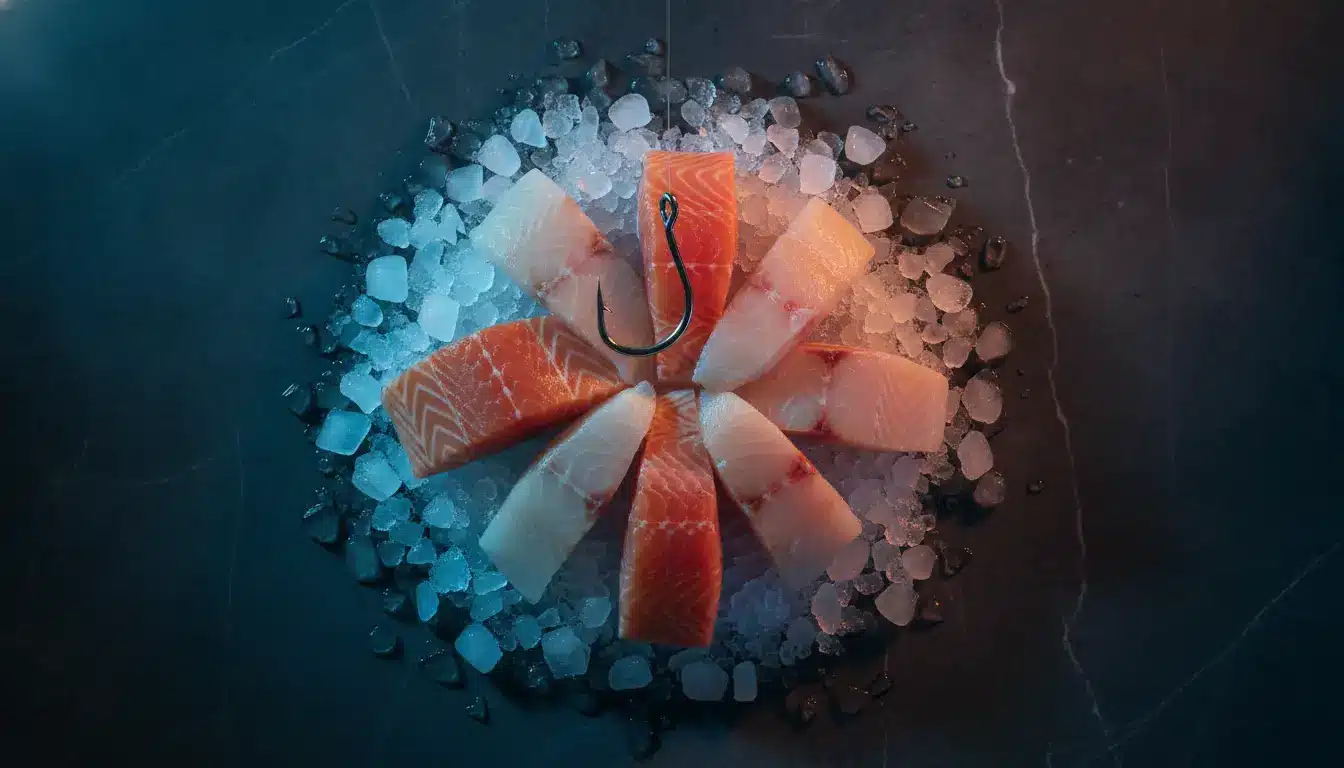


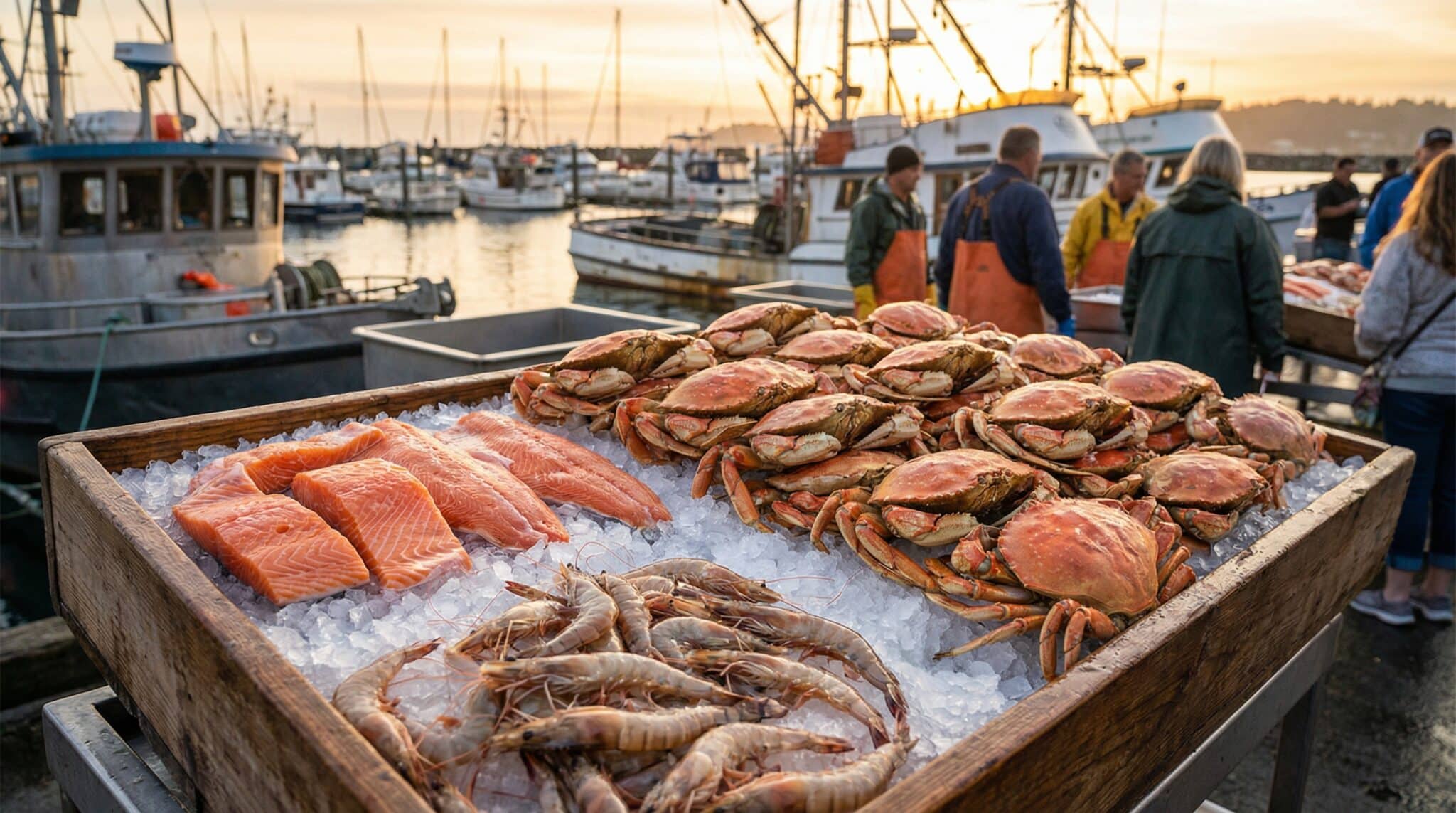
You know that sad, overpriced salmon sitting under the fancy ice mountain at the supermarket? The one that costs the same as a small car payment? There’s a decent chance it just took a cross country (or cross ocean) tour while something fresher was literally swimming off California yesterday.
And here’s my slightly dramatic opinion: seafood quality is mostly about timing. Not the font on the sign. Not the “fresh” sticker. Timing.
California’s coastline is basically a rotating menu crab shows up, salmon does its glamorous seasonal runway walk, squid has its chaotic little moment and if you buy what’s peaking, dinner goes from “fine, I guess” to “wait, why don’t I do this every week?”
Let me be your slightly bossy friend for a minute and help you shop like you have insider info.
The Only Rule I Want You to Remember
Eat what’s peaking, not what’s posing.
Fish and shellfish don’t care about your meal plan. They run on biology and regulations and ocean conditions (rude, but honestly relatable).
- Crab isn’t great right after molting so the season lines up with when they’ve filled out.
- Salmon shows up in runs tied to water temps and snowmelt.
- Spot prawns have a short, glorious spring window and then disappear like they heard you open a Ziploc bag.
Also: seasons can shift year to year, and openings/closures are a real thing. If you’re planning a big splurge, check California Department of Fish and Wildlife (CDFW) for current commercial season updates. Consider it your “don’t get played” insurance.
A Practical (Non-Spreadsheet) Seafood Calendar
I’m not going to pretend you want to cross reference a 12 month table while standing in line holding melting ice cream. So here’s the version you’ll actually use.
Winter (December-February): The “Rich Stuff” Era
If winter had a theme song, it would be crab cracking sounds.
- Dungeness crab: Peak eating and usually best value in Dec-Feb (still around into spring depending on the year).
- Rockfish & lingcod: really solid in winter firm, white, forgiving. (Translation: it’s hard to ruin even if you get distracted by your group chat.)
- Uni (sea urchin): often best in colder months creamier, less weirdly bitter.
My personal winter personality is basically: “Put a pot on the stove and don’t talk to me until I’ve had butter and lemon for Dungeness crab dinner ideas.”
Spring (March-May): The Blink and You Miss It Season
Spring is when the ocean starts showing off.
- Spot prawns: April-May is the big moment. They’re sweet, almost lobster-y, and they sell out fast. Hesitate and they’re gone. (Ask me how I know.)
- California halibut: season opens in spring and gets better as it rolls toward summer.
- Monterey Bay squid: often peaks in spring too when it’s abundant, it can be wildly affordable. This is when calamari can be a Tuesday dinner, not a “special occasion appetizer.”
Summer (June-August): Salmon’s Main Character Season
This is when you stop treating salmon like a once a year luxury and start acting like a person with options.
- Wild king salmon: June-August is often peak (when open). If you love it, this is when to buy and freeze a little stash.
- Halibut: still going strong, often great in summer.
- Sardines/anchovies: late summer can be their time cheap, nutritious, and honestly underrated if you cook them like you mean it.
Fall (September-November): Shellfish Come Back to Life
As the water cools, certain things get noticeably better.
- Oysters & mussels: fall through spring tends to be the sweet spot (plumper, tastier). The old “only eat oysters in months with an R” thing is basically pointing you toward cooler water months.
- Squid: can have another peak in fall.
- Crab: starts creeping back in late fall (often November), but opening week prices can be spicy.
Fall is the warm up lap. Winter is the victory lap.
“Okay but WHAT should I actually buy?” My Shortlist
If you want the cheat sheet without the overthinking:
If you want a guaranteed wow:
- Dungeness crab (Dec-Feb peak): Buy whole if you can. Live is the freshest, but yes, it’s an Experience. Pre-cooked is convenient and still delicious just not quite as magical.
- Wild king salmon (Jun-Aug peak): Grill it, roast it, pretend you’re a coastal grandmother. Buy extra during peak and freeze it properly.
- Spot prawns (Apr-May): Quick cook only. The longer you mess with them, the more you risk turning them into expensive rubber bands.
If you want great seafood without crying at checkout:
- Rockfish/lingcod (winter is especially great): tacos, chowder, pan fry these are your workhorses.
- Monterey Bay squid (spring/fall): fresh cleaned same day is noticeably better than frozen. Quick grill, quick sauté, done.
If you want to feel fancy with minimal effort:
- Oysters & mussels (Sep-Apr): steam mussels with garlic and wine and suddenly you’re a person who “entertains.”
Where “California Seafood” Actually Comes From (Because Labels Can Be Sneaky)
“California” on a sign can mean a lot of things sometimes it’s caught here, sometimes it’s just processed here. Those are not the same vibe.
A super quick regional cheat sheet:
- Northern CA (Eureka to Bodega Bay-ish): big on Dungeness crab and a lot of salmon.
- Central Coast / Monterey Bay: squid, halibut, and plenty of rockfish.
- Southern CA: more warm water species (different seasons), plus plenty of great local landings depending on what’s running.
And yes: you’re allowed to ask questions at the seafood counter about wine bottles for shellfish. This is your dinner, not a museum display.
My go to questions:
- “Was this previously frozen?” (Because “fresh” at the counter can mean “thawed this morning.”)
- “Do you know where it was caught?”
- “When did it come in?”
If the answers get weirdly vague, that’s your cue to pivot to something else.
Where to Buy So You Don’t Get Played
Grocery store
Totally fine just be nosy. Good counters will tell you origin and arrival dates. If nobody knows anything, I’d personally skip the splurge species and grab something safer (like frozen wild salmon clearly labeled as frozen frozen isn’t a villain, mystery is).
Buying direct / docks
If you live near a harbor and you’ve never bought seafood straight from the source, it’s honestly kind of fun. Bring:
- a cooler with ice
- cash (sometimes)
- flexibility (because you get what’s landing, not what you “planned”)
Farmers markets + CSFs (Community Supported Fisheries)
Some markets have legit seafood vendors, and CSFs are like farm boxes but from the ocean. You basically subscribe and get what’s best that week. It’s a great way to eat seasonally without having to become a part time fish detective.
How to Get the Best Deal (Without Becoming a Coupon Person)
The first week of a season is usually pricey. A few weeks in when boats are landing consistently prices often calm down.
Also: holidays mess everything up. If you want crab at a human price, buying the second week of January can be kinder than trying to fight the New Year’s Eve crab rush like it’s a sporting event.
Storage: The Unsexy Part That Saves Your Dinner
This is where people accidentally turn “treat yourself seafood” into “why does this smell like regret?”
- Plan to cook within 24 hours for best quality.
- Keep seafood cold: on ice, in the coldest part of your fridge. (Not in the door. The door is chaos.)
- Whole fish keeps better than fillets. If you’re not cooking immediately, consider buying whole.
Freezing (do it right or don’t bother)
If you can vacuum seal, amazing. If not:
- Wrap tightly in plastic wrap (no air gaps)
- Wrap again in foil or put in a freezer bag
- Squeeze out as much air as humanly possible
Salmon freezes well for a few months if wrapped well. Crab meat can be frozen, but texture can suffer, so I don’t treat it like a long term plan.
The sniff test (trust it)
Fresh seafood should smell like the ocean, not like a fishy punch in the face. If you get ammonia or strong funk, please don’t “cook it and see.” That is not bravery. That’s a gamble.
Staying Current (Because the Ocean Doesn’t Care About My Blog Post)
If you’re planning something specific especially salmon or crab check:
- California Department of Fish and Wildlife (CDFW) for season announcements and changes
- Monterey Bay Aquarium’s Seafood Watch for sustainability guidance
- Local harbors/fishmongers on social media (honestly, it’s the best real time intel)
Your Tiny Homework (It’s Easy, I Promise)
This week, pick one thing that’s in season right now and buy it on purpose. Ask one question at the counter. Bring a cooler if you’re going to the dock. Cook it within a day.
Once you taste seafood at its actual peak, you’re going to side eye that overpriced “fresh” salmon forever and honestly? Good.