

What Does Calamari Taste Like? (Spoiler: It’s Not “Fishy Rubber Bands”)
If the word calamari makes you picture a sad pile of fried rings that squeak when you chew… hi, you’re my people.
Because here’s the thing: most people who “hate calamari” don’t actually hate calamari. They hate overcooked squid that’s been through the culinary equivalent of a hostage situation.
When calamari is done right, it’s one of the mildest, easiest to like seafoods out there. Like… if shrimp and scallops had a low drama cousin who just wants to be dipped in sauce and loved.
Let me walk you through what it should taste like, what the texture is supposed to be, and the one timing rule that basically decides if you’re eating something dreamy or something that could bounce off a wall.
First: What even is calamari?
Calamari is just the fancy menu name for squid. Usually you’re getting:
- Rings (from the squid’s body/mantle) more even and tender
- Tentacles a little denser and chewier (some people live for the tentacles. I respect that)
In the U.S., it’s often served as fried rings with marinara, because fried food is the universal peace treaty. But it can also be grilled, tossed into pasta, simmered in sauce, or served raw if it’s handled properly.
And yes most of what you’ll eat is frozen first. That’s normal. Squid freezes well and can still be fantastic (unlike my motivation, which does not freeze well and cannot be revived).
So… what does calamari taste like?
Mild. Slightly sweet. Clean.
That’s the whole vibe.
If you’ve had scallops, you’re in the right neighborhood. If you’ve had shrimp, also nearby. Calamari’s flavor is usually:
- Gently sweet
- A little briny/ocean-y, but not in a punch you in the face way
- Super good at soaking up seasoning (garlic, lemon, chili, herbs, marinara, aioli… yes please)
When it’s grilled or seared, it can taste a bit buttery or nutty, especially if there’s some char involved.
What it shouldn’t taste like:
- Strongly fishy
- Metallic
- Anything like ammonia
If you’re getting those flavors, it’s either not fresh, not handled well, or your tastebuds are trying to file a complaint.
The texture: the part that makes or breaks people
Texture is where calamari gets its reputation. And honestly? Fair. Because the range goes from:
- “Ooh, satisfying and springy”
to
- “Why am I chewing a hair tie?”
When it’s cooked properly, calamari has a pleasant chew kind of like al dente pasta. There’s resistance, then it gives. That chew is the point. It’s not supposed to dissolve like a fish filet.
If you’re trying it for the first time (or giving it a second chance after a rubber band incident), fried calamari is the easiest entry. The crispy coating helps your brain relax and stop yelling “SQUID???” in the background.
The #1 secret: calamari has a tiny cooking window
This is the whole ballgame. This is the reason for 99% of calamari heartbreak.
Squid is dramatic in the kitchen: cook it quickly or cook it forever. Anything in between tends to turn tough.
The rule I swear by:
- Flash cook it (super hot, super fast think under a couple minutes)
or
- Braise it a long time (low and slow 30-45 minutes or more)
That middle zone where it hangs out at moderate heat for too long is where calamari goes from “tender chewy” to “mouth workout.”
What this means in real life:
- Fried calamari should be quickly fried until just golden (usually around 90 seconds to 2 minutes, depending on size).
- Grilled calamari should be high heat, short time (a minute-ish per side is common).
- If it’s simmering in sauce, it needs enough time to fully tenderize.
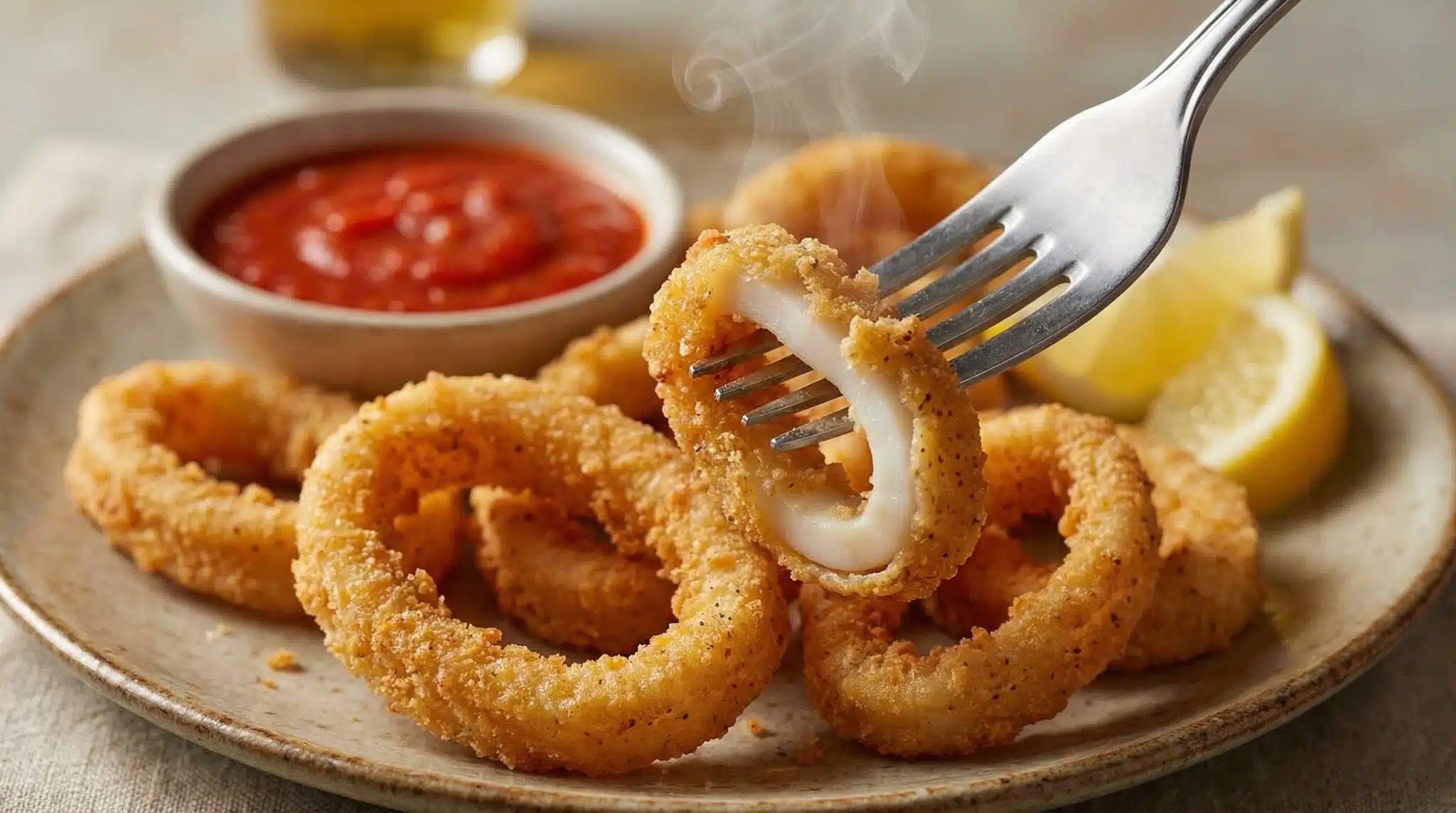
Also: calamari is done when it turns opaque (white instead of translucent). Fried pieces often show signs of overfrying and curl slightly at the edges. If it’s been in the fryer long enough to become a deep tan, it’s probably on its way to Tough Town.
The “best” way to try calamari (if you’re skeptical)
Personally, if you’re still in the “I don’t know about squid” phase, I’d do it like this:
1) Fried calamari
This is the gateway. Crispy outside, mild inside, usually served with marinara and lemon. It’s basically the onion ring of the sea (said with love).
2) Grilled calamari
This tastes more like the squid itself not octopus cleaner, slightly sweet, a little smoky/charred. If it’s tender, it’s so good. If it’s not tender… well. You’ll know immediately.
3) Braised calamari
If you see it simmered in tomato sauce or stuffed and cooked low and slow, this is where it turns soft and saucy less chewy, more fork tender.
4) Raw / ceviche style (only from a trusted place)
Raw calamari can be delicate and silky, but this is not the moment for sketchy seafood decisions. If it’s not sushi grade from a reputable source, don’t do it. You deserve better.
How to spot good calamari (even if you’re not a seafood snob)
If you’re ordering at a restaurant, you obviously can’t sniff the raw squid like a raccoon at a dumpster. But you can look for clues.
Signs it’s going to be good:
- It tastes clean and mild, not fishy
- The rings are tender with a little chew, not tough
- The breading (if fried) is light and crisp, not thick and bready
- It comes with lemon, because lemon is basically calamari’s emotional support fruit
Things that help a lot:
- Smaller pieces tend to be more tender and forgiving.
- A good place will season it properly. Calamari is mild if the cook is shy with salt, it can taste like nothing.
Also: sauce matters. Marinara brings brightness, garlic aioli brings richness, and lemon makes everything pop. If you skip all of those, you’re kind of raw dogging the experience (and not in the fun way).
“Why is my calamari rubbery?” (aka: the tragedy)
Almost always: it was cooked too long at the wrong heat.
And yes, it can happen fast. Calamari goes from perfect to rubbery in what feels like the time it takes to answer one text message.
Other common letdowns:
- Blandness (it needs salt and a finishing squeeze of lemon)
- Thick, heavy breading that tastes like fried sadness instead of crisp lightness
- Old seafood (that “fishy” taste isn’t inevitable it’s a warning sign)
Quick FAQ (because I know you’re thinking it)
Is chewiness normal?
Yes. Calamari should have a pleasant chew. Rubber band chew is not normal. That’s overcooking.
Can you eat calamari raw?
Yes but only if it’s sushi grade and from a trusted source. Don’t gamble with raw seafood unless you enjoy living on the edge (and/or spending quality time with your bathroom).
How do you know it’s cooked right?
Opaque white, tender chewy, not stiff. Fried: lightly golden with a bit of curl, not dark and hard.
My best advice for your next order
If you’ve been burned before (literally or emotionally), try calamari again just do it strategically:
- Order it at a reputable seafood spot (you know, the kind where the fish doesn’t taste like it’s been on a road trip).
- Start with fried calamari for maximum approachability.
- Squeeze the lemon. Always. Don’t be brave. Be wise.
- If you love it, then go explore grilled or braised versions like a confident little squid connoisseur.
Calamari isn’t supposed to be scary. It’s supposed to be mild, satisfying, and dangerously easy to keep eating until you look down and realize you’ve stolen the entire basket. (Not that I’ve done that. Ahem.)