

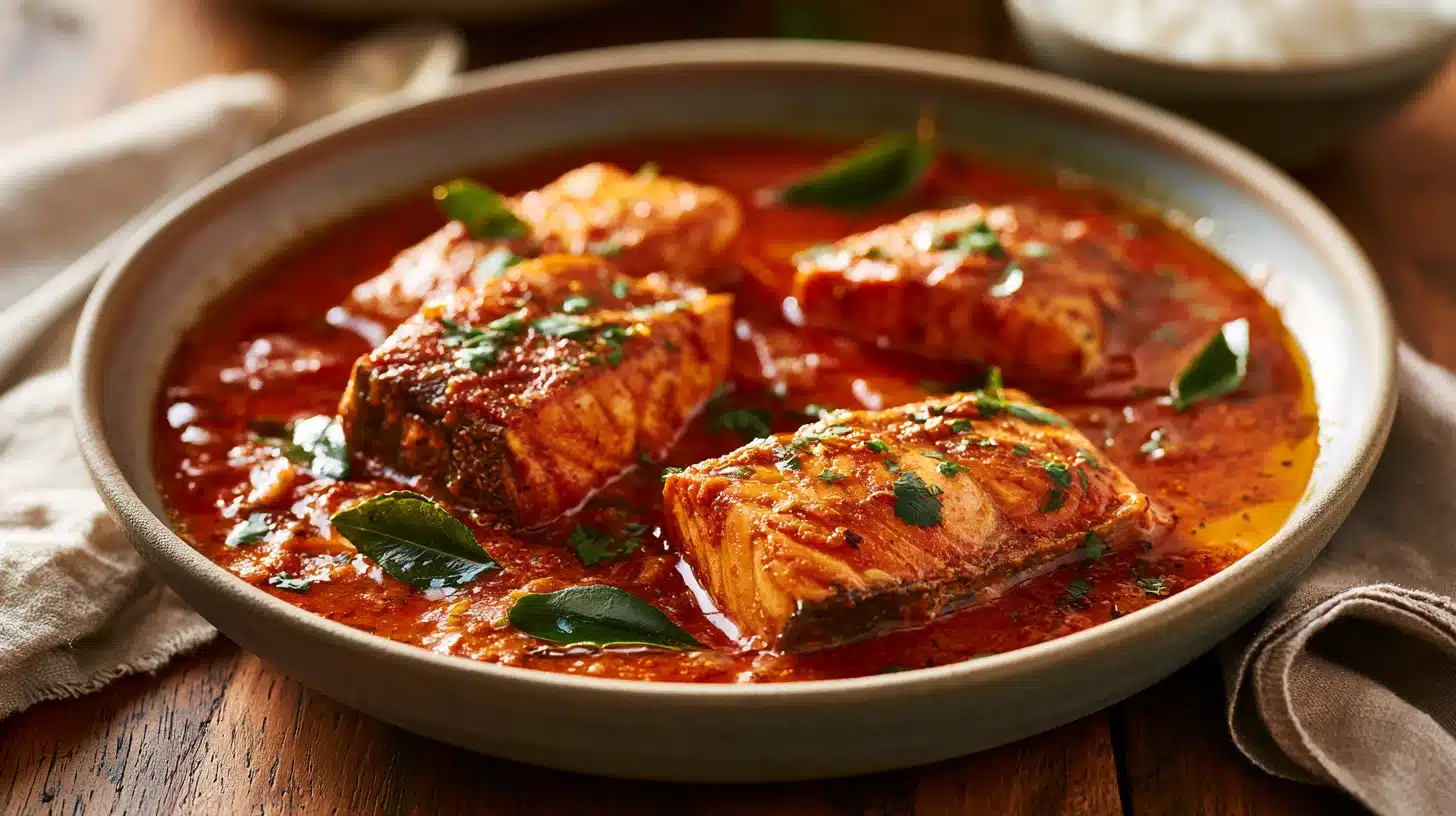
If you love comforting meals and are a big fan of fish recipes, salmon curry deserves a place on your dinner table.
This flavorful dish has become extremely popular globally, particularly in South and Southeast Asia, with each region developing its own variations.
But the wide variety of options is not the only factor behind the dish’s popularity. Rather, it is the easy preparation and how quickly it can be made.
About Salmon Curry
Intertwining the buttery texture of salmon with the bold flavors of traditional curry sauce, Salmon curry is a flavorful seafood dish that is enjoyed in many cuisines.
If one had to pin down its exact origin, it would be hard to do so. Different regions developed their own versions over time.
In South Asian and Sri Lankan cooking, fish curries have been part of everyday meals for generations, while salmon became a popular choice later thanks to its rich flavor and firm texture.
Depending on the region and the recipe, the sauce can be tomato-based, coconut-based, or a mixed flavor of both.
Unlike many other fish, salmon has a firm and meaty texture that holds it shape well during cooking. This makes it an incredible choice for curries and a healthy one, considering its protein and omega-3 content.
The dish can be prepared with either fresh or frozen salmon and can be paired with rice, quinoa, naan, and even noodles, giving the consumer multiple options.
The Famous South Asian Salmon Curry
Okay, this one’s a favorite around here. Coconut milk, a little lime, a bit of heat, and suddenly dinner feels like something special.
Ingredients
Gather these fresh, everyday items before you start cooking your salmon curry.
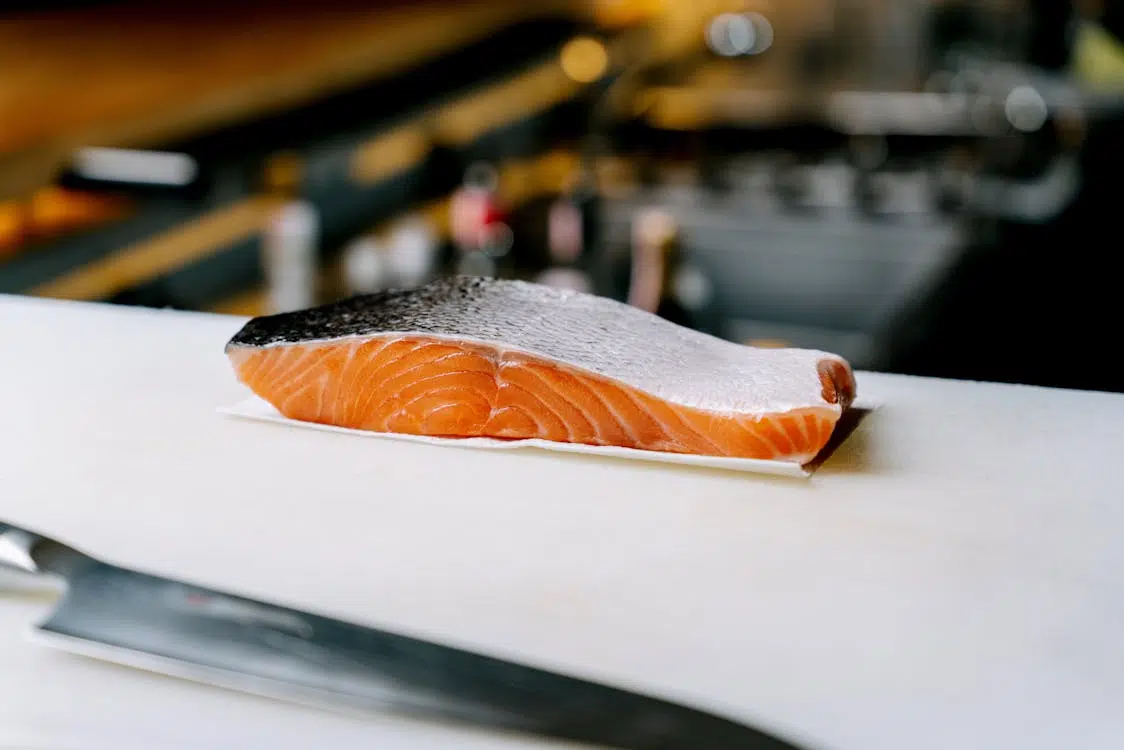
- 500g Salmon, skinless
- 7-8 Curry Leaves
- 1/2 cup Coconut milk
- 1/2 tablespoon Tomato paste / 1/4 cup sliced tomatoes
- 1/2 inch ginger, grated
- 1 teaspoon garlic, grated or minced
- 1 onion, finely chopped
- 2-3 tablespoons oil, divided
- 1 + 1/4 tablespoon red chili powder
- 1/4 tablespoon paprika (for color)
- 1-2 green chilies, sliced or raw
- 1/4 tablespoon mustard seeds
- 2-3 tablespoons tamarind water
- 1/4 tablespoon turmeric powder
- 1/4 tablespoon ground cumin
- 1/4 tablespoon black pepper
- 1+1/4 teaspoon salt
- 2 green cardamoms
- 2-3 cloves
- 1/2 cup water
- 2-3 tablespoons lime juice
Step 1: Prep the Salmon and Toast the Whole Spices
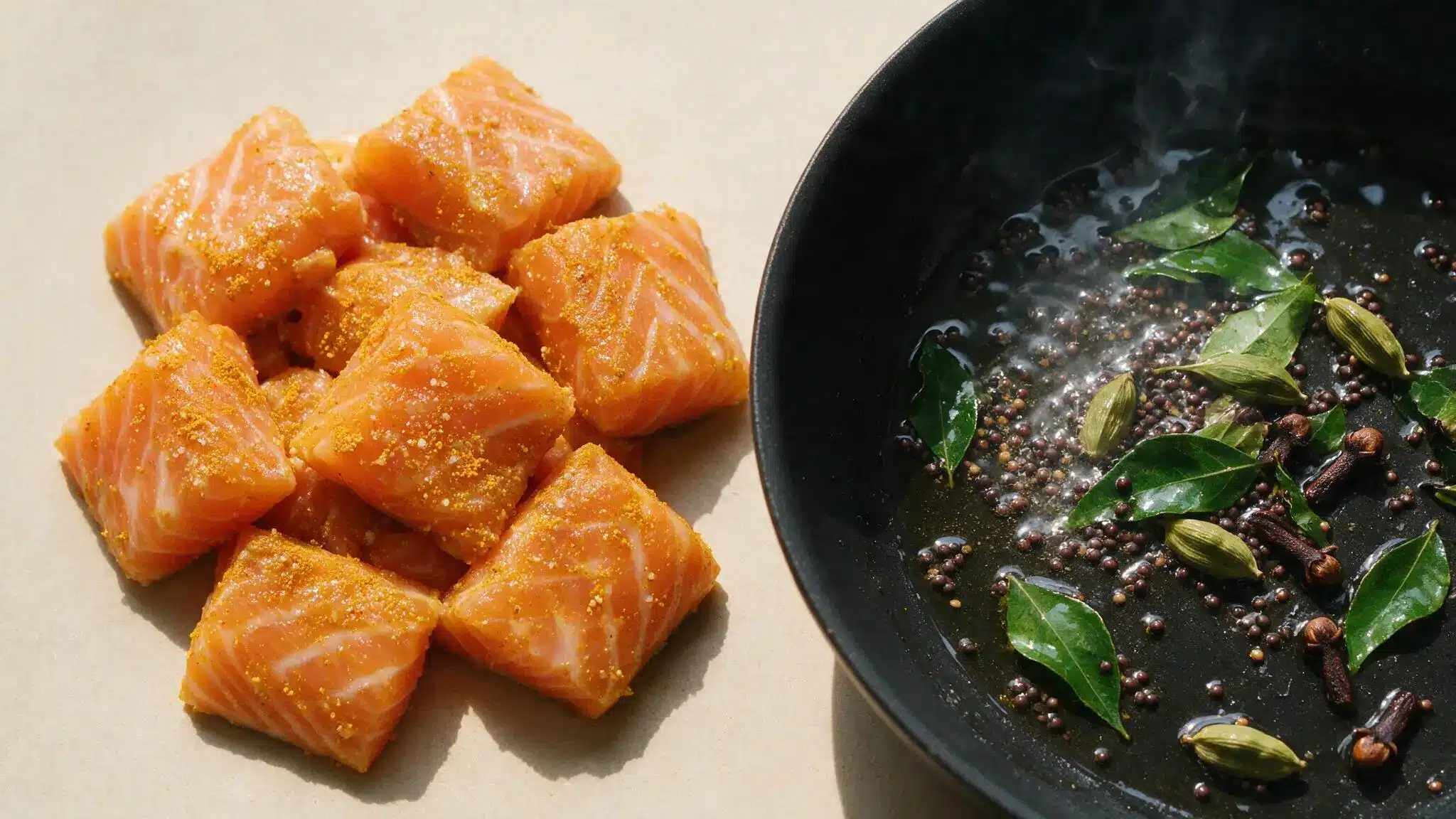
First things first, the salmon gets cut into nice big chunks. A little
salt and turmeric get rubbed all over, and then it just sits there, soaking up the flavor while everything else gets going.
Oil goes into a hot pan, and once it’s shimmering, the mustard seeds go in. They pop and crackle, which is honestly pretty fun to watch.
Curry leaves, cardamom, and cloves go in right after, and they only need about 20 seconds before the whole kitchen starts smelling incredible.
Not into mustard seeds? Cumin seeds work just as well and give a softer, milder start.
Step 2: Cook the Onion, Ginger, Garlic, and Chilies
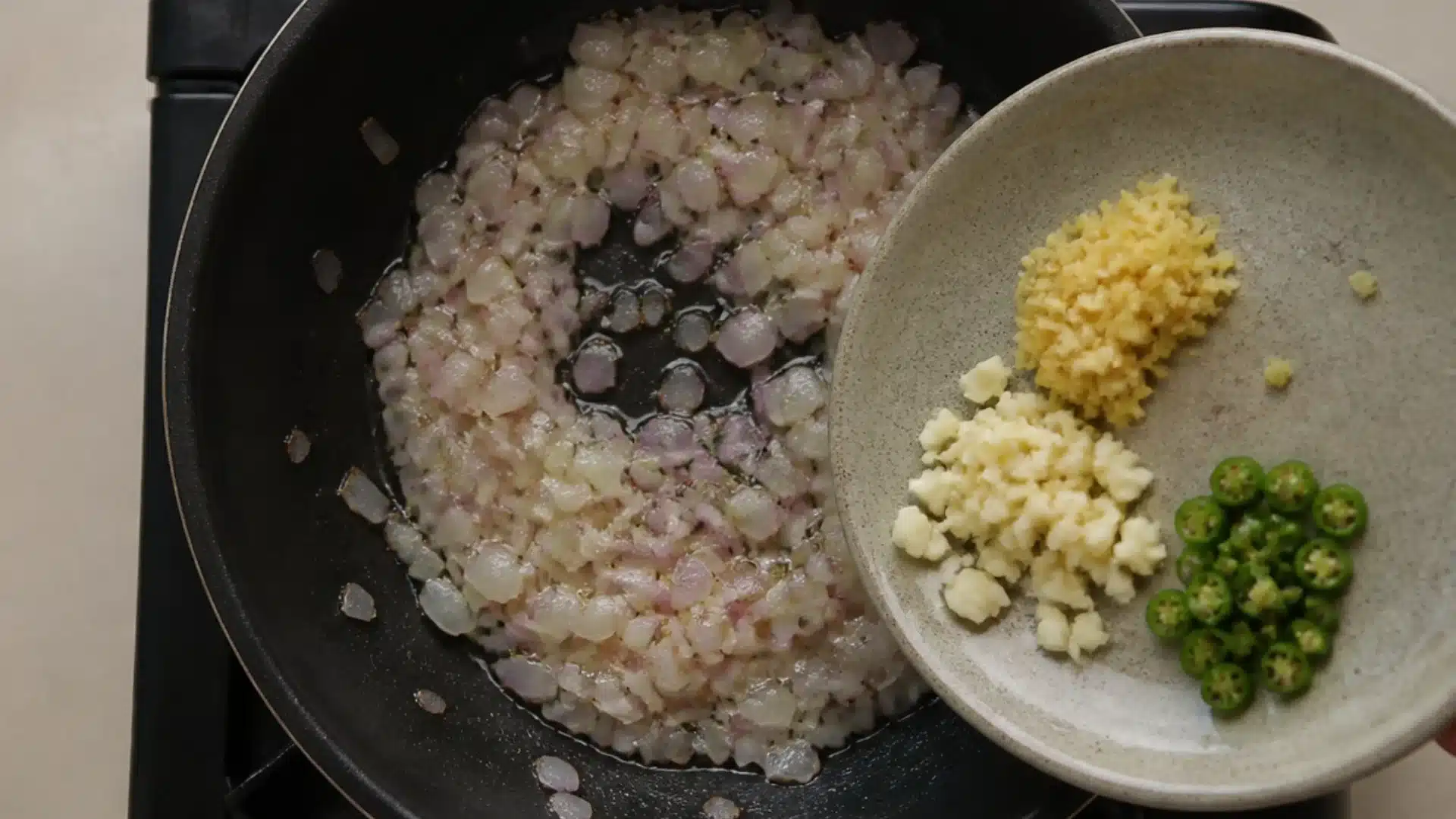
The chopped onion goes into that same pan and cooks until it softens up and turns a nice golden color.
Ginger, garlic, and green chilies join the party next.
Everything cooks together for two more minutes, with a stir here and there so nothing sticks or catches on the bottom.
Step 3: Add the Spice Powders and Tomato
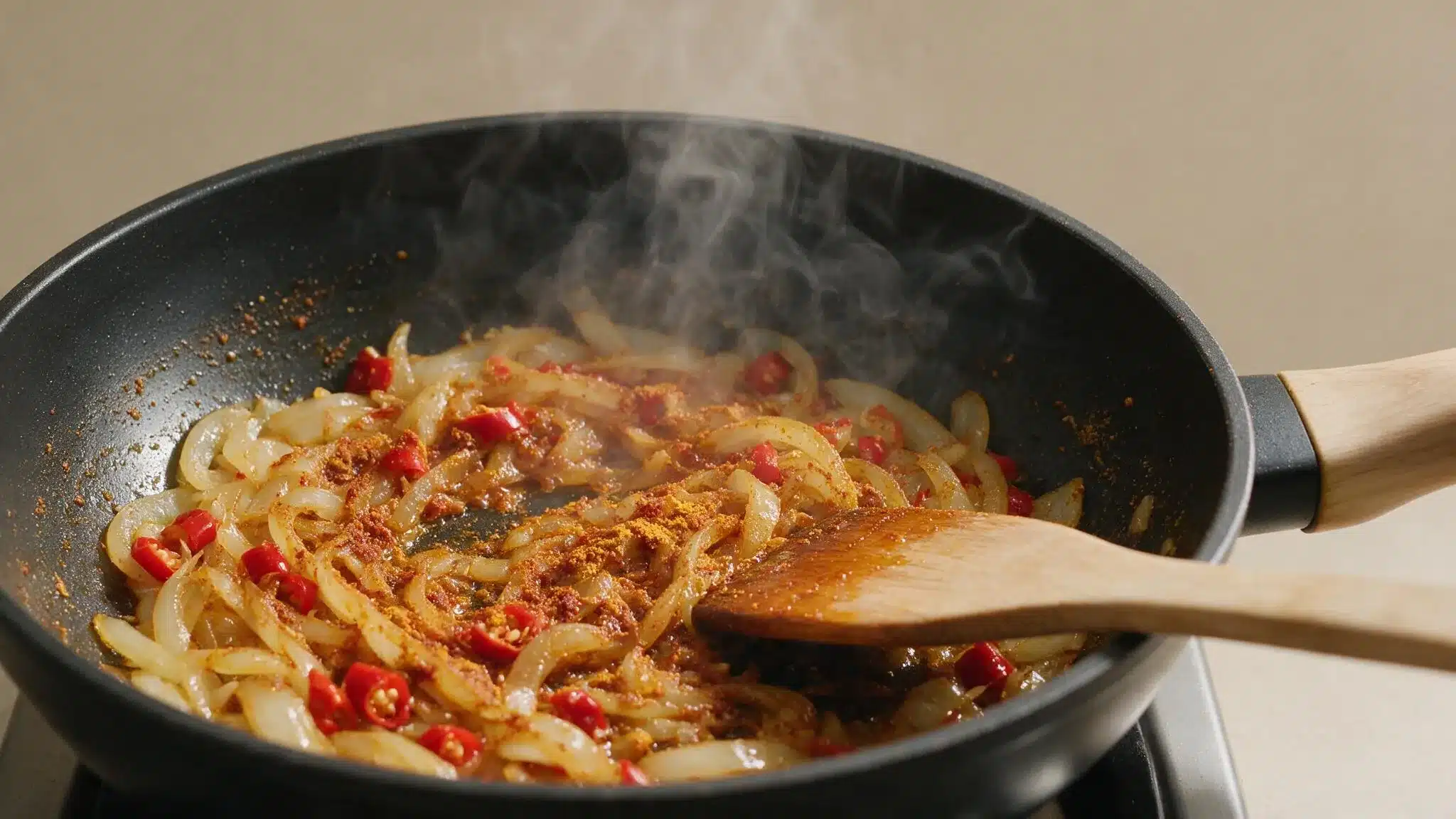
The heat gets dialed down just a bit. Red chili powder, paprika, cumin, and the rest of the turmeric all go in together, with a quick stir so nothing burns.
Tomato paste or sliced tomatoes come in next, and this simmers for three to four minutes until the oil starts to separate a little.
Step 4: Pour in the Coconut Milk and Simmer
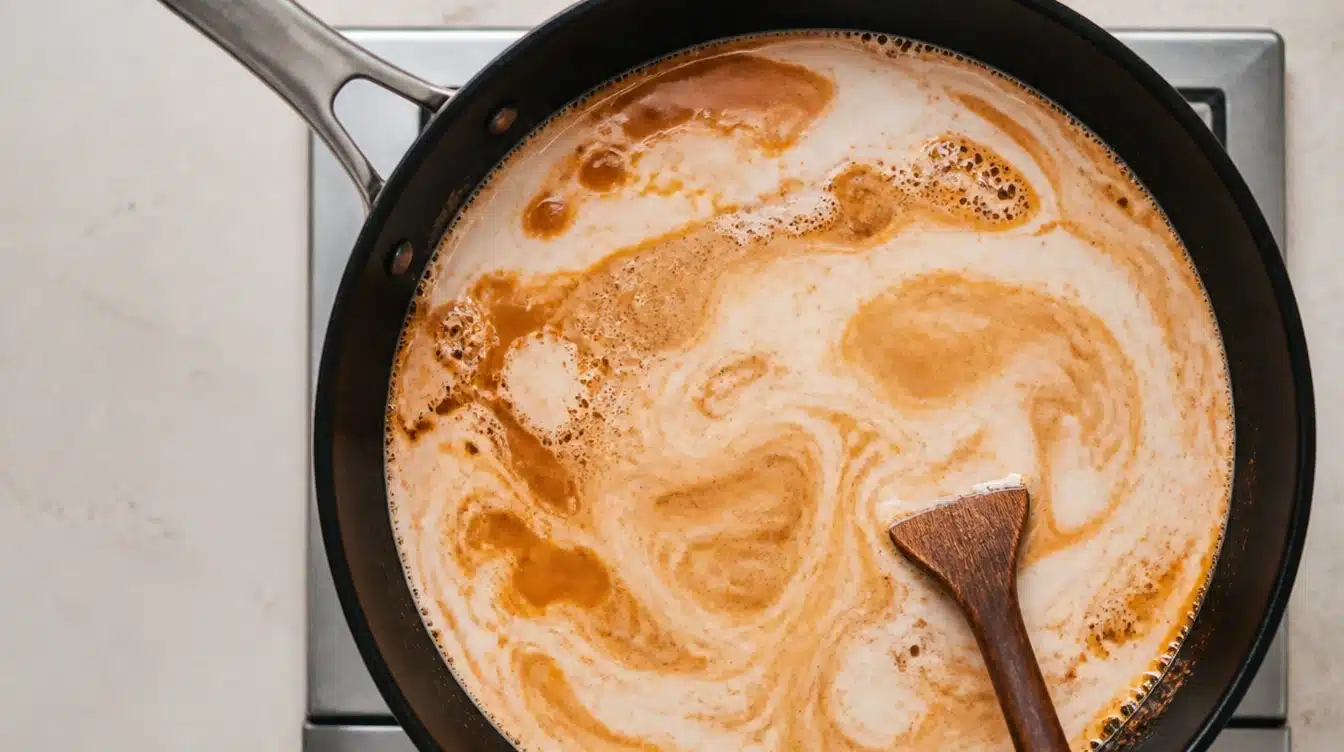
Coconut milk, water, and tamarind water all go in together and get a good stir.
Then the curry simmers gently on low heat, which keeps the coconut milk nice and smooth instead of splitting apart.
A splash of lime juice with a tiny pinch of sugar can be an alternative to tamarind water. And for anyone skipping coconut, cashew cream is a solid stand-in, though the taste shifts just a touch.
Step 5: Add the Salmon and Finish the Curry
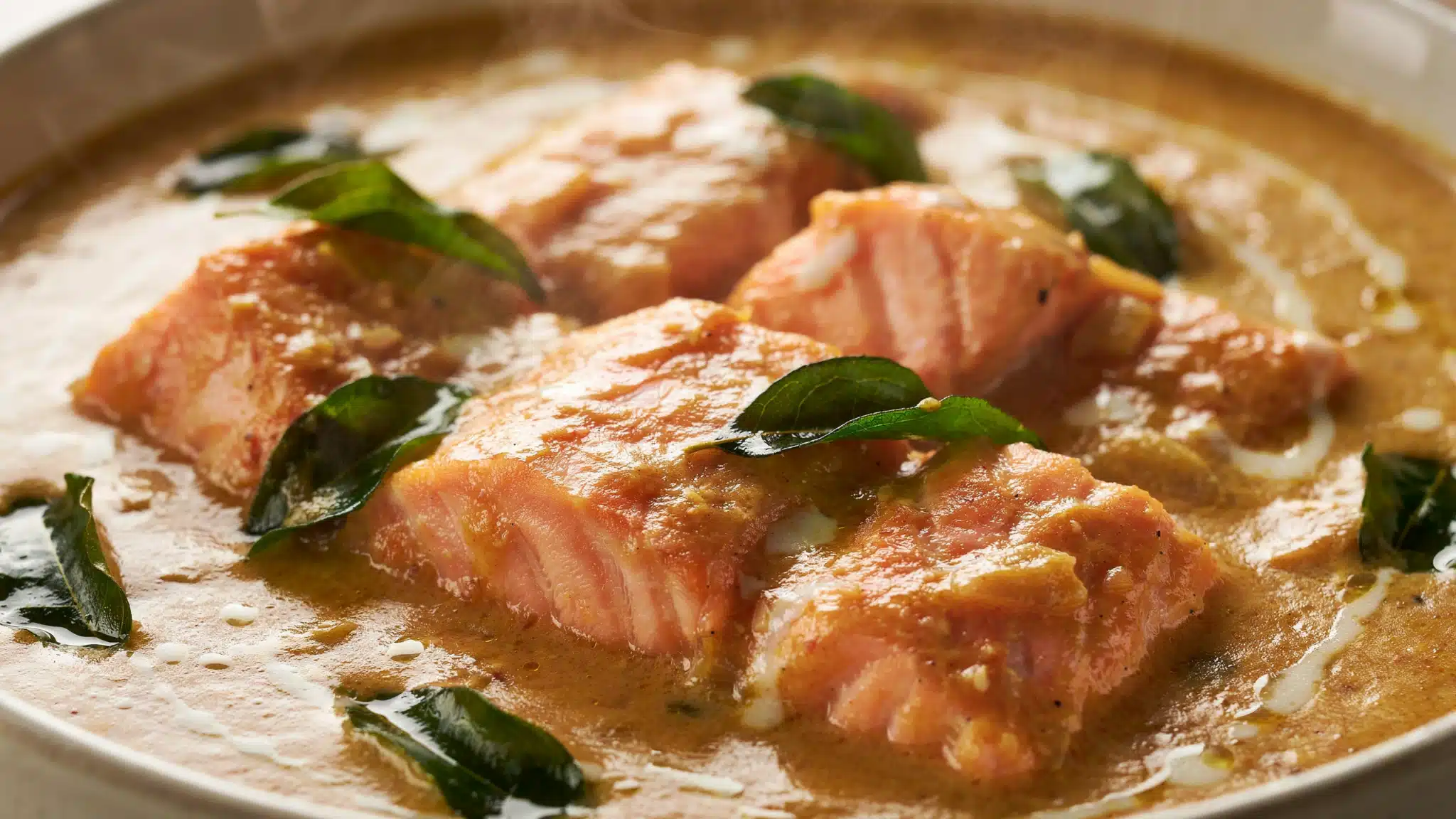
This is where it all comes together. The salmon chunks go in one by one, without too much stirring, so they stay in nice pieces instead of falling apart.
The pan gets covered, and everything cooks for six to eight minutes, until the salmon turns light pink and flakes apart with barely any effort.
A little more salt and black pepper go in, the heat gets turned off, and a good squeeze of lime juice finishes it all off.
One last gentle stir, and it’s ready to serve. You can add curry leaves for dressing.
More Traditional Salmon Curry You Can Try
These next few recipes give you more room to explore salmon curry.
So, if you want something new yet closer to the classic version, try these next.
Indian-Style Salmon Curry
Ingredients
- 1 pound salmon fillet, cut into large chunks
- 2 tablespoons oil
- 1 medium onion, finely chopped
- 2 cloves garlic, minced
- 1 teaspoon grated ginger
- 2 medium tomatoes, chopped
- 1 teaspoon turmeric powder
- 1 teaspoon cumin powder
- 1 teaspoon coriander powder
- 1/2 teaspoon chili powder
- 1 cup coconut milk
- 1/2 teaspoon garam masala
- Salt to taste
- Fresh coriander leaves, for garnish
Step 1: Cook the Onion Until Golden
Add oil to a hot pan, and once it’s warmed up, add the chopped onion. Then it’s just a bit of a waiting game.
Around five minutes in, it turns soft and golden, and that smell alone makes the wait worth it.
Stirring too often actually slows things down. A few stirs here and there let the onion brown properly instead of just softening.
Step 2: Add Garlic, Ginger, and the Spice Powders
Garlic and ginger jump in next, and it barely takes a minute before the whole kitchen smells incredible.
Then turmeric, cumin, coriander, and chili powder join the mix. It takes just a few seconds for these spices to wake up and start smelling toasty.
Step 3: Build the Base with Tomatoes
Chopped tomatoes go in next, and they’re left to do their thing until they turn soft and mushy. This little step is basically the heart and soul of the curry.
Step 4: Add the Coconut Milk and Simmer the Salmon
Coconut milk pours in next, gets a good stir, and everything comes up to a gentle boil.
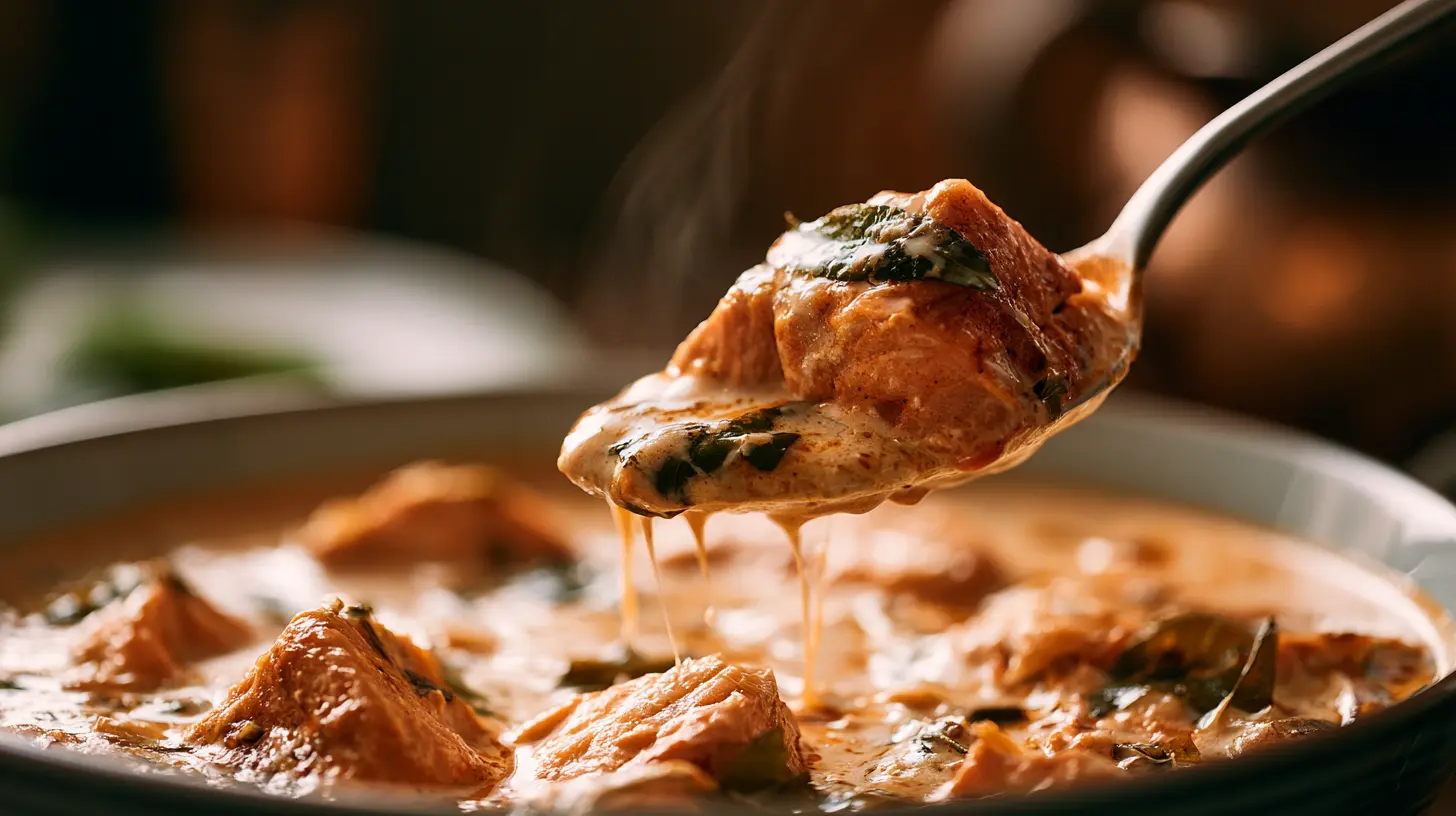
Then the salmon slides in, nice and gentle, and simmers away until it turns opaque and flakes apart without any fuss at all.
Tip: The salmon keeps cooking a little even after the heat’s off, so pulling it out just slightly underdone works out perfectly by serving time.
Step 5: Finish with Garam Masala and Garnish
A sprinkle of garam masala goes in for one last stir, then the heat switches off. Fresh coriander gets scattered right on top before serving, and the whole thing gets spooned out hot over a bed of rice.
Tip: Give the curry some time to sit and settle. It tastes better after a few hours.
Caribbean-Style Coconut Salmon Curry
Ingredients
- 1 pound salmon fillet, cut into large chunks
- 2 tablespoons oil
- 1 medium onion, sliced
- 1 red bell pepper, sliced
- 2 cloves garlic, minced
- 1 teaspoon grated ginger
- 1 scotch bonnet pepper, whole (or finely chopped for more heat)
- 2 tablespoons curry powder
- 1/2 teaspoon allspice
- 2-3 sprigs fresh thyme
- 1 cup coconut milk
- 2 scallions, chopped
- Salt to taste
- Juice of 1 lime
Step 1: Get the Onion and Peppers Going
Start with the oil in a hot pan, and once it’s warmed through, toss in the sliced onion and bell pepper together.
There’s no need to babysit this part. Just let them soften up and turn slightly golden around the edges.
It takes a few minutes, and the kitchen already starts smelling like something good is on the way.
Step 2: Bring In the Garlic, Ginger, and Heat
Once things have softened up a bit, garlic and ginger get stirred in, and almost right away, the smell in the kitchen shifts to something deeper.
This is also when the scotch bonnet pepper joins in, whole if a milder curry is the goal, or chopped for something with a real kick.
A minute is plenty here, just enough for everything to soften together.
Step 3: Season with Curry Powder, Allspice, and Thyme
Now the curry powder and allspice get sprinkled in, along with the thyme sprigs. Everything gets a good stir so the spices coat the onion and pepper properly, and it only takes a few seconds for the pan to smell warm and a little smoky.
This is really where the whole dish starts to take shape.
Fresh thyme brings a more rounded flavor than dried, but dried thyme works fine too, just use a little less since it’s more concentrated.
Step 4: Pour In the Coconut Milk and Let the Salmon Simmer
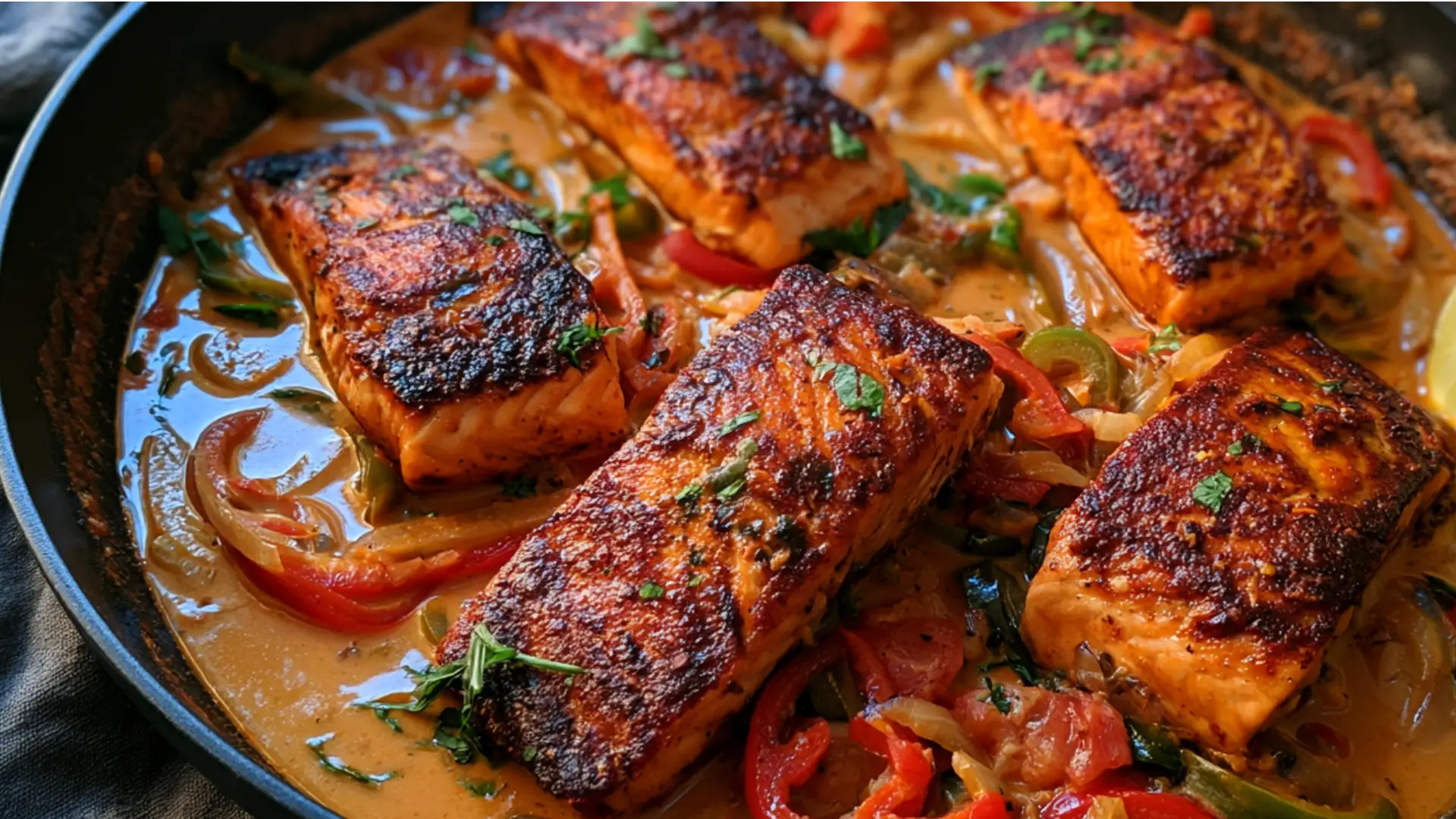
Coconut milk goes into the pan next, and after a gentle stir, everything comes up to a light simmer. The salmon chunks slide in right after, and from here it’s really just about patience.
A few minutes later, the fish turns opaque and pulls apart easily with a fork.
Keeping the simmer gentle rather than a rolling boil helps the salmon stay tender instead of turning firm or rubbery.
Step 5: Finish It Off with Scallions and Lime
Right before serving, the scallions and a good squeeze of lime juice get stirred through, and that’s really all it needs.
A little salt to taste, one last gentle stir, and it’s ready to go, spooned out warm over rice.
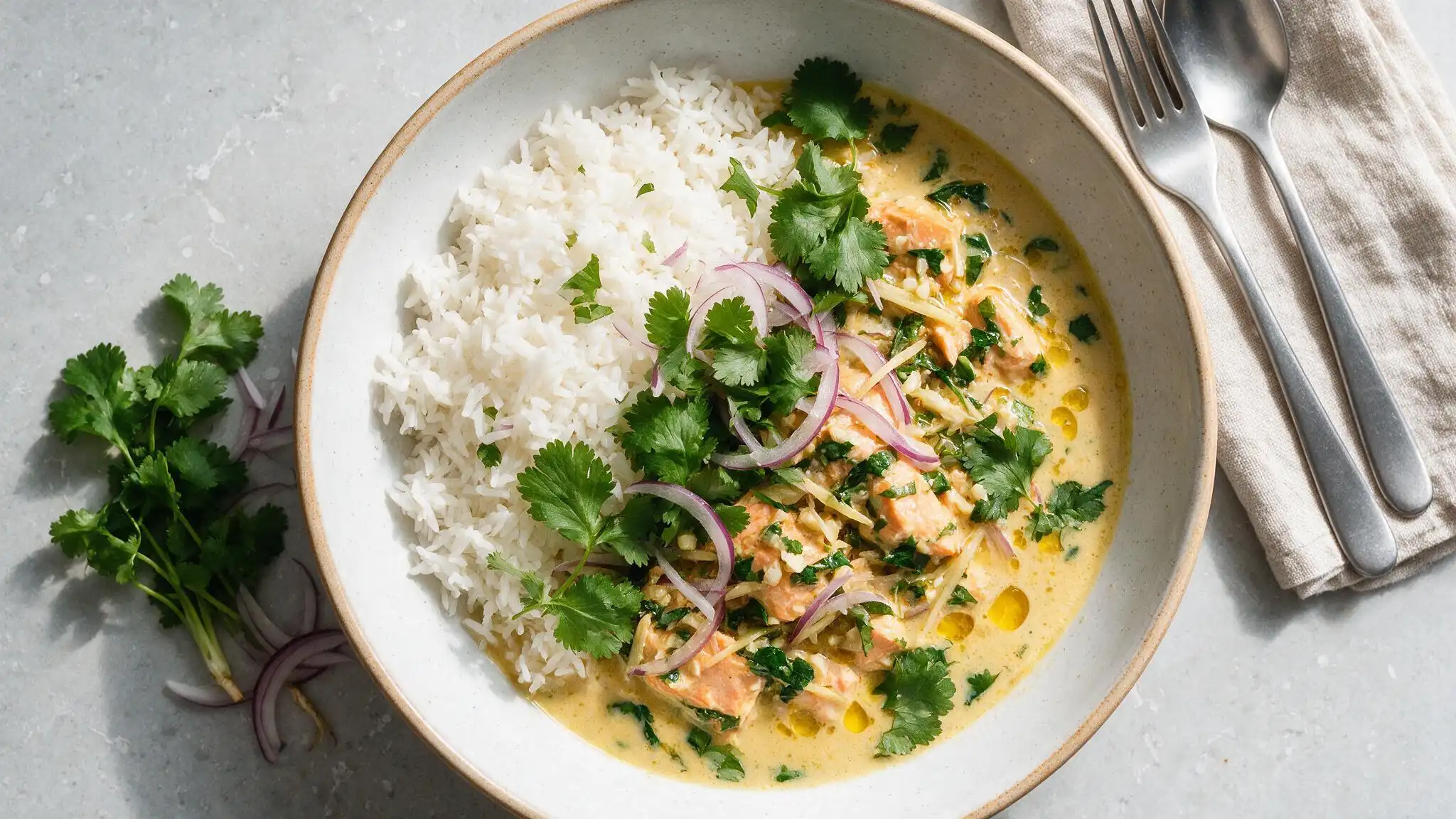
Coconut-Miso Salmon Curry
Ingredients
- 1 pound salmon fillet, cut into large chunks
- 2 tablespoons oil
- 1 medium onion, finely chopped
- 2 cloves garlic, minced
- 1 teaspoon grated ginger
- 2 tablespoons white miso paste
- 1 tablespoon curry powder
- 1 cup coconut milk
- 1/2 cup vegetable broth or water
- 1 tablespoon soy sauce
- 1 teaspoon brown sugar
- 1 red chili, sliced (optional)
- 2 scallions, chopped
- Salt to taste
- Juice of 1/2 lime
Step 1: Start with the Onion, Nice and Slow
So this one kicks off pretty simply. Oil goes into a hot pan, and once it’s warmed through, the chopped onion goes in right after.
Now here’s the thing: there’s really no rush at this stage.
Let it sit there and soften up on its own, stirring every so often, until it turns a soft golden color. That usually takes about five minutes, give or take, and honestly, this is the easiest part of the whole thing.
Step 2: Bring In the Garlic and Ginger
Once the onion’s looking good, stir the garlic and ginger right in. It only takes about a minute for the whole kitchen to smell incredible. That sharp, warm smell means that something good is happening.
Nothing fancy here, just a good stir so everything mingles together nicely.
Step 3: Stir In the Miso and Curry Powder
This is where things get interesting. The miso paste goes in next, along with the curry powder, and it takes a bit of stirring to break the miso down so it doesn’t clump up in one spot.
It looks a little strange at first, kind of pasty, but that’s completely normal, and it smooths out once the liquid goes in.
Tip: Mixing the miso with a splash of warm water before adding it to the pan makes it blend in much more smoothly, no clumps at all.
Step 4: Pour In the Coconut Milk and Let It All Come Together
Coconut milk, broth, soy sauce, and brown sugar all go into the pan together now, and everything gets a good stir until it looks like one smooth, happy sauce. It’s brought up to a gentle simmer, and that’s the cue for the salmon to go in.
The chunks slide in gently, and from here it’s mostly just waiting, maybe four to six minutes, until the fish turns opaque and flakes apart with barely any effort.
Adding the salmon skin-side down first, even without the skin on, helps the pieces hold their shape better while they cook.
Step 5: Finish with Scallions, Lime, and a Little Heat
Right at the end, the scallions and sliced chili go in, along with a good squeeze of lime juice. A quick taste for salt, one last gentle stir, and honestly, that’s it.
It’s ready to be spooned out warm over rice, and it smells every bit as good as it tastes.
Best Side Dishes to Serve with Salmon Curry
Salmon curry already brings a lot to the table with its coconut milk and spices, so the right side dish just needs to round things out.
Some bring balance, some bring crunch, and some are just there to soak up all that good sauce.
Steamed Basmati Rice
This one’s kind of the obvious pick, but for good reason.
Salmon curry has a lot going on with the coconut milk and spices, so it really just needs something plain underneath to soak everything up.
Basmati rice does exactly that, and it’s light enough that it doesn’t compete with the curry at all. Just rice and curry together, and somehow that’s all it takes.
Garlic Naan
Naan brings something totally different to the table. Tearing off a piece and using it to scoop up the sauce is honestly one of the better parts of the meal.
The garlic in the naan also plays really well with the ginger and spices already happening in the curry.
Cucumber Raita
Curry can get pretty warm, spice-wise, so having something cool on the side just makes sense. Raita is basically yogurt mixed with grated cucumber, and maybe a little cumin or mint stirred in.
A spoonful next to the curry helps balance things out, especially if the chili was a bit heavy-handed earlier.
Sautéed Greens
Something green on the plate never hurts, and a quick sauté of spinach or kale with a little garlic works really well here.
It’s simple, it doesn’t take much time, and it adds a bit of texture that the curry doesn’t really have on its own. Plus, it makes the whole meal feel a little more balanced.
Roti or Flatbread
Roti is a bit lighter than naan. It’s a good option for anyone who wants that scoop-and-dip experience without something too heavy on the side.
it also holds up well against the coconut milk without falling apart.
Pickled Red Onions
This one’s more of a small extra than a full side, but it adds a nice sharp bite that cuts through the richness of the coconut milk. A few slices on top or off to the side, and suddenly every bite feels a little brighter.
Conclusion
Comfort food does not have to be difficult to make and unhealthy.
This salmon curry recipe is the perfect example of how everyday ingredients can come together to produce such a rich and flavorful dish.
So the next time you are craving something hearty and full of taste, let this homemade curry be the meal that brings everyone to the table.
Frequently Asked Questions (FAQs)
1. Is Salmon Curry Healthy?
Yes, salmon curry is usually considered a healthy and balanced meal when made with fresh ingredients. Salmon is rich in high-quality protein and omega-3 fatty acids, which support heart and brain health.
2. What Is the Biggest Mistake While Cooking Salmon?
The biggest mistake that people make while cooking salmon is overcooking it, which can make it too dry and tough. It usually takes 8-12 minutes to cook salmon.
3. Which Garnishing is the Best for Salmon Curry?
Salmon curry garnish depends on style. Use coriander and lemon for indian curry. Try Thai basil, lime, and red chili for Thai. Add thyme and scallions for Caribbean.