

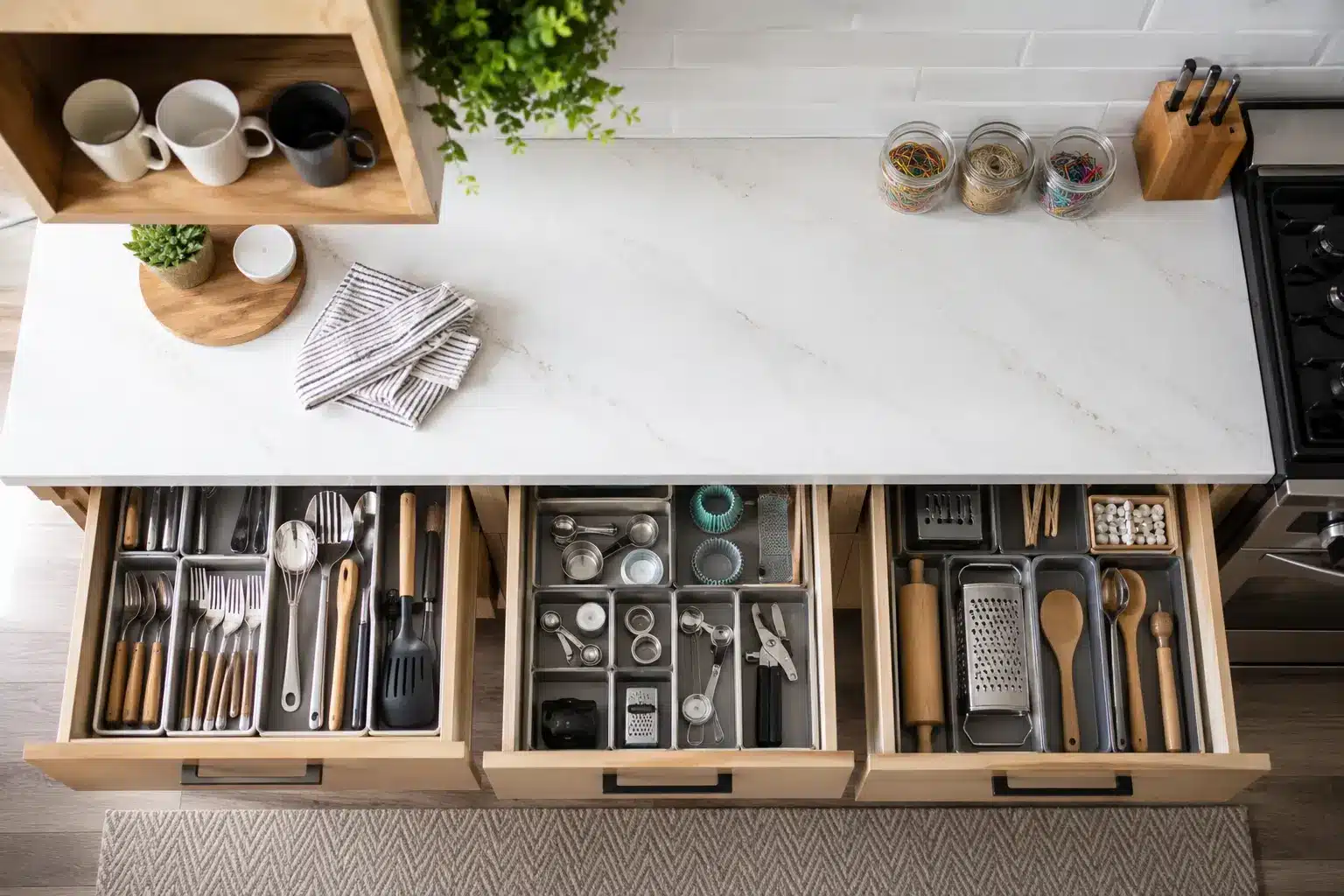
Every time you open the junk drawer, something falls out. Tangled utensils and mystery gadgets pile up in every corner, and the mess only grows
But a few simple tricks can change how your whole kitchen works. The right organizers and a clear plan turn that clutter into calm in one afternoon.
Below you’ll find the exact steps that hold up, plus the drawer dividers and bins worth buying.
This is where knowing how to organize kitchen drawers really pays off.
From the utensil drawer to that messy catch-all, this manual walks through each one, step by step.
Why is Organizing Kitchen Drawers Important?
It’s easy to write off drawer clutter. But a messy drawer costs you more than you think. I used to lose a full minute just hunting for the right spoon.
Tidy drawers save you time every single day. You reach in, grab what you need, and get back to cooking. No digging, no dumping at all on the counter.
They also save money. When you can see what you own, you stop buying doubles of stuff you already have. I found three peelers once, all hiding in the same mess.
And a clean drawer just feels good to open.
Cooking also turns into less of a chore when your tools sit right where you left them. This small bit of order sets the tone for the whole kitchen.
How to Organize Kitchen Drawers: Step By Step
Organizing kitchen drawers is easier than it looks. Just follow these steps, one at a time.
Step 1: Empty Everything Out
Start by pulling every single item out of the drawer. I dump it all onto the counter so I can see what I own.
This part feels messy, but it’s the only way to start fresh. You’ll likely find things you forgot you had.
Step 2: Wipe it Clean
Crumbs and sticky spots love to hide in drawers. Give the empty drawer a good wipe with a damp cloth.
Let it dry fully before you put anything back. A clean base makes the whole job feel worth it.
Step 3: Sort and Toss
Now go through the pile item by item. Keep what you use, and toss what’s broken or doubled up.
I ask myself one thing: did I touch this in the last year? If not, it usually goes.
Step 4: Group Like With Like
Put similar items into small piles. Spoons with spoons, gadgets with gadgets, and so on.
This step shows you exactly how much space each group needs. It also stops that random mix that causes clutter later.
Step 5: Add Dividers or Bins
Drop in drawer dividers to give each group a home. Adjustable ones work great since drawers come in odd sizes.
I like clear bins for the small stuff, like clips and corks. Everything gets a spot, so nothing floats around.
Measure your drawer before you buy any dividers and pick clear bins so you can spot items fast.
Step 6: Put it All Back to Use
Return items based on how often you reach for them. Daily tools go near the front, and rare ones go to the back.
Keep the heavy stuff low and light things up top. Then test it out for a week and adjust.
Best Kitchen Drawer Organizers That Actually Reduce Clutter
Not every organizer earns its spot. These are the ones I keep coming back to because they hold up and cut the mess.
1. Adjustable Drawer Divider
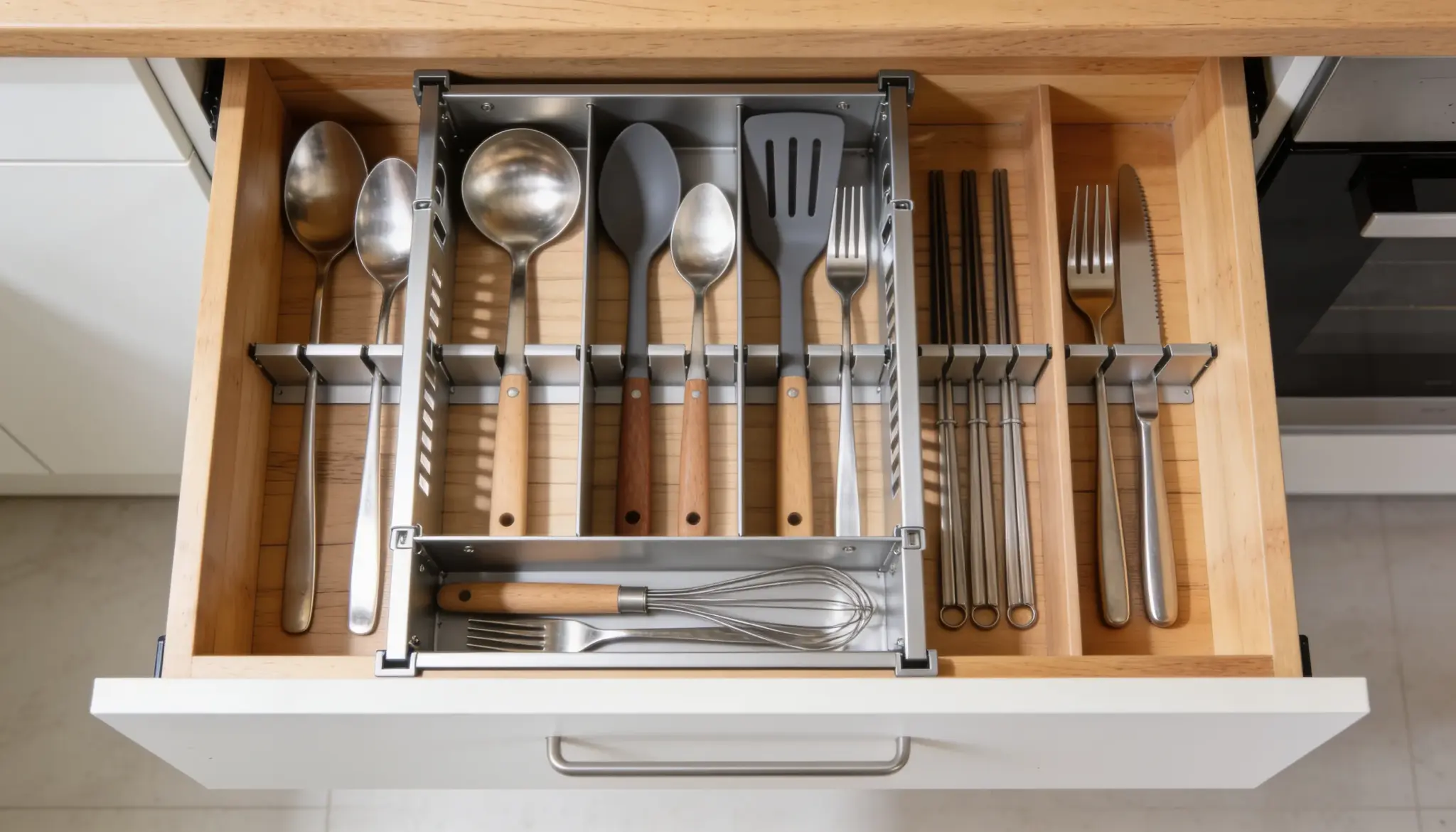
These slides fit almost any drawer. I use them to split spoons, spatulas, and whisks into their own lanes.
They expand and lock in place, so nothing shifts when you open the drawer. One set works across drawers of different sizes.
2. Expandable Utensil Trays
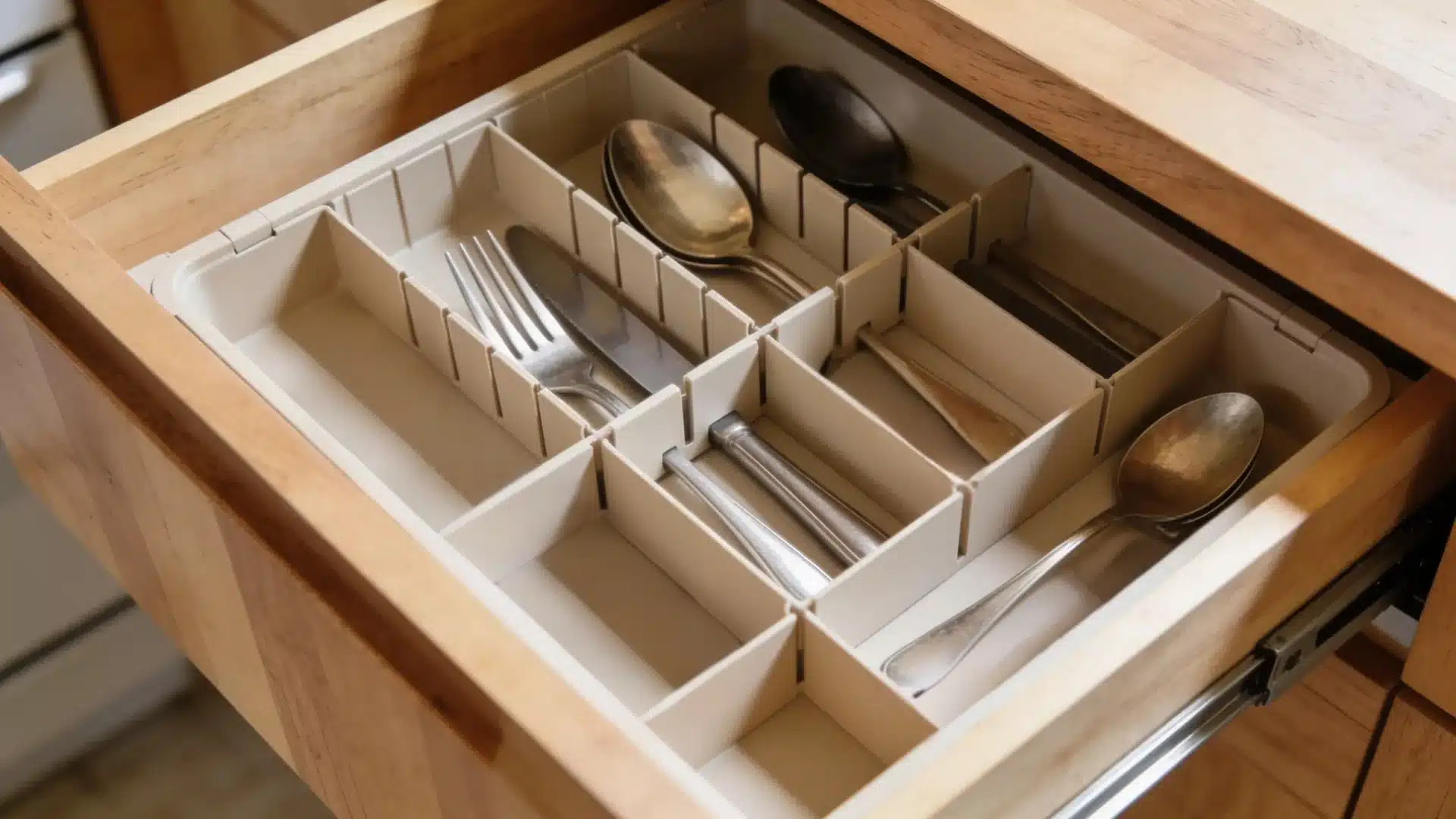
A good tray sorts everyday forks and knives fast. The expandable kind stretches to fill the drawer edge to edge.
That means no wasted gaps where junk likes to collect. Users can reach in without looking and grab the right one.
3. Bamboo or Wood Inserts
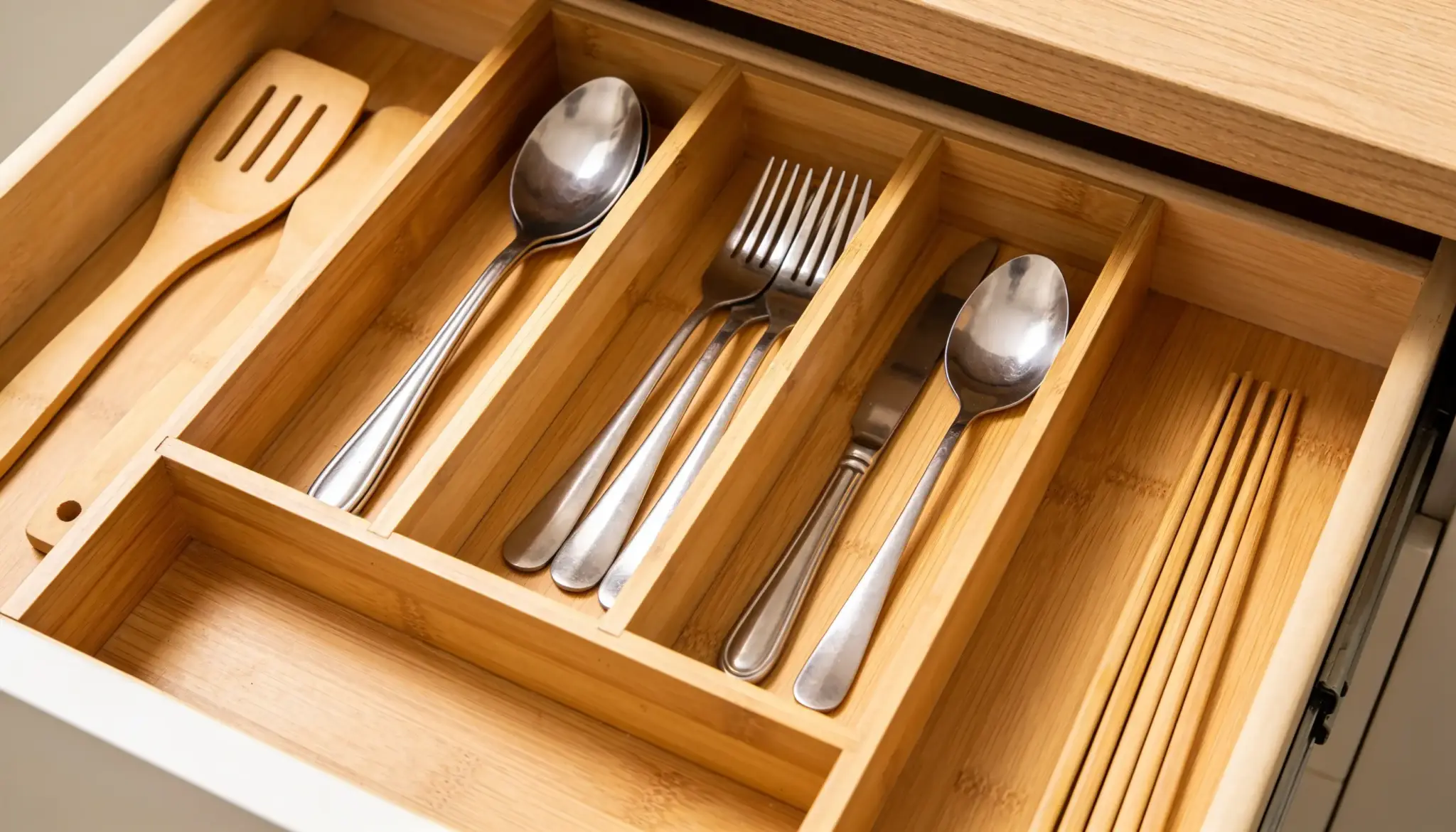
If you want something sturdy, wood inserts last for years. They resist warping and feel solid under heavy tools.
I like them for deep drawers that hold pot lids and pans. They also look clean if you ever leave a drawer open.
4. Pegboard Drawer Systems
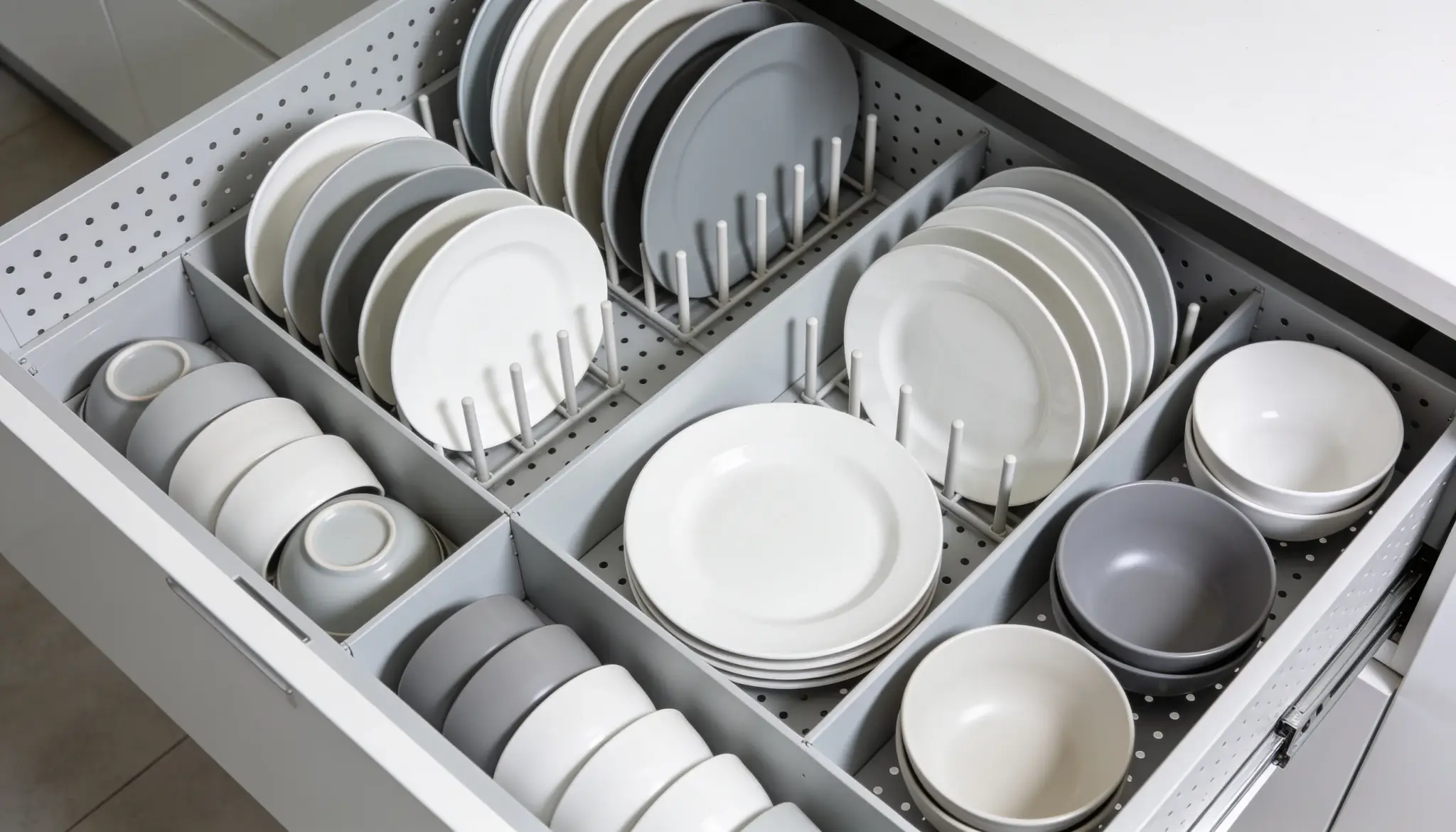
These use movable pegs to hold plates and bowls upright. Great for a deep drawer that would otherwise turn into a pile.
You shift the pegs to match whatever you store. Stack them once, and they stop sliding into each other.
5. Non-slip Drawer Liners
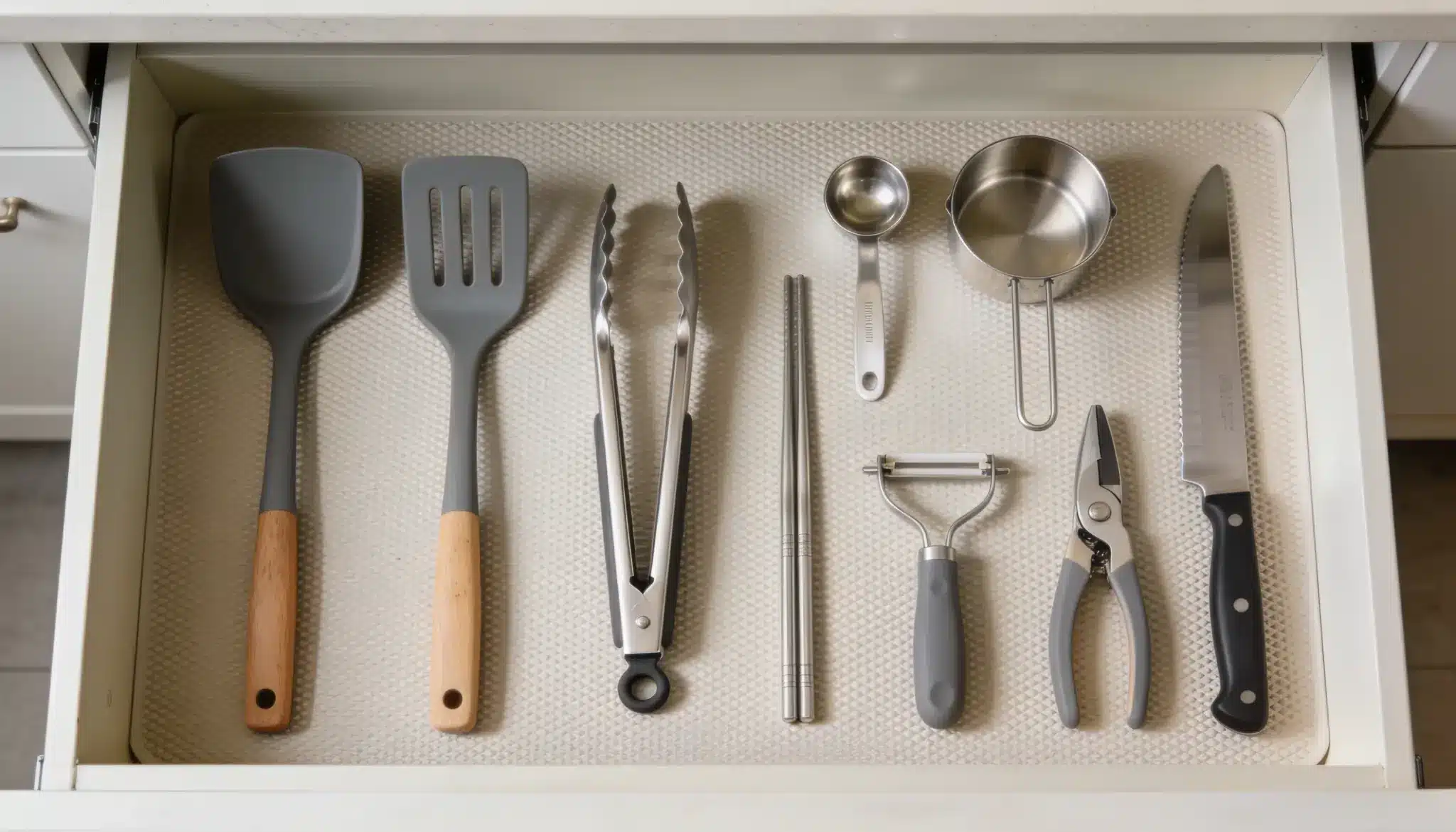
A liner keeps everything from sliding when you open or close the drawer. It also protects the base from scratches and spills.
Cut it to size, then drop it straight in. Pair one with any of the dividers above for a setup that stays put.
DIY Kitchen Drawer Organization Hacks on a Budget
You don’t need to spend a dime to get tidy drawers. I’ve fixed most of mine with stuff already lying around the house.
Here are the cheap tricks that pulled real weight for me.
6. Cut Cereal Boxes Into Dividers
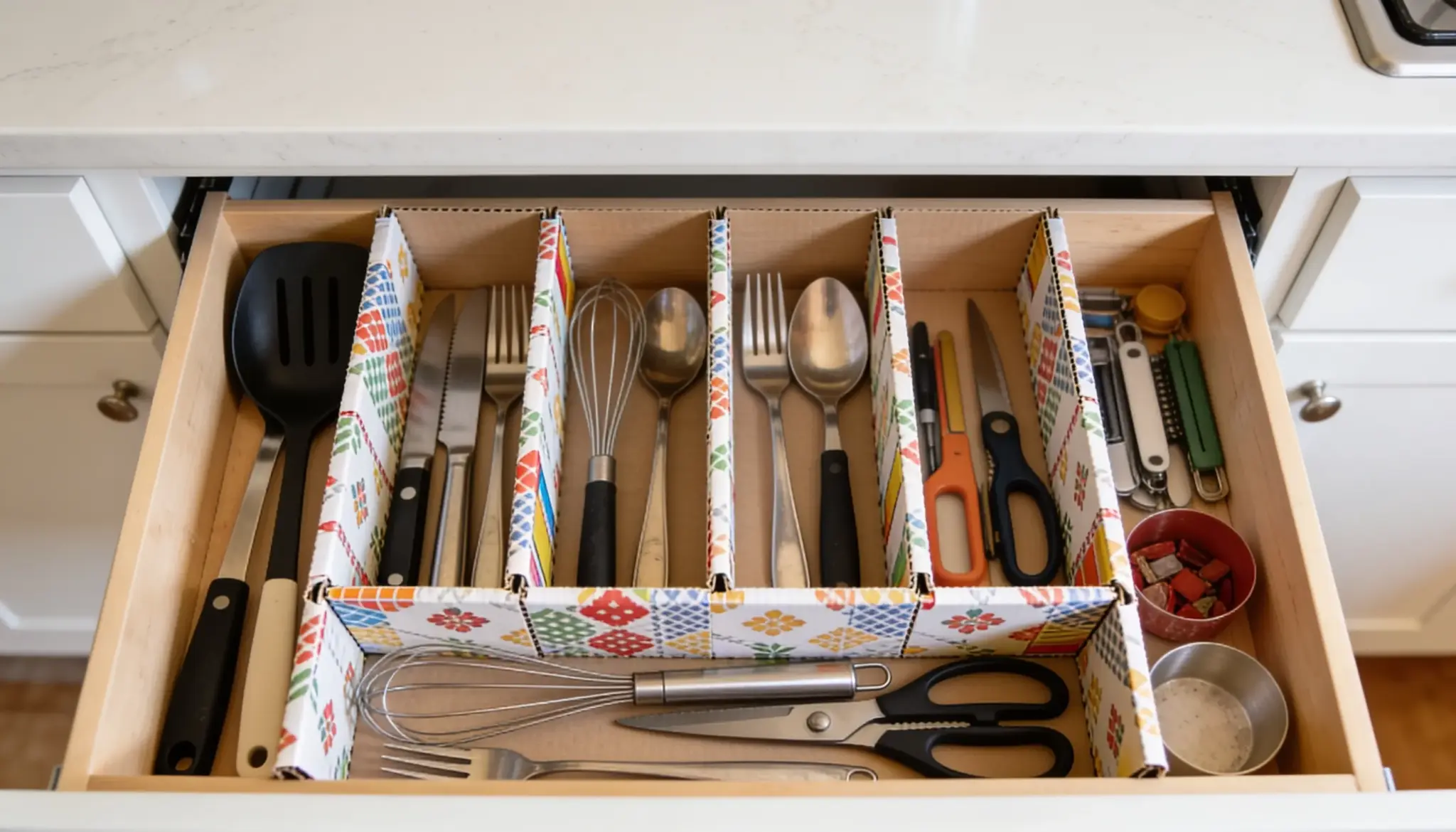
I turn empty cereal or cracker boxes into free bin walls. I cut them to my drawer’s height, then wrap them in paper so they look nice.
They hold my small tools upright without costing me a single cent.
7. Repurpose Small Jars And Cans
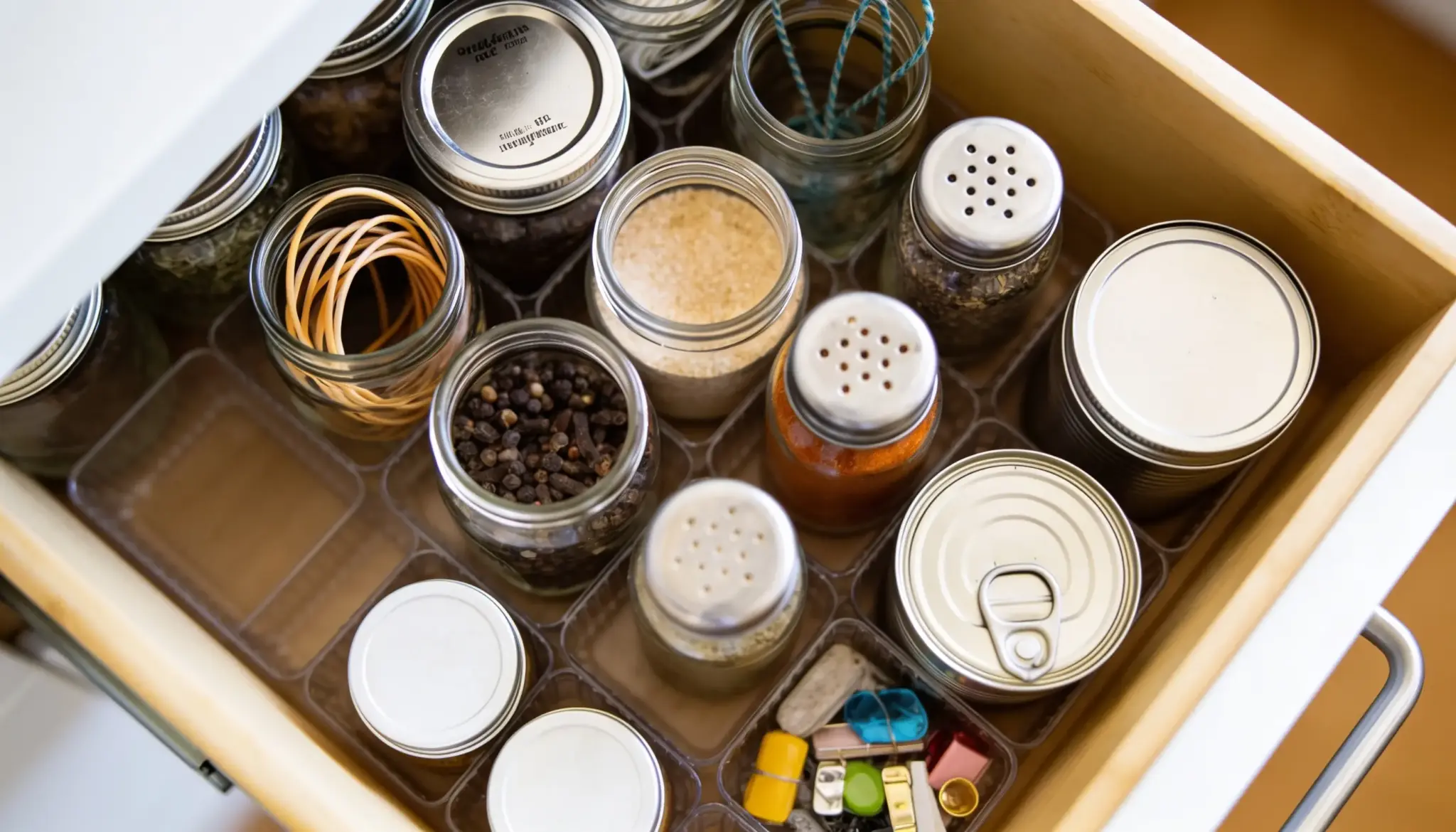
Clean out old jars, tins, and yogurt cups for the tiny stuff. They hold rubber bands, twist ties, and spare batteries.
Line a few in a row, and your junk drawer starts to make sense. Peel off the labels first, so each one looks clean and clear.
8. Use Ice Cube Trays For Odds and Ends
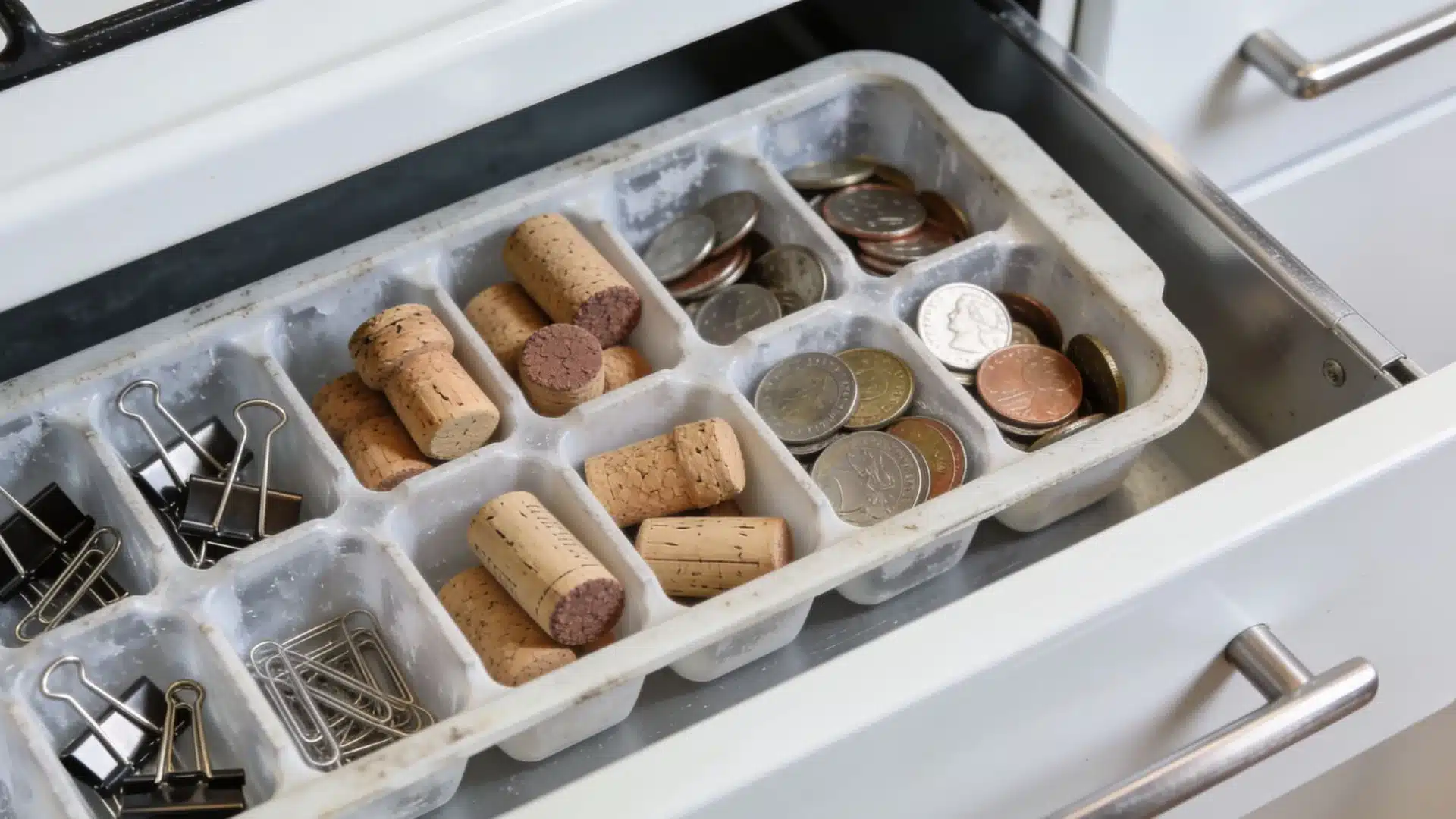
An old ice tray sorts clips, corks, and loose change into neat little rows. It sits right inside a shallow drawer.
Each slot holds one type of thing. Silicone trays flex to fit odd spaces too. Grab one you no longer freeze with, and put it back to work.
9. Glue Clothespins For Lid Control
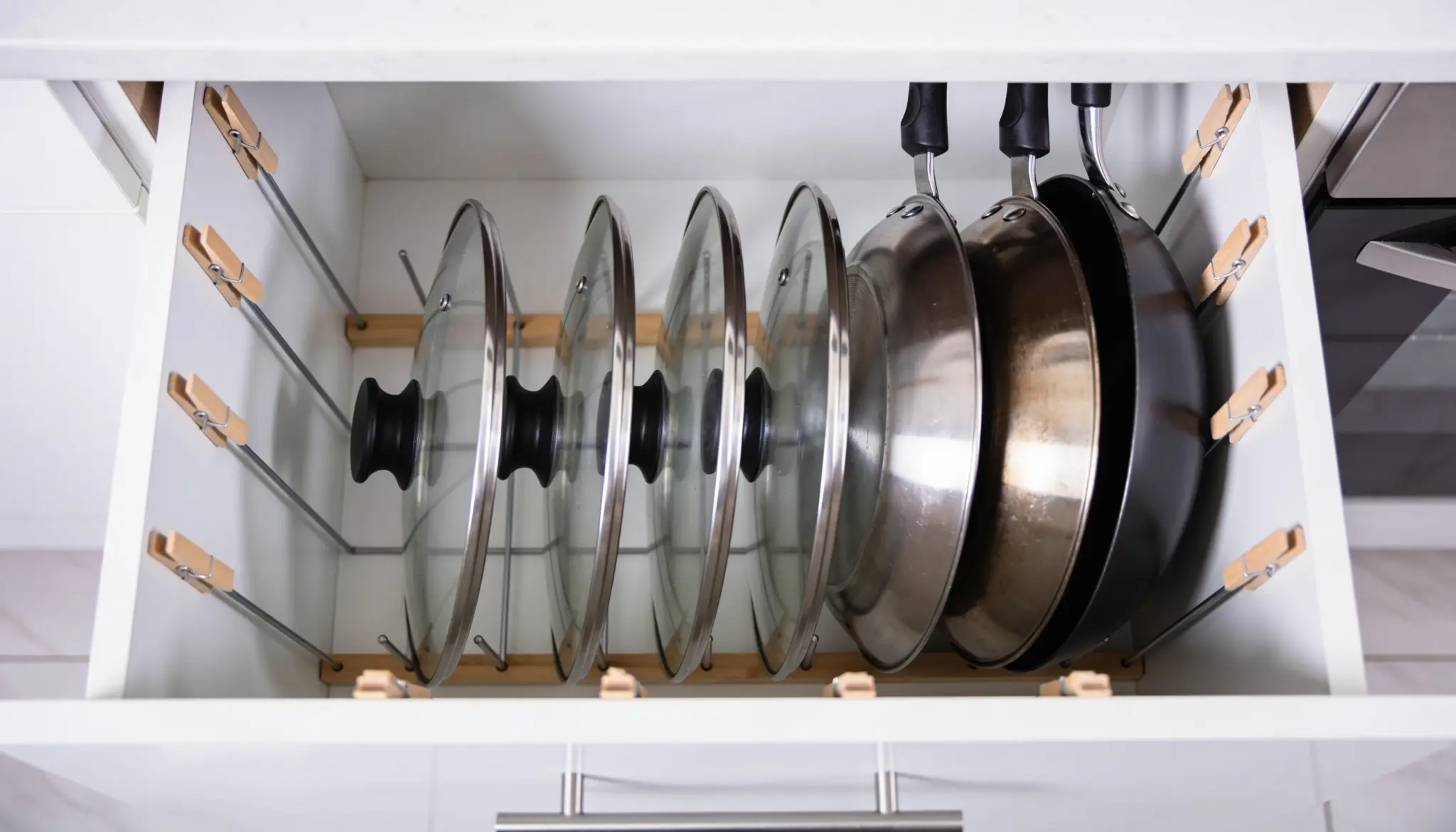
Stick a few clothespins inside the drawer wall to grip pot lids. It’s a two-minute fix using glue you likely already have. The lids stand up instead of sliding around.
10. Try Foam or Shelf-Liner Scraps
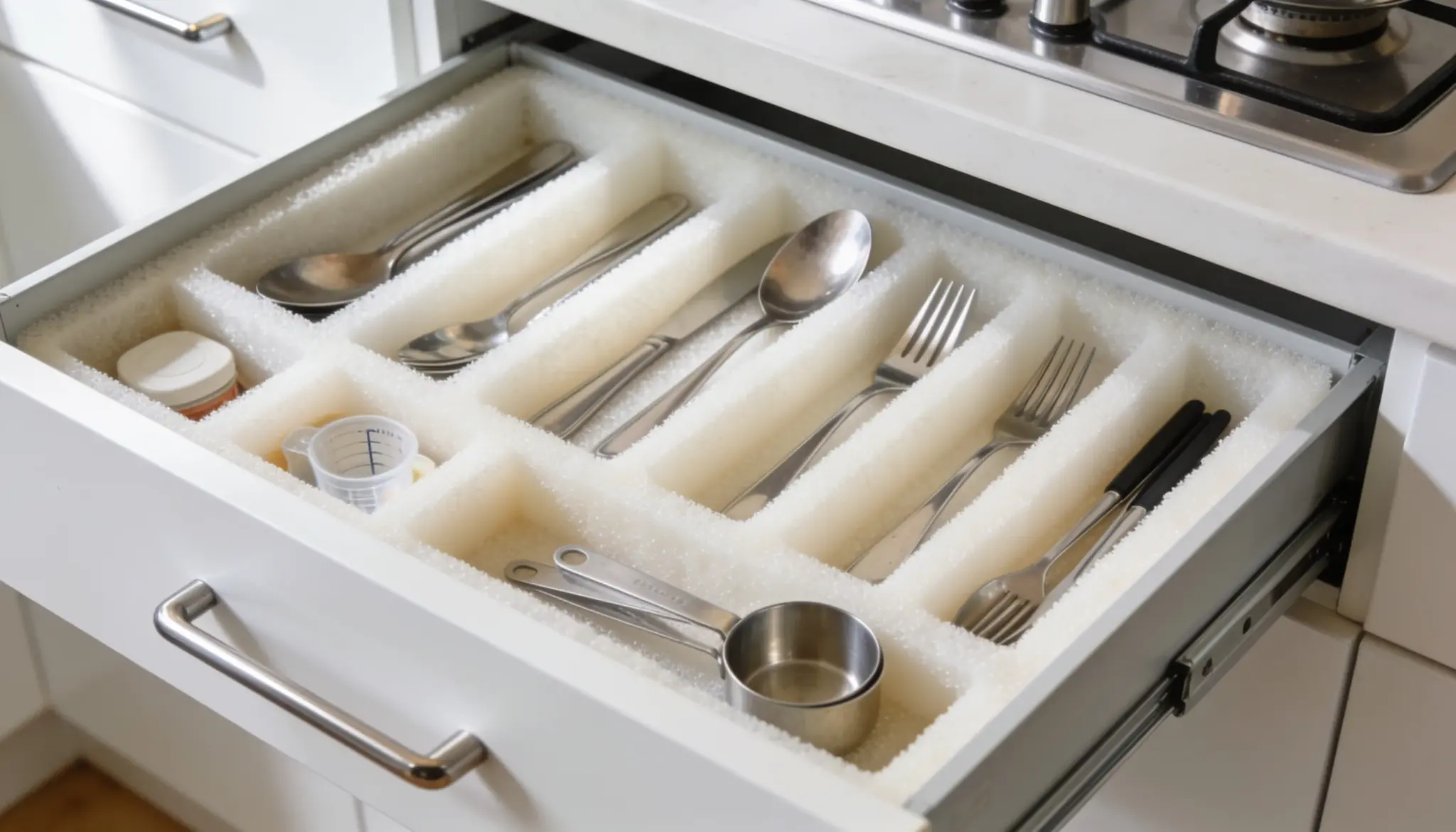
Leftover shelf liner keeps items from sliding when you open the drawer. Cut it to size and drop it in. It cushions the base and cuts the rattle too.
Old foam packing sheets work just as well. Both grip the base, so your tools stay put every time.
How to Organize Small Kitchen Drawers?
Small drawers fill up fast, so every inch has to earn its place. I’ve learned to keep only what I truly use and give each thing a clear spot.
A few simple moves make a tiny drawer feel twice as roomy.
- Store items that lie down flat in the drawer. Move the bulky gadgets to a bin or a lower shelf elsewhere.
- Slim dividers split the space without eating into it. They keep two or three small groups apart with ease.
- Keep only what you grab most in reach. Shift the rare tools to a back shelf or another drawer.
- A shallow tray sections the drawer in seconds. It stops the loose mix that clutters tiny spaces fast.
- Take one minute a week to put stray items back. That quick reset keeps the small drawer from piling up.
How to Organize Kitchen Drawers Without Cabinet And Drawer Space?
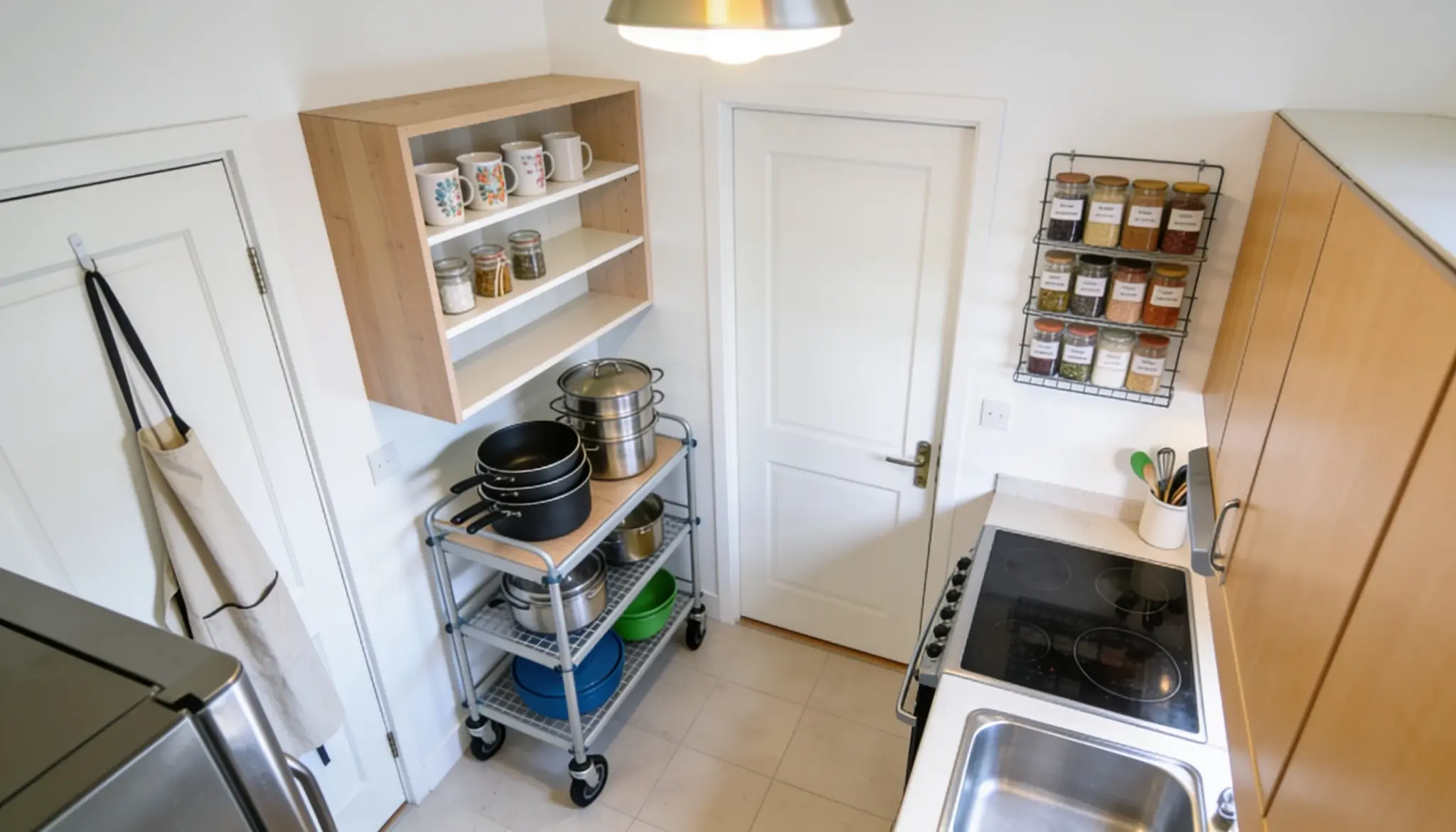
Some kitchens either don’t have cabinets or just don’t give you much room.
A small rental can leave you with almost nowhere to put your gear. The trick is to stop thinking flat and start thinking up.
Remember, walls, doors, and even the sides of the fridge can hold your stuff. They fit more than you’d expect.
- Start With the Walls: A simple row of hooks can hold mugs, pots, and the busiest tools out in the open. It looks tidy, and it keeps hands free from digging.
- Use the Doors: Doors are the spot most people forget. A slim rack on the back of a pantry door holds foil, wraps, and spices with ease.
- Roll in a Cart: A rolling cart slides into any gap and moves wherever the work is. Once the walls, doors, and spare corners come into play, the clutter finally has somewhere to land.
Conclusion
Learning how to organize kitchen drawers really comes down to a few honest steps and a bit of patience.
Pull it all out, sort what matters, and give each thing its own spot. The tools and hacks above cost little, yet they save you time every single day.
What I love most is the calm that follows. No more digging, no more clatter, just drawers that work for you.
Pick one drawer this weekend and start there. Once you see the difference, the rest will feel easy.
Frequently Asked Questions (FAQs)
1. How Should Kitchen Drawers Be Organized?
Sort items into groups, then give each group its own divider or bin. Store daily tools up front and rare ones toward the back.
2. What’s the Best Way to Store Knives Safely in Drawers?
Use an in-drawer knife holder with grooves for each blade. It keeps edges apart, so you won’t cut your hand reaching in.
3. Which Drawer Organizers Work Best for Utensils and Small Tools?
Expandable trays sort everyday utensils quickly, while small clear bins handle clips and odds and ends.
4. Is it Better to Organize Drawers by Item Type or Cooking Zones?
Cooking zones win for busy kitchens. Keep prep gear by the counter and cooking tools near the stove.