

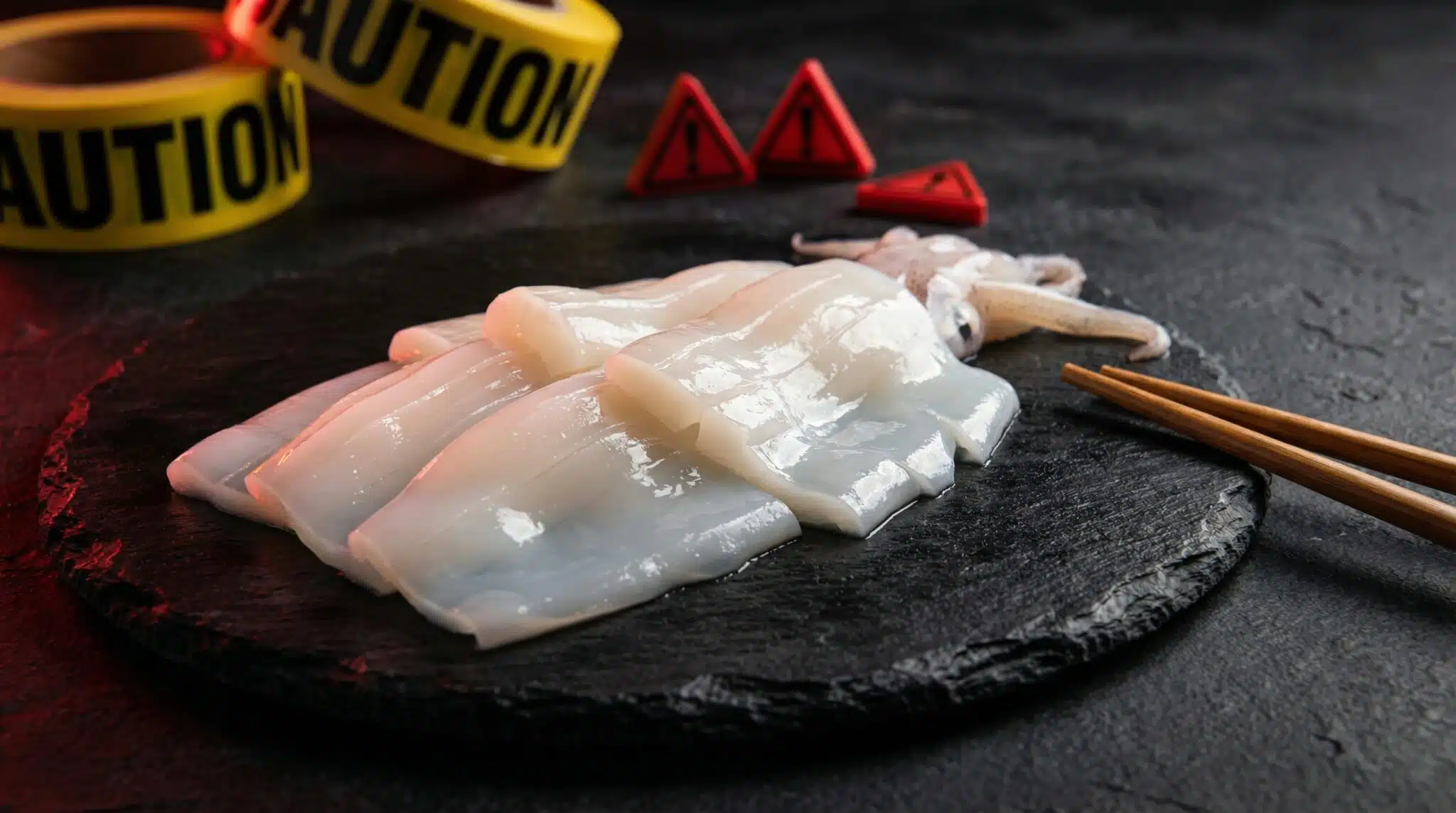
Is Raw Squid Safe? (AKA: Should You Really Eat That Calamari “Sashimi” at Home?)
If you’ve ever stared at a gorgeous plate of raw squid and thought, “This is either going to be a delightful little ocean snack… or a full body regret,” hi, same.
Here’s the deal: raw squid can be safe for healthy adults, but only if a couple very specific, unglamorous things happened before it hit your plate namely proper commercial freezing (to kill parasites) and staying cold the whole time (to keep bacteria from throwing a rave).
And I’m going to be annoying about this (lovingly): “It looks fresh!” is not a safety plan.
Let’s talk about what actually matters, what doesn’t, and when you should just cook the squid and sleep peacefully at night.
The One Sentence Rule I Use
Freezing kills parasites. Cooking kills basically everything.
That’s the entire vibe.
Freezing is about parasites (hello, Anisakis). It does not magically erase bacteria that were already there or grew because the squid got warm at any point. So if you’re eating it raw, you need both:
- Verified parasite killing freezing, and
- excellent cold handling from seller → your fridge → your mouth
Which is why raw squid at a reputable sushi place is usually a different universe than raw squid from “whatever was in the seafood case next to the imitation crab.”
Who Should Just Skip Raw Squid (No Heroics)
If you’re in any of these categories, I’m going to gently slide the “eat it cooked” card across the table:
- Pregnant (Listeria is the big scary one here)
- Immunocompromised
- Liver disease (especially because of Vibrio vulnificus, which can be extremely dangerous)
- Kids under ~8 and adults 65+ (foodborne illness hits harder)
- Shellfish allergy folks (squid contains tropomyosin, which can overlap with shellfish reactions)
This isn’t me being dramatic. This is me wanting you to enjoy your dinner without needing a medical chart afterward.
Okay, What Can Go Wrong With Raw Squid?
1) Parasites (The “Thanks, I Hate It” Category)
The headline culprit is Anisakis (aka herring worm). If you eat contaminated squid raw and the larvae are alive, they can burrow into your stomach or intestinal wall. (Yes, I also wish I didn’t know that sentence.)
Symptoms can show up fast within 1 to 12 hours and include severe cramps, nausea, vomiting, diarrhea. Sometimes it requires medical removal.
Important note: refrigeration, marinating, and “it was in lemon juice!” do not kill Anisakis.
2) Bacteria (The “Freezing Doesn’t Fix This” Category)
Bacteria are the other reason I get cranky about “just freeze it at home!”
- Vibrio can be present from seawater exposure. It can make you miserably sick.
- Vibrio vulnificus is rarer but can be life threatening in higher risk people.
- Listeria is sneaky because it can grow (slowly) even in the fridge and it’s especially dangerous in pregnancy.
So even if parasites were handled correctly, temperature abuse (squid sitting warm too long) can still make you sick.
Stuff People Do That Feels “Safe”… But Isn’t
Marinades and “Ceviche Style” Are Not Safety Magic
Lime juice, vinegar, wine… they can change texture and color, but they don’t reliably kill parasites or bacteria. It’s like putting a cute outfit on a problem and calling it solved.
Same with a quick sear where the outside looks cooked but the inside never got hot enough. If you want the kill switch, you need either:
- parasite killing commercial freezing (for raw), or
- full cooking to temp (for total peace of mind)
The Freezing Rules That Actually Matter (FDA Protocols)
If squid is going to be eaten raw, the parasite killing step is typically one of these FDA compliant freezing options:
- -4°F (-20°C) for 7 days, or
- -31°F (-35°C) for 15 hours (blast freezing)
Here’s the part nobody wants to hear: your home freezer probably isn’t reliably cold enough. Many hover around 0°F to 10°F. That’s not the same thing as -4°F.
If you’re determined to DIY this anyway, at minimum you’d need to confirm your freezer can hold -4°F or colder with a thermometer, and you’d want a longer freeze time (people often go 14 days to be extra safe). But honestly? This is why I prefer buying from sources that already did the correct freezing.
“Sushi Grade” Squid: The Label That Means… Vibes
I hate to be the bearer of bad news, but “sushi grade” isn’t a regulated term. There’s no official standard that forces a seller to prove anything just because they used that phrase.
So instead of trusting the label, ask a real question:
- Was this squid frozen according to FDA parasite destruction guidelines for raw consumption?
- Can you tell me the freezing method/temperature?
And yes, this is awkward. But it’s less awkward than spending the next 12 hours bargaining with your stomach.
Also: “Previously frozen” isn’t a red flag here. For raw use, it can actually be the safer sign because freezing (when done correctly) is the whole point.
Cold Chain: The Unsexy Thing That Makes or Breaks This
Even perfectly frozen squid can become unsafe if it warms up later.
My non-negotiables if you’re eating it raw:
- Keep it at 40°F or below in the coldest part of your fridge
- Limit time at room temp to 2 hours max (1 hour if it’s hot out)
- Eat it within 24 hours of thawing
- If you’re not eating it soon? Cook it. Don’t refreeze thaw refreeze and hope for the best.
Also: fridge dials lie. A $10 fridge thermometer has saved my sanity more than once.
How to Tell If Squid Is Spoiled (And What You Can’t See)
Good signs: firm, translucent flesh, mild ocean smell (not “chemical cleaning aisle”), whole squid with clear, full eyes.
Walk away if: mushy texture, cloudy/sunken eyes, sour/fishy/ammonia smell.
But listen this is important: you can’t reliably spot parasites by sight or smell. Squid can look gorgeous and still carry Anisakis. Your nose can tell you “fresh,” not “safe raw.”
When Cooking Is the Smarter Choice (My Favorite Option, Honestly)
If you want the “I’m not gambling today” version for calamari squid or octopus, cook it.
Cooking squid to an internal temperature of 145°F (for 15 seconds) knocks out parasites, bacteria, and viruses.
My personal tip: squid is either cooked quickly or it turns into a rubber band with a college degree.
- High heat sear: a few minutes per side, depending on thickness
- Grill: a couple minutes per side over hot heat
- Boil: short and fast (overcooking happens in a blink)
If you tend to overthink it (me), an instant read thermometer is worth it.
If You Eat Raw Squid and Feel Awful: When to Get Help
I’m not here to diagnose you over the internet, but don’t ignore serious symptoms.
Get medical care promptly if you have:
- intense abdominal pain (especially within hours), pain that doesn’t ease, or vomiting blood
- high fever, blood in stool, signs of dehydration
- symptoms lasting beyond ~48 hours without improvement
- any severe symptoms if you’re in a higher risk category (pregnant, immunocompromised, liver disease, etc.)
My Real Life Verdict
Raw squid isn’t automatically a death wish but it’s also not a “close enough” situation.
If you want to eat it raw with confidence, you need:
- verified commercial freezing that meets FDA parasite kill protocols
- excellent cold handling
- clean prep and no cross-contamination
- and the humility to say, “You know what? I’m cooking this,” when anything feels questionable
Because honestly? A quick sear can still give you tender, sweet squid… without you having to spend the night Googling “anisakis symptoms” or viral calamari rumor at 2 a.m.