

Skip to content
Know Sea Food Logo
  • Cooking techniques
  • Kitchen & Home Essentials
  • Seafood Recipes
    • Healthy Seafood
    • Seafood Varieties
  • more
    • Seafood Storage
    • Garden to Table
    • Nutrition & Wellness
  • Cooking techniques
  • Kitchen & Home Essentials
  • Seafood Recipes
    • Healthy Seafood
    • Seafood Varieties
  • more
    • Seafood Storage
    • Garden to Table
    • Nutrition & Wellness
Search
Know Sea Food Logo
  • Cooking Techniques
  • Healthy Seafood Options
  • Seafood Recipe Ideas
  • Seafood Shelf Life & Storage
  • Seafood Types
  • Nutrition & Wellness
  • Kitchen & Home Essentials
  • Garden to Table
  • Cooking Techniques
  • Healthy Seafood Options
  • Seafood Recipe Ideas
  • Seafood Shelf Life & Storage
  • Seafood Types
  • Nutrition & Wellness
  • Kitchen & Home Essentials
  • Garden to Table
Explore All

Can You Freeze Crab Meat? What You Need to Know

Line 12
  • Martha Johnson
  • Seafood Shelf Life & Storage

Published On: September 26, 2025 Last Updated: February 20, 2026

Portion into Serving Sizes

Table of Contents

Ever bought fresh crab meat and panicked about using it before it spoils?

“Can I freeze crab meat ?” or “Freezing seafood ruins the texture” – are two most common questions asked. When stored right, frozen crab tastes almost as good as fresh. Professional chefs freeze crab all the time.

Imagine never rushing through expensive crab recipes again. You could buy in bulk, prep ahead, and always have premium seafood ready.

Let’s walk through the simple steps that’ll save you money and keep that sweet flavor intact.

Can You Freeze Crab Meat

Yes, you can freeze crab meat for up to 3 months at 0°F.

Here’s exactly what to do and how to do:

Cook live crabs first by boiling for 5 minutes, then cool quickly.

Remove shell pieces, pat meat dry, and store in vacuum-sealed bags or airtight containers.

Label with dates and freeze immediately. Fresh crab freezes better than cooked crab. Vacuum sealing prevents freezer burn and maintains the quality of the food.

Always thaw safely in the refrigerator overnight – never at room temperature. Use thawed crab within 1-2 days.

Frozen crab may lose some texture after thawing, making it better for cooked dishes like crab cakes and soups rather than fresh applications like cocktails. Store at 0°F or below and never refreeze once thawed.

How to Properly Freeze Crab Meat

Trust me, these simple steps will save your crab.

Step 1. Clean and Prepare Your Crab
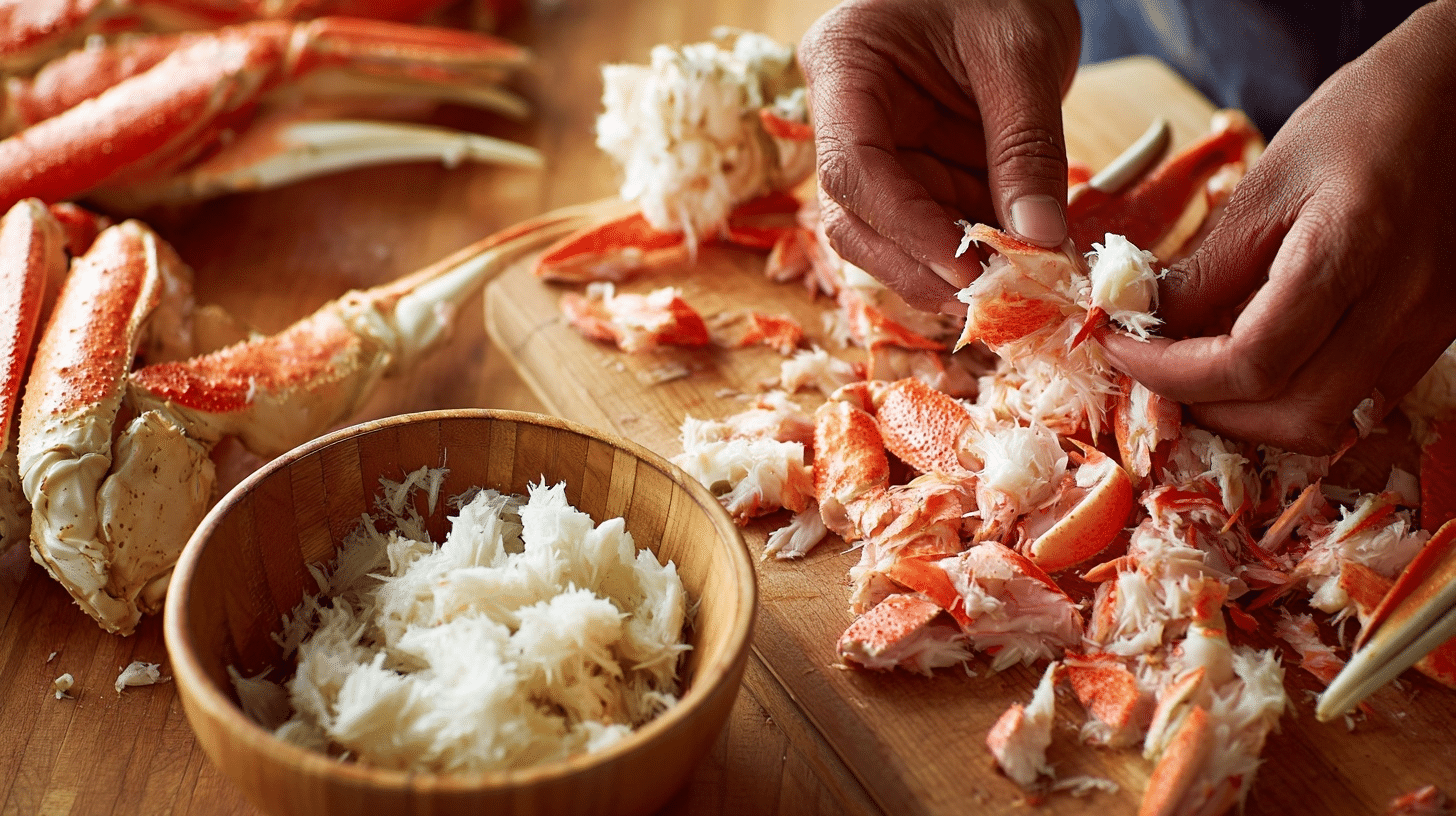
Clean and Prepare Your Crab

Start by carefully picking through your crab meat. Remove any shell pieces or cartilage; nobody wants to bite into that later!

If you’re working with whole crabs, cook them first, then extract the meat.

Make sure everything is fresh and clean before considering freezing. This prep work makes all the difference in your final results.

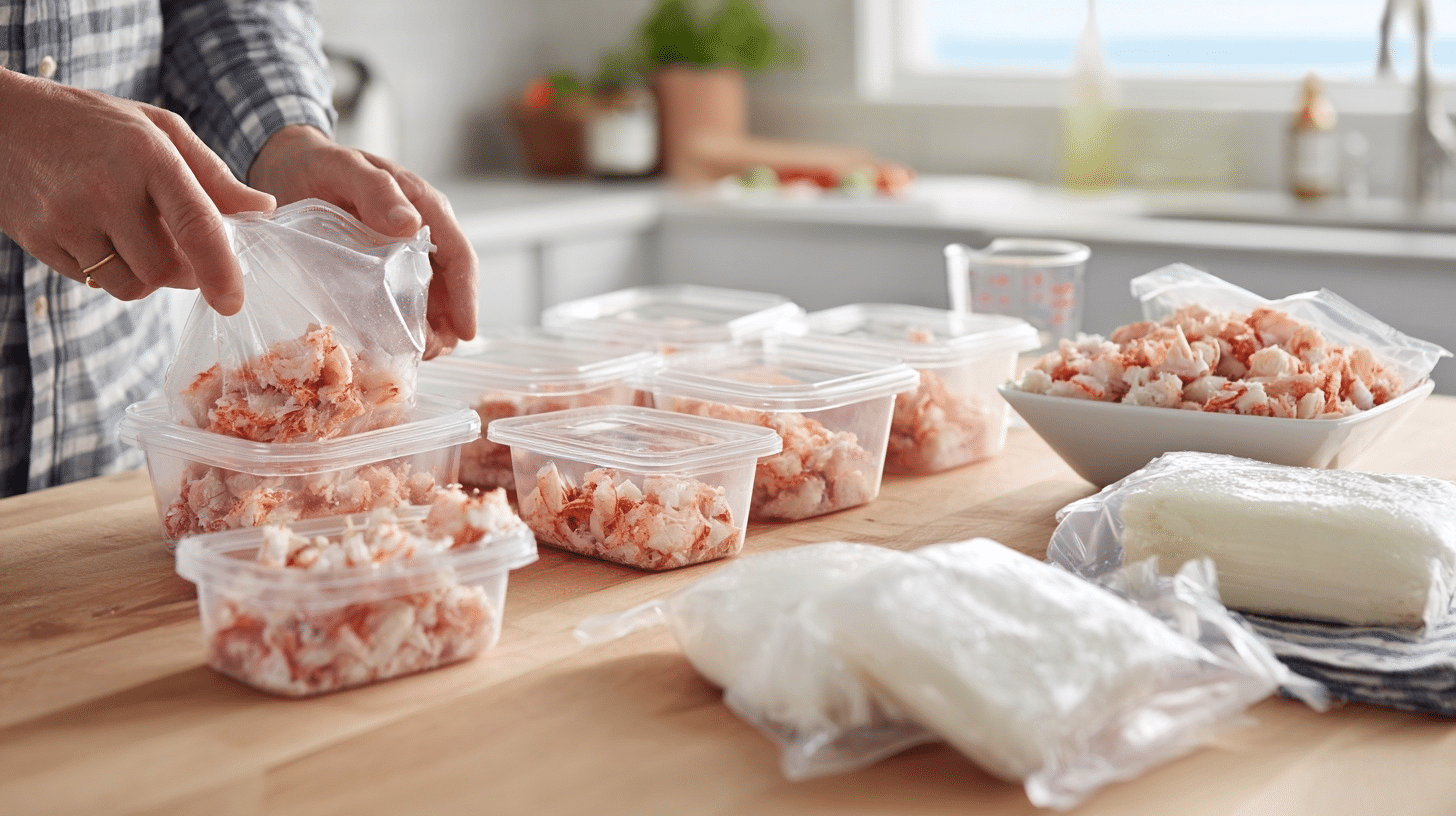
Step 2. Portion Into Serving Sizes
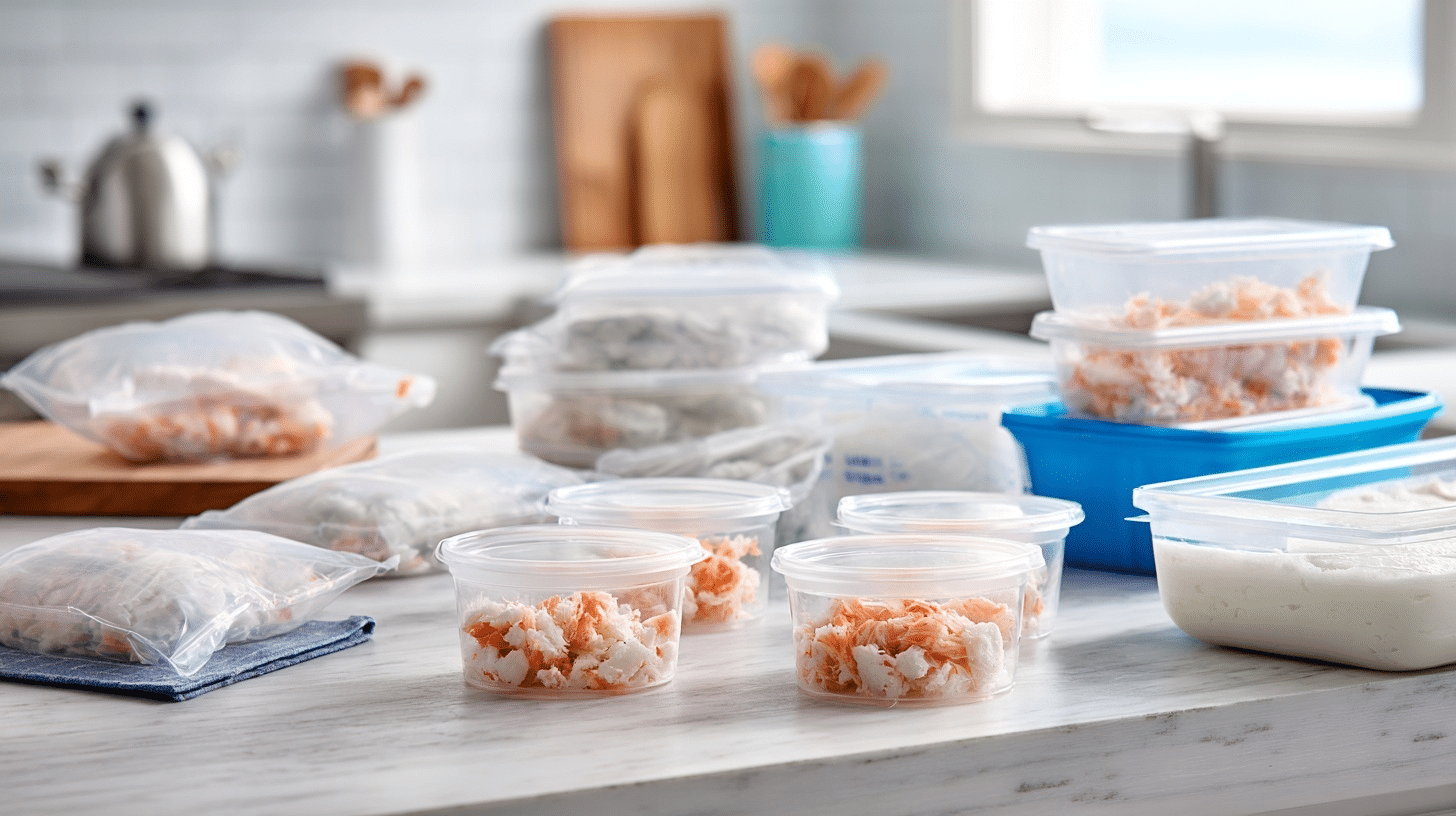
Portion in Serving

Don’t freeze all your crab in one giant lump. Divide it into meal-sized portions instead. This way, you can thaw exactly what you need without wasting any.

Consider how much you typically use in recipes, such as half-cup or one-cup portions. Smaller portions also freeze and thaw more quickly, which helps maintain their quality.

Step 3. Wrap It Right
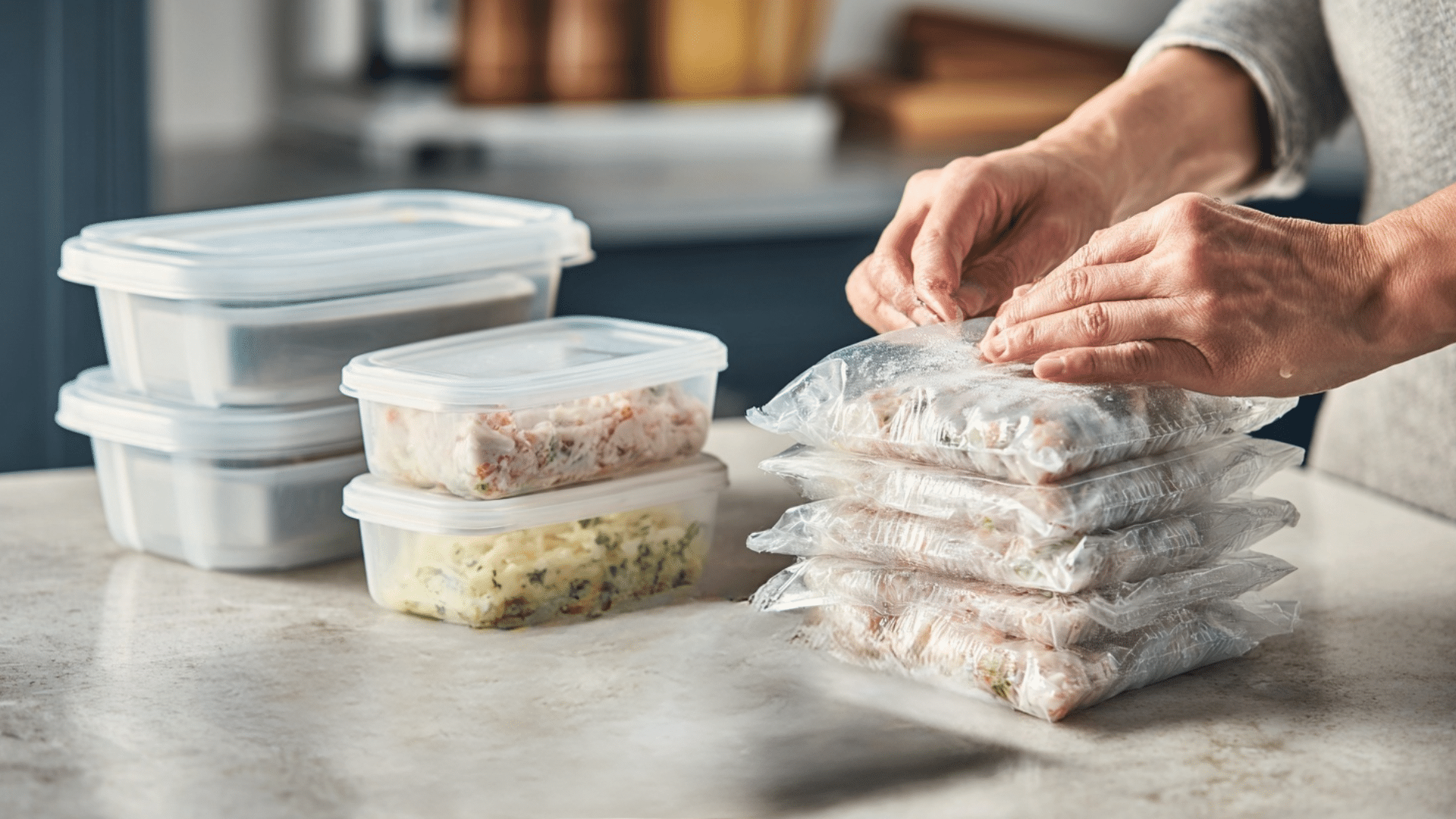
wrap it right

Double wrap your crab meat for maximum protection. First, wrap the item tightly in plastic wrap, pressing out any air bubbles to have a tight seal.

Then place in freezer bags or airtight containers. Label everything with the date and contents.

Good wrapping prevents freezer burn and keeps those delicious flavors locked in. Don’t skip this step – your taste buds will notice the difference!

Step 4. Freeze Quickly
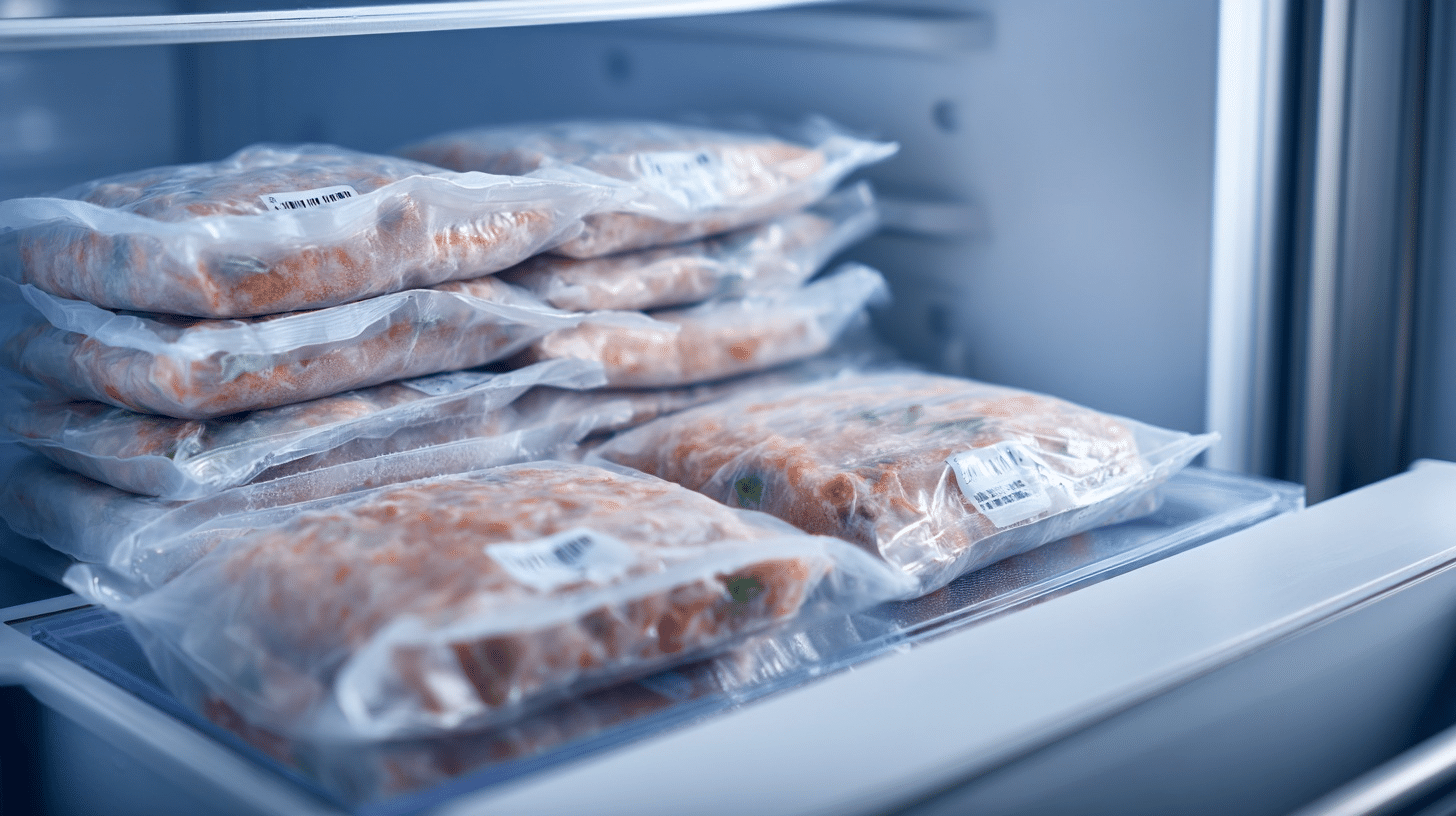
Freeze Quickly

Pop your wrapped crab into the coldest part of your freezer right away. The faster it freezes, the better the texture will be when you thaw it.

Don’t let it sit around at room temperature or in the fridge first.

Quick freezing helps maintain the meat’s structure and prevents ice crystals from forming inside the delicate flesh.

Things to Keep in Mind While Freezing Crab Meat

These small details can significantly impact your frozen crab experience. Trust me, I’ve learned these lessons the hard way!

Following these guidelines will help you avoid common mistakes and keep your crab tasting fresh and delicious.

  • Use within 3 months: Frozen crab stays good for about three months, but fresher is always better
  • Never refreeze thawed crab: Once it’s thawed, use it up or toss it out for food safety
  • Cooked crab freezes differently: It might get a bit more watery than fresh, but still tastes great
  • Temperature matters: Keep your freezer at 0°F or below for best results
  • Thaw in the fridge: Slow, cold thawing keeps the texture much better than quick methods

Conclusion

Don’t forget to clean it well, wrap it properly, and use it within three months.

Saving money on a bulk purchase or preserving leftovers from a feast, frozen crab can be just as delicious as fresh crab. So go ahead, stock up when you find a good deal.

Your freezer is ready to keep that sweet crab goodness safe until you’re ready to enjoy it again!

Frequently Asked Questions

How long does crab meat last in the refrigerator?

Fresh crab meat lasts 2–3 days in the fridge when stored in an airtight container. Pasteurized crab in unopened cans can last several months until the “use by” date.

What is the best way to preserve crab meat?

Freezing is best. Store it in an airtight container or vacuum-sealed bag to prevent freezer burn and preserve flavor.

How long can you freeze jumbo lump crab meat?

Up to 3 months for the best quality, though it can be kept longer if well-sealed.

Does freezing affect crab meat texture?

Yes, slightly. Frozen crab may be softer or more watery once thawed, but it’s still excellent for cooked dishes like soups, casseroles, or crab cakes.
Picture of Martha Johnson

Martha Johnson

Martha Johnson, a nutritionist and wellness advocate, has been writing for our Healthy Seafood Options section since 2021. With her background in dietetics, Martha provides insightful advice on incorporating healthy seafood into daily meals. She focuses on the benefits of omega-3-rich fish and sustainable seafood choices. When she's not writing, Martha enjoys creating healthy recipes and promoting sustainable eating habits. She believes in the importance of choosing nutritious options that benefit both personal health and the planet.
Read More About Me
Picture of Martha Johnson

Martha Johnson

Martha Johnson, a nutritionist and wellness advocate, has been writing for our Healthy Seafood Options section since 2021. With her background in dietetics, Martha provides insightful advice on incorporating healthy seafood into daily meals. She focuses on the benefits of omega-3-rich fish and sustainable seafood choices. When she's not writing, Martha enjoys creating healthy recipes and promoting sustainable eating habits. She believes in the importance of choosing nutritious options that benefit both personal health and the planet.
Read More About Me

We’ll not show your email address publicly.

Join the discussion Cancel reply

Your email address will not be published. Required fields are marked *

Picture of Martha Johnson

Martha Johnson

Martha Johnson, a nutritionist and wellness advocate, has been writing for our Healthy Seafood Options section since 2021. With her background in dietetics, Martha provides insightful advice on incorporating healthy seafood into daily meals. She focuses on the benefits of omega-3-rich fish and sustainable seafood choices. When she's not writing, Martha enjoys creating healthy recipes and promoting sustainable eating habits. She believes in the importance of choosing nutritious options that benefit both personal health and the planet.
Read more about me

Table of Contents

Related Posts

Salmon fillets arranged in radial pattern on ice with fishhook at center
  • July 28, 2026

Hook, Line, and Sinker: Why You’re Misreading Your Seafood Labels

Full post : Hook, Line, and Sinker: Why You’re Misreading Your Seafood Labels
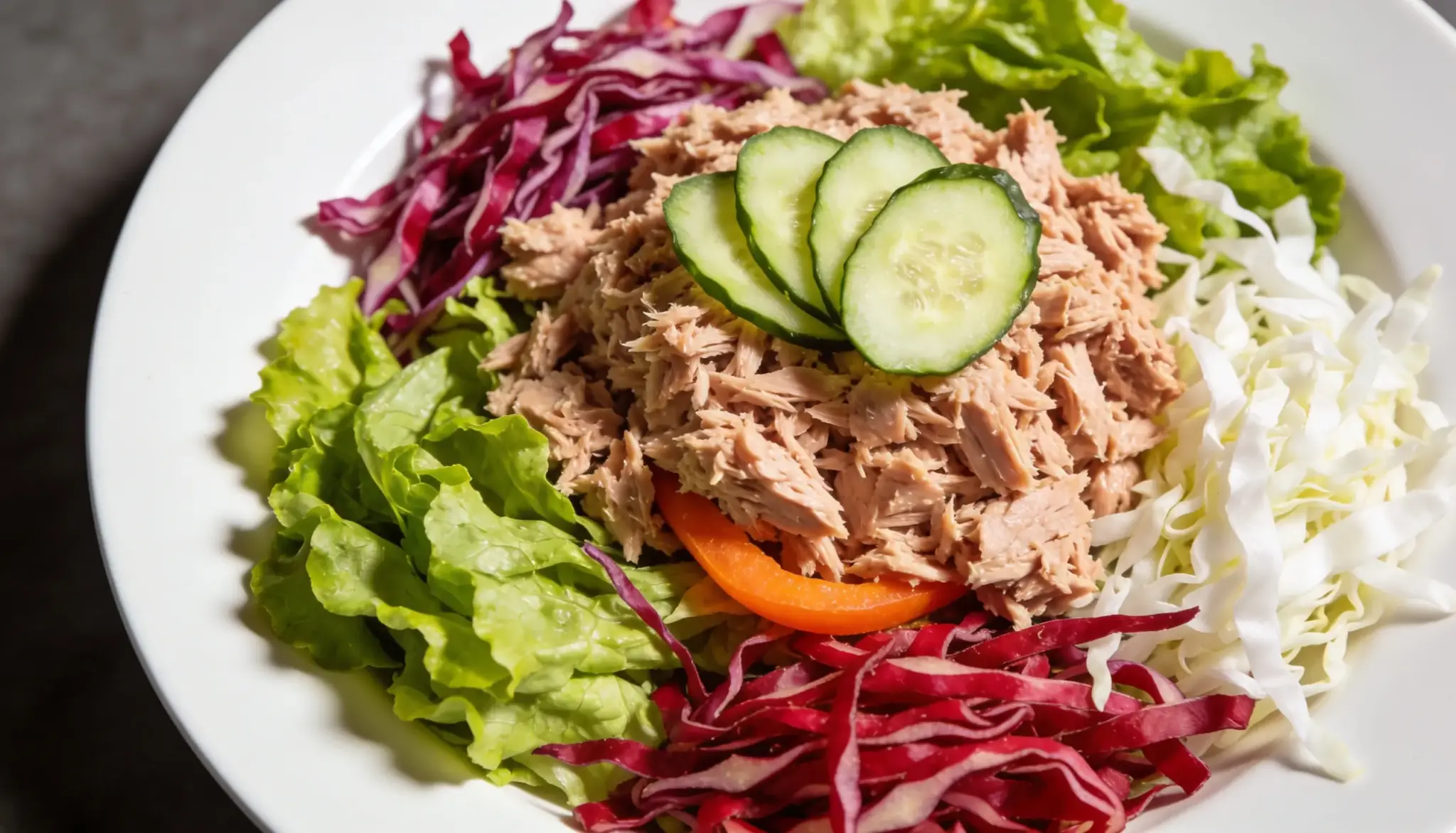
tuna-salad-last-in-fridge
  • July 7, 2026

How Long Does Tuna Salad Last in the Fridge?

Full post : How Long Does Tuna Salad Last in the Fridge?
Chef draining deep fryer oil into stainless steel container in commercial kitchen
  • July 1, 2026

How Seafood Restaurants Recycle Their Used Cooking Oil

Full post : How Seafood Restaurants Recycle Their Used Cooking Oil
How to Meal Plan Around Seafood Without Letting Food Go to Waste
  • June 30, 2026

How to Meal Plan Around Seafood Without Letting Food Go to Waste

Full post : How to Meal Plan Around Seafood Without Letting Food Go to Waste

As seen on

buzzfeed_706c6d
cosmopolitan_706c6d
elpais_706c6d
guardian_main_706c6d
newyorktimes_706c6d
KnowSeaFood Logo Footer
Facebook Instagram Pinterest

Quick Links

  • Cooking Techniques
  • Healthy Seafood Options
  • Seafood Recipe Ideas
  • Seafood Shelf Life & Storage
  • Seafood Types
  • Nutrition & Wellness
  • Kitchen & Home Essentials
  • Garden to Table
  • Cooking Techniques
  • Healthy Seafood Options
  • Seafood Recipe Ideas
  • Seafood Shelf Life & Storage
  • Seafood Types
  • Nutrition & Wellness
  • Kitchen & Home Essentials
  • Garden to Table

Explore

  • About us
  • Blogs
  • Contact us
  • Privacy Policy
  • About us
  • Blogs
  • Contact us
  • Privacy Policy
Facebook Twitter Youtube

©2020-2026 Knowseafood. All rights reserved.

Let’s help you find your next favourite