

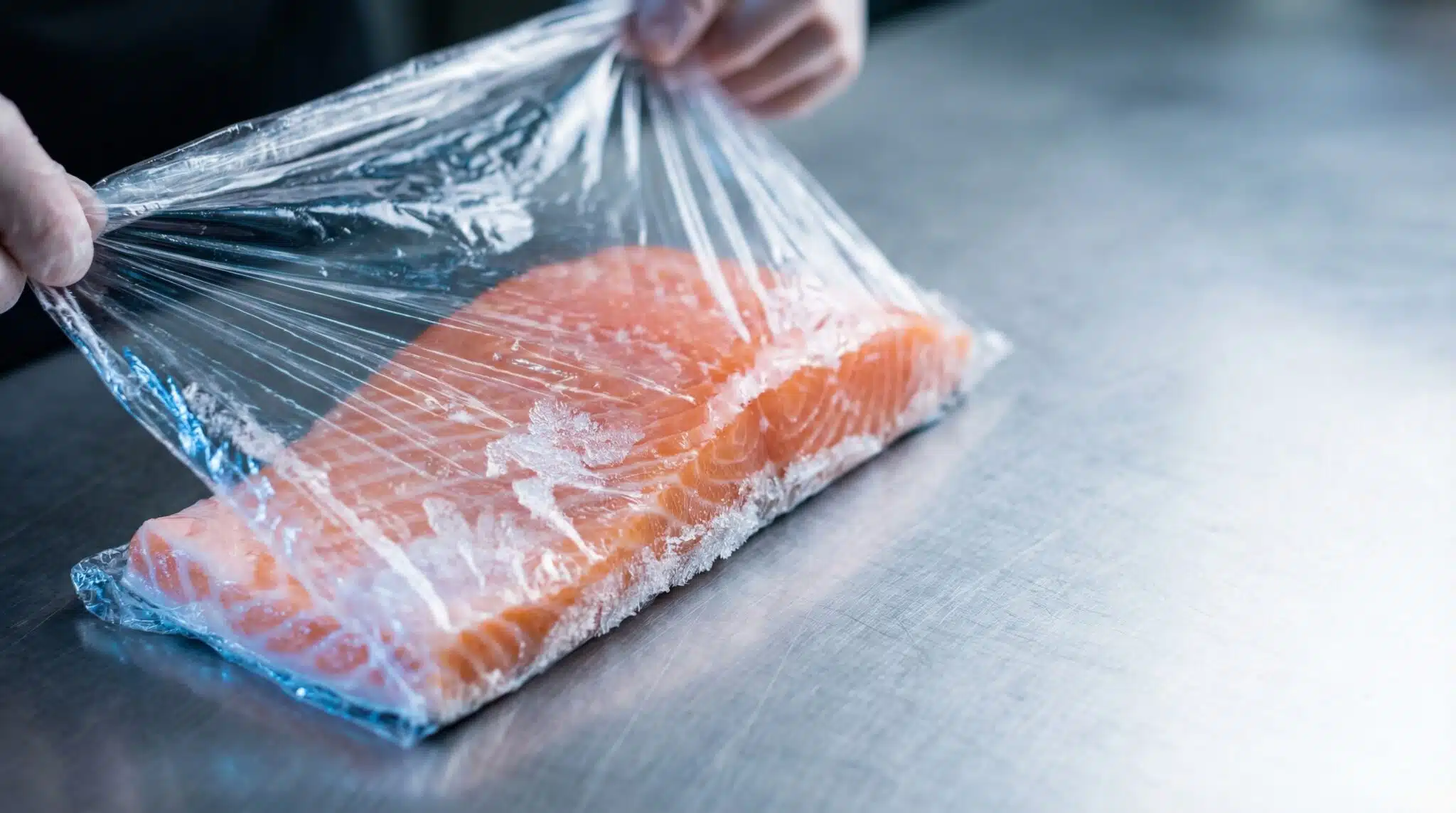
How to Freeze Fish Without Wrecking It (aka: how to avoid the sad puddle)
You know that weird liquid moat that shows up around your thawed fish? The one that makes your beautiful fillet look like it’s been crying in the fridge overnight? Yeah. That’s not just “water.” That’s your fish’s texture and flavor waving goodbye.
The good news: freezing fish doesn’t have to turn it into mushy, freezer burned regret. The bad news: it will if you let air get to it and you freeze it like you’re casually tossing socks into a drawer.
I’m going to keep this practical and non-science-y, because you don’t need a lecture you need dinner to taste good.
The two things that ruin frozen fish (and what to do instead)
If you remember nothing else, remember this: air exposure and slow freezing are the villains.
- Air exposure = freezer burn + “stale fish” flavor (especially with fattier fish).
- Slow freezing = big ice crystals that shred the fish’s cells from the inside (hello, puddle).
So the goal is:
- freeze it fast (give it space and a cold, steady freezer), and
- wrap it like you mean it (tight, airtight, not “eh, this bag is probably fine”).
Also: freezing preserves quality it does not perform miracles. If your fish smells off or feels slimy before freezing, freezing it is not “saving it for later.” It’s “postponing a gross experience.” Toss it.
First: if you’re planning to eat it raw, pause right here
Cooking fish to 145°F takes care of the scary stuff. Eating it raw is a totally different party, with different rules for sashimi fridge storage.
If you want to make sushi, sashimi, or ceviche at home, freezing is mainly about parasites, and the FDA’s guidance is basically:
- −4°F for 7 days, or
- flash freezing at −31°F for shorter times (not a thing most of us can do at home unless your freezer is secretly a commercial beast).
Here’s the part people miss: your average fridge freezer combo often hangs around 0°F, not −4°F. And yes, those four degrees matter. If you’re serious about raw fish at home, stick a freezer thermometer in there and confirm you can actually hit and hold −4°F. (Chest freezers are usually better at this than the freezer above your ice maker that’s opened 47 times a day.)
Also, some fish have lower parasite risk and may be exempt in certain cases (like tuna species such as yellowfin/bluefin/bigeye) and properly raised farmed salmon on documented parasite free feed. But I’m going to be honest: if you’re not 100% sure what you’re doing, the simplest (and safest) move is to buy fish intended for raw use from a reputable source and follow their guidance. Your kitchen is fabulous, but it’s not a sushi bar.
For everybody else who’s cooking their fish like a normal human on a Tuesday? Keep reading.
Freeze it while it’s still “good fish,” not “questionable fish”
My personal rule: freeze within 2 days of buying it if you’re not cooking it right away.
Because the fish doesn’t start its life in your kitchen. If it sat in a store case for a few days, it’s already used up some of its “best quality” window before you even got home. (This is why that “great deal” on fish that expires tomorrow is… a gamble.)
If you catch your own fish: gut it ASAP, keep it cold on ice, and freeze within hours. Freshness is everything here.
Why salmon freezes like a champ and cod acts dramatic
This drives people nuts because they think they “did it wrong,” when sometimes… it’s the fish.
When fish freezes, water inside it turns into ice crystals. Ice expands. Crystals poke holes in the fish’s structure. When you thaw it, those damaged cells leak moisture (your puddle).
Fat helps protect texture. So generally:
- Fatty fish (salmon, trout, mackerel) freeze really well texture wise… but the fat can go stale faster if air gets in.
- Lean but dense fish (tuna, mahi mahi) do okay.
- Lean + higher water fish (cod, flounder) are the ones that tend to go softer and flakier in a slightly sad way.
So if you’ve ever frozen salmon and thought, “Wow, still great,” and then frozen cod and thought, “Why is it falling apart like it’s auditioning for fish chowder?” you’re not imagining things.
How long frozen fish stays “good” (not just “technically safe”)
This is where I get a little opinionated: yes, fish can remain safe in the freezer for a long time, but quality is a different story. I’m aiming for “you’ll actually want to eat it.”
Here’s a realistic ballpark:
- Lean fish (cod, halibut, walleye): best quality 6-8 months (often still safe up to a year)
- Fatty fish (salmon, mackerel): best quality 2-3 months (can taste tired by month 4 if packaging wasn’t great)
- Shrimp: best quality around 6 months
- Vacuum sealed fish: can hold good quality way longer sometimes up to 2 years (because air is the enemy)
Packaging is honestly as important as the species. The exact same salmon will taste totally different at month three depending on whether it was vacuum sealed or tossed in a flimsy bag with half the air still inside.
My freezer setup rules (so the fish doesn’t get bullied back there)
- Back of the freezer, not the door. The door is basically a temperature swing carnival.
- When you first freeze, don’t stack everything in a warm clump. Give packages a little space at first so they freeze faster.
- A steady temp beats a “sometimes super cold, sometimes meh” freezer. Those ups and downs let ice crystals melt and refreeze, which is texture death by a thousand tiny annoyances.
Can you refreeze fish?
Yes… if it was thawed safely.
If your fish thawed in the refrigerator and stayed cold, you can refreeze it. If it still has a few ice crystals, even better.
But every freeze/thaw cycle chips away at texture. Once? Usually fine. Twice? It starts getting soft. After that? You’re headed straight toward fish cake territory (which is not the worst fate, honestly, but it’s a different dinner).
The best ways to freeze fish (ranked, with zero guilt)
1) Vacuum sealing (the “I’m not messing around” option)
If you freeze fish often, a vacuum sealer is absolutely worth it. It’s like giving your fish a tiny airtight winter coat.
My tips:
- Pre-freeze the fillets on a sheet pan for 1-2 hours first. This firms them up so the vacuum doesn’t squish the life out of the flesh or suck out a bunch of liquid.
- If your sealer has a “wet” or “pulse” mode, use it.
- Use decent bags cheap ones can let air sneak in over time.
2) Double wrap (the best “no special gadgets” method)
If you don’t have a vacuum sealer, this is what I’d do.
- Wrap the fish tight in plastic wrap, pressed right onto the surface (no air pockets).
- Then wrap it again with foil or freezer paper.
- Label it, because Frozen Mystery Fillet is not a fun game.
This is usually solid for 4-6 months of good quality if your freezer is steady.
3) Water displacement bag trick (great for short term)
This is the “I want this fish to taste good in the next few weeks” method.
- Put portions in a zip top bag.
- Lower the bag into a bowl of cold water with the zipper just above the water line.
- The water pressure pushes the air out.
- Seal it and freeze.
It’s not perfect, but it’s shockingly effective for quick storage.
4) Ice glazing (old school, best for whole fish)
If you’re freezing whole fish (or you’ve got something you caught), glazing is a legit fishing trick:
- Freeze it solid.
- Dip it in ice water for a few seconds.
- Freeze again.
- Repeat a few times to build a protective ice shell.
If the glaze cracks later, just re-dip and refreeze. It’s like touching up nail polish, but colder and less glamorous.
Thawing: where good frozen fish goes to die (unless you do this)
The best way: thaw in the fridge
I know. Planning ahead. Annoying. But it really is the best for texture.
- Smaller portions often take 8-12 hours
- Bigger pieces can take 24 hours
Put it on a plate (bottom shelf, because gravity happens), and cover loosely.
Important safety note if it’s vacuum sealed:
Open the vacuum sealed package before thawing in the fridge. In an oxygen free environment, Clostridium botulinum can produce toxin even at refrigerator temperatures. (Fun fact nobody asked for, but you really do need to know it.)
Faster way: cold water thaw
If dinner is happening whether the fish is ready or not:
- Keep it sealed in the bag.
- Submerge in cold water (under 70°F).
- Change the water every 30 minutes.
Thin fillets can thaw in about an hour. Thicker cuts might take 2-3. Cook it right away (or refrigerate and use within a day or two).
Sometimes: cook from frozen (yes, really)
For baking, poaching, steaming, cooking from frozen can actually work great and sometimes keeps fish juicier because you skip some drip loss.
- Add roughly 50% more cooking time
- Don’t try to pan sear frozen fish unless you enjoy “burnt outside, icy middle” as a culinary concept.
Never do this (I’m begging you)
Do not thaw fish on the counter or in hot water. That 40°F-140°F range is where bacteria multiply fastest, and fish gets sketchy fast when it’s hanging out past room temperature time limits.
If your fish still isn’t perfect… here’s how to rescue dinner
- Freezer burn (white/gray dry patches): trim it off and cook the rest. Safe, just not as tasty.
- Rancid/stale taste (usually fatty fish + air exposure): sometimes trimming darker fatty areas helps. Strong flavors (ginger, garlic, curry) can also camouflage what’s left.
- Mushy texture (often lean fish frozen slowly): turn it into fish cakes, chowder, curry recipes where texture isn’t the whole point.
- Ammonia smell: that fish was already bad. Toss it. No marinade on earth is fixing that.
My “do this and you’ll be fine” freezer fish routine
If you want the simplest version:
- Freeze fish while it’s still fresh (within 2 days of buying).
- Wrap it airtight (vacuum seal if you can. Double wrap if you can’t).
- Store it in the back of a steady freezer.
- Use fatty fish within 2-3 months, lean fish within 6-8 months for best quality.
- Thaw in the fridge when you can and open vacuum sealed fish before thawing.
That’s it. No drama. No puddles. No “why does this taste like the freezer smells?”
Now go forth and buy the fish that’s on sale without fear. Your future self will feel wildly smug when dinner is basically already handled.